
Report Feature
Topical Pet Ectoparasiticide Drop Market Trends and Forecast
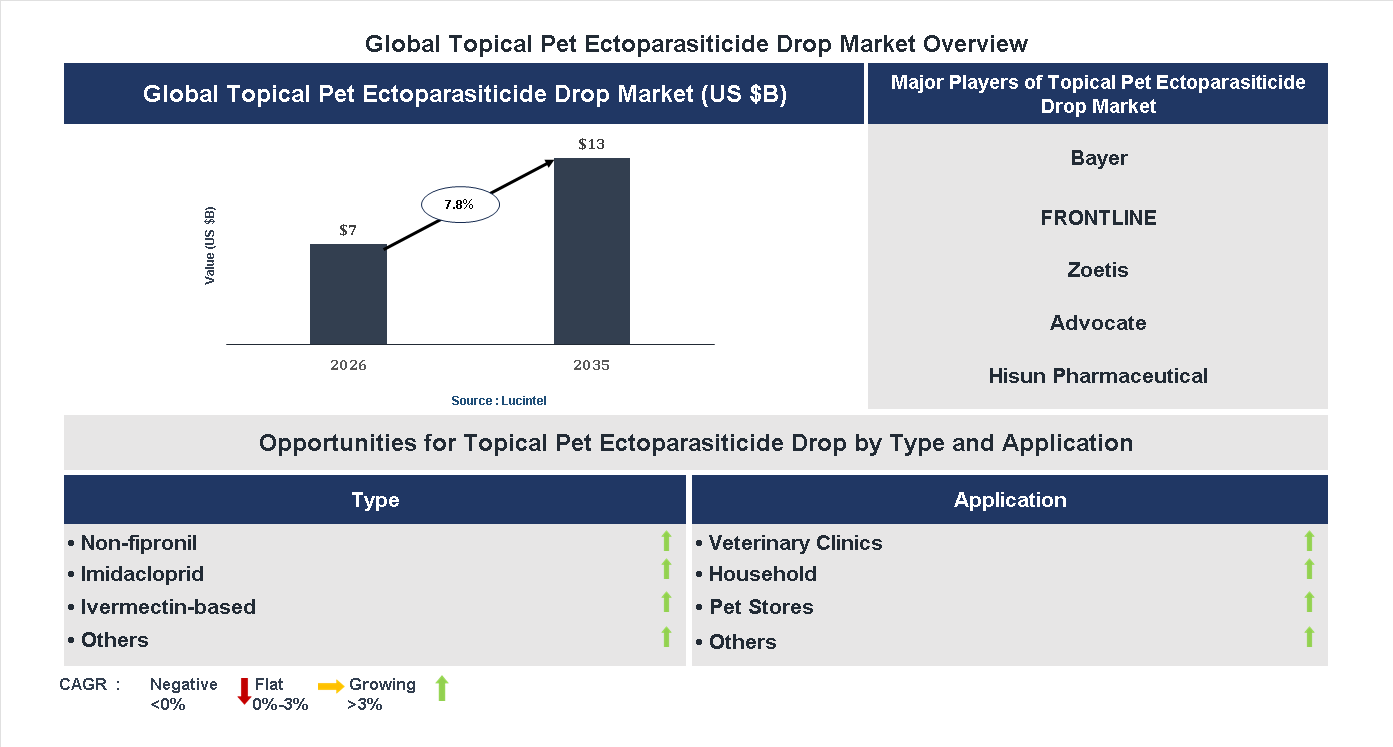
The future of the global topical pet ectoparasiticide drop market looks promising with opportunities in the veterinary clinic, household, and pet store markets. The global topical pet ectoparasiticide drop market is expected to reach an estimated $13 billion by 2035 with a CAGR of 7.8% from 2026 to 2035. The major drivers for this market are the increasing pet ownership, the rising awareness about zoonotic parasite diseases, and the growing demand for convenient topical pet treatments.• Lucintel forecasts that, within the type category, non-fipronil is expected to witness the highest growth over the forecast period.
• Within the application category, household is expected to witness the highest growth.
• In terms of region, APAC is expected to witness the highest growth over the forecast period. Gain valuable insights for your business decisions with our comprehensive 150+ page report. Sample figures with some insights are shown below.
Emerging Trends in the Topical Pet Ectoparasiticide Drop Market
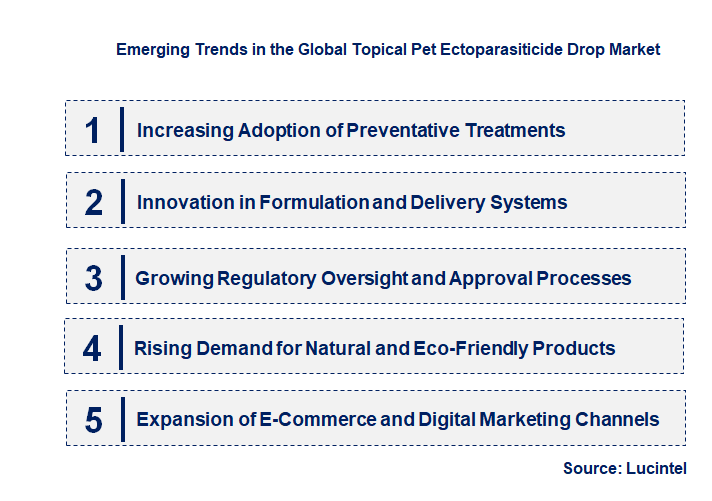
The topical pet ectoparasiticide drop market is experiencing rapid growth driven by increasing pet ownership, rising awareness of parasite-borne diseases, and advancements in veterinary medicine. Consumers are seeking effective, easy-to-apply solutions to protect their pets from fleas, ticks, and other ectoparasites. The market is also influenced by innovations in formulation, regulatory approvals, and a growing trend toward preventative healthcare for pets. These developments are transforming the landscape, making pet health management more accessible and effective. As a result, key trends are emerging that are shaping the future of this market, offering new opportunities and challenges for manufacturers and veterinarians alike.• Increasing Adoption of Preventative Treatments: The shift from reactive to preventative pet healthcare is a major trend. Pet owners are now prioritizing regular use of ectoparasiticides to prevent infestations rather than treating them after they occur. This proactive approach reduces health risks for pets and minimizes the spread of parasites. It also drives consistent demand for topical drops, encouraging manufacturers to develop long-lasting, easy-to-apply formulations. The trend supports better pet health outcomes and fosters customer loyalty, ultimately expanding the market.
• Innovation in Formulation and Delivery Systems: Advances in formulation technology are leading to more effective and user-friendly products. New delivery systems, such as long-acting drops and combination treatments, improve convenience and compliance. These innovations enhance the efficacy of ectoparasiticides and reduce application frequency, making pet owners more likely to adhere to treatment schedules. Additionally, formulations that minimize side effects and are suitable for sensitive pets are gaining popularity. This trend is pushing companies to invest in research and development, resulting in more sophisticated and appealing products.
• Growing Regulatory Oversight and Approval Processes: Regulatory agencies are implementing stricter guidelines for pet pharmaceuticals, including ectoparasiticides. This trend ensures safety and efficacy but also increases the time and cost for product approval. Companies are investing in clinical trials and compliance measures to meet these standards. The regulatory landscape influences market entry strategies and product innovation, encouraging the development of safer, more targeted solutions. It also enhances consumer confidence, which is crucial for market growth, especially in regions with stringent regulations.
• Rising Demand for Natural and Eco-Friendly Products: Consumers are increasingly seeking natural, chemical-free, and environmentally sustainable pet care options. This trend is driving the development of botanical-based ectoparasiticides and formulations with reduced chemical residues. Pet owners perceive these products as safer for their pets and the environment, influencing purchasing decisions. Manufacturers are responding by creating eco-friendly drops that align with these preferences, which can differentiate their offerings in a competitive market. This shift toward natural products is reshaping product development priorities and marketing strategies.
• Expansion of E-commerce and Digital Marketing Channels: The growth of online retail platforms is transforming how pet owners purchase ectoparasiticides. E-commerce offers convenience, a wider product selection, and access to detailed product information and reviews. Digital marketing strategies, including social media and targeted advertising, are increasing brand visibility and consumer engagement. This trend enables companies to reach a broader audience, including rural and remote areas, and facilitates direct-to-consumer sales. The expansion of digital channels is making pet health products more accessible and personalized, significantly impacting market dynamics and competitive strategies. These trends are collectively reshaping the topical pet ectoparasiticide drop market by fostering innovation, enhancing safety and efficacy, and expanding access through digital channels. They are driving a shift toward preventative, natural, and convenient solutions, ultimately improving pet health outcomes and creating new opportunities for industry growth.
Recent Development in the Topical Pet Ectoparasiticide Drop Market
The topical pet ectoparasiticide drop market is experiencing rapid growth driven by increasing pet ownership, rising awareness of parasite-borne diseases, and advancements in veterinary medicine. Consumers seek effective, easy-to-apply solutions for flea and tick control, prompting innovation and expansion in this sector. Market players are investing in research, marketing, and distribution channels to meet the growing demand. These developments are shaping a competitive landscape focused on safety, efficacy, and convenience, ultimately benefiting pet health and owner satisfaction.• Growing Pet Ownership: Expanding pet populations worldwide are fueling demand for effective ectoparasiticide solutions, creating significant market opportunities. As pet ownership rises, especially in urban areas, owners prioritize parasite prevention, leading to increased sales of topical drops. This trend encourages manufacturers to develop targeted, user-friendly products, boosting market growth. The increased focus on pet health and wellness further amplifies this opportunity, making pet ectoparasiticide drops a vital segment in veterinary care.
• Advances in Product Formulation: Innovations in formulation technology have improved the safety, efficacy, and ease of application of topical ectoparasiticides. New formulations offer longer-lasting protection, reduced side effects, and better absorption, enhancing consumer confidence. These advancements enable manufacturers to differentiate their products and meet diverse pet needs. As research continues, the market benefits from more effective solutions, encouraging repeat purchases and expanding customer base, ultimately driving market growth.
• Rising Awareness of Parasite-Borne Diseases: Increased awareness about the health risks posed by fleas and ticks has led pet owners to seek reliable prevention methods. Educational campaigns and veterinary recommendations have heightened demand for topical drops that effectively prevent disease transmission. This awareness shift supports market expansion by encouraging proactive parasite control, fostering trust in topical solutions, and prompting innovation to address emerging health concerns.
• Expansion of Distribution Channels: The growth of online retail, veterinary clinics, and pet specialty stores has broadened product accessibility. E-commerce platforms provide convenient purchasing options, increasing market reach, especially in remote areas. Veterinary clinics serve as trusted sources for product recommendations, boosting sales. The expansion of distribution channels enhances consumer access, accelerates product adoption, and fosters competitive pricing, collectively contributing to the overall growth of the topical pet ectoparasiticide drop market.
• Regulatory Approvals and Safety Standards: Stringent regulatory frameworks and safety standards have driven product innovation and quality improvements. Manufacturers invest in rigorous testing to meet approval requirements, ensuring product safety and efficacy. These regulations increase consumer confidence and facilitate market entry for new products. Compliance with safety standards also encourages innovation, leading to more effective and safer solutions, which ultimately strengthen market stability and growth prospects. The overall impact of these developments is a robust, expanding market characterized by innovative, safe, and accessible products. Increased pet ownership, technological advancements, heightened disease awareness, diversified distribution, and regulatory compliance collectively drive market growth. This dynamic environment benefits consumers through better products and improved pet health, positioning the topical pet ectoparasiticide drop market for sustained expansion and innovation.
Strategic Growth Opportunities in the Topical Pet Ectoparasiticide Drop Market
The topical pet ectoparasiticide drop market is experiencing rapid growth driven by increasing pet ownership, rising awareness of parasite-borne diseases, and advancements in veterinary pharmaceuticals. Consumers seek effective, easy-to-apply solutions for flea and tick control, fueling innovation and product diversification. Market players are focusing on expanding distribution channels and developing targeted formulations to meet diverse pet needs. This evolving landscape presents significant opportunities for companies to capture market share and improve pet health outcomes through strategic initiatives.• Expanding Pet Ownership and Awareness Drive Market Growth: The rising number of pet owners worldwide, coupled with increased awareness of flea and tick-borne diseases, is fueling demand for effective ectoparasiticide solutions. Pet owners are prioritizing preventive care, leading to higher adoption rates of topical drops. Educational campaigns and veterinary recommendations further boost consumer confidence, creating a robust market environment for growth and innovation in topical pet ectoparasiticide products.
• Innovation in Formulations Enhances Efficacy and Safety: Advances in pharmaceutical technology enable the development of more effective and safer topical drops. Innovations such as long-lasting formulations, natural ingredients, and reduced side effects appeal to pet owners seeking reliable solutions. These improvements increase product adoption, foster brand loyalty, and open avenues for premium offerings, thereby expanding the market and encouraging manufacturers to invest in research and development.
• Strategic Expansion of Distribution Channels Broadens Market Reach: Companies are increasingly leveraging online platforms, veterinary clinics, pet stores, and supermarkets to distribute topical ectoparasiticide drops. This multi-channel approach enhances accessibility and convenience for consumers, especially in emerging markets. Strengthening distribution networks and forming strategic partnerships enable brands to penetrate new regions, increase sales volume, and establish a competitive edge in the growing market.
• Growing Focus on Sustainable and Eco-Friendly Products: The rising consumer preference for environmentally responsible pet care products is influencing market offerings. Manufacturers are developing eco-friendly formulations, biodegradable packaging, and cruelty-free testing practices. This shift attracts environmentally conscious pet owners, differentiates brands, and aligns with global sustainability trends. Emphasizing sustainability can lead to increased brand loyalty and open new market segments, further propelling market growth.
• Increasing Adoption of Preventive Healthcare Practices in Pets: The trend toward proactive pet healthcare emphasizes prevention over treatment, boosting demand for topical ectoparasiticides. Veterinarians and pet owners are increasingly adopting regular preventive measures, including topical drops, to maintain pet health. This behavioral shift supports steady market growth, encourages product innovation tailored to preventive care, and fosters long-term customer relationships, ultimately strengthening the overall market landscape. The overall market for topical pet ectoparasiticide drops is poised for substantial growth driven by innovation, expanding distribution, and changing consumer preferences. These opportunities collectively enhance product offerings, improve accessibility, and promote sustainable practices, ensuring a dynamic and competitive environment. Companies that strategically capitalize on these trends will be well-positioned to lead in this expanding market, ultimately benefiting pet health and owner satisfaction.
Topical Pet Ectoparasiticide Drop Market Driver and Challenges
The topical pet ectoparasiticide drop market is influenced by a variety of technological, economic, and regulatory factors. Advances in veterinary medicine and parasitology have led to the development of more effective and safer products, driving market growth. Economic factors such as increasing pet ownership and rising expenditure on pet healthcare further propel demand. Regulatory frameworks ensure product safety and efficacy, shaping market dynamics. However, challenges like stringent regulations, competition from alternative treatments, and concerns over chemical residues pose hurdles. Understanding these drivers and challenges is essential for stakeholders to navigate the evolving landscape and capitalize on growth opportunities within this specialized market. The factors responsible for driving the topical pet ectoparasiticide drop market include:• Technological Innovations: The development of advanced formulations and delivery systems enhances product efficacy and safety, attracting pet owners and veterinarians. Innovations such as long-acting drops and combination therapies improve compliance and treatment outcomes, fueling market expansion. Continuous R&D efforts are expected to introduce novel solutions, maintaining competitive advantage and meeting evolving consumer needs.
• Rising Pet Ownership and Expenditure: Increasing pet adoption globally, especially in urban areas, has led to higher spending on pet healthcare. Pet owners are willing to invest in preventive treatments like ectoparasiticides to ensure their pets' health, thereby boosting demand. This trend is supported by rising disposable incomes and a growing awareness of zoonotic disease transmission, which emphasizes the importance of parasite control.
• Regulatory Approvals and Standards: Stringent regulatory frameworks ensure the safety, efficacy, and quality of pet medications. Approval processes by agencies such as the FDA and EMA influence market entry and product development. Compliance with these standards fosters consumer trust and encourages manufacturers to innovate within regulatory boundaries, ultimately supporting market growth.
• Increasing Awareness and Veterinary Guidance: Educational campaigns and veterinary recommendations significantly influence pet owner choices. As awareness about ectoparasite-related health risks increases, demand for effective topical solutions rises. Veterinarians play a crucial role in prescribing these products, and their endorsement can accelerate market penetration and product adoption.
• Growing Focus on Preventive Healthcare: The shift from reactive to preventive pet healthcare emphasizes the importance of regular parasite control. This proactive approach encourages pet owners to use topical ectoparasiticides routinely, ensuring sustained market demand. The trend aligns with broader health and wellness movements, fostering long-term growth prospects. The challenges facing the topical pet ectoparasiticide drop market include:
• Stringent Regulatory Environment: Navigating complex approval processes and compliance requirements can delay product launches and increase costs. Variations in regulations across regions create additional hurdles for global market players, potentially limiting market expansion and innovation.
• Competition from Alternative Treatments: The availability of oral medications, collars, and natural remedies offers pet owners multiple options for parasite control. These alternatives may be preferred due to ease of use or perceived safety, challenging the market share of topical drops and necessitating continuous product differentiation.
• Concerns Over Chemical Residues and Safety: Growing awareness about potential chemical residues in pet products raises safety concerns among consumers. Negative perceptions or adverse event reports can impact demand and lead to stricter regulations, compelling manufacturers to invest in safer formulations and transparent marketing strategies. The topical pet ectoparasiticide drop market is driven by technological advancements, increasing pet ownership, regulatory standards, awareness, and preventive healthcare trends. However, it faces challenges from regulatory complexities, competition, and safety concerns. These factors collectively shape a dynamic environment where innovation and compliance are crucial for sustained growth. Stakeholders must navigate these drivers and challenges effectively to capitalize on emerging opportunities and ensure long-term market stability.
List of Topical Pet Ectoparasiticide Drop Companies
Companies in the market compete on the basis of product quality offered. Major players in this market focus on expanding their manufacturing facilities, R&D investments, infrastructural development, and leverage integration opportunities across the value chain. With these strategies topical pet ectoparasiticide drop companies cater increasing demand, ensure competitive effectiveness, develop innovative products & technologies, reduce production costs, and expand their customer base. Some of the topical pet ectoparasiticide drop companies profiled in this report include-• Bayer
• FRONTLINE
• Zoetis
• Advocate
• Hisun Pharmaceutical
• BoehringerIngelheim
• Heartgard
Topical Pet Ectoparasiticide Drop Market by Segment
The study includes a forecast for the global topical pet ectoparasiticide drop market by type, application, and region.Topical Pet Ectoparasiticide Drop Market by Type [Value from 2019 to 2035]:
• Non-fipronil
• Imidacloprid
• Ivermectin-based
• Others
Topical Pet Ectoparasiticide Drop Market by Application [Value from 2019 to 2035]:
• Veterinary Clinics
• Household
• Pet Stores
• Others
Topical Pet Ectoparasiticide Drop Market by Region [Value from 2019 to 2035]:
• North America
• Europe
• Asia Pacific
• The Rest of the World
Country Wise Outlook for the Topical Pet Ectoparasiticide Drop Market
The topical pet ectoparasiticide drop market has experienced significant growth driven by increasing pet ownership, rising awareness of parasite-borne diseases, and advancements in veterinary pharmaceuticals. Technological innovations and regulatory approvals have further expanded product options, making treatments more effective and accessible. The market dynamics vary across regions due to differing pet care practices, regulatory environments, and economic factors. As the demand for safe, convenient, and long-lasting solutions grows, key players are investing in research and development to introduce novel formulations. This evolving landscape reflects a broader trend toward improved pet health management and preventive care worldwide.• United States: The US market has seen rapid growth with a focus on innovative, long-lasting ectoparasiticide drops. Regulatory approvals for new active ingredients have increased, and there is a rising trend toward natural and eco-friendly products. The adoption of advanced delivery systems, such as spot-on formulations with extended efficacy, is prominent. E-commerce platforms are significantly contributing to market expansion, providing easier access for pet owners. Additionally, increased awareness about flea and tick-borne diseases has driven demand for effective prevention solutions. Veterinary clinics are increasingly recommending these products, further boosting sales.
• China: China's market is expanding due to rising pet ownership and urbanization. The government’s supportive policies for pet health are encouraging market growth. Local manufacturers are developing affordable, effective ectoparasiticide drops tailored to regional needs. There is a growing preference for imported brands known for quality and safety, which are gaining popularity among middle-class pet owners. E-commerce and online veterinary consultations are facilitating product distribution. Moreover, increasing awareness about parasite prevention and the influence of Western pet care practices are contributing to market development. The market is expected to continue its upward trajectory with ongoing product innovation.
• Germany: The German market emphasizes high-quality, safe, and environmentally friendly pet care products. Regulatory standards are stringent, ensuring only effective and safe ectoparasiticide drops are available. There is a notable shift toward natural and chemical-free formulations, aligning with consumer preferences for sustainability. Veterinary professionals play a crucial role in recommending products, and pet owners are increasingly seeking veterinary advice before purchasing. The market benefits from a well-established distribution network, including pharmacies and veterinary clinics. Technological advancements in formulation and delivery systems are also prominent, with a focus on minimizing side effects and maximizing efficacy.
• India: The Indian market is witnessing rapid growth driven by increasing pet ownership and awareness of parasite-related health issues. Affordability remains a key factor, leading to the popularity of locally produced, cost-effective ectoparasiticide drops. The rise of e-commerce platforms has improved product accessibility, especially in rural and semi-urban areas. There is a growing trend toward preventive pet healthcare, with pet owners seeking reliable solutions. Regulatory frameworks are evolving to ensure product safety and efficacy, encouraging local manufacturers to innovate. The market is expected to expand further as pet care awareness continues to rise and disposable incomes increase.
• Japan: Japan’s market is characterized by high consumer awareness and demand for premium pet health products. The focus is on safe, effective, and environmentally friendly ectoparasiticide drops. Regulatory standards are strict, ensuring high product quality and safety. There is a significant preference for products with long-lasting effects and minimal side effects. The integration of technology, such as smart delivery systems and digital health monitoring, is emerging. Pet owners often consult veterinarians for product recommendations, and there is a strong emphasis on preventive care. The market continues to grow with innovations aimed at enhancing convenience and safety for pets and owners alike.

Features of the Global Topical Pet Ectoparasiticide Drop Market
Market Size Estimates: Topical pet ectoparasiticide drop market size estimation in terms of value ($B). Trend and Forecast Analysis: Market trends (2019 to 2025) and forecast (2026 to 2035) by various segments and regions. Segmentation Analysis: Topical pet ectoparasiticide drop market size by type, application, and region in terms of value ($B). Regional Analysis: Topical pet ectoparasiticide drop market breakdown by North America, Europe, Asia Pacific, and Rest of the World. Growth Opportunities: Analysis of growth opportunities in different types, applications, and regions for the topical pet ectoparasiticide drop market. Strategic Analysis: This includes M&A, new product development, and competitive landscape of the topical pet ectoparasiticide drop market. Analysis of competitive intensity of the industry based on Porter’s Five Forces model.
FAQ
Q1. What is the topical pet ectoparasiticide drop market size? Answer: The global topical pet ectoparasiticide drop market is expected to reach an estimated $13 billion by 2035. Q2. What is the growth forecast for topical pet ectoparasiticide drop market? Answer: The global topical pet ectoparasiticide drop market is expected to grow with a CAGR of 7.8% from 2026 to 2035. Q3. What are the major drivers influencing the growth of the topical pet ectoparasiticide drop market? Answer: The major drivers for this market are the increasing pet ownership, the rising awareness about zoonotic parasite diseases, and the growing demand for convenient topical pet treatments. Q4. What are the major segments for topical pet ectoparasiticide drop market? Answer: The future of the topical pet ectoparasiticide drop market looks promising with opportunities in the veterinary clinic, household, and pet store markets. Q5. Who are the key topical pet ectoparasiticide drop market companies? Answer: Some of the key topical pet ectoparasiticide drop companies are as follows:• Bayer
• FRONTLINE
• Zoetis
• Advocate
• Hisun Pharmaceutical
• BoehringerIngelheim
• Heartgard Q6. Which topical pet ectoparasiticide drop market segment will be the largest in future? Answer: Lucintel forecasts that, within the type category, non-fipronil is expected to witness the highest growth over the forecast period. Q7. In topical pet ectoparasiticide drop market, which region is expected to be the largest in next 5 years? Answer: In terms of region, APAC is expected to witness the highest growth over the forecast period. Q8. Do we receive customization in this report? Answer: Yes, Lucintel provides 10% customization without any additional cost.
Table of Contents
List of Figures
List of Tables
Methodology
- In-depth interviews of the major players in this market
- Detailed secondary research from competitors’ financial statements and published data
- Extensive searches of published works, market, and database information pertaining to industry news, company press releases, and customer intentions
- A compilation of the experiences, judgments, and insights of Lucintel’s professionals, who have analyzed and tracked this market over the years.


Buy Now
Choose a license that fits your team. Instant PDF delivery.
Prices exclude taxes. Instant delivery. Custom licensing available on request.
Key Questions
- • What are some of the most promising, high-growth opportunities for the topical pet ectoparasiticide drop market by type (non-fipronil, imidacloprid, ivermectin-based, and others), application (veterinary clinics, household, pet stores, and others), and region (North America, Europe, Asia Pacific, and the Rest of the World)?
- • Which segments will grow at a faster pace and why?
- • Which region will grow at a faster pace and why?
- • What are the key factors affecting market dynamics? What are the key challenges and business risks in this market?
- • What are the business risks and competitive threats in this market?
- • What are the emerging trends in this market and the reasons behind them?
- • What are some of the changing demands of customers in the market?
- • What are the new developments in the market? Which companies are leading these developments?
- • Who are the major players in this market? What strategic initiatives are key players pursuing for business growth?
- • What are some of the competing products in this market and how big of a threat do they pose for loss of market share by material or product substitution?
- • What M&A activity has occurred in the last 7 years and what has its impact been on the industry? For any questions related to Topical Pet Ectoparasiticide Drop Market, Topical Pet Ectoparasiticide Drop Market Size, Topical Pet Ectoparasiticide Drop Market Growth, Topical Pet Ectoparasiticide Drop Market Analysis, Topical Pet Ectoparasiticide Drop Market Report, Topical Pet Ectoparasiticide Drop Market Share, Topical Pet Ectoparasiticide Drop Market Trends, Topical Pet Ectoparasiticide Drop Market Forecast, Topical Pet Ectoparasiticide Drop Companies, write Lucintel analyst at email: helpdesk@lucintel.com. We will be glad to get back to you soon.


