
Report Feature
Tokenization Market Trends and Forecast
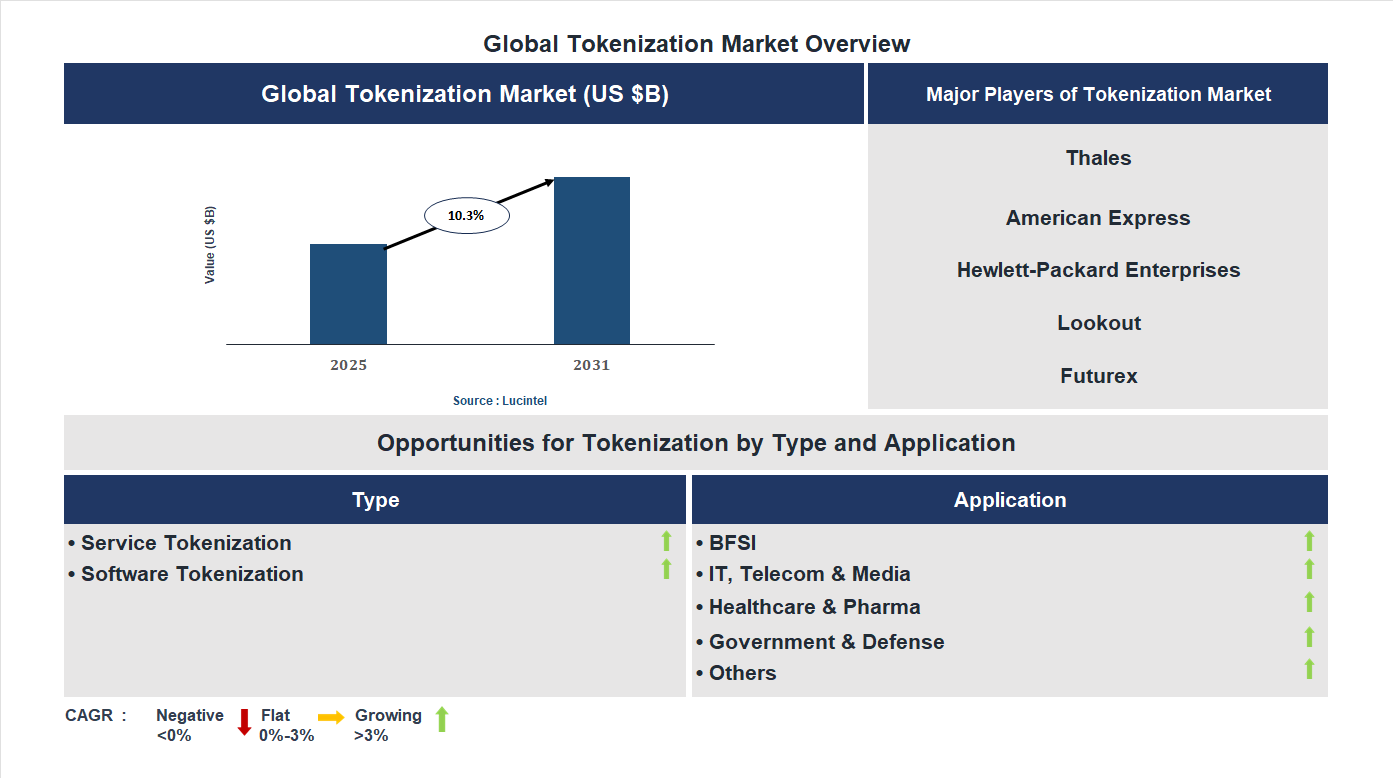
The future of the global tokenization market looks promising with opportunities in the BFSI, IT, telecom & media, healthcare & pharma, and government & defense markets. The global tokenization market is expected to grow with a CAGR of 10.3% from 2025 to 2031. The major drivers for this market are the increasing demand for secure payment methods, the rising adoption of digital financial services, and the growing focus on protecting sensitive data.• Lucintel forecasts that, within the type category, service tokenization is expected to witness higher growth over the forecast period.
• Within the application category, BFSI is expected to witness the highest growth.
• In terms of region, APAC is expected to witness the highest growth over the forecast period. Gain valuable insights for your business decisions with our comprehensive 150+ page report. Sample figures with some insights are shown below.
Emerging Trends in the Tokenization Market
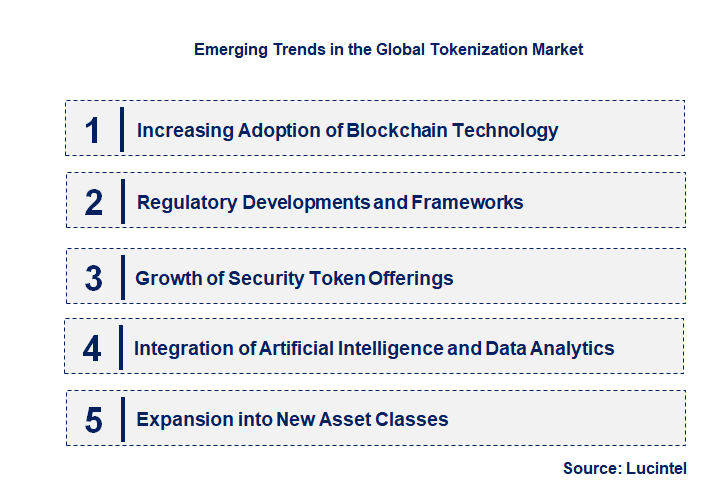
The tokenization market is experiencing rapid growth driven by technological advancements and increasing demand for secure digital transactions. As industries adopt blockchain and digital asset solutions, new opportunities and challenges are emerging. These developments are transforming how assets are managed, transferred, and secured across various sectors, including finance, real estate, and supply chain management. The evolving regulatory landscape and technological innovations are further shaping this market. Understanding these key trends is essential for stakeholders to capitalize on emerging opportunities and navigate potential risks effectively. The following five trends highlight the most significant developments currently influencing the tokenization market.• Increasing Adoption of Blockchain Technology: The widespread integration of blockchain technology is fundamental to tokenization. It provides a secure, transparent, and immutable ledger for digital assets, enhancing trust and efficiency. Financial institutions, real estate firms, and supply chain companies are leveraging blockchain to tokenize assets, reducing transaction costs and settlement times. This trend is driving market expansion by enabling more secure and scalable tokenization solutions, fostering greater investor confidence, and encouraging broader adoption across industries.
• Regulatory Developments and Frameworks: Governments and regulatory bodies are increasingly establishing legal frameworks for tokenized assets. Clear regulations help mitigate risks related to fraud, money laundering, and investor protection, fostering market legitimacy. Progressive policies are encouraging institutional participation and cross-border transactions. However, regulatory uncertainty remains a challenge, requiring market participants to stay adaptable. Overall, evolving regulations are shaping a more structured environment that promotes innovation while ensuring compliance, thus accelerating market growth and investor confidence.
• Growth of Security Token Offerings (STOs): Security Token Offerings are gaining popularity as a compliant alternative to traditional fundraising methods. STOs are regulated, asset-backed tokens that offer investors rights similar to traditional securities. They provide liquidity, fractional ownership, and transparency, making them attractive for both issuers and investors. The rise of STOs is expanding the market beyond cryptocurrencies, attracting institutional investors and large-scale projects. This trend is significantly impacting the market by increasing legitimacy, reducing barriers to entry, and fostering a more mature ecosystem for digital assets.
• Integration of Artificial Intelligence and Data Analytics: AI and data analytics are increasingly being integrated into tokenization platforms to enhance decision-making, risk assessment, and security. These technologies enable real-time monitoring, fraud detection, and personalized investment strategies. AI-driven insights help issuers optimize asset management and improve user experience. As a result, the market benefits from increased efficiency, reduced operational costs, and better compliance. This trend is transforming the tokenization landscape into a more intelligent, data-driven ecosystem that supports scalable and secure digital asset management.
• Expansion into New Asset Classes: The tokenization market is expanding beyond traditional assets like equities and real estate to include commodities, art, intellectual property, and even carbon credits. This diversification opens new revenue streams and investment opportunities, attracting a broader range of participants. Tokenizing diverse assets enhances liquidity, fractional ownership, and global accessibility. It also enables innovative financial products and markets. This trend is reshaping the market by broadening its scope, increasing asset liquidity, and democratizing access to previously illiquid or inaccessible assets. In summary, these trends are collectively transforming the tokenization market into a more secure, regulated, and diversified ecosystem. They are fostering innovation, increasing investor confidence, and expanding the range of assets that can be tokenized. As a result, the market is poised for sustained growth, greater mainstream adoption, and the development of new financial paradigms.
Recent Development in the Tokenization Market
The tokenization market has experienced rapid growth driven by advancements in blockchain technology, increasing security concerns, and the need for efficient digital asset management. As industries adopt tokenization for various applications, market players are innovating to enhance security, scalability, and usability. Regulatory developments and technological innovations are shaping the landscape, making tokenization more accessible and appealing across sectors such as finance, real estate, and supply chain management. These developments are transforming traditional asset management, reducing fraud, and enabling new business models. The evolving ecosystem is attracting investors and stakeholders seeking secure, transparent, and efficient digital solutions.• Adoption of Blockchain Technology: Widespread integration of blockchain has improved transparency and security in tokenization, enabling real-time tracking and reducing fraud risks. This has increased trust among users and facilitated cross-border transactions, expanding market reach and adoption.
• Regulatory Frameworks Development: Governments and regulators are establishing clearer guidelines for tokenized assets, which enhances legal clarity and investor confidence. This reduces compliance risks and encourages institutional participation, accelerating market growth.
• Expansion into Real Estate and Art Sectors: Tokenization of high-value assets like real estate and art has democratized access, increased liquidity, and reduced entry barriers. This diversification attracts new investors and broadens market scope.
• Technological Innovations in Security: Advanced cryptographic techniques and multi-layer security protocols have strengthened asset protection, reducing hacking and theft risks. This boosts user confidence and promotes wider adoption.
• Integration with DeFi Platforms: The incorporation of tokenized assets into decentralized finance platforms has created new lending, borrowing, and trading opportunities. This has increased liquidity and provided innovative financial products, fueling market expansion. In summary, these developments are significantly impacting the tokenization market by enhancing security, regulatory clarity, and asset diversity. They are fostering increased investor confidence, expanding market applications, and driving overall growth. As technological and regulatory landscapes evolve, the market is poised for continued innovation and adoption across multiple sectors.
Strategic Growth Opportunities in the Tokenization Market
The tokenization market is experiencing rapid expansion driven by increasing security concerns, regulatory requirements, and the need for secure digital transactions. As industries adopt advanced security measures, tokenization offers a reliable solution to protect sensitive data across various applications. This growth is further fueled by technological advancements and the rising adoption of digital payment systems, cloud computing, and IoT devices. Key applications such as banking, healthcare, retail, government, and telecommunications are witnessing significant investments in tokenization solutions. These developments are transforming how organizations safeguard data, enhance customer trust, and comply with regulations, ultimately shaping the future landscape of digital security.• Banking and Payments: Enhanced Security and Fraud Prevention : Tokenization reduces the risk of data breaches by replacing sensitive card information with tokens, thereby preventing fraud and ensuring secure transactions. This boosts customer confidence and compliance with PCI DSS standards, leading to increased adoption of tokenization in digital banking and payment platforms.
• Healthcare Data Security: Protecting Sensitive Patient Information : In healthcare, tokenization safeguards electronic health records (EHRs) and patient data from cyber threats. It enables secure sharing of medical information across platforms, ensuring compliance with HIPAA regulations and improving patient privacy and trust.
• Retail and E-commerce: Securing Customer Data and Transactions : Retailers leverage tokenization to protect payment details and personal information during online transactions. This reduces fraud risks, enhances customer experience, and supports compliance with data protection laws, fostering growth in e-commerce.
• Government and Public Sector: Securing Identity and Sensitive Data : Governments utilize tokenization to secure citizen data, identity documents, and voting systems. This enhances national security, reduces identity theft, and ensures compliance with data privacy regulations, strengthening public trust.
• Telecommunications: Protecting Subscriber Data and Communications : Telecom providers adopt tokenization to secure subscriber information, call data, and billing details. This minimizes data breaches, supports regulatory compliance, and enhances service security, driving market growth. In summary, these key growth opportunities across applications are significantly impacting the tokenization market by increasing demand for secure, compliant, and efficient data management solutions. As organizations prioritize data security, the market is poised for sustained expansion, innovation, and broader adoption across industries.
Tokenization Market Driver and Challenges
The tokenization market is influenced by a variety of technological, economic, and regulatory factors that shape its growth and development. Advances in blockchain technology and digital security are pivotal in enabling secure and efficient tokenization processes. Economic factors such as increasing digital asset investments and the rising demand for secure transaction methods further propel the market forward. Regulatory frameworks are evolving to accommodate digital assets, impacting market dynamics positively or negatively depending on compliance requirements. Additionally, technological innovations like smart contracts and decentralized finance (DeFi) platforms are expanding the scope of tokenization. However, challenges such as regulatory uncertainties, security concerns, and technological complexities also pose significant hurdles. Understanding these drivers and challenges is essential for stakeholders to navigate the evolving landscape effectively. The factors responsible for driving the tokenization market include:• Technological Advancements: The rapid development of blockchain technology and smart contracts has revolutionized tokenization by enabling secure, transparent, and efficient digital asset management. These innovations facilitate fractional ownership, reduce transaction costs, and improve liquidity, attracting investors and businesses alike. As technology continues to evolve, the scope of tokenization expands into new asset classes, including real estate, art, and commodities, further fueling market growth. The integration of AI and IoT with blockchain also enhances security and operational efficiency, making tokenization more accessible and reliable for a broader audience.
• Growing Digital Asset Investments: The surge in digital asset investments, including cryptocurrencies and security tokens, has significantly contributed to market expansion. Investors seek diversified portfolios and innovative investment opportunities, which tokenization offers by enabling fractional ownership and easier transferability. The increasing acceptance of digital assets by financial institutions and the rise of institutional investors have added credibility and liquidity to the market. This trend is supported by the global shift towards digital finance, encouraging more entities to adopt tokenization as a means to unlock value and access new markets.
• Regulatory Developments: Evolving regulatory frameworks across different jurisdictions are shaping the tokenization landscape. Clearer regulations provide legal certainty, encouraging more businesses and investors to participate. Governments and regulatory bodies are working to establish standards for security tokens, anti-money laundering (AML), and know-your-customer (KYC) procedures, which enhance trust and compliance. However, inconsistent regulations and uncertainties in some regions can hinder market growth, requiring stakeholders to stay adaptable and proactive in navigating legal complexities.
• Increasing Adoption of Blockchain Technology: The widespread adoption of blockchain technology across various industries is a key driver. Its decentralized nature ensures transparency, security, and immutability, which are critical for tokenization. Industries such as real estate, supply chain, and entertainment are leveraging blockchain to tokenize assets, streamline processes, and reduce fraud. As blockchain infrastructure becomes more robust and scalable, the efficiency and appeal of tokenization increase, attracting more participants and expanding the market scope.
• Strategic Partnerships and Collaborations: Collaborations between technology providers, financial institutions, and regulatory bodies are accelerating market growth. These partnerships facilitate the development of innovative tokenization platforms, improve compliance standards, and expand market reach. For example, alliances with major financial firms lend credibility and foster trust among investors. Such collaborations also promote standardization and interoperability, making tokenized assets more accessible and easier to trade across platforms, thereby boosting overall market adoption. The challenges facing this tokenization market include:
• Regulatory Uncertainty: The lack of comprehensive and consistent regulations across regions creates significant hurdles. Unclear legal frameworks can lead to compliance risks, legal disputes, and hesitations among investors and businesses. Rapid technological changes often outpace regulatory updates, resulting in a gray area that hampers innovation and market expansion. Companies may face difficulties in navigating varying requirements, which can delay product launches and limit cross-border transactions. Addressing regulatory uncertainty requires ongoing dialogue between stakeholders and policymakers to develop balanced, clear, and adaptable frameworks.
• Security Concerns and Fraud Risks: Despite blockchain’s inherent security features, vulnerabilities such as hacking, smart contract bugs, and phishing attacks pose serious threats. The loss of digital assets due to security breaches undermines investor confidence and can lead to significant financial losses. Additionally, fraudulent schemes and scams exploiting the nascent market can deter new participants. Ensuring robust cybersecurity measures, regular audits, and user education are essential to mitigate these risks. Without adequate security protocols, the market’s credibility and long-term sustainability remain at risk.
• Technological Complexity and Scalability Issues: The complexity of blockchain technology and the current limitations in scalability hinder widespread adoption. High transaction fees, slow processing times, and interoperability issues between different blockchain platforms can restrict user experience and limit the volume of transactions. Developing user-friendly interfaces and scalable solutions requires significant investment and innovation. Overcoming these technological challenges is crucial for enabling mass adoption of tokenization, especially for high-value or high-frequency transactions, and for expanding the market into new asset classes and industries. In summary, the tokenization market is driven by technological innovations, increasing digital asset investments, evolving regulations, blockchain adoption, and strategic collaborations. However, it faces challenges such as regulatory uncertainty, security risks, and technological complexities. These factors collectively influence the market’s growth trajectory, requiring stakeholders to adapt proactively. While opportunities for expansion are substantial, addressing the challenges is essential to ensure sustainable development and widespread acceptance of tokenized assets. The market’s future will depend on how effectively these drivers are leveraged and challenges mitigated to foster a secure, compliant, and innovative environment.
List of Tokenization Companies
Companies in the market compete on the basis of product quality offered. Major players in this market focus on expanding their manufacturing facilities, R&D investments, infrastructural development, and leverage integration opportunities across the value chain. With these strategies tokenization companies cater increasing demand, ensure competitive effectiveness, develop innovative products & technologies, reduce production costs, and expand their customer base. Some of the tokenization companies profiled in this report include-• Thales
• American Express
• Hewlett-Packard Enterprises
• Lookout
• Futurex
• Protegrity
• IXOPAY
• Fiserv
• Global Payments
• Visa
Tokenization Market by Segment
The study includes a forecast for the global tokenization market by type, application, and region.Tokenization Market by Type [Value from 2019 to 2031]:
• Service Tokenization
• Software Tokenization
Tokenization Market by Application [Value from 2019 to 2031]:
• BFSI
• IT, Telecom & Media
• Healthcare & Pharma
• Government & Defense
• Others
Tokenization Market by Region [Value from 2019 to 2031]:
• North America
• Europe
• Asia Pacific
• The Rest of the World
Country Wise Outlook for the Tokenization Market
The tokenization market has experienced rapid growth driven by increasing demand for enhanced security, digital transformation, and the adoption of blockchain technology across various sectors. As organizations seek to protect sensitive data and streamline transactions, tokenization solutions are becoming integral to financial services, healthcare, and retail industries. Technological advancements, regulatory developments, and expanding use cases are shaping the landscape in key regions. The United States, China, Germany, India, and Japan are leading the way with innovative initiatives and strategic investments, reflecting their commitment to leveraging tokenization for secure and efficient digital ecosystems.• United States: The US market has seen significant growth with major financial institutions adopting tokenization for secure payments and data protection. Fintech startups are innovating with blockchain-based solutions, and regulatory frameworks are evolving to support digital asset security. The adoption of tokenization in healthcare for patient data privacy and in retail for secure transactions is also expanding rapidly.
• China: China is focusing on integrating tokenization within its digital yuan ecosystem, enhancing digital currency security and transaction efficiency. The government promotes blockchain technology for supply chain management and financial services, with several pilot projects underway. The market is driven by strong governmental support and increasing enterprise adoption of tokenization solutions.
• Germany: Germany emphasizes regulatory compliance and data privacy in its tokenization initiatives. Financial institutions are adopting tokenization for secure asset management and cross-border transactions. The country is also exploring blockchain applications in manufacturing and logistics, fostering innovation through public-private partnerships and research initiatives.
• India: India is witnessing rapid adoption of tokenization in banking and financial services, driven by government initiatives like Digital India. Startups are developing blockchain-based solutions for secure identity verification and payments. The regulatory environment is evolving to facilitate safe and scalable tokenization practices, with increasing interest from large corporations.
• Japan: Japan is advancing tokenization in the context of digital currencies and asset management. The country’s fintech sector is integrating tokenization for secure trading and settlement processes. Regulatory clarity and government support are fostering innovation, with several pilot projects exploring blockchain-based tokenization for real estate and supply chain management.

Features of the Global Tokenization Market
Market Size Estimates: Tokenization market size estimation in terms of value ($B). Trend and Forecast Analysis: Market trends (2019 to 2024) and forecast (2025 to 2031) by various segments and regions. Segmentation Analysis: Tokenization market size by type, application, and region in terms of value ($B). Regional Analysis: Tokenization market breakdown by North America, Europe, Asia Pacific, and Rest of the World. Growth Opportunities: Analysis of growth opportunities in different types, applications, and regions for the tokenization market. Strategic Analysis: This includes M&A, new product development, and competitive landscape of the tokenization market. Analysis of competitive intensity of the industry based on Porter’s Five Forces model.
FAQ
Q1. What is the growth forecast for tokenization market? Answer: The global tokenization market is expected to grow with a CAGR of 10.3% from 2025 to 2031. Q2. What are the major drivers influencing the growth of the tokenization market? Answer: The major drivers for this market are the increasing demand for secure payment methods, the rising adoption of digital financial services, and the growing focus on protecting sensitive data. Q3. What are the major segments for tokenization market? Answer: The future of the tokenization market looks promising with opportunities in the BFSI, IT, telecom & media, healthcare & pharma, and government & defense markets. Q4. Who are the key tokenization market companies? Answer: Some of the key tokenization companies are as follows:• Thales
• American Express
• Hewlett-Packard Enterprises
• Lookout
• Futurex
• Protegrity
• IXOPAY
• Fiserv
• Global Payments
• Visa Q5. Which tokenization market segment will be the largest in future? Answer: Lucintel forecasts that, within the type category, service tokenization is expected to witness higher growth over the forecast period. Q6. In tokenization market, which region is expected to be the largest in next 5 years? Answer: In terms of region, APAC is expected to witness the highest growth over the forecast period. Q7. Do we receive customization in this report? Answer: Yes, Lucintel provides 10% customization without any additional cost.
Table of Contents
List of Figures
List of Tables
Methodology
- In-depth interviews of the major players in this market
- Detailed secondary research from competitors’ financial statements and published data
- Extensive searches of published works, market, and database information pertaining to industry news, company press releases, and customer intentions
- A compilation of the experiences, judgments, and insights of Lucintel’s professionals, who have analyzed and tracked this market over the years.


Buy Now
Choose a license that fits your team. Instant PDF delivery.
Prices exclude taxes. Instant delivery. Custom licensing available on request.
Key Questions
- • What are some of the most promising, high-growth opportunities for the tokenization market by type (service tokenization and software tokenization), application (BFSI, IT, telecom & media, healthcare & pharma, government & defense, and others), and region (North America, Europe, Asia Pacific, and the Rest of the World)?
- • Which segments will grow at a faster pace and why?
- • Which region will grow at a faster pace and why?
- • What are the key factors affecting market dynamics? What are the key challenges and business risks in this market?
- • What are the business risks and competitive threats in this market?
- • What are the emerging trends in this market and the reasons behind them?
- • What are some of the changing demands of customers in the market?
- • What are the new developments in the market? Which companies are leading these developments?
- • Who are the major players in this market? What strategic initiatives are key players pursuing for business growth?
- • What are some of the competing products in this market and how big of a threat do they pose for loss of market share by material or product substitution?
- • What M&A activity has occurred in the last 5 years and what has its impact been on the industry? For any questions related to Tokenization Market, Tokenization Market Size, Tokenization Market Growth, Tokenization Market Analysis, Tokenization Market Report, Tokenization Market Share, Tokenization Market Trends, Tokenization Market Forecast, Tokenization Companies, write Lucintel analyst at email: helpdesk@lucintel.com. We will be glad to get back to you soon.


