
Market Report · July 16, 2026

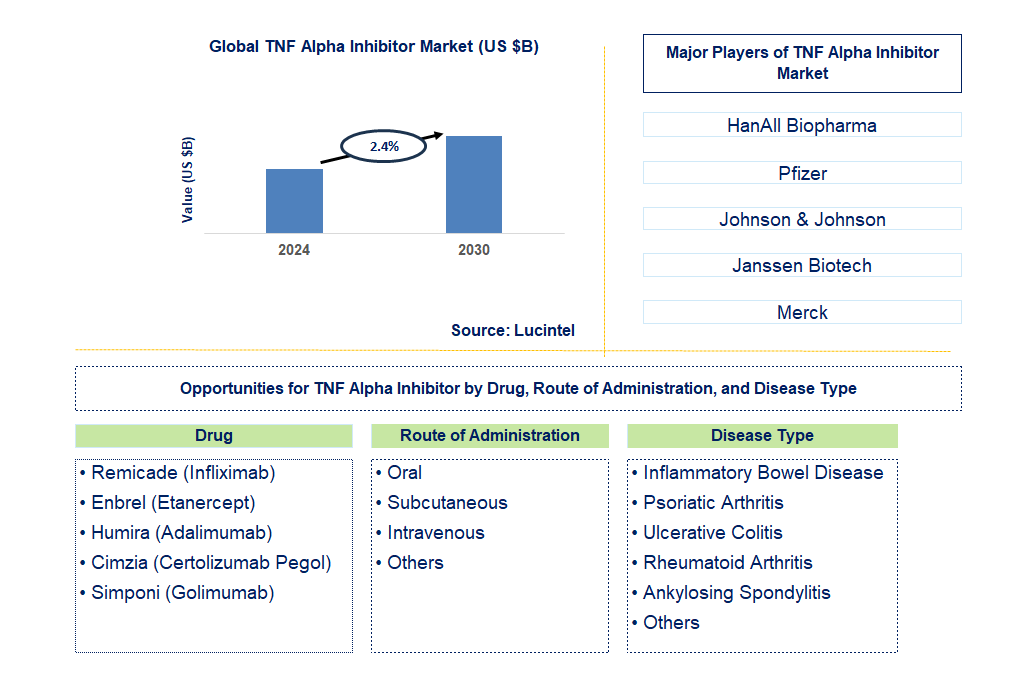
Key data points: The growth forecast = 2.4% annually for the next 6 years. Scroll below to get more insights. This market report covers trends, opportunities, and forecast in the global TNF alpha inhibitor market to 2030 by drug (remicade (infliximab), enbrel (etanercept), humira (adalimumab), cimzia (certolizumab pegol), and simponi (golimumab)), route of administration (oral, subcutaneous, intravenous, and others), disease type (inflammatory bowel disease, psoriatic arthritis, ulcerative colitis, rheumatoid arthritis, ankylosing spondylitis, and others), and region (North America, Europe, Asia Pacific, and the Rest of the World)
We'll send your sample report shortly.
• Lucintel forecasts that, within the drug category, Remicade (infliximab) is expected to witness the highest growth over the forecast period.
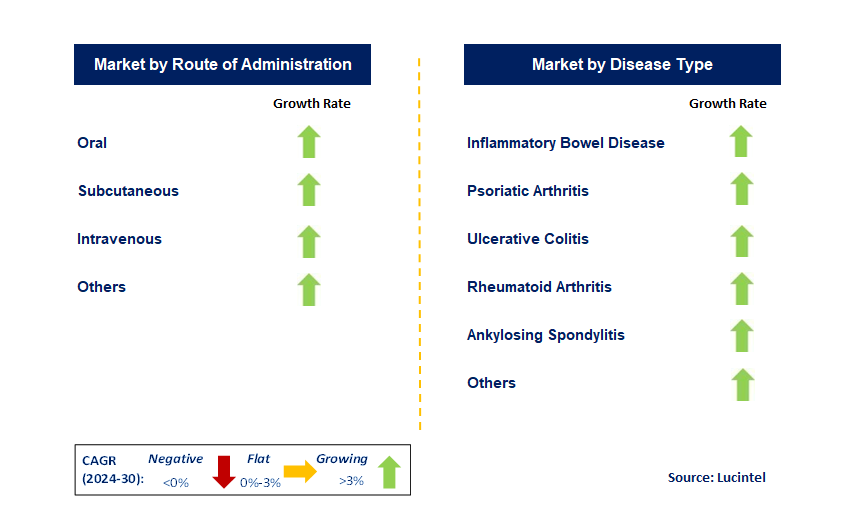
• Within the type category, inflammatory bowel disease is expected to witness the highest growth over the forecast period.
• In terms of regions, North America will remain the largest region over the forecast period. A more than 150-page report is developed to help in your business decisions.
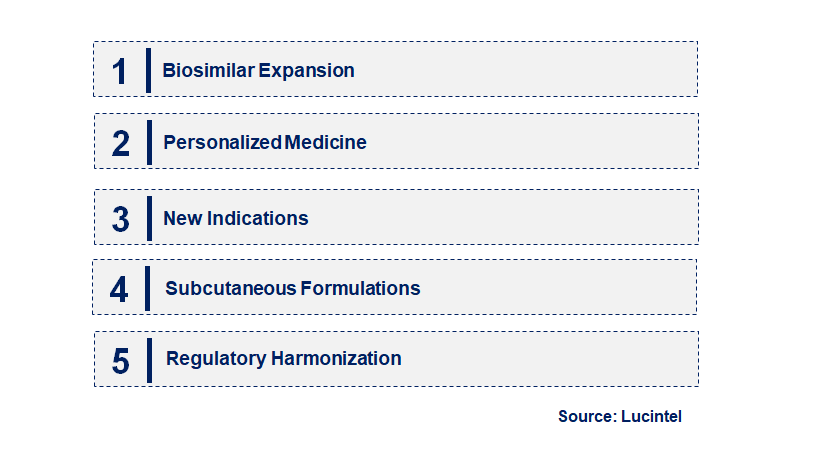
• Biosimilar Expansion: The global expansion of TNF alpha inhibitors is leading to lower treatment costs and better access, especially in emerging markets. This trend promotes competition, which reduces prices, making treatments more accessible for chronic conditions.
• Personalized Medicine: Advancements in genetic testing and biomarkers are driving personalized approaches to TNF-alpha inhibitor therapy. This helps optimize therapeutic efficacy and patient outcomes by tailoring therapies to individual patient profiles.
• New Indications: Ongoing research is expanding the therapeutic applications of TNF alpha inhibitors beyond traditional autoimmune diseases, including dermatology and oncology. This creates novel market opportunities and drives innovation in drug development.
• Subcutaneous Formulations: The advent of subcutaneous forms of TNF-alpha inhibitors has increased patient convenience and medication adherence. This is particularly important for chronic diseases, where long-term treatment is required, and patient compliance is crucial for improving overall well-being.
• Regulatory Harmonization: Efforts to harmonize regional regulatory frameworks have streamlined the approval process for TNF alpha inhibitors. This has sped up the time-to-market for new products and biosimilars globally. All of these trends are shaping the TNF alpha inhibitor market in terms of accessibility, personalization, and convenience, while also driving innovation and competition in global healthcare.
• Biosimilar Approvals: Approved TNF-alpha inhibitors in the US and Europe have intensified competition, leading to lower treatment costs and broader patient access, especially for conditions such as rheumatoid arthritis and psoriasis.
• Reforms by China’s Regulatory Agency: China’s regulatory reforms have expedited the approval and commercialization of both originators and biosimilars of TNF alpha inhibitors, enhancing local production capabilities and reducing dependence on imports.
• New Indications in Germany: In Germany, there is an increasing number of new indications for which approval has been granted to use TNF alpha inhibitors, including non-rheumatic inflammatory diseases. These innovations broaden the clinical usefulness of TNF alpha inhibitors.
• India’s Market Expansion: The rapid introduction of affordable TNF alpha inhibitors in India, driven by the country's growing pharmaceutical industry, has improved access to these drugs for rural populations with low incomes, addressing unmet medical needs. These strides will significantly transform the future direction of markets for critical medications like TNF alpha inhibitors, making them more affordable and accessible in a shorter period, and expanding their reach to more areas.
• Autoimmune Disease Management: The increased use of TNF-alpha inhibitors in managing autoimmune diseases such as rheumatoid arthritis and psoriasis presents a major growth opportunity. These therapies improve patients' quality of life while decelerating the progression of the diseases.
• Inflammatory Bowel Disease (IBD): The rising incidence of IBD, including Crohn’s disease and ulcerative colitis, has spurred demand for TNF alpha inhibitors. This area offers substantial growth potential, especially with the development of new formulations and delivery methods.
• Pediatric Applications: Research into TNF alpha inhibitors for pediatric use could expand therapeutic options for children diagnosed with chronic illnesses who would otherwise be excluded from treatments under conventional “adults-only” guidelines. Increasing approvals for pediatric use could enhance outcomes in this specialty.
• Combination Therapies: TNF alpha inhibitors can have enhanced efficacy when paired with other biologics or small molecules. Future market expansion may be driven by this innovative approach, with partnerships between larger brands and smaller companies developing tailored solutions for improved treatment experiences.
• Emerging Markets: In developing economies, where the incidence of autoimmune diseases and inflammatory conditions is increasing, low-cost biosimilars are likely to capture market share. Expanding access to these therapies in emerging markets will drive growth. These strategies will broaden the market for TNF alpha inhibitors, spark innovation, and provide greater access to therapies, addressing the medical needs of patients who are not fully served by existing treatments.
• HanAll Biopharma
• Pfizer
• Johnson & Johnson
• Janssen Biotech
• Merck
• AbbVie
• Novartis International
• Sanofi
• AstraZeneca
• GlaxoSmithKline
• Remicade (Infliximab)
• Enbrel (Etanercept)
• Humira (Adalimumab)
• Cimzia (Certolizumab Pegol)
• Simponi (Golimumab)
• Oral
• Subcutaneous
• Intravenous
• Others
• Inflammatory Bowel Disease
• Psoriatic Arthritis
• Ulcerative Colitis
• Rheumatoid Arthritis
• Ankylosing Spondylitis
• Others
• North America
• Europe
• Asia Pacific
• The Rest of the World
• United States: In the US, approval of TNF alpha inhibitors has led to increased competition and reduced costs. These developments are improving access for patients, particularly for chronic diseases like rheumatoid arthritis and Crohn’s disease, while driving innovation in delivery mechanisms and formulation improvements.
• China: Regulatory reforms in China have fast-tracked the approval process for TNF alpha inhibitors, resulting in the launch of both local and international products. The focus is on affordability and increasing the accessibility of biological therapies for autoimmune conditions, with an emphasis on locally produced drugs.
• Germany: Biosimilar adoption in Germany has been strong, driven by favorable reimbursement policies. Recent advances include expanding the indications for existing drugs, backed by substantial clinical evidence, thereby enhancing their integration into treatment protocols.
• India: India has become a major manufacturer of low-cost TNF alpha inhibitors, with several biosimilars already available in the market. Pharmaceutical regulations have been streamlined, and efforts are now focused on improving the distribution of these treatments in rural areas and other underserved populations.
• Japan: Japan is seeing transformation in the TNF alpha inhibitor market through the development of biosimilars and novel formulations. Recent government initiatives are promoting the use of biosimilars as cost-saving alternatives. Clinical trials are ongoing to expand the therapeutic applications of TNF alpha inhibitors in Japan.


• HanAll Biopharma
• Pfizer
• Johnson & Johnson
• Janssen Biotech
• Merck
• AbbVie
• Novartis International
• Sanofi
• AstraZeneca
• GlaxoSmithKline Q5. Which TNF alpha inhibitor market segment will be the largest in the future? Answer: Lucintel forecasts that Remicade (infliximab) is expected to witness the highest growth over the forecast period. Q6. In the TNF alpha inhibitor market, which region is expected to be the largest in the next 5 years? Answer: North America will remain the largest region over the forecast period. Q7. Do we receive customization in this report? Answer: Yes, Lucintel provides 10% customization without any additional cost.


Choose a license that fits your team. Instant PDF delivery.
Prices exclude taxes. Instant delivery. Custom licensing available on request.
Market Report · July 16, 2026
Market Report · July 15, 2026
Market Report · July 15, 2026
Trusted partner for strategic intelligence and business growth


Receive a complimentary market analysis tailored to your industry. Our analysts will identify key growth opportunities and competitive dynamics specific to your business.

Market size, growth rate, and key trend analysis for your specific sector.

Top competitor positioning and market share analysis.

Strategic recommendations backed by data-driven insights.
Get curated market intelligence and competitive moves straight to your inbox.
By subscribing, you agree to receive our monthly insights. Unsubscribe anytime.
Receive a complimentary market analysis tailored to your industry. Our analysts will identify key growth opportunities and competitive dynamics specific to your business.
Market size, growth rate, and key trend analysis for your specific sector.
Top competitor positioning and market share analysis.
Strategic recommendations backed by data-driven insights.
Get curated market intelligence, emerging trends, and competitive moves straight to your inbox each month.
By subscribing, you agree to receive our monthly insights. Unsubscribe anytime.
We'll send your sample report shortly.