
Market Report · July 24, 2026

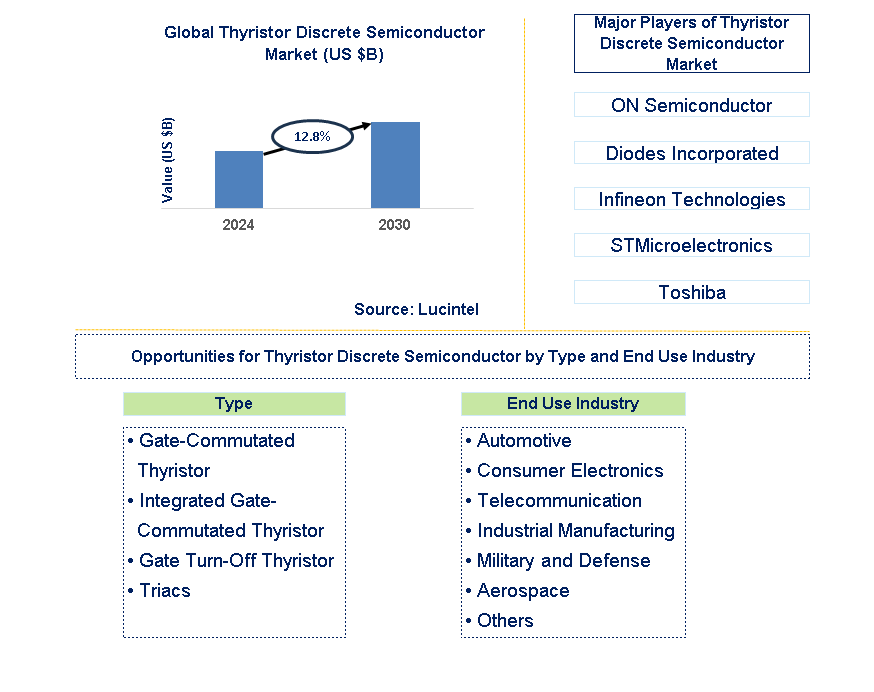
Key data points: The growth forecasts = 12.8% annually for the next 6 years. Scroll below to get more insights. This market report covers trends, opportunities, and forecasts in the global thyristor discrete semiconductor market to 2030 by type (gate-commutated thyristor, integrated gate-commutated thyristor, gate turn-off thyristor, and triacs), end use industry (automotive, consumer electronics, telecommunication, industrial manufacturing, military and defense, aerospace, and others), and region (North America, Europe, Asia Pacific, and the Rest of the World)
We'll send your sample report shortly.
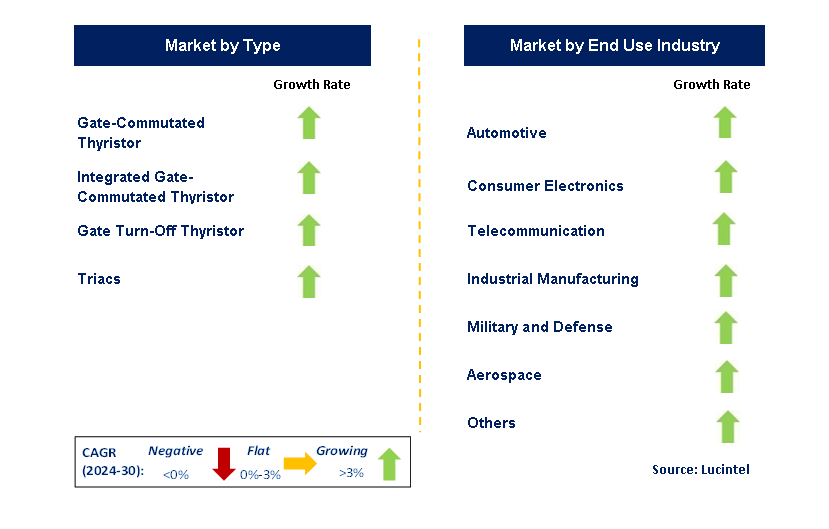
• Lucintel forecasts that, within the type category, gate turn-off thyristor is expected to witness the highest growth over the forecast period due to its high-voltage direct current (hvdc) transmission.
• Within the end use category, automotive will remain the largest segment due to growing innovations such as autonomous car technology and regenerative car breaking and active integration of multitude of sensors.
• In terms of regions, APAC is expected to witness the highest growth over the forecast period due to growing demand for automotive sector. Gain Valuable insights for your business decisions with our comprehensive 150+ page report.
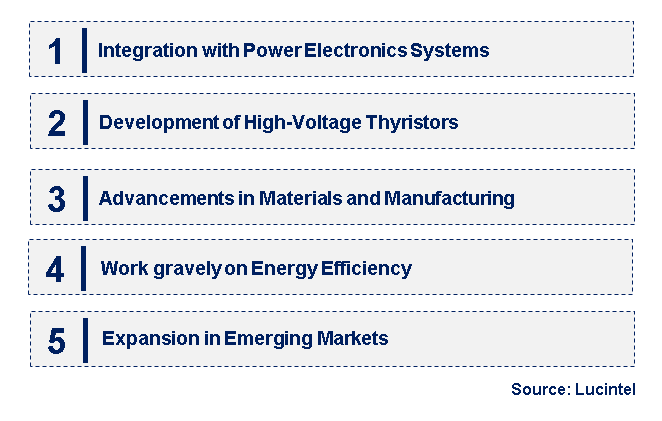
• Integration with Power Electronics Systems: Thyristors are now integral to advanced systems such as smart grids and renewable energy systems, which increasingly require power electronics. The operational aspects of power control and distribution are also made more effective and dependable through this integration. A prevailing trend is the improvement of electrical efficiency in power management systems, making thyristor-semiconductor integration a reality.
• Development of High-Voltage Thyristors: Another trend in thyristor development is the increase in voltage ratings, driven by the demand for effective power management in industrial processes and energy applications. High-voltage thyristors are designed to handle larger power loads, which are necessary for replacing aging electricity systems and adopting renewable energy sources.
• Advancements in Materials and Manufacturing: Progressive developments in materials science and manufacturing processes are enhancing the functionality of thyristors. The materials used now possess better properties, and newer fabrication techniques focus more effectively on heat management, switching kinetics, and reliability. The development of thick-film multilayer ceramic capacitors that can withstand harsh conditions for automotive and industrial applications is among the significant achievements.
• Focus on Energy Efficiency: There is a strong emphasis on energy efficiency in the thyristor discrete semiconductor industry. Manufacturers are producing energy-efficient and low-power-loss thyristors that meet the requirements of global energy-saving technologies. This facilitates the use of thyristors in end-use applications where energy conservation while enhancing system performance is crucial.
• Expansion in Emerging Markets: A critical development is the initiative by manufacturers to expand into emerging markets, particularly in regions such as Asia-Pacific and Latin America. These regions are currently undergoing rapid industrialization and infrastructure development, creating a demand for effective and affordable thyristor solutions. Market players are actively seeking opportunities in these areas to achieve returns and establish a presence in the international market. New directions in the development of the thyristor discrete semiconductor market, such as integration with power electronics systems, high-voltage thyristor fabrication, and material enhancements, are changing market dynamics. Emphasis on energy conservation in existing production processes and entry into emerging markets are additional factors driving current market development and innovations in the power electronics industry.
• High-Voltage Thyristors Introduced: The introduction of high-voltage thyristors has been significant, allowing better handling of high-power applications in industries and the energy sector. High-power thyristor devices are designed for switching higher voltages, improving the quality and reliability of power system control to support and enhance electrical systems and renewable energy facilities.
• Thermal Management Developments: Recent advancements in thermal management systems for thyristors have increased their effectiveness and longevity. New cooling systems and materials aimed at reducing heat are being adopted to prevent overheating and thus extend the operational life of thyristors. This advancement is crucial in systems where consistent performance and high reliability are essential.
• Miniaturization of Thyristors: Miniaturization of thyristors is increasing the demand for smaller components in advanced electronic and automotive devices. These smaller thyristors offer the same performance as larger ones but can be easily accommodated in volume-limited designs. This trend enhances the miniaturization of gadgets and modern automotive systems.
• Integration with Smart Grid Technologies: The trend of incorporating new management technologies in thyristors is set to continue. The redistribution of power under this method depends on net sales, order volume, and internal production capabilities. This trend reflects a growing movement towards "smart" grids and innovative systems for managing energy.
• Focus on Cost-Effective Solutions: Developing cost-effective thyristor products has become essential for both local and export markets. There is a strong push to reduce production costs without sacrificing quality and performance. Despite the sector's high customization, these thyristors are becoming widely used in automotive, industrial, consumer electronics, and other fields. These principal trends will reshape the thyristor discrete semiconductor market in innovative ways, extending services and improving quality. Trends such as high-voltage thyristor improvement, thermal management, miniaturization, integration into smart grids, and cost-effective designs are currently determining market requirements.
• Automotive Power Control: The automotive industry, particularly with electric vehicles (EVs) and advanced driver-assistance systems (ADAS), represents a growing market for thyristors. Their application in power management and motor control systems enhances efficiency and reliability. The automotive industry's growth creates more opportunities for high-power thyristors in these applications.
• Renewable Energy Integration: Another growth area is the integration of thyristors in renewable energy systems, such as wind and solar. In energy management systems, thyristors are utilized for power flow control and stability. As the demand for renewable energy and sustainable practices increases, sophisticated thyristor-based devices are also needed for these applications.
• Industrial Automation Applications: This market is expanding due to increasing applications of thyristor technologies in industrial automation. This sector is one of the fastest-growing areas due to the need for effective and accurate power control during industrial processes. Industries utilizing thyristors include motor drives, heating, and process control, where they serve critical functions. The trend towards increased automation creates favorable conditions for the thyristor market's growth.
• Consumer Electronics: The consumer electronics sector, particularly through the electronic devices market, is also a significant segment for thyristors. This is especially true in areas where space and power control requirements are low to medium, promoting convenience and efficiency. Thyristors are applied in various environments, including smart mobile devices, tablets, domestic appliances, and home electronics. As the electronics industry evolves, the demand for high-performance thyristors in these products continues to rise.
• Smart Grid Technologies: Thyristors in power distribution and control systems have opportunities stemming from the emergence of smart grid technologies. They are used for efficient power flow control in grid systems and ensuring grid stability. The development of smart grids and advanced energy management systems intensifies the need for thyristor-based systems. In various applications, including automotive control, renewable energy integration, industrial automation, electronics, and smart grid design, strategic growth opportunities are emerging in the thyristor discrete semiconductor market. These innovations are driven by technological advancements and industry needs, presenting significant growth prospects.
• Technological Advancements: A primary factor propelling the thyristor discrete semiconductor market is the constant advancement in the design and engineering of semiconductor devices. New materials, such as silicon carbide (SiC) and gallium nitride (GaN), have improved thyristor capabilities and efficiency. The manufacture of precision and miniaturized components has enabled the production of better and more reliable parts. The emergence of these technologies expands applications in power control, industrial automation, and renewables, fueling the demand for superior thyristors.
• Increased Demand in the Automotive Sector: In the automotive sector, particularly with the introduction of electric vehicles (EVs) and advanced driver-assistance systems (ADAS), the demand for thyristors is rising. Thyristors are essential components in modern vehicles for power distribution, motor control, and battery management systems. The development of automotive technologies and hybrid drives also increases the demand for high-quality, high-efficiency thyristors, making this industry a significant driving force in the market.
• Expansion of Renewable Energy Projects: The growing number of renewable energy projects, especially solar and wind, is a key growth factor for the thyristor discrete semiconductor market. Thyristors facilitate effective control of varying power sources through power conditioning and management systems, stabilizing the power grid. The global trend towards renewable energy is increasing the demand for efficient and reliable thyristor solutions, boosting this market sector. Challenges in the thyristor discrete semiconductor market include:
• High Production Costs: Fabricating high-quality thyristors involves considerable costs for materials, fabrication procedures, and quality control programs. These expenses can lead to high unit costs, making devices unaffordable in some markets. Achieving an optimal balance of cost and performance is necessary to remain competitive and address cost-effectiveness issues.
• Complex Regulatory Compliance: A significant challenge is the difficulty posed by various governmental regulations concerning semiconductors. Meeting diverse standards for different countries can be costly and may affect market penetration and business operations. Thyristor manufacturers must comply with safety, environmental, and industrial requirements despite the complexities involved.
• Competition from Alternative Technologies: While the industry primarily focuses on thyristor discrete semiconductors, other technologies, such as IGBTs and MOSFETs, are often more efficient in terms of switching speed and cost. As a result, thyristor manufacturers must continue improving their technologies to retain market competitiveness despite this competition. Additionally, the thyristor discrete semiconductor industry faces drivers such as advanced imaging technologies, increasing development programs supporting the automotive industry, the adoption of sustainable energy, and new market trends. However, challenges like production difficulties, regulatory compliance costs, and competition from alternative technologies must be addressed. Reconciling these issues is essential to capitalize on growth prospects while keeping pace with advancements in the semiconductor industry.
• ON Semiconductor
• Diodes Incorporated
• Infineon Technologies
• STMicroelectronics
• Toshiba
• Mitsubishi Electric
• Fuji Electric
• Vishay Intertechnology
• ROHM Semiconductor
• Littelfuse
• Gate-Commutated Thyristor
• Integrated Gate-Commutated Thyristor
• Gate Turn-Off Thyristor
• Triacs
• Automotive
• Consumer Electronics
• Telecommunication
• Industrial Manufacturing
• Military And Defense
• Aerospace
• Others
• North America
• Europe
• Asia Pacific
• The Rest of the World
• United States: In the U.S. thyristor discrete semiconductor market, recent developments include the launch of high-voltage and high-current thyristors used in modern power systems and alternative energy sources. Companies are enhancing thermal management and improving efficiency to meet the increasing demands for reliable power electronics. Additionally, there is a rise in resources allocated to expanding and developing new methods for improving thyristor technology, particularly in electric vehicles and smart grids.
• China: The thyristor discrete semiconductor market in China is experiencing significant growth as the country develops its production capabilities while transitioning towards industrial automation and the consumer electronics industry. Local companies are improving the manufacture of high-quality thyristors to meet the needs of the expanding electronics industry and construction projects. There is also a trend towards manufacturing cost-effective, low-power-consuming thyristors for local and export markets, aligning with China policies on technology independence and innovation.
• Germany: In Germany, advancements in passive cooling heatsink configurations are positively impacting semiconductor technology capabilities. German manufacturers are developing new materials that are less sensitive to wear and provide superior characteristics for sophisticated industrial processes and renewable energy integration. The trend towards high precision and quality is expanding, driven by the traditions of the German industry and the automotive sector, which require high-quality components for high-end applications.
• India: The thyristor discrete semiconductor industry in India has recently seen local manufacturing expansions and the incorporation of advanced thyristor technologies in power electronics and industrial automation. There is increasing demand for performance-oriented and durable thyristors, spurred by the Indian government’s push for smart grid development and infrastructure enhancement. Additionally, Indian firms are emphasizing cost-effective products for both local and export markets, highlighting India's growing importance in the global semiconductor value chain.
• Japan: Japan is making significant innovations in the thyristor discrete semiconductor market to ensure that thyristors perform better in high-tech applications. Japanese companies are producing high-voltage and high-frequency thyristors to support advanced power systems and renewable energy solutions. As a strong player in the electronics and automotive industries, Japan focuses on ensuring thyristors are integrated into new technologies, such as electric and hybrid vehicles.


• ON Semiconductor
• Diodes Incorporated
• Infineon Technologies
• STMicroelectronics
• Toshiba
• Mitsubishi Electric
• Fuji Electric
• Vishay Intertechnology
• ROHM Semiconductor
• Littelfuse Q5. Which thyristor discrete semiconductor market segment will be the largest in future? Answer: Lucintel forecasts that gate turn-off thyristor is expected to witness highest growth over the forecast period due to its high-voltage direct current (hvdc) transmission. Q6. In thyristor discrete semiconductor market, which region is expected to be the largest in next 5 years? Answer: APAC is expected to witness highest growth over the forecast period due to growing demand for automotive sector. Q.7 Do we receive customization in this report? Answer: Yes, Lucintel provides 10% customization without any additional cost.


Choose a license that fits your team. Instant PDF delivery.
Prices exclude taxes. Instant delivery. Custom licensing available on request.
Market Report · July 24, 2026
Market Report · July 20, 2026
Market Report · July 20, 2026
Trusted partner for strategic intelligence and business growth


Receive a complimentary market analysis tailored to your industry. Our analysts will identify key growth opportunities and competitive dynamics specific to your business.

Market size, growth rate, and key trend analysis for your specific sector.

Top competitor positioning and market share analysis.

Strategic recommendations backed by data-driven insights.
Get curated market intelligence and competitive moves straight to your inbox.
By subscribing, you agree to receive our monthly insights. Unsubscribe anytime.
Receive a complimentary market analysis tailored to your industry. Our analysts will identify key growth opportunities and competitive dynamics specific to your business.
Market size, growth rate, and key trend analysis for your specific sector.
Top competitor positioning and market share analysis.
Strategic recommendations backed by data-driven insights.
Get curated market intelligence, emerging trends, and competitive moves straight to your inbox each month.
By subscribing, you agree to receive our monthly insights. Unsubscribe anytime.
We'll send your sample report shortly.