
Report Feature
Thermostatic Wax Market Trends and Forecast
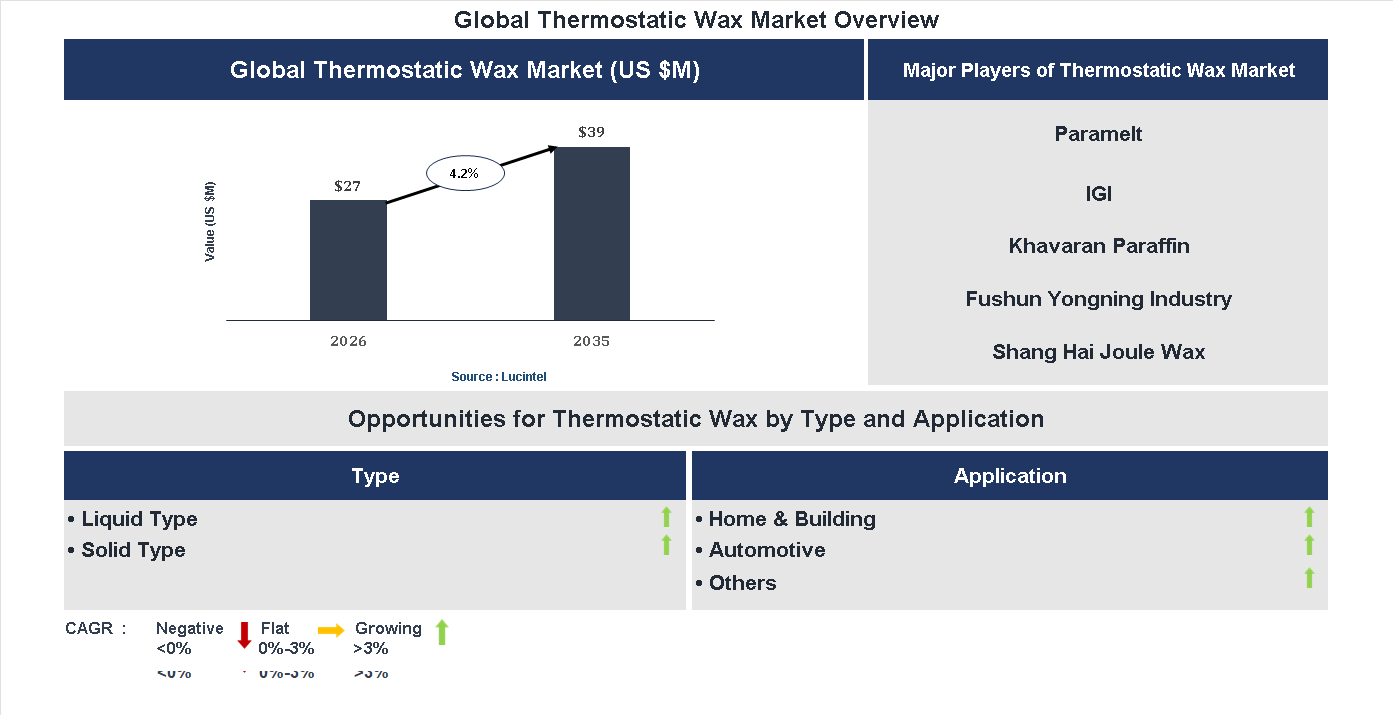
The future of the global thermostatic wax market looks promising with opportunities in the home & building and automotive markets. The global thermostatic wax market is expected to reach an estimated $39 million by 2035 with a CAGR of 4.2% from 2026 to 2035. The major drivers for this market are the increasing demand for temperature control systems, the rising use in automotive thermal management, and the growing adoption in industrial thermostat devices.• Lucintel forecasts that, within the type category, liquid type is expected to witness higher growth over the forecast period.
• Within the application category, automotive is expected to witness higher growth.
• In terms of region, APAC is expected to witness the highest growth over the forecast period. Gain valuable insights for your business decisions with our comprehensive 150+ page report. Sample figures with some insights are shown below.
Emerging Trends in the Thermostatic Wax Market
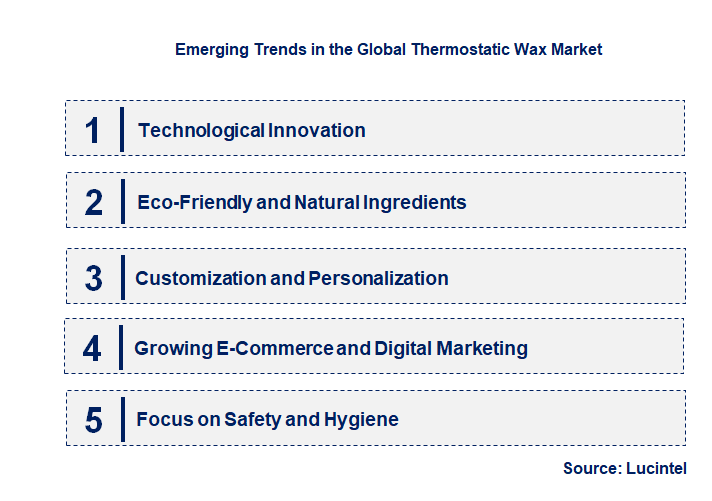
The thermostatic wax market is experiencing rapid evolution driven by technological advancements, changing consumer preferences, and increasing demand for personalized and efficient hair removal solutions. As consumers seek more convenient, sustainable, and innovative products, market players are investing in research and development to meet these needs. The integration of smart technology, eco-friendly ingredients, and customization options are shaping the future landscape of this industry. These emerging trends are not only enhancing product offerings but also redefining consumer engagement and market dynamics, leading to a more competitive and innovative environment. Understanding these key trends is essential for stakeholders aiming to capitalize on growth opportunities in this evolving market.• Technological Innovation: The integration of smart and digital features in thermostatic wax devices is transforming user experience. Advanced temperature control, app connectivity, and automated dispensing systems enable precise application and improved safety. These innovations increase convenience, reduce waste, and enhance overall effectiveness, attracting tech-savvy consumers. As technology continues to evolve, the market is expected to see more sophisticated devices that offer personalized settings and real-time feedback, making hair removal more efficient and user-friendly.
• Eco-Friendly and Natural Ingredients: Consumers are increasingly prioritizing sustainability and natural products. The demand for eco-friendly wax formulations with organic, biodegradable ingredients is rising. Manufacturers are responding by developing products that minimize environmental impact while maintaining high performance. This trend not only appeals to environmentally conscious consumers but also aligns with global sustainability initiatives, encouraging brands to innovate with plant-based, cruelty-free, and recyclable packaging, thereby strengthening brand loyalty and expanding market share.
• Customization and Personalization: The market is shifting towards tailored hair removal solutions that cater to individual skin types and preferences. Customizable wax formulations and adjustable thermostatic settings allow users to select optimal temperature and consistency. This trend enhances user satisfaction by providing more control and comfort during application. Personalization also extends to product packaging and branding, creating a more engaging consumer experience and fostering brand loyalty in a competitive landscape.
• Growing E-commerce and Digital Marketing: The rise of online retail channels and digital marketing strategies is significantly impacting market growth. E-commerce platforms offer wider reach, convenience, and access to a broader consumer base. Digital campaigns, influencer collaborations, and targeted advertising are increasing product visibility and consumer engagement. This trend enables brands to gather valuable consumer data, refine marketing strategies, and introduce new products more effectively, ultimately accelerating market penetration and sales growth.
• Focus on Safety and Hygiene: The COVID-19 pandemic has heightened awareness around hygiene and safety in personal care products. Manufacturers are emphasizing contactless dispensing, disposable applicators, and sterilization protocols to ensure safe usage. These measures build consumer trust and meet regulatory standards, especially in salons and professional settings. The focus on safety and hygiene is expected to continue shaping product development, influencing packaging designs, and operational practices, thereby reinforcing consumer confidence and market stability. These emerging trends are reshaping the thermostatic wax market by fostering innovation, sustainability, personalization, digital engagement, and safety. They are driving market growth, enhancing consumer experience, and setting new standards for product development and marketing strategies. As these trends evolve, they will continue to influence competitive dynamics and create new opportunities for industry stakeholders.
Recent Development in the Thermostatic Wax Market
The thermostatic wax market is experiencing rapid growth driven by increasing demand for personalized skincare, advancements in formulation technology, and rising consumer awareness of hair removal options. Innovations in wax products and the expansion of distribution channels are further fueling market expansion. As consumers seek more effective and comfortable hair removal solutions, manufacturers are focusing on developing high-quality, temperature-controlled waxes. These developments are shaping the future landscape of the market, offering new opportunities for growth and innovation.• Growth in Personal Care Industry: The rising global focus on personal grooming and skincare has significantly boosted demand for thermostatic wax products. Consumers prefer safer, more comfortable hair removal options, prompting brands to innovate. This trend is especially prominent in emerging markets, where increasing disposable incomes and beauty consciousness drive market expansion. The demand for high-quality, temperature-controlled waxes is expected to continue growing, creating substantial opportunities for manufacturers to capture market share and develop new product lines.
• Technological Advancements in Wax Formulation: Recent innovations in wax formulations have improved product safety, efficacy, and user experience. New ingredients and delivery systems allow for better temperature regulation, reducing discomfort and skin irritation. These technological improvements enable brands to differentiate their offerings and meet consumer expectations for comfort and safety. As research progresses, more sophisticated thermostatic waxes are expected to enter the market, further enhancing product performance and expanding consumer adoption across various demographics.
• Rising Consumer Awareness and Preference for At-Home Hair Removal: The COVID-19 pandemic accelerated the shift toward at-home beauty treatments, including hair removal. Consumers now seek convenient, effective, and safe products for personal use. Thermostatic waxes, with their temperature control features, are ideal for home use, offering a salon-like experience. This trend is driving manufacturers to develop user-friendly, portable, and affordable wax products, expanding the market reach and increasing sales in the at-home segment.
• Expansion of Distribution Channels and E-commerce: The growth of online retail platforms has made thermostatic wax products more accessible to consumers worldwide. E-commerce provides brands with opportunities to reach new markets, offer customized products, and gather consumer feedback. Additionally, partnerships with beauty salons and specialty stores enhance product visibility and credibility. The integration of digital marketing strategies and direct-to-consumer sales channels is expected to further accelerate market growth and diversify distribution options.
• Increasing Focus on Sustainable and Natural Products: Consumers are increasingly demanding eco-friendly and natural skincare solutions, influencing the thermostatic wax market. Brands are responding by developing biodegradable, cruelty-free, and organic wax formulations. These sustainable products appeal to environmentally conscious consumers and can command premium pricing. The shift toward natural ingredients and sustainable packaging is expected to reshape product development strategies, fostering innovation and expanding the market to environmentally aware demographics. The overall impact of these developments is a dynamic, expanding market characterized by innovation, increased consumer engagement, and diversified distribution channels. These factors are driving growth, enhancing product offerings, and shaping a competitive landscape that benefits both consumers and manufacturers. As the market evolves, it is poised for continued expansion and technological advancement.
Strategic Growth Opportunities in the Thermostatic Wax Market
The thermostatic wax market is experiencing rapid growth driven by increasing demand for personalized skincare, advanced hair removal solutions, and innovative cosmetic products. Technological advancements and rising consumer awareness about effective, long-lasting hair removal methods are fueling market expansion. Additionally, the shift towards natural and organic ingredients is creating new opportunities for product differentiation. Market players are focusing on strategic collaborations, product innovation, and expanding distribution channels to capitalize on these trends and meet evolving consumer preferences.• Expansion into the professional skincare and salon segment: The growing popularity of professional waxing services presents significant opportunities for thermostatic wax products. Salons and spas seek high-quality, easy-to-use waxes that deliver consistent results, driving demand for specialized formulations. Companies investing in product development tailored for professional use can capture a larger market share. This segment also offers potential for brand loyalty and recurring revenue streams, as consumers prefer trusted salons for their waxing needs, further boosting market growth.
• Development of natural and organic thermostatic wax formulations: Consumers are increasingly seeking natural, organic, and chemical-free skincare options. This trend creates opportunities for companies to develop thermostatic waxes with plant-based ingredients, free from synthetic additives. Such formulations appeal to health-conscious consumers and those with sensitive skin, expanding the customer base. Innovating with eco-friendly packaging and transparent ingredient lists can enhance brand appeal, positioning companies as leaders in sustainable beauty solutions and driving market growth.
• Integration of smart technology for enhanced user experience: Incorporating smart features into thermostatic wax devices, such as temperature control, app connectivity, and usage analytics, can significantly improve user convenience and safety. These technological advancements enable personalized waxing experiences, reduce the risk of burns or discomfort, and foster customer loyalty. Companies investing in IoT-enabled products can differentiate themselves in a competitive market, attract tech-savvy consumers, and open new revenue streams through premium offerings and subscription services.
• Expansion into emerging markets with rising disposable incomes: Rapid economic growth and increasing disposable incomes in emerging markets present substantial growth opportunities. Consumers in these regions are seeking effective personal grooming solutions, including waxing products. Localized marketing strategies, affordable pricing, and distribution partnerships can facilitate market entry. As awareness and acceptance of waxing increase, companies can establish a strong presence, capture new customer segments, and benefit from the expanding middle class, thereby accelerating overall market growth.
• Strategic collaborations and product innovation to meet evolving consumer needs: Collaborations with cosmetic brands, dermatologists, and research institutions can lead to innovative product formulations and new application methods. Developing multifunctional waxes, such as those combining skincare benefits with hair removal, can attract diverse consumer segments. Continuous innovation and strategic partnerships enable companies to stay ahead of market trends, address unmet needs, and expand their product portfolios, ultimately driving sustained growth and competitive advantage in the thermostatic wax market. The overall impact of these opportunities is poised to significantly accelerate market growth, foster innovation, and expand consumer reach. Companies that strategically leverage these trends can strengthen their market position, enhance brand loyalty, and capitalize on emerging demand. As the market evolves, embracing technological advancements, sustainability, and regional expansion will be crucial for sustained success and long-term profitability.
Thermostatic Wax Market Driver and Challenges
The thermostatic wax market is influenced by a variety of technological, economic, and regulatory factors that shape its growth trajectory. Advances in material science and manufacturing processes have led to the development of more efficient and longer-lasting wax products. Economic factors such as increasing disposable incomes and rising demand for personal care and wellness products are fueling market expansion. Regulatory standards concerning safety and environmental impact are also playing a crucial role in shaping product development and market entry strategies. Additionally, consumer preferences for natural and sustainable products are driving innovation and market differentiation. Together, these drivers and challenges create a dynamic environment that impacts the overall growth and competitiveness of the thermostatic wax market. The factors responsible for driving the thermostatic wax market include:• Technological Innovation: The development of advanced thermostatic wax formulations with improved melting points, stability, and safety features is a key driver. Innovations in encapsulation and delivery systems enhance user experience and product efficacy, attracting more consumers and manufacturers. These technological advancements enable the creation of customized solutions for various applications, including personal care, therapeutic, and industrial uses, thereby expanding market reach and increasing demand.
• Rising Personal Care and Wellness Trends: Increasing consumer awareness about skincare, hair removal, and wellness treatments is significantly boosting demand for thermostatic wax products. The growing popularity of at-home beauty treatments and professional salons contributes to market growth. As consumers seek convenient, effective, and safe waxing solutions, manufacturers are innovating to meet these needs, which in turn propels market expansion.
• Economic Growth and Disposable Income: Rapid economic development in emerging markets has led to higher disposable incomes, enabling consumers to spend more on personal grooming and wellness products. This economic upliftment results in increased demand for premium and specialized thermostatic wax products, especially in regions where beauty and self-care are becoming integral parts of lifestyle choices.
• Regulatory Environment and Safety Standards: Stringent safety regulations and standards for cosmetic and therapeutic products influence market dynamics. Compliance with these standards ensures product safety and quality, fostering consumer trust and brand loyalty. Regulatory frameworks also encourage innovation to meet safety requirements, which can act as both a challenge and an opportunity for market players.
• Sustainability and Natural Product Demand: Growing consumer preference for eco-friendly and natural products is pushing manufacturers to develop biodegradable, organic, and sustainably sourced thermostatic waxes. This trend not only aligns with environmental regulations but also enhances brand image and consumer loyalty, thereby driving market growth. The challenges facing the thermostatic wax market include:
• Regulatory Compliance and Certification: Navigating complex regulatory landscapes across different regions poses a significant challenge. Ensuring compliance with safety, environmental, and quality standards requires substantial investment in testing, certification, and documentation. Non-compliance can lead to product recalls, legal issues, and loss of consumer trust, hindering market expansion.
• Raw Material Availability and Cost Fluctuations: The supply chain for high-quality raw materials used in thermostatic wax formulations can be volatile. Fluctuations in raw material prices and availability due to environmental factors, geopolitical issues, or supply chain disruptions can increase production costs and impact profit margins, limiting the ability of manufacturers to innovate or reduce prices.
• Market Competition and Innovation Pressure: The market is highly competitive, with numerous players vying for market share. Continuous innovation is necessary to meet evolving consumer preferences and regulatory standards, which requires significant R&D investment. Failure to innovate or differentiate products can lead to loss of market share and reduced profitability. The thermostatic wax market is shaped by technological advancements, rising consumer demand, economic growth, regulatory standards, and sustainability trends. However, challenges such as regulatory compliance, raw material volatility, and intense competition pose risks to sustained growth. Overall, these factors create a complex environment that requires strategic adaptation by market participants to capitalize on opportunities while managing risks effectively. The markets future will depend on how well companies innovate within regulatory frameworks and respond to evolving consumer preferences.
List of Thermostatic Wax Companies
Companies in the market compete on the basis of product quality offered. Major players in this market focus on expanding their manufacturing facilities, R&D investments, infrastructural development, and leverage integration opportunities across the value chain. With these strategies thermostatic wax companies cater increasing demand, ensure competitive effectiveness, develop innovative products & technologies, reduce production costs, and expand their customer base. Some of the thermostatic wax companies profiled in this report include-• Paramelt
• IGI
• Khavaran Paraffin
• Fushun Yongning Industry
• Shang Hai Joule Wax
Thermostatic Wax Market by Segment
The study includes a forecast for the global thermostatic wax market by type, application, and region.Thermostatic Wax Market by Type [Value from 2019 to 2035]:
• Liquid Type
• Solid Type
Thermostatic Wax Market by Application [Value from 2019 to 2035]:
• Home & Building
• Automotive
• Others
Thermostatic Wax Market by Region [Value from 2019 to 2035]:
• North America
• Europe
• Asia Pacific
• The Rest of the World
Country Wise Outlook for the Thermostatic Wax Market
The thermostatic wax market has experienced significant growth driven by increasing demand for temperature-sensitive products across various industries, including healthcare, cosmetics, and industrial applications. Technological advancements, rising consumer awareness, and expanding markets in emerging economies have contributed to this trend. Countries are adopting innovative formulations and improving manufacturing processes to meet safety and efficiency standards. Regulatory changes and environmental considerations are also shaping market dynamics. As the market evolves, key players are focusing on product diversification and strategic collaborations to strengthen their positions. The following summarizes recent developments in the United States, China, Germany, India, and Japan.• United States: The U.S. market has seen increased adoption of thermostatic wax in medical and cosmetic applications, driven by technological innovations and consumer demand for personalized products. Companies are investing in R&D to develop eco-friendly and safer formulations, aligning with regulatory standards. The healthcare sectors growth, especially in wound care and therapeutic treatments, has boosted market expansion. Additionally, the rise of e-commerce platforms has facilitated wider distribution and consumer access. Industry players are also focusing on sustainable practices and reducing environmental impact, which is influencing product development strategies.
• China: China remains a rapidly growing market for thermostatic wax, fueled by expanding manufacturing and industrial sectors. The government’s focus on innovation and technological upgrades has led to the development of high-quality, cost-effective products. The cosmetic industry’s boom, particularly in skincare and beauty treatments, has increased demand for thermostatic wax. Moreover, domestic companies are forming strategic alliances and investing in advanced production facilities to enhance product quality and meet international standards. The increasing awareness of health and wellness among consumers is also contributing to market growth, with a focus on natural and safe ingredients.
• Germany: Germany’s market is characterized by high standards of quality and safety, with a strong emphasis on research and development. The country is a leader in integrating thermostatic wax into industrial applications, including automotive and manufacturing sectors. Innovations in formulation technology have improved product stability and performance. Germany’s strict regulatory environment has prompted companies to adopt sustainable and environmentally friendly practices. The focus on energy efficiency and eco-conscious production methods aligns with broader European Union policies. Market players are also investing in digitalization and automation to optimize manufacturing processes and enhance product offerings.
• India: The Indian thermostatic wax market is witnessing rapid growth due to increasing industrialization and urbanization. The expanding healthcare and cosmetic sectors are major drivers, with rising consumer awareness about personal care and wellness. Local manufacturers are adopting advanced technologies to produce high-quality, affordable products. The government’s initiatives to promote manufacturing and innovation are further supporting market development. Additionally, the growing e-commerce sector is facilitating wider distribution channels. Environmental concerns are prompting companies to develop eco-friendly formulations, while the demand for natural and organic products is gaining popularity among Indian consumers.
• Japan: Japan’s market is characterized by technological sophistication and a focus on innovation. The country is leveraging thermostatic wax in advanced industrial applications, including electronics and automotive industries. Japanese companies are investing heavily in R&D to improve product performance, safety, and environmental sustainability. The aging population has increased demand for medical and therapeutic applications of thermostatic wax. Regulatory standards are stringent, encouraging the development of eco-friendly and non-toxic products. The market also benefits from Japan’s strong emphasis on quality control and sustainable manufacturing practices, positioning it as a leader in high-performance thermostatic wax solutions.

Features of the Global Thermostatic Wax Market
Market Size Estimates: Thermostatic wax market size estimation in terms of value ($M). Trend and Forecast Analysis: Market trends (2019 to 2025) and forecast (2026 to 2035) by various segments and regions. Segmentation Analysis: Thermostatic wax market size by type, application, and region in terms of value ($M). Regional Analysis: Thermostatic wax market breakdown by North America, Europe, Asia Pacific, and Rest of the World. Growth Opportunities: Analysis of growth opportunities in different types, applications, and regions for the thermostatic wax market. Strategic Analysis: This includes M&A, new product development, and competitive landscape of the thermostatic wax market. Analysis of competitive intensity of the industry based on Porter’s Five Forces model.
FAQ
Q1. What is the thermostatic wax market size? Answer: The global thermostatic wax market is expected to reach an estimated $39 million by 2035. Q2. What is the growth forecast for thermostatic wax market? Answer: The global thermostatic wax market is expected to grow with a CAGR of 4.2% from 2026 to 2035. Q3. What are the major drivers influencing the growth of the thermostatic wax market? Answer: The major drivers for this market are the increasing demand for temperature control systems, the rising use in automotive thermal management, and the growing adoption in industrial thermostat devices. Q4. What are the major segments for thermostatic wax market? Answer: The future of the thermostatic wax market looks promising with opportunities in the home & building and automotive markets. Q5. Who are the key thermostatic wax market companies? Answer: Some of the key thermostatic wax companies are as follows:• Paramelt
• IGI
• Khavaran Paraffin
• Fushun Yongning Industry
• Shang Hai Joule Wax Q6. Which thermostatic wax market segment will be the largest in future? Answer: Lucintel forecasts that, within the type category, liquid type is expected to witness higher growth over the forecast period. Q7. In thermostatic wax market, which region is expected to be the largest in next 5 years? Answer: In terms of region, APAC is expected to witness the highest growth over the forecast period. Q8. Do we receive customization in this report? Answer: Yes, Lucintel provides 10% customization without any additional cost.
Table of Contents
List of Figures
List of Tables
Methodology
- In-depth interviews of the major players in this market
- Detailed secondary research from competitors’ financial statements and published data
- Extensive searches of published works, market, and database information pertaining to industry news, company press releases, and customer intentions
- A compilation of the experiences, judgments, and insights of Lucintel’s professionals, who have analyzed and tracked this market over the years.


Key Questions
- • What are some of the most promising, high-growth opportunities for the thermostatic wax market by type (liquid type and solid type), application (home & building, automotive, and others), and region (North America, Europe, Asia Pacific, and the Rest of the World)?
- • Which segments will grow at a faster pace and why?
- • Which region will grow at a faster pace and why?
- • What are the key factors affecting market dynamics? What are the key challenges and business risks in this market?
- • What are the business risks and competitive threats in this market?
- • What are the emerging trends in this market and the reasons behind them?
- • What are some of the changing demands of customers in the market?
- • What are the new developments in the market? Which companies are leading these developments?
- • Who are the major players in this market? What strategic initiatives are key players pursuing for business growth?
- • What are some of the competing products in this market and how big of a threat do they pose for loss of market share by material or product substitution?
- • What M&A activity has occurred in the last 7 years and what has its impact been on the industry? For any questions related to Thermostatic Wax Market, Thermostatic Wax Market Size, Thermostatic Wax Market Growth, Thermostatic Wax Market Analysis, Thermostatic Wax Market Report, Thermostatic Wax Market Share, Thermostatic Wax Market Trends, Thermostatic Wax Market Forecast, Thermostatic Wax Companies, write Lucintel analyst at email: helpdesk@lucintel.com. We will be glad to get back to you soon.


