
Market Report · May 16, 2026

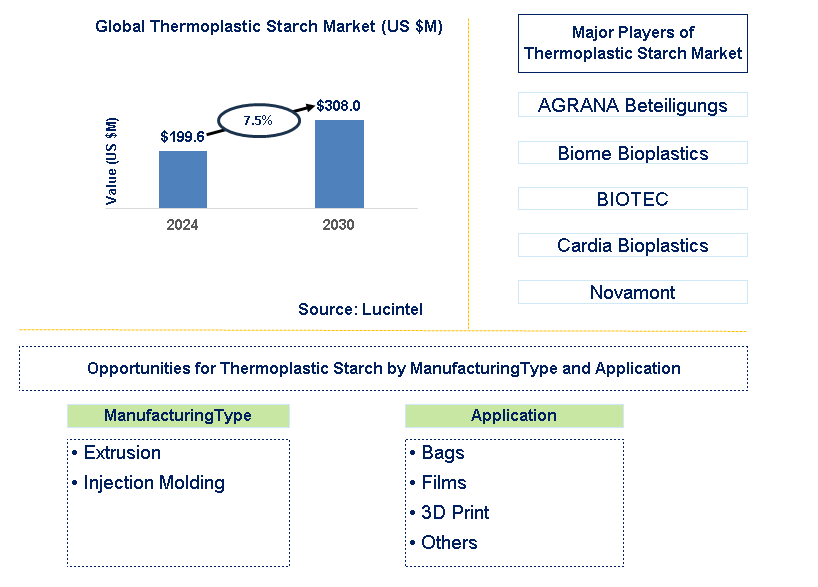
Key data points: The market size in 2030 = $308 million, growth forecast = 7.5% annually for the next 6 years. Scroll below to get more insights. This market report covers trends, opportunities, and forecasts in the global thermoplastic starch market to 2030 by manufacturing type (extrusion and injection molding), application (bags, films, 3D print, and others), and region (North America, Europe, Asia Pacific, and the Rest of the World)
We'll send your sample report shortly.
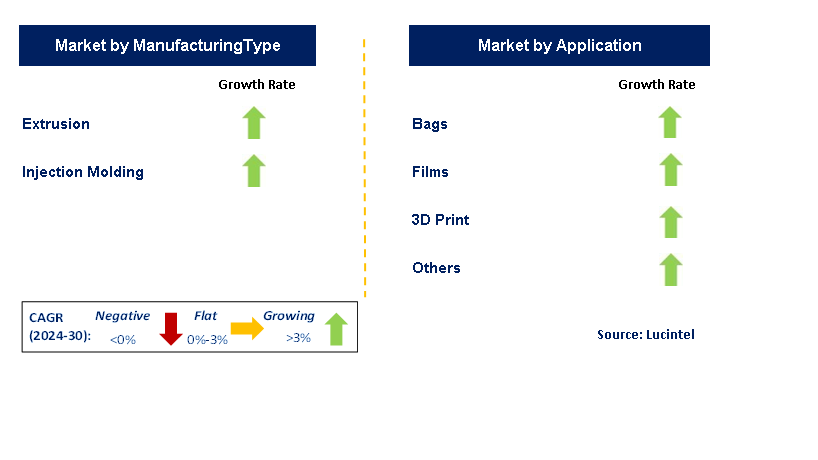
• Lucintel forecasts that extrusion will remain a larger segment over the forecast period due to the packaging industry's rapid expansion.
• Within this market, 3D print will remain the largest segment due to thermoplastics are a popular material for 3d printing since they are odorless and easy to deal with during the process.
• North America will remain the largest region over the forecast period due to the existence of significant end-use industries, rising industrialization, and the availability of cutting-edge technology. Gain valuable insight for your business decisions with our comprehensive 150+ page report
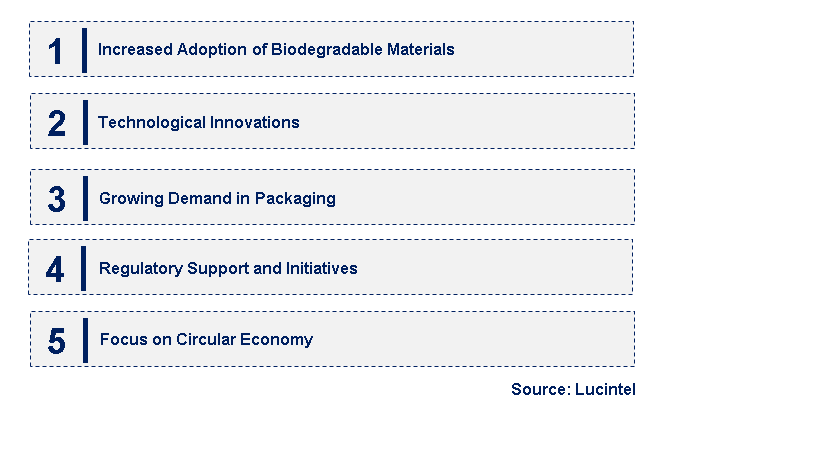
• Increased Adoption of Biodegradable Materials: The push for sustainable alternatives to conventional plastics is driving the adoption of thermoplastic starch. As consumers demand eco-friendly products, manufacturers are responding by developing biodegradable solutions that reduce environmental impact.
• Technological Innovations: Advances in processing technologies, such as extrusion and blending, are enhancing the properties of thermoplastic starch. Innovations are improving its mechanical strength, thermal stability, and moisture resistance, expanding its applicability in various sectors.
• Growing Demand in Packaging: The packaging industry is a major driver for thermoplastic starch, as companies seek biodegradable options for single-use products. This trend is leading to increased investments in research and development to create high-performance bioplastics.
• Regulatory Support and Initiatives: Government regulations promoting the use of biodegradable materials are encouraging manufacturers to adopt thermoplastic starch. Policies aimed at reducing plastic waste are creating a favorable market environment for bioplastics.
• Focus on Circular Economy: The emphasis on a circular economy is prompting companies to explore recycling and composting options for thermoplastic starch products. This shift is essential for minimizing waste and enhancing the sustainability of the material. These emerging trends are reshaping the thermoplastic starch market by promoting sustainability, driving technological advancements, and expanding application areas. Stakeholders must adapt to these trends to remain competitive and meet consumer demands for eco-friendly products.
• Development of Enhanced Blends: Recent innovations have led to the creation of enhanced blends of thermoplastic starch with other biopolymers. These blends improve mechanical and barrier properties, making them more competitive with traditional plastics in packaging applications.
• Investment in Production Facilities: Several companies are investing in new production facilities to increase capacity for thermoplastic starch. This expansion aims to meet the rising demand for biodegradable materials across various industries, including packaging and agriculture.
• Research on Alternative Raw Materials: Researchers are exploring alternative raw materials for thermoplastic starch production, including different starch sources and additives. This research aims to optimize production processes and improve the sustainability of the material.
• Collaboration with Research Institutions: Collaborations between industry players and academic institutions are fostering innovation in thermoplastic starch technology. These partnerships focus on developing high-performance bioplastics that can replace conventional plastics in critical applications.
• Market Expansion into New Applications: Companies are actively exploring new applications for thermoplastic starch beyond traditional uses. Recent developments include its adoption in automotive components and construction materials, highlighting its versatility as a biodegradable alternative. These recent developments are transforming the thermoplastic starch market by enhancing product capabilities, expanding production capacity, and fostering innovation. As the industry evolves, stakeholders must capitalize on these developments to drive growth and sustainability.
• Biodegradable Packaging Solutions: The growing demand for eco-friendly packaging presents a significant opportunity for thermoplastic starch. Its biodegradable nature makes it an attractive alternative for single-use packaging, catering to consumer preferences for sustainable products.
• Agricultural Films and Mulches: The agricultural sector is increasingly adopting biodegradable films and mulches made from thermoplastic starch. This trend supports sustainable farming practices and reduces plastic pollution in agriculture, providing a key growth opportunity.
• Automotive Components: The automotive industry is exploring the use of thermoplastic starch in interior components and composites. This shift towards lightweight and biodegradable materials aligns with industry goals to enhance sustainability and reduce carbon footprints.
• Consumer Goods and Textiles: The consumer goods sector is a potential growth area for thermoplastic starch, particularly in the production of biodegradable products such as disposable cutlery and textiles. This market expansion can meet rising consumer demands for sustainable alternatives.
• Construction Materials: The construction industry is starting to recognize the potential of thermoplastic starch in producing biodegradable composites for construction applications. This opportunity aligns with the increasing emphasis on sustainability in building materials. These strategic growth opportunities highlight the potential for thermoplastic starch to expand its presence across diverse applications. By capitalizing on these opportunities, stakeholders can drive growth and enhance their competitive position in the market.
• Rising Environmental Concerns: Growing awareness of plastic pollution is driving demand for biodegradable alternatives like thermoplastic starch. This trend is prompting manufacturers to develop sustainable products that align with consumer preferences.
• Government Regulations and Initiatives: Supportive government policies promoting biodegradable materials are fostering market growth. Regulations aimed at reducing plastic waste encourage manufacturers to adopt thermoplastic starch in their product lines.
• Technological Advancements: Innovations in processing techniques are enhancing the properties and applications of thermoplastic starch. These advancements enable manufacturers to produce higher-quality bioplastics that compete with conventional materials.
• Increased Consumer Demand for Sustainable Products: Consumers are increasingly seeking eco-friendly options, pushing companies to invest in biodegradable materials. This demand is driving growth in the thermoplastic starch market as companies respond to shifting consumer preferences.
• Global Focus on Circular Economy: The emphasis on a circular economy is encouraging the development of recyclable and compostable materials. This focus aligns with the sustainable nature of thermoplastic starch, promoting its adoption across various industries. Challenges in the thermoplastic starch market include:
• Cost Competitiveness: Thermoplastic starch often faces challenges in cost competitiveness compared to traditional plastics. Companies must find ways to optimize production processes to reduce costs while maintaining quality.
• Limited Awareness and Acceptance: Despite growing interest, there remains limited awareness of thermoplastic starch among consumers and industries. Educating stakeholders about its benefits is crucial for driving adoption.
• Technical Limitations: Certain technical limitations, such as moisture sensitivity and processing challenges, can hinder the performance of thermoplastic starch. Continued research and development are necessary to overcome these barriers. The interplay of these drivers and challenges significantly influences the thermoplastic starch market. By leveraging growth drivers and addressing challenges, stakeholders can enhance their strategies and achieve sustainable growth in this dynamic industry.
• AGRANA Beteiligungs
• Biome Bioplastics
• BIOTEC
• Cardia Bioplastics
• Novamont
• Kuraray
• Rodenburg Biopolymers
• Wittenburg Group
• Great Wrap
• Grupa Azoty
• Extrusion
• Injection Molding
• Bags
• Films
• 3D Print
• Others
• North America
• Europe
• Asia Pacific
• The Rest of the World
• United States: In the U.S., the thermoplastic starch market is experiencing growth due to rising environmental awareness and regulatory support for biodegradable products. Companies are investing in research and development to enhance the properties of thermoplastic starch, making it suitable for various applications, including packaging and automotive parts. Collaborative efforts between industry and academia are driving innovation, leading to the development of high-performance bioplastics that meet consumer demands.
• China: China continues to lead in thermoplastic starch production, with numerous manufacturers expanding their capacities. The government is promoting the use of biodegradable materials to address environmental issues associated with plastic waste. Recent developments include advancements in blending technologies that improve the mechanical properties of thermoplastic starch, allowing it to compete more effectively with conventional plastics in packaging and disposable products.
• Germany: Germany's thermoplastic starch market is marked by significant investments in sustainable practices. The country is focusing on creating bioplastics that comply with strict EU regulations on plastics and waste management. Recent innovations include enhanced formulations that increase the thermal stability and moisture resistance of thermoplastic starch, enabling its use in diverse applications, such as food packaging and agricultural films.
• India: In India, the demand for thermoplastic starch is growing as industries seek eco-friendly alternatives to traditional plastics. Recent developments include government initiatives promoting the use of biodegradable materials in packaging and agricultural sectors. Companies are exploring cost-effective production methods to scale up thermoplastic starch production, making it more accessible for various applications, including disposable cutlery and bags.
• Japan: Japan is emphasizing advanced research in thermoplastic starch, focusing on enhancing its functionality and versatility. Collaborations between universities and manufacturers are driving innovations in biopolymer technology. Recent developments include the introduction of modified thermoplastic starch with improved mechanical properties, catering to applications in packaging, textiles, and automotive components, aligning with Japan's sustainability goals.


• AGRANA Beteiligungs
• Biome Bioplastics
• BIOTEC
• Cardia Bioplastics
• Novamont
• Kuraray
• Rodenburg Biopolymers
• Wittenburg Group
• Great Wrap
• Grupa Azoty Q6. Which thermoplastic starch market segment will be the largest in future? Answer: Lucintel forecasts that extrusion will remain the larger segment over the forecast period due to the packaging industry's rapid expansion. Q7. In thermoplastic starch market, which region is expected to be the largest in next 5 years? Answer: North America will remain the largest region over the forecast period due to the existence of significant end-use industries, rising industrialization, and the availability of cutting-edge technology. Q.8 Do we receive customization in this report? Answer: Yes, Lucintel provides 10% customization without any additional cost.


Choose a license that fits your team. Instant PDF delivery.
Prices exclude taxes. Instant delivery. Custom licensing available on request.
Market Report · May 16, 2026
Market Report · May 16, 2026
Market Report · May 16, 2026
Trusted partner for strategic intelligence and business growth


Receive a complimentary market analysis tailored to your industry. Our analysts will identify key growth opportunities and competitive dynamics specific to your business.

Market size, growth rate, and key trend analysis for your specific sector.

Top competitor positioning and market share analysis.

Strategic recommendations backed by data-driven insights.
Get curated market intelligence and competitive moves straight to your inbox.
By subscribing, you agree to receive our monthly insights. Unsubscribe anytime.
Receive a complimentary market analysis tailored to your industry. Our analysts will identify key growth opportunities and competitive dynamics specific to your business.
Market size, growth rate, and key trend analysis for your specific sector.
Top competitor positioning and market share analysis.
Strategic recommendations backed by data-driven insights.
Get curated market intelligence, emerging trends, and competitive moves straight to your inbox each month.
By subscribing, you agree to receive our monthly insights. Unsubscribe anytime.
We'll send your sample report shortly.