
Market Report · July 31, 2026

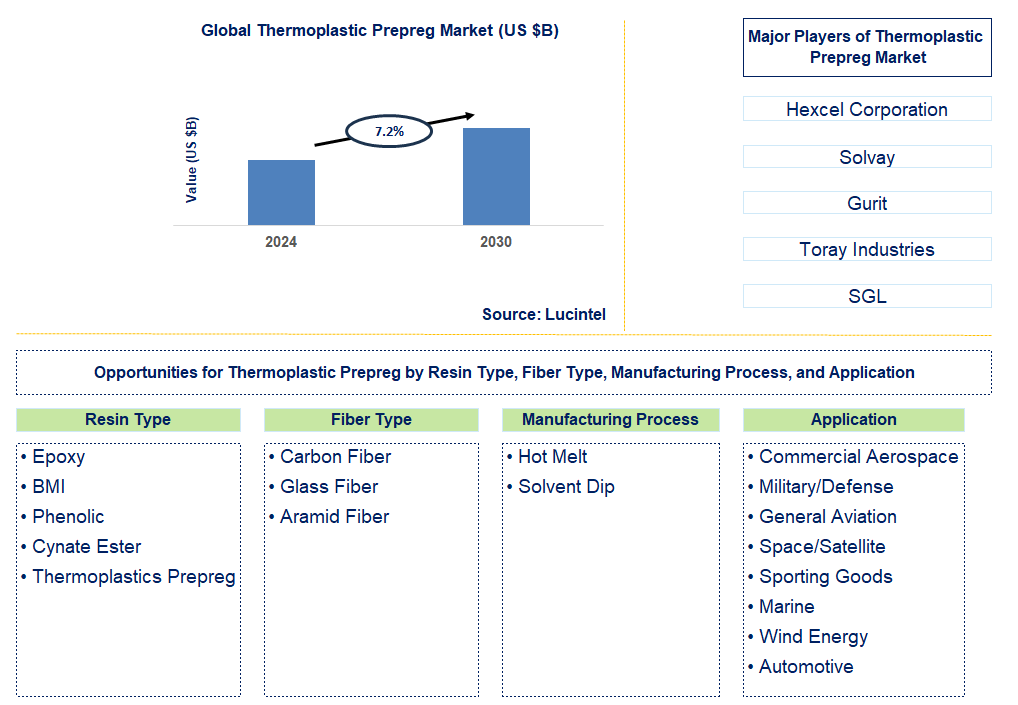
Key data points: The growth forecast = 7.2% annually for the next 6 years. Scroll below to get more insights. This market report covers trends, opportunities, and forecasts in the global thermoplastic prepreg market to 2030 by resin type (epoxy, BMI, phenolic, cynate ester, and thermoplastics prepreg), fiber type (carbon fiber, glass fiber , and aramid fiber), manufacturing process (hot melt and solvent dip), application (commercial aerospace, military/defense, general aviation, space/satellite, sporting goods, marine, wind energy, automotive, and others), and region (North America, Europe, Asia Pacific, and the Rest of the World)
We'll send your sample report shortly.
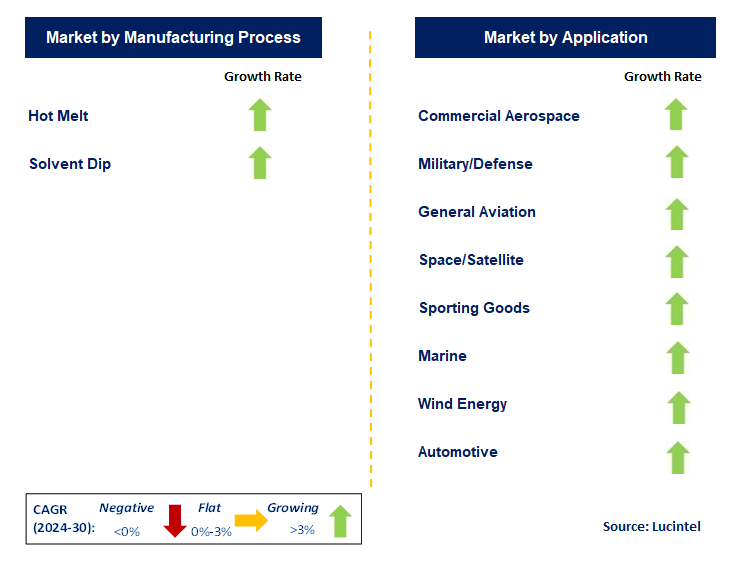
• Lucintel forecasts that, within the resin type category, thermoplastics prepreg is expected to witness the highest growth over the forecast period.
• Within the application category, commercial aerospace is expected to witness the highest growth.
• In terms of regions, North America is expected to witness highest growth over the forecast period. A more than 150-page report is developed to help in your business decisions.
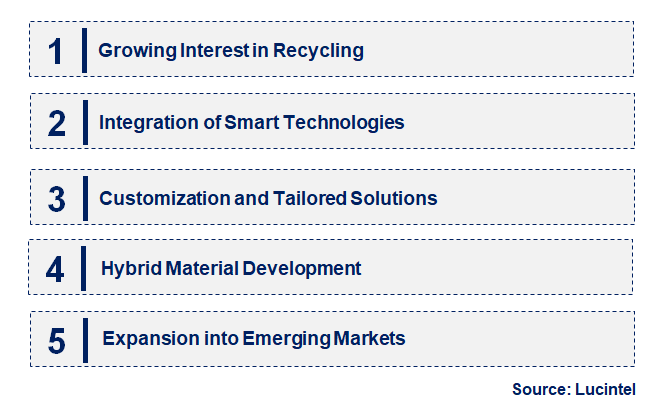
• Growing Interest in Recycling: Evidence points to a growing interest in making thermoplastic prepregs, which can be recycled easily in the future. Various manufacturers are trying to find a new type of resin and processing in order to create compliant materials.
• Integration of Smart Technologies: Increasing attention is being paid to the embedding of smart technologies – proliferation of thermoplastic prepregs with built-in sensors. These materials make it possible to measure structural temperature or monitor the condition in other ways.
• Customization and Tailored Solutions: There is a growing market for thermoplastic prepregs with specific applications. Advanced processing technologies are used by manufacturers to create materials with special properties.
• Hybrid Material Development: There has been a noticeable increase in the production of hybrid thermoplastic prepregs where different fibers, such as carbon sheets and known glass fabrics, are used. Through this strategy, the disadvantages of other products are improved.
• Expansion into Emerging Markets: An increasing number of manufacturers are seeking growth in emerging economies such as Southeast Asia and African countries. This includes setting up local production facilities and partnerships for supply to the respective regions. These new factors facilitate changes in the Thermoplastic Prepreg market by fostering sustainability, embracing technological advancements, and entering new markets. The same author has noted how, as trends change and manufacturers begin to accommodate such trends, they break through the barriers of several industries, thus enhancing the prospects for future developments.
• Advancements in Manufacturing Technologies: Aided manufacturing technologies, which include automated fiber placement and, more recently, thermoplastic tape laying, are improving production capability and minimizing waste to a great extent. These machines save time and reduce costs by ensuring that the right materials are used at the right place.
• Increased R&D Investment: Companies are making significant moves in R&D to develop next-generation thermoplastic prepreg materials that can withstand rigorous thermal and physical stresses. As a result, the focus of material development is shifting towards higher-performance materials.
• Sustainability Initiatives: There have been growing efforts toward thermal management system grade thermoplastic prepregs as most manufacturers are using bio-based polymers in their production and investigating other forms of recycling. This change is contributing not only to compliance with regulations but also to the market's influence for green products.
• Expansion of Applications: The thermoplastic prepregs market is expanding into new applications, including wind energy and consumer electronics. This diversification is driven by the requirements of many market sectors where high-strength and low-weight materials are needed.
• Collaboration with Research Institutions: The collaboration between manufacturers and academics leads to the creation of new ideas and makes it possible to manufacture modern thermoplastic materials. The synergistic relationship between science and industry is of great importance in enhancing technology to meet the precise needs of industries. Hence, these developments have a considerable influence on the production of thermoplastic prepregs by improving production capabilities, enhancing sustainability, and broadening the areas of application. These advancements have helped transform thermoplastic prepregs into a solution of choice in many sectors as the industry expands.
• Aerospace Sector: In the aerospace domain, there is a good scope for the growth of thermoplastic prepregs as there is a need for lightweight, high-strength materials. With the increasing pressure to enhance fuel efficiency from aircraft manufacturers, it is projected that thermoplastic composites will be in high demand.
• Automotive Sector: Considering the shift of the automotive industry towards electric vehicles, the use of thermoplastic prepregs is on the rise for the fabrication of lightweight parts that improve performance and decrease emissions. This change presents a large opportunity for manufacturers.
• Wind Energy Applications: The increasing interest in renewable sources of power is driving the need for thermoplastic prepregs in the wind turbine production business. The characteristics of these materials help increase wind energy systems' operational efficiency and durability.
• Consumer Electronics: Thermoplastic prepregs are finding their way into the consumer electronics sector, a new market where a lot of lightweight and tough materials are required for gadgets. As electronics continue to miniaturize, the demand for advanced materials will also grow.
• Construction and Infrastructure: The use of thermoplastic prepregs is becoming more popular in the construction industry, especially in structural components and infrastructure development. There is significant opportunity for growth since there is a demand for strong yet lightweight materials resistant to weather conditions. Venues that cannot be overemphasized in relation to thermoplastic prepregs are well-positioned to capitalize on the ever-changing market dynamics. These advantages enable manufacturers to stand out in the evolving landscape.
• Rising Demand for Lightweight Materials: The growth of the thermoplastic prepreg market is fueled further by the demand for lightweight materials in industries such as aerospace and automotive. Lightweight composites improve fuel economy and performance, which is why such composites are valued in today’s applications.
• Technological Innovations: Technological improvements in manufacturing methods such as automated processes and 3D printing have led to a rise in the production of high-quality thermoplastic prepreg materials. These innovations enhance productivity and reduce costs, thus promoting growth.
• Sustainability Trends: Along with other factors, the growing emphasis on sustainability is encouraging the creation of thermoplastic prepregs that are eco-friendly. The demand for recyclable and bio-based materials resonates with consumers and satisfies regulatory requirements, increasing market prospects.
• Expansion into New Applications: The expanding scope of thermoplastic prepregs in applications such as wind energy, construction, and consumer electronics provides new growth opportunities. This additional demand is driven by the ‘high-performance material’ requirements across various industries.
• Creative Partnership Innovation: Alliances between manufacturers and research institutions are driving innovation in the development of thermoplastic prepregs. These synergies improve the creation of advanced materials that appeal to industry requirements. Challenges in the thermoplastic prepreg market are:
• Fluctuations in Raw Material Costs: Changes in raw material prices could squeeze profits and raise thermoplastic prepreg production costs. Being able to cope with these changes is necessary to sustain competitiveness.
• Threat from the Use of Substitute Materials: The increasing use of substitute materials like thermoset composites and metals puts a strain on the thermoplastic prepreg market. Companies should consistently introduce new products to distinguish themselves from competitors and remain in business.
• Regulatory Restrictions: Manufacturers face many demands concerning safety, performance, and environmental protection. All of these are implemented within the framework of regulations that are complicated to follow. Achieving compliance can entail heavy expenditure on R&D. The Thermoplastic Prepreg market remains strong in demand and continues to develop despite challenges like insufficient demand, raw material shortages, and competition. Understanding these drivers and challenges is crucial for stakeholders to navigate market dynamics and maximize growth opportunities.
• Hexcel Corporation
• Solvay
• Gurit
• Toray Industries
• SGL
• Mitsubishi Chemical Coporation
• Teijin Limited
• Epoxy
• BMI
• Phenolic
• Cynate Ester
• Thermoplastics Prepreg
• Carbon Fiber
• Glass Fiber
• Aramid Fiber
• Hot Melt
• Solvent Dip
• Commercial Aerospace
• Military/Defense
• General Aviation
• Space/Satellite
• Sporting Goods
• Marine
• Wind Energy
• Automotive
• North America
• Europe
• Asia Pacific
• The Rest of the World
• United States: The growth of the thermoplastic prepreg market in the U.S. can be attributed to a growing aerospace and automotive market, which leads to rising investments in these sectors. Companies are focusing on the development of advanced materials that offer better mechanical properties and thermal stability. The increasing collaboration between research and manufacturing is leading to the development of new thermoplastic composites that meet high standards. Moreover, the transition to electric vehicles is sparking the need to create lightweight materials, and thermoplastic prepregs help increase fuel efficiency and overall performance.
• China: China's ambitions in the thermoplastic prepreg market are centered on high performance, given the presence of a strong manufacturing environment and government policies supporting advanced materials. Recent trends include the construction of new factories with high-tech equipment aimed at producing advanced thermoset composite materials. Additionally, China’s growing focus on eco-friendliness has spurred the development of recyclable thermoplastic prepregs. Applications are also being explored in wind energy and other energy infrastructure sectors where high strength-to-weight ratios will improve productivity and reduce costs.
• Germany: Germany is a leader in thermoplastic prepreg innovations, with significant applications in the automotive and aerospace industries. Tactical advancements include pursuing smart technologies and sustainable development in future manufacturing processes. German manufacturers are also partnering with universities to produce durable thermoplastic materials that can withstand extreme environments. These efforts, along with research into rigid thermoplastic composite recycling, make Germany a pioneer in green manufacturing.
• India: In India, there is an upward trend in the thermoplastic prepreg market, particularly in the automotive and aerospace industries. Recent investments in infrastructure and technology are helping domestic manufacturers produce high-quality prepregs. Government support to enhance the uptake of advanced manufacturing technologies is also aiding market growth. Additionally, manufacturers are increasingly knowledgeable about lightweight materials, contributing to a rise in the use of thermoplastic unidirectional prepregs for strength- and weight-sensitive applications.
• Japan: In Japan, there is a strong focus on advanced manufacturing technology, with an emphasis on sustainability and high performance. Companies are investing in the development of next-generation thermoplastic prepregs, which are aimed at meeting the specific needs of the automotive and aerospace sectors. Japanese firms are utilizing composite technology and targeting expansion in wind energy and construction. The country's strict environmental regulations and focus on reducing carbon footprints are encouraging the widespread adoption of eco-friendly thermoplastic prepregs. The global outlook for the thermoplastic prepreg market shows that it is positioned for strong growth. With continued demand for advanced, lightweight materials, manufacturers are focused on new innovations to boost their market presence.


• Hexcel Corporation
• Solvay
• Gurit
• Toray Industries
• SGL
• Mitsubishi Chemical Coporation
• Teijin Limited Q5. Which thermoplastic prepreg market segment will be the largest in future? Answer: Lucintel forecasts that thermoplastics prepreg is expected to witness the highest growth over the forecast period. Q6. In thermoplastic prepreg market, which region is expected to be the largest in next 6 years? Answer: North America is expected to witness highest growth over the forecast period. Q.7 Do we receive customization in this report? Answer: Yes, Lucintel provides 10% customization without any additional cost.


Choose a license that fits your team. Instant PDF delivery.
Prices exclude taxes. Instant delivery. Custom licensing available on request.
Market Report · July 31, 2026
Market Report · May 18, 2026
Market Report · May 16, 2026
Trusted partner for strategic intelligence and business growth


Receive a complimentary market analysis tailored to your industry. Our analysts will identify key growth opportunities and competitive dynamics specific to your business.

Market size, growth rate, and key trend analysis for your specific sector.

Top competitor positioning and market share analysis.

Strategic recommendations backed by data-driven insights.
Get curated market intelligence and competitive moves straight to your inbox.
By subscribing, you agree to receive our monthly insights. Unsubscribe anytime.
Receive a complimentary market analysis tailored to your industry. Our analysts will identify key growth opportunities and competitive dynamics specific to your business.
Market size, growth rate, and key trend analysis for your specific sector.
Top competitor positioning and market share analysis.
Strategic recommendations backed by data-driven insights.
Get curated market intelligence, emerging trends, and competitive moves straight to your inbox each month.
By subscribing, you agree to receive our monthly insights. Unsubscribe anytime.
We'll send your sample report shortly.