
Report Feature
Thermal Printable Wristband Market Trends and Forecast
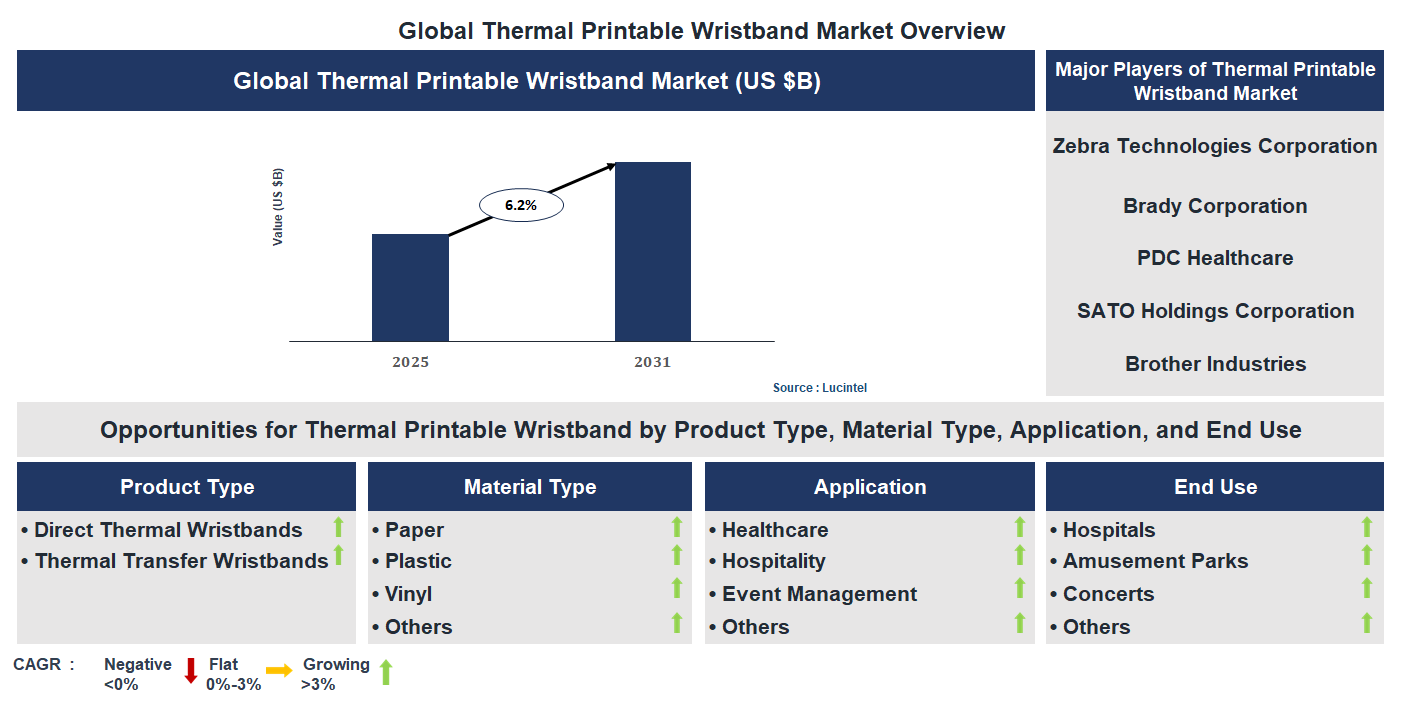
The future of the global thermal printable wristband market looks promising with opportunities in the hospital, amusement park, and concert markets. The global thermal printable wristband market is expected to grow with a CAGR of 6.2% from 2025 to 2031. The major drivers for this market are the increasing demand for accurate patient identification, the rising use of barcode-enabled tracking systems, and the growing adoption of low-cost wristband printing.• Lucintel forecasts that, within the product type category, direct thermal wristband is expected to witness higher growth over the forecast period.
• Within the end use category, amusement park is expected to witness the highest growth.
• In terms of region, North America is expected to witness the highest growth over the forecast period. Gain valuable insights for your business decisions with our comprehensive 150+ page report. Sample figures with some insights are shown below.
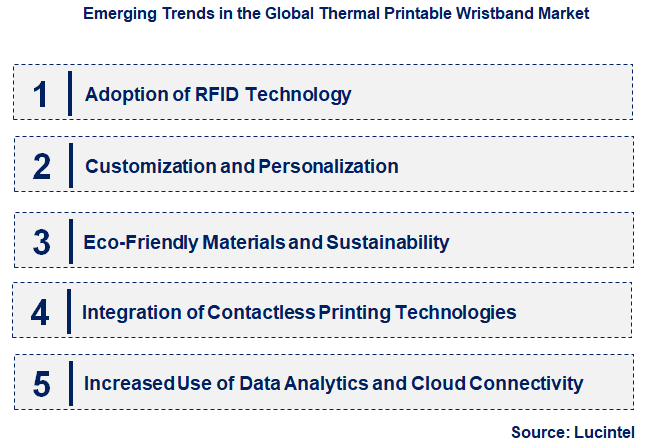
Emerging Trends in the Thermal Printable Wristband Market
The thermal printable wristband market is experiencing rapid growth driven by technological advancements, increasing demand for efficient patient identification, and the expanding healthcare and event management sectors. As organizations seek more reliable, customizable, and cost-effective solutions, several emerging trends are shaping the future of this market. These developments are not only enhancing operational efficiency but also improving safety and user experience. Understanding these key trends is essential for stakeholders aiming to capitalize on market opportunities and stay ahead of competitive pressures in this evolving landscape.• Adoption of RFID Technology: RFID-enabled thermal wristbands are gaining popularity due to their enhanced security and tracking capabilities. These wristbands allow real-time monitoring of individuals, reducing errors and theft, especially in healthcare and large events. The integration of RFID technology improves data accuracy, streamlines check-in processes, and enhances overall safety, making wristbands more versatile and reliable.
• Customization and Personalization: Increasing demand for personalized wristbands tailored to specific needs is a significant trend. Manufacturers are offering customizable options such as branding, color coding, and variable data printing. This trend improves user engagement, facilitates better organization, and enhances brand visibility, especially in healthcare, sports, and entertainment sectors, leading to higher customer satisfaction.
• Eco-friendly Materials and Sustainability: The market is witnessing a shift towards biodegradable and recyclable materials to address environmental concerns. Eco-friendly wristbands reduce plastic waste and appeal to environmentally conscious consumers. This trend aligns with global sustainability initiatives, encouraging companies to adopt greener practices, which can also serve as a competitive advantage and meet regulatory standards.
• Integration of Contactless Printing Technologies: Contactless printing methods, such as wireless and near-field communication (NFC) printing, are emerging as efficient solutions. These technologies enable quick, hygienic, and seamless printing processes, especially important in healthcare settings during pandemics. They reduce physical contact, minimize contamination risks, and improve workflow efficiency, making wristband printing faster and safer.
• Increased Use of Data Analytics and Cloud Connectivity: The integration of data analytics and cloud-based systems is transforming wristband management. These technologies facilitate real-time data collection, remote monitoring, and improved inventory management. They enable organizations to analyze usage patterns, optimize supply chains, and enhance decision-making, leading to smarter, more responsive market operations. In summary, these trends are collectively reshaping the thermal printable wristband market by enhancing functionality, sustainability, and user experience. They are driving innovation, improving operational efficiency, and meeting evolving customer expectations, ultimately leading to a more dynamic and competitive landscape.
Recent Development in the Thermal Printable Wristband Market
The thermal printable wristband market has experienced significant growth driven by increasing demand for efficient patient identification, event management, and security solutions. Technological advancements, rising healthcare infrastructure, and the need for customizable, durable wristbands are fueling market expansion. Additionally, the integration of RFID technology and the adoption of eco-friendly materials are shaping the market landscape. As industries seek more reliable and versatile identification tools, the market is poised for continued innovation and growth. These developments are transforming how organizations manage safety, security, and operational efficiency, making thermal printable wristbands an essential component across various sectors.• Technological Advancements: The integration of RFID and NFC technology into thermal printable wristbands has enhanced tracking and data management capabilities, improving accuracy and operational efficiency in healthcare and event management sectors.
• Eco-Friendly Materials: The shift towards biodegradable and recyclable materials for wristbands addresses environmental concerns, appealing to eco-conscious consumers and organizations, and promoting sustainable practices within the industry.
• Customization and Design Flexibility: Manufacturers are offering more customizable options, including variable data printing and personalized designs, which improve user engagement and brand visibility, especially in events and marketing campaigns.
• Growing Healthcare Infrastructure: Increased investments in healthcare facilities worldwide are driving demand for patient identification solutions, boosting the market for thermal printable wristbands in hospitals and clinics.
• Adoption of Cloud-Based Printing Solutions: The emergence of cloud-enabled printing systems allows for remote management and real-time updates, enhancing efficiency and reducing errors in large-scale operations like hospitals and event venues. These developments are significantly impacting the thermal printable wristband market by increasing product versatility, sustainability, and operational efficiency. The integration of advanced technologies and eco-friendly materials is expanding market applications and customer base. Customization options are enhancing user experience and brand recognition, while improved infrastructure and digital solutions are streamlining processes. Overall, these trends are fostering innovation, driving market growth, and positioning thermal printable wristbands as a vital tool across healthcare, events, and security sectors.
Strategic Growth Opportunities in the Thermal Printable Wristband Market
The thermal printable wristband market is experiencing rapid expansion driven by increasing demand for efficient patient identification, event management, and access control solutions. Technological advancements and the growing need for customization are fueling innovation across various applications. As healthcare, entertainment, and security sectors evolve, key growth opportunities are emerging that can significantly influence market dynamics. These opportunities not only enhance operational efficiency but also improve safety and user experience, making them critical for industry stakeholders aiming to capitalize on emerging trends and expand their market presence.• Personalized Patient Identification : The rising need for accurate and quick patient identification is driving demand for thermal printable wristbands. These wristbands improve hospital workflows, reduce errors, and enhance patient safety, leading to widespread adoption in hospitals and clinics. The ability to customize and print on-demand ensures real-time updates, streamlining hospital operations and reducing administrative costs.
• Customizable Wristbands for Access Control : The entertainment and sports industries are increasingly adopting thermal printable wristbands for secure access control. These wristbands allow event organizers to customize designs, include branding, and print tickets on-site, enhancing security and attendee experience. Their durability and ease of use make them ideal for large-scale events, boosting market growth in this segment.
• Tamper-Evident Wristbands : The need for secure identification in pharmaceutical and laboratory environments is creating demand for tamper-evident thermal wristbands. These wristbands help prevent counterfeiting and ensure compliance with safety regulations. Their ability to be printed with detailed information enhances traceability and accountability, impacting regulatory adherence positively.
• Guest Personalization and Security : Hotels and resorts are leveraging thermal printable wristbands for guest identification and personalized services. These wristbands facilitate seamless check-ins, access to amenities, and payment processing. Customization options improve guest experience, while security features ensure safety, making them a vital growth area in hospitality.
• Smart Wristbands Integration : The integration of thermal printable wristbands with smart technology is opening new avenues in security and access control. These wristbands can incorporate RFID or QR codes, enabling contactless entry and real-time tracking. Their versatility and enhanced security features are expected to drive adoption across corporate, government, and event sectors. In summary, these growth opportunities are significantly impacting the thermal printable wristband market by expanding its applications, enhancing customization, and improving security features. As industries increasingly prioritize safety, efficiency, and personalized experiences, the market is poised for sustained growth and innovation.
Thermal Printable Wristband Market Driver and Challenges
The thermal printable wristband market is influenced by a variety of technological, economic, and regulatory factors that shape its growth and development. Advances in printing technology, increasing demand for efficient patient identification in healthcare, and the need for customizable branding solutions are key drivers. Conversely, challenges such as regulatory compliance, environmental concerns, and technological limitations pose hurdles. Understanding these drivers and challenges is essential for stakeholders to navigate the market effectively and capitalize on emerging opportunities while addressing potential risks. The factors responsible for driving the thermal printable wristband market include:-• Technological Innovation: The continuous development of high-quality, cost-effective thermal printing technology enhances the efficiency and accuracy of wristband printing. Innovations such as wireless connectivity and improved print durability enable healthcare providers and event organizers to streamline operations, reduce errors, and improve patient safety. These advancements also support customization, branding, and real-time printing, making thermal wristbands more versatile and appealing across various sectors.
• Growing Healthcare Sector: The increasing need for patient identification, medication management, and infection control in hospitals and clinics drives demand for thermal printable wristbands. The rising prevalence of chronic diseases and the expansion of healthcare infrastructure globally contribute to this growth. Thermal wristbands offer a quick, reliable, and cost-effective solution for patient safety, which is critical in high-volume healthcare settings.
• Regulatory and Compliance Standards: Stringent regulations related to patient safety, data security, and material safety influence the market. Manufacturers must adhere to standards set by health authorities, which often require the use of non-toxic, hypoallergenic, and environmentally friendly materials. Compliance ensures market acceptance and reduces legal risks, thereby encouraging innovation and higher quality products.
• Increasing Adoption in Event Management and Retail: The demand for customizable wristbands in events, concerts, festivals, and retail environments is rising. Thermal printing allows for on-demand, personalized wristbands that enhance security, branding, and customer engagement. The ease of printing and low costs make thermal wristbands an attractive choice for these industries, expanding market opportunities beyond healthcare. The challenges in the thermal printable wristband market are:
• Regulatory and Environmental Concerns: The market faces challenges related to strict regulations on material safety, environmental impact, and waste management. The disposal of plastic wristbands raises environmental concerns, prompting a shift towards biodegradable materials. Meeting regulatory standards while maintaining cost-effectiveness can be difficult, potentially limiting innovation and increasing production costs.
• Technological Limitations: Despite advancements, thermal printing technology still encounters issues such as limited print resolution, color options, and durability under harsh conditions. These limitations can affect the quality and longevity of wristbands, especially in demanding environments like outdoor events or long-term healthcare applications. Overcoming these technical barriers is essential for broader adoption.
• Cost and Market Competition: Price sensitivity among end-users and intense competition among manufacturers pose significant challenges. High initial investment in printing equipment and consumables can deter smaller organizations from adopting thermal printing solutions. Additionally, the presence of alternative printing technologies and cheaper substitutes can impact market share and profit margins. In summary, the thermal printable wristband market is driven by technological advancements, expanding healthcare needs, regulatory compliance, and diversification into new sectors. However, it faces challenges related to environmental concerns, technological limitations, and market competition. These factors collectively influence the market’s growth trajectory, requiring stakeholders to innovate continuously and adapt to evolving standards and consumer demands. The overall impact is a dynamic market with significant growth potential, provided that challenges are effectively managed through innovation and strategic planning.
List of Thermal Printable Wristband Companies
Companies in the market compete on the basis of product quality offered. Major players in this market focus on expanding their manufacturing facilities, R&D investments, infrastructural development, and leverage integration opportunities across the value chain. With these strategies thermal printable wristband companies cater increasing demand, ensure competitive effectiveness, develop innovative products & technologies, reduce production costs, and expand their customer base. Some of the thermal printable wristband companies profiled in this report include-• Zebra Technologies Corporation
• Brady Corporation
• PDC Healthcare
• SATO Holdings Corporation
• Brother Industries
• Medline Industries
• Thermo Fisher Scientific
• Zebra Technologies Europe Limited
• Impinj
• General Data Company
Thermal Printable Wristband Market by Segment
The study includes a forecast for the global thermal printable wristband market by product type, material type, application, end use, and region.Thermal Printable Wristband Market by Product Type [Value from 2019 to 2031]:
• Direct Thermal Wristbands
• Thermal Transfer Wristbands
Thermal Printable Wristband Market by Material Type [Value from 2019 to 2031]:
• Paper
• Plastic
• Vinyl
• Others
Thermal Printable Wristband Market by Application [Value from 2019 to 2031]:
• Healthcare
• Hospitality
• Event Management
• Others
Thermal Printable Wristband Market by End Use [Value from 2019 to 2031]:
• Hospitals
• Amusement Parks
• Concerts
• Others
Thermal Printable Wristband Market by Region [Value from 2019 to 2031]:
• North America
• Europe
• Asia Pacific
• The Rest of the World
Country Wise Outlook for the Thermal Printable Wristband Market
The thermal printable wristband market has experienced significant growth driven by increasing demand for healthcare identification, event management, and security solutions worldwide. Technological advancements, rising adoption in hospitals, and expanding applications in various sectors have contributed to this upward trend. Countries are focusing on innovative materials, enhanced printing capabilities, and integration with digital systems to improve efficiency and security. Regulatory standards and safety concerns also influence market dynamics, prompting manufacturers to develop more reliable and customizable products. As the market evolves, regional differences in adoption rates and technological preferences shape the global landscape, with key players investing heavily in research and development to maintain competitive advantages.• United States: The US market has seen rapid adoption of thermal wristbands in healthcare, driven by hospital digitization and patient safety initiatives. Innovations include RFID-enabled wristbands for real-time tracking and improved data security. The healthcare sector remains the largest user, with increasing use in event management and security applications. Regulatory compliance and technological integration are key focus areas, leading to the development of more durable and customizable wristbands. Market players are investing in smart wristband solutions that enhance patient identification and streamline hospital workflows, contributing to sustained growth.
• China: China’s thermal wristband market is expanding due to rising healthcare infrastructure and government initiatives promoting digital health. The country is witnessing increased adoption in hospitals, clinics, and large-scale events. Local manufacturers are focusing on cost-effective, high-quality products to capture market share. The integration of QR codes and RFID technology is becoming common, improving traceability and management efficiency. Additionally, the growth of the e-commerce sector and increasing awareness of safety standards are fueling demand. The market is also benefiting from technological collaborations and investments in R&D to develop innovative, eco-friendly materials.
• Germany: Germany’s market emphasizes high-quality, durable wristbands with advanced printing features suitable for healthcare and industrial applications. The country’s strict regulatory environment ensures compliance with safety and hygiene standards, fostering innovation in antimicrobial and hypoallergenic materials. The adoption of digital printing and customization options is increasing, especially in hospitals and event management. Germany is also focusing on sustainable solutions, with manufacturers developing eco-friendly wristbands. The integration of RFID and NFC technologies is gaining traction, enhancing security and data management capabilities. Overall, the market is characterized by a focus on quality, safety, and technological integration.
• India: The Indian thermal wristband market is witnessing rapid growth driven by expanding healthcare infrastructure, increasing hospital admissions, and rising awareness of patient safety. Cost-effective solutions are prioritized, with local manufacturers offering affordable, customizable wristbands. The adoption of RFID and QR code technologies is increasing to improve patient tracking and management. The market is also expanding into the event management sector, including festivals and large gatherings. Government initiatives to improve healthcare delivery and digital health records are further boosting demand. Innovations in biodegradable and eco-friendly materials are emerging, aligning with sustainability goals.
• Japan: Japan’s market is characterized by high technological adoption and stringent quality standards. The focus is on developing smart wristbands with integrated sensors for health monitoring and security. The healthcare sector is a major driver, with hospitals adopting advanced wristbands for patient safety and data management. The market also sees growth in event management and security applications, with an emphasis on durability and customization. Japanese manufacturers are investing in R&D to develop eco-friendly, hypoallergenic, and antimicrobial wristbands. The integration of RFID and NFC technologies enhances security and operational efficiency, positioning Japan as a leader in innovative wristband solutions.

Features of the Global Thermal Printable Wristband Market
Market Size Estimates: Thermal printable wristband market size estimation in terms of value ($B). Trend and Forecast Analysis: Market trends (2019 to 2024) and forecast (2025 to 2031) by various segments and regions. Segmentation Analysis: Thermal printable wristband market size by various segments, such as by product type, material type, application, end use, and region in terms of value ($B). Regional Analysis: Thermal printable wristband market breakdown by North America, Europe, Asia Pacific, and Rest of the World. Growth Opportunities: Analysis of growth opportunities in different product types, material types, applications, end uses, and regions for the thermal printable wristband market. Strategic Analysis: This includes M&A, new product development, and competitive landscape of the thermal printable wristband market. Analysis of competitive intensity of the industry based on Porter’s Five Forces model.
FAQ
Q1. What is the growth forecast for thermal printable wristband market? Answer: The global thermal printable wristband market is expected to grow with a CAGR of 6.2% from 2025 to 2031. Q2. What are the major drivers influencing the growth of the thermal printable wristband market? Answer: The major drivers for this market are the increasing demand for accurate patient identification, the rising use of barcode-enabled tracking systems, and the growing adoption of low-cost wristband printing. Q3. What are the major segments for thermal printable wristband market? Answer: The future of the thermal printable wristband market looks promising with opportunities in the hospital, amusement park, and concert markets. Q4. Who are the key thermal printable wristband market companies? Answer: Some of the key thermal printable wristband companies are as follows:• Zebra Technologies Corporation
• Brady Corporation
• PDC Healthcare
• SATO Holdings Corporation
• Brother Industries
• Medline Industries
• Thermo Fisher Scientific
• Zebra Technologies Europe Limited
• Impinj
• General Data Company Q5. Which thermal printable wristband market segment will be the largest in future? Answer: Lucintel forecasts that, within the product type category, direct thermal wristband is expected to witness higher growth over the forecast period. Q6. In thermal printable wristband market, which region is expected to be the largest in next 5 years? Answer: In terms of region, North America is expected to witness the highest growth over the forecast period. Q7. Do we receive customization in this report? Answer: Yes, Lucintel provides 10% customization without any additional cost.
Table of Contents
List of Figures
List of Tables
Methodology
- In-depth interviews of the major players in this market
- Detailed secondary research from competitors’ financial statements and published data
- Extensive searches of published works, market, and database information pertaining to industry news, company press releases, and customer intentions
- A compilation of the experiences, judgments, and insights of Lucintel’s professionals, who have analyzed and tracked this market over the years.


Buy Now
Choose a license that fits your team. Instant PDF delivery.
Prices exclude taxes. Instant delivery. Custom licensing available on request.
Key Questions
- • What are some of the most promising, high-growth opportunities for the thermal printable wristband market by product type (direct thermal wristbands and thermal transfer wristbands), material type (paper, plastic, vinyl, and others), application (healthcare, hospitality, event management, and others), end use (hospitals, amusement parks, concerts, and others), and region (North America, Europe, Asia Pacific, and the Rest of the World)?
- • Which segments will grow at a faster pace and why?
- • Which region will grow at a faster pace and why?
- • What are the key factors affecting market dynamics? What are the key challenges and business risks in this market?
- • What are the business risks and competitive threats in this market?
- • What are the emerging trends in this market and the reasons behind them?
- • What are some of the changing demands of customers in the market?
- • What are the new developments in the market? Which companies are leading these developments?
- • Who are the major players in this market? What strategic initiatives are key players pursuing for business growth?
- • What are some of the competing products in this market and how big of a threat do they pose for loss of market share by material or product substitution?
- • What M&A activity has occurred in the last 5 years and what has its impact been on the industry? For any questions related to Thermal Printable Wristband Market, Thermal Printable Wristband Market Size, Thermal Printable Wristband Market Growth, Thermal Printable Wristband Market Analysis, Thermal Printable Wristband Market Report, Thermal Printable Wristband Market Share, Thermal Printable Wristband Market Trends, Thermal Printable Wristband Market Forecast, Thermal Printable Wristband Companies, write Lucintel analyst at email: helpdesk@lucintel.com. We will be glad to get back to you soon.


