
Market Report · July 22, 2026

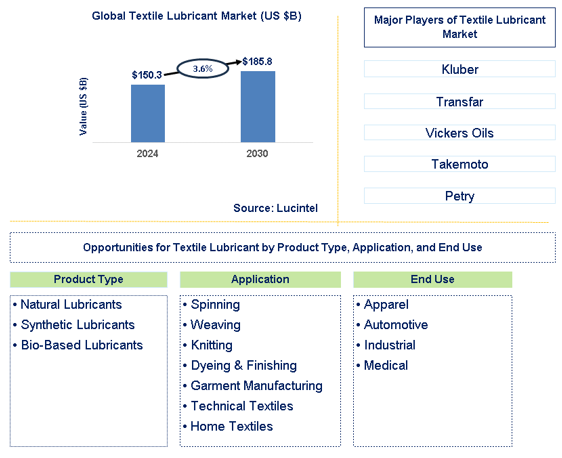
Key data points: The market size in 2030 = $185.8 billion, growth forecast = 3.6% annually for the next 6 years. Scroll below to get more insights. This market report covers trends, opportunities, and forecasts in the global textile lubricant market to 2030 by product type (natural lubricants, synthetic lubricants, and bio-based lubricants), application (spinning, weaving, knitting, dyeing & finishing, garment manufacturing, technical textiles, and home textiles), end use (apparel, automotive, industrial, and medical), and region (North America, Europe, Asia Pacific, and the Rest of the World)
We'll send your sample report shortly.
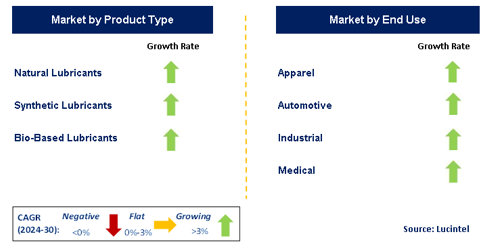
• Lucintel forecasts that, within the product type category, synthetic lubricants will remain the larger segment over the forecast period due to consistent quality and performance of synthetic lubricants.
• In terms of regions, APAC is expected to witness highest growth over the forecast period due to fast industrialization in nations like China and India, together with a sizable textile industry. Gain Valuable insights for your business decisions with our comprehensive 150+ page report.
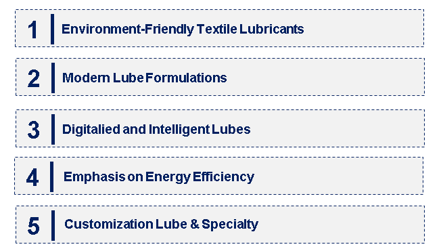
• Environment-Friendly Textile Lubricants: The need for environmentally friendly textile lubricants that meet strict regulations is rising. This trend is driven by global attention to sustainable development and the reduction of ecological footprints resulting from textile industrial processes. Companies are developing biodegradable and bio-based lubricants to satisfy these needs.
• Modern Lube Formulations: A key trend in this area involves the development of advanced formulations aimed at improving machine efficiency and durability. In high-speed operations and varying temperatures, such as those in modern textile devices, these lubricants can perform under extreme conditions.
• Digitalized and Intelligent Lubes: The introduction of smart material production has led to the emergence of digitalized and smart lubricant types that can be monitored and optimized around the clock with real-time data. Smart lubricants embedded with sensors transmit data about their operational capabilities, enabling condition-based maintenance and facilitating downtime recovery.
• Emphasis on Energy Efficiency: Textile lubricants that help conserve energy have become highly desirable. The high costs associated with manufacturing, along with the requirement to adopt green practices, drive this trend. Significant reductions in energy consumption are achieved by using friction-reducing lubricants from manufacturers.
• Customization Lube & Specialty Products: The demand for customized and specialty lubricants produced specifically for various textile processes and machines continues to grow. This need is particularly pronounced in regions with highly developed textile manufacturing sectors that require tailored, operationally compliant lubricants. These emerging trends are reshaping the textile lubricant market, fostering innovations and creating fresh opportunities for industry players. Firms that align with these trends will be well-positioned to thrive in a competitive environment as the industry continues to evolve.
• New Eco-Friendly Lubricants are Being Launched: Manufacturers are coming up with new types of textile lubricants that are environmentally friendly because there has been a rising number of rules relating to this subject. These products help reduce the impact on the environment during textile production while maintaining high functionality.
• Formation of Strategic Partnerships: Major players in the industry are building partnerships that will enable them to expand their product range as well as their distribution networks. In addition, these partnerships seek to increase market presence and take advantage of technology advancements.
• Development in Lubricant Technology: There has been significant levels of investment in R&D for lubricants aimed at improving machine performance and lowering maintenance costs. All these innovations aid manufacturers within textiles sector raise their operational efficiencies.
• Stringent Compliance with Regulations: Currently, companies operating in eco-sensitive regions have increased their focus towards meeting stringent regulations on environmental protection. Due to this, companies re-aligning their lines according to such provisions hence embracing eco-friendly lubricants.
• Market Development: The expansion of textile manufacturing into emerging markets necessitates quality textile lubricants. To benefit from the fast growing textile industry and meet rising demand among other reasons, firms have invested heavily in these areas. As concerns about sustainability, innovation and strategic development continue to shape its direction, some major events currently underway suggest where the textile lubricant is heading. With time they will determine how the market develops further.
• Spinning Process: As they seek to enhance yarn quality and minimize machine wear, manufacturers need more lubricants in spinning. Minimizing friction with high-performance lubricants that guarantee smooth operation of machines is very crucial in this particular category.
• Weaving Process: Weaving process lubricants must be able to withstand high speeds as well as tension variations. Developing specific types of oils that can improve performance and increase the lifespan of weaving machines opens up massive opportunities for growth.
• Knitting Process: High friction conditions are usually prevalent during knitting processes hence requiring highly efficient lubricants. Increasing demand for quality knit fabrics necessitates advanced lubes which improve machine operability while reducing maintenance needs.
• Dyeing and Finishing: Lubricants needed during dyeing and finishing processes ensure a smooth color flow on the fabric’s surface. Thus growing importance on fabric standards as well as appearance creates a market for such chemicals designed to affect these effects.
• Textile Machinery Maintenance: In terms of machinery maintenance, textile represents one of the most critical applications where lubes are used. Such regions that have highly developed textile industries represent a huge untapped potential market opportunity to produce oils or greases capable of extending the service life of equipment thereby cutting down on downtime. These strategic growth opportunities drive Textile Lubricant market expansion. Focusing on these applications will make firms competitive and contribute their share toward overall industrial growth.
• Kluber
• Transfar
• Vickers Oils
• Takemoto
• Petry
• Matsumoto Yushi Seiyaku
• Exxon Mobil
• Hindustan Petroleum
• Sinopec Lubricant
• Behran Oil
• Natural Lubricants
• Synthetic Lubricants
• Bio-Based Lubricants
• Spinning
• Weaving
• Knitting
• Dyeing & Finishing
• Garment Manufacturing
• Technical Textiles
• Home Textiles
• Apparel
• Automotive
• Industrial
• Medical
• North America
• Europe
• Asia Pacific
• The Rest of the World
• United States: This market currently demands high-mileage lubricants that boost both machine efficiency and reduce downtime. The use of ecologically sound lubricants has become imperative due to environmental concerns and strict regulations. Additionally, technological advancements in textile machinery require specific lubricants capable of withstanding high-speed machining.
• China: The textile lubricant industry in China is expanding rapidly due to its dominant position in global textile manufacturing. The government's focus on minimizing industrial pollution necessitates the use of degradable or low-emission lubricants. Local producers are investing in R&D to develop lubricants that meet international standards for both domestic use and export.
• Germany: Key aspects of the textile lubricant market in Germany include innovation and sustainability. Synthetic and bio-based products that achieve effective results without harming the environment are being developed. Moreover, German companies are investing in modern lubricant production technologies that save energy and reduce the environmental impact of textile manufacturing.
• India: The expansion of the textile industry and increased mechanization are driving rapid growth in the Indian textile lubricant sector. Demand for quality oils has risen due to government initiatives supporting the textile industry, along with increasing exports. Indian manufacturers are striving to produce cost-effective oils for both local consumption and foreign markets.
• Japan: High precision and quality characterize Japan’s textile lubricant sector. Japanese firms develop innovative oils that enhance performance and extend the lifespan of various textile machinery. There is also a trend toward greener products driven by strict environmental laws and the global sustainability movement in the textile industry.
• Kluber
• Transfar
• Vickers Oils
• Takemoto
• Petry
• Matsumoto Yushi Seiyaku
• Exxon Mobil
• Hindustan Petroleum
• Sinopec Lubricant
• Behran Oil Q6. Which textile lubricant market segment will be the largest in future? Answer: Lucintel forecasts that, within the product type category, synthetic lubricants will remain the larger segment over the forecast period due to consistent quality and performance of synthetic lubricants. Q7. In textile lubricant market, which region is expected to be the largest in next 5 years? Answer: In terms of regions, APAC is expected to witness highest growth over the forecast period due to fast industrialization in nations like China and India, together with a sizable textile industry. Q.8 Do we receive customization in this report? Answer: Yes, Lucintel provides 10% customization without any additional cost.


Choose a license that fits your team. Instant PDF delivery.
Prices exclude taxes. Instant delivery. Custom licensing available on request.
Market Report · July 22, 2026
Market Report · July 22, 2026
Market Report · July 22, 2026
Trusted partner for strategic intelligence and business growth


Receive a complimentary market analysis tailored to your industry. Our analysts will identify key growth opportunities and competitive dynamics specific to your business.

Market size, growth rate, and key trend analysis for your specific sector.

Top competitor positioning and market share analysis.

Strategic recommendations backed by data-driven insights.
Get curated market intelligence and competitive moves straight to your inbox.
By subscribing, you agree to receive our monthly insights. Unsubscribe anytime.
Receive a complimentary market analysis tailored to your industry. Our analysts will identify key growth opportunities and competitive dynamics specific to your business.
Market size, growth rate, and key trend analysis for your specific sector.
Top competitor positioning and market share analysis.
Strategic recommendations backed by data-driven insights.
Get curated market intelligence, emerging trends, and competitive moves straight to your inbox each month.
By subscribing, you agree to receive our monthly insights. Unsubscribe anytime.
We'll send your sample report shortly.