
Market Report · July 22, 2026

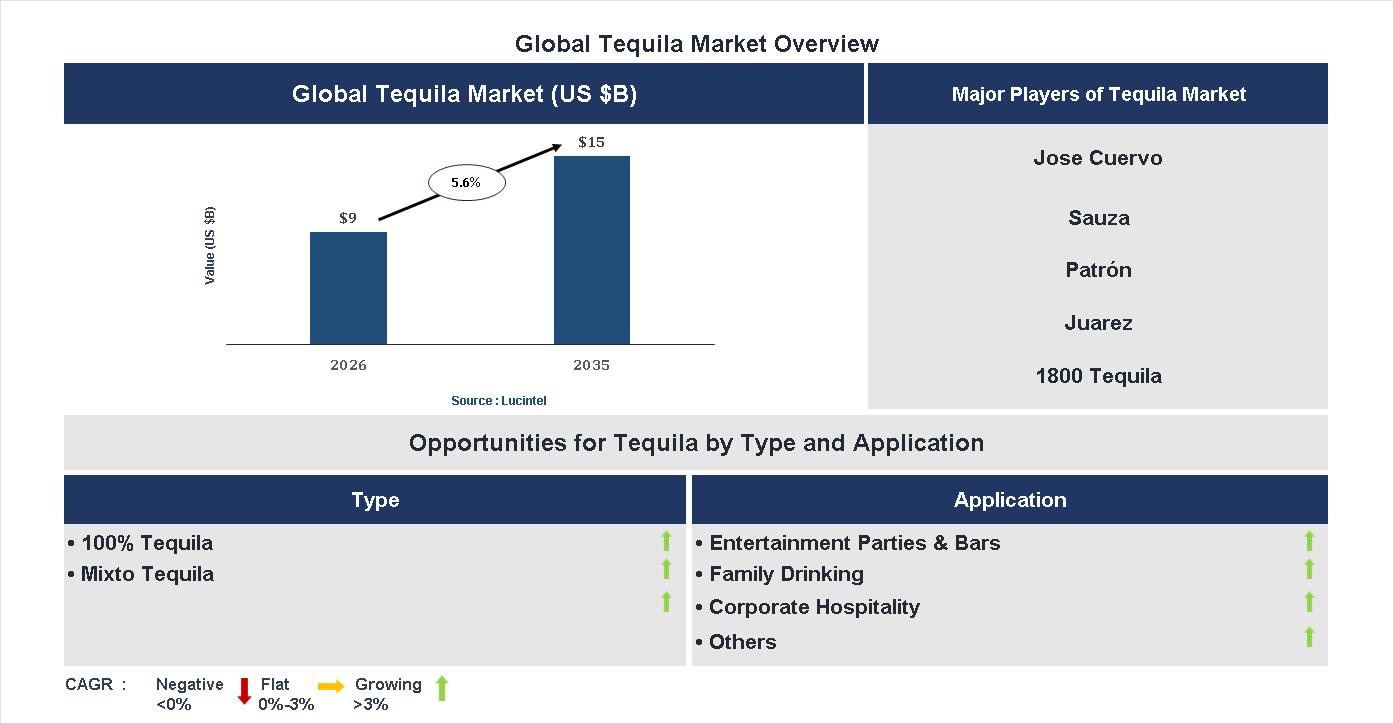
Key data points: The market size in 2035 = $15 billion, growth forecast = 5.6% annually for the next 8 years. Scroll below to get more insights. This market report covers trends, opportunities and forecasts in tequila market to 2035 by type (100% tequila and mixto tequila), application (entertainment parties & bars, family drinking, corporate hospitality, and others), and region (North America, Europe, Asia Pacific, and the Rest of the World)
We'll send your sample report shortly.
• Lucintel forecasts that, within the type category, 100% tequila is expected to witness higher growth over the forecast period.
• Within the application category, entertainment party & bar is expected to witness the highest growth.
• In terms of region, APAC is expected to witness the highest growth over the forecast period. Gain valuable insights for your business decisions with our comprehensive 150+ page report. Sample figures with some insights are shown below.
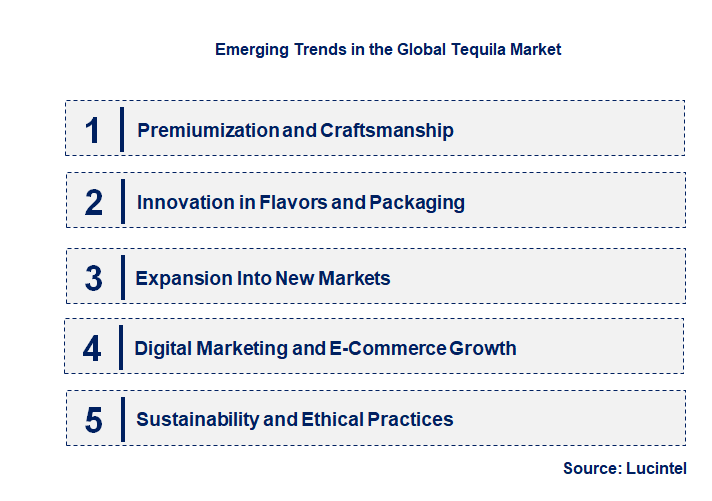
• Premiumization and Craftsmanship: The demand for premium tequila is rising as consumers seek high-quality, authentic products. This trend emphasizes craftsmanship, traditional production methods, and unique flavor profiles, appealing to connoisseurs and luxury buyers. Producers are investing in artisanal techniques and storytelling to differentiate their brands, which boosts market value and consumer loyalty. The focus on premiumization is also encouraging small-batch and limited-edition releases, fostering a sense of exclusivity and enhancing brand prestige.
• Innovation in Flavors and Packaging: Companies are introducing innovative flavors such as infused, organic, and exotic variants to attract diverse consumer segments. Additionally, creative packaging designs and eco-friendly materials are gaining popularity, aligning with sustainability trends. These innovations help brands stand out on shelves, appeal to younger consumers, and expand product portfolios. The trend toward unique flavors and sustainable packaging is also driving consumer engagement and brand differentiation in a competitive market.
• Expansion into New Markets: The tequila market is witnessing significant growth in emerging regions such as Asia-Pacific, Africa, and the Middle East. Companies are tailoring marketing strategies to local preferences and establishing distribution channels to penetrate these markets. This expansion is driven by increasing disposable incomes, changing lifestyles, and growing awareness of tequila as a versatile spirit. Entering new markets not only boosts sales volume but also diversifies revenue streams and enhances global brand presence.
• Digital Marketing and E-Commerce Growth: The rise of digital platforms and e-commerce channels is transforming how tequila brands connect with consumers. Social media marketing, influencer collaborations, and online sales platforms are enabling brands to reach wider audiences directly. This trend facilitates personalized marketing, real-time engagement, and convenient purchasing options, especially among younger consumers. The digital shift is also providing valuable consumer insights, helping brands refine their strategies and foster brand loyalty in a competitive landscape.
• Sustainability and Ethical Practices: Consumers are increasingly prioritizing brands that demonstrate environmental responsibility and ethical sourcing. Producers are adopting sustainable farming practices, eco-friendly packaging, and transparent supply chains to meet these expectations. This trend enhances brand reputation, appeals to environmentally conscious consumers, and aligns with global sustainability initiatives. Incorporating sustainability into business models is becoming a key differentiator and a strategic imperative for long-term growth in the tequila market. These trends are collectively reshaping the tequila market by emphasizing quality, innovation, global expansion, digital engagement, and sustainability. They are driving growth, fostering brand differentiation, and creating new opportunities for industry stakeholders to innovate and adapt in a dynamic environment.
• Growing Demand for Premium and Craft Tequila: The market is witnessing a surge in consumer preference for premium and craft tequila, driven by a desire for authentic, high-quality spirits. This trend encourages producers to focus on artisanal production methods, unique flavors, and branding strategies that emphasize heritage and craftsmanship. As a result, premium tequila sales are increasing globally, attracting a more affluent customer base and boosting overall market value. This shift enhances brand differentiation and encourages innovation within the industry.
• Expansion into Emerging Markets: Emerging markets such as Asia-Pacific and Africa present significant growth opportunities for tequila brands. Increasing urbanization, rising disposable incomes, and changing consumer lifestyles are fueling demand for international spirits. Companies are investing in localized marketing and distribution channels to penetrate these regions effectively. This expansion not only broadens the consumer base but also diversifies revenue streams, positioning tequila as a global beverage option. The growth in these markets is expected to accelerate industry revenues substantially.
• Innovation in Flavors and Packaging: Innovation in flavors and packaging is transforming the tequila landscape by appealing to diverse consumer preferences. Brands are introducing new flavor profiles, such as fruit-infused or spicy variants, to attract younger and adventurous drinkers. Additionally, innovative packaging designs and eco-friendly materials are enhancing product appeal and sustainability. These developments foster consumer engagement, increase brand loyalty, and open avenues for premium pricing. The focus on innovation is vital for maintaining competitiveness and capturing niche markets.
• Digital Marketing and E-Commerce Growth: The rise of digital marketing and e-commerce platforms is revolutionizing how tequila brands reach consumers. Social media campaigns, influencer collaborations, and online sales channels enable brands to build direct relationships with customers and expand their reach globally. E-commerce provides convenience and access to a broader audience, especially during the pandemic. This digital shift enhances brand visibility, accelerates sales, and offers valuable consumer insights. The integration of digital strategies is crucial for market growth and adapting to modern purchasing behaviors.
• Sustainability and Ethical Production Practices: Sustainability initiatives are increasingly influencing the tequila industry, with brands adopting eco-friendly practices such as organic farming, water conservation, and waste reduction. Ethical production practices appeal to environmentally conscious consumers and enhance brand reputation. Certification programs and transparent supply chains are becoming standard, fostering trust and loyalty. These efforts contribute to long-term industry sustainability, reduce environmental impact, and meet regulatory standards. Emphasizing sustainability is shaping the future of tequila production and market positioning. The overall impact of these developments is a dynamic, expanding tequila market characterized by innovation, global reach, and sustainability. These opportunities are attracting new consumer segments, increasing sales, and strengthening brand differentiation. As a result, the industry is poised for sustained growth, with companies leveraging these trends to enhance competitiveness and market share worldwide.
• Expanding Premium and Ultra-Premium Segments: The rising consumer preference for high-quality, artisanal tequila is creating substantial growth opportunities in premium and ultra-premium segments. Consumers are willing to pay more for authentic, handcrafted products with unique flavor profiles, fostering brand loyalty. This trend encourages producers to innovate with limited editions, aged tequilas, and premium packaging, thereby increasing profit margins and market share in a competitive landscape.
• Growing International Markets and Export Opportunities: The global demand for tequila is expanding beyond traditional markets like the US and Mexico into Europe, Asia, and other regions. Increasing awareness and acceptance of tequila as a versatile spirit for cocktails and sipping are driving exports. Companies are leveraging strategic partnerships, localized marketing, and distribution channels to penetrate these emerging markets, unlocking new revenue streams and diversifying their consumer base.
• Innovation in Flavored and Ready-to-Drink (RTD) Products: The development of flavored tequilas and RTD cocktails is capturing consumer interest, especially among younger demographics seeking convenience and variety. These innovative products cater to evolving tastes and lifestyle preferences, providing opportunities for differentiation. Investment in product development, marketing campaigns, and distribution channels for flavored and RTD tequila products can significantly boost sales and market share.
• Embracing Sustainable and Organic Production Practices: Consumers are increasingly prioritizing sustainability and organic ingredients in their purchasing decisions. Tequila producers adopting eco-friendly cultivation, organic certification, and sustainable packaging can enhance brand reputation and appeal to environmentally conscious consumers. This focus on sustainability not only meets market demand but also aligns with regulatory trends, offering long-term growth potential and competitive advantage.
• Strategic Brand Collaborations and Marketing Campaigns: Collaborations with celebrities, mixologists, and lifestyle brands are enhancing tequila’s visibility and desirability. Innovative marketing campaigns, experiential events, and social media engagement help build brand loyalty and attract new consumers. Strategic partnerships enable brands to tap into new customer segments, increase market penetration, and differentiate themselves in a crowded marketplace, fostering sustained growth. The overall impact of these opportunities is a robust expansion of the tequila market, driven by innovation, globalization, and consumer preferences. Companies that effectively leverage these growth avenues can strengthen their market position, increase revenues, and capitalize on the evolving landscape of the spirits industry. This dynamic environment promises continued growth and diversification in the coming years.
• Increasing Global Demand: The global demand for tequila has surged due to its rising popularity among millennials and health-conscious consumers seeking natural and authentic spirits. This trend is supported by the growing appreciation for premium and craft spirits, which has led to increased sales in North America, Europe, and emerging markets. The expansion of distribution channels, including e-commerce platforms, has further facilitated access to tequila products worldwide. Moreover, marketing campaigns emphasizing tequilas cultural heritage and versatility have enhanced its appeal, driving market growth significantly.
• Innovation in Product Offerings: Technological advancements and consumer preferences have spurred innovation in tequila products. Producers are now offering flavored, organic, and artisanal tequilas to cater to diverse tastes. The development of sustainable production methods, such as eco-friendly agave cultivation and waste management, appeals to environmentally conscious consumers. Additionally, packaging innovations, including premium bottles and convenient formats, have enhanced product attractiveness. These innovations not only meet evolving consumer demands but also enable brands to differentiate themselves in a competitive market, thereby fueling growth.
• Expansion of Production Capacity: Investment in expanding production facilities and modernization of distillation processes has increased tequila output. This expansion is driven by rising demand and the need to meet international export requirements. Countries like Mexico, the primary producer, are upgrading their infrastructure to improve quality and efficiency. The adoption of advanced technologies such as automated distillation and quality control systems ensures consistent product standards. Increased production capacity allows for greater market penetration and the ability to supply larger volumes, supporting overall industry growth and competitiveness.
• Favorable Trade Policies and Export Opportunities: Trade agreements and favorable export policies have opened new markets for tequila producers. Countries such as the United States, Canada, and European nations have reduced tariffs and streamlined import procedures, facilitating easier access to these markets. This has led to increased exports and brand recognition globally. Additionally, government initiatives promoting Mexican spirits and protecting geographical indications have strengthened market positioning. These policies enable producers to expand their reach, increase sales, and capitalize on international demand, thereby boosting the overall market.
• Growing Premium and Super-Premium Segments: Consumers are increasingly willing to pay a premium for high-quality, authentic tequila. This shift towards premium and super-premium segments is driven by rising disposable incomes and a desire for luxury experiences. Brands are investing in branding, storytelling, and packaging to appeal to affluent consumers. The focus on craftsmanship, heritage, and organic ingredients enhances perceived value. This trend not only increases profit margins but also elevates the overall market image, encouraging further investment and innovation in high-end tequila products. The challenges facing the tequila market include:
• Regulatory and Legal Constraints: Stringent regulations regarding production standards, labeling, and geographical indications pose significant hurdles. Compliance with diverse international standards requires substantial investment and expertise. Changes in regulations can lead to increased costs and operational delays. Additionally, intellectual property issues and counterfeit products threaten brand integrity and market trust. Navigating complex legal frameworks across different regions demands continuous monitoring and adaptation, which can hinder market expansion and innovation efforts.
• Fluctuating Agave Supply and Prices: The reliance on agave as the primary raw material makes the market vulnerable to supply chain disruptions. Climate change, pests, and overharvesting have led to shortages and increased prices. These fluctuations impact production costs and profit margins, forcing producers to seek alternative sources or adjust formulations. The scarcity of high-quality agave can also affect product quality and consistency, potentially damaging brand reputation. Managing supply risks is crucial for maintaining market stability and meeting consumer demand.
• Impact of Economic and Political Instability: Economic downturns, currency fluctuations, and political uncertainties can adversely affect the tequila market. Reduced consumer spending during economic crises diminishes demand for premium spirits. Political instability may disrupt trade relations, export channels, and supply chains. Changes in taxation policies or import/export restrictions can further complicate market operations. These factors create an unpredictable environment, requiring companies to develop resilient strategies to mitigate risks and sustain growth amid volatility. The tequila market is driven by innovative product offerings, expanding global demand, increased production capacity, and favorable trade policies. However, it faces challenges such as regulatory complexities, supply chain vulnerabilities, and economic uncertainties. These drivers and challenges collectively influence the markets trajectory, requiring stakeholders to adapt strategically. While growth prospects remain promising, addressing regulatory and supply issues is essential for long-term sustainability. Overall, the markets future depends on balancing innovation and compliance while navigating external economic and political factors.
• Jose Cuervo
• Sauza
• Patrón
• Juarez
• 1800 Tequila
• El Jimador Family
• Don Julio
• Familia Camarena Tequila
• Herradura
• Zarco
• 100% Tequila
• Mixto Tequila
• Entertainment Parties & Bars
• Family Drinking
• Corporate Hospitality
• Others
• North America
• Europe
• Asia Pacific
• The Rest of the World
• United States: The US tequila market continues to grow rapidly, driven by premium product demand and cocktail culture expansion. Major brands are investing in marketing campaigns and new product lines, including flavored tequilas. The rise of e-commerce platforms has facilitated easier access for consumers, boosting sales. Craft and small-batch tequilas are gaining popularity among connoisseurs. Regulatory changes have also supported market growth, with increased focus on quality standards. Additionally, tequila tourism in regions like Jalisco has enhanced brand visibility and consumer engagement, further fueling market expansion.
• China: The Chinese tequila market is emerging, with increasing awareness among urban consumers and younger demographics. Import regulations are easing, allowing more tequila brands to enter the market. Premium and imported tequilas are gaining popularity in upscale bars and restaurants. Local marketing efforts focus on positioning tequila as a trendy, luxury spirit. E-commerce platforms are playing a vital role in distribution, especially among millennials. While still a niche segment, the market shows potential for rapid growth as Western drinking habits become more mainstream in China.
• Germany: Germanys tequila market is characterized by a steady increase in consumption, particularly among young adults and cocktail enthusiasts. The country’s vibrant bar scene and cocktail culture have contributed to rising demand. Importers are expanding their portfolios to include a wider variety of tequilas, including artisanal and organic options. Consumer awareness about tequila quality and origin is improving, leading to increased preference for premium products. Events and festivals dedicated to tequila are also promoting brand recognition. Overall, Germany is becoming a significant European hub for tequila enthusiasts and connoisseurs.
• India: The Indian tequila market is in its nascent stage but shows promising growth potential. Urban middle and upper classes are increasingly experimenting with international spirits, including tequila. Premium and imported brands are gaining traction through retail outlets and online sales. The growing popularity of Western-style cocktails and bar culture is boosting demand. Market players are focusing on educating consumers about tequila’s heritage and quality. Government regulations and import duties are challenges, but the expanding hospitality sector and rising disposable incomes are expected to drive future growth.
• Japan: Japan’s tequila market is expanding gradually, driven by a sophisticated consumer base interested in international spirits. The trend towards premiumization and craft spirits is evident, with consumers seeking high-quality, authentic tequilas. Bars and restaurants are increasingly offering tequila-based cocktails, and retail outlets are stocking a broader range of brands. Japanese consumers are also participating in tequila tasting events and festivals, enhancing brand awareness. E-commerce sales are rising, making tequila more accessible. Overall, Japan’s market is evolving with a focus on quality, authenticity, and experiential consumption.


• Jose Cuervo
• Sauza
• Patrón
• Juarez
• 1800 Tequila
• El Jimador Family
• Don Julio
• Familia Camarena Tequila
• Herradura
• Zarco Q6. Which tequila market segment will be the largest in future? Answer: Lucintel forecasts that, within the type category, 100% tequila is expected to witness higher growth over the forecast period. Q7. In tequila market, which region is expected to be the largest in next 5 years? Answer: In terms of region, APAC is expected to witness the highest growth over the forecast period. Q8. Do we receive customization in this report? Answer: Yes, Lucintel provides 10% customization without any additional cost.


Choose a license that fits your team. Instant PDF delivery.
Prices exclude taxes. Instant delivery. Custom licensing available on request.
Market Report · July 22, 2026
Market Report · July 22, 2026
Market Report · July 22, 2026
Trusted partner for strategic intelligence and business growth


Receive a complimentary market analysis tailored to your industry. Our analysts will identify key growth opportunities and competitive dynamics specific to your business.

Market size, growth rate, and key trend analysis for your specific sector.

Top competitor positioning and market share analysis.

Strategic recommendations backed by data-driven insights.
Get curated market intelligence and competitive moves straight to your inbox.
By subscribing, you agree to receive our monthly insights. Unsubscribe anytime.
Receive a complimentary market analysis tailored to your industry. Our analysts will identify key growth opportunities and competitive dynamics specific to your business.
Market size, growth rate, and key trend analysis for your specific sector.
Top competitor positioning and market share analysis.
Strategic recommendations backed by data-driven insights.
Get curated market intelligence, emerging trends, and competitive moves straight to your inbox each month.
By subscribing, you agree to receive our monthly insights. Unsubscribe anytime.
We'll send your sample report shortly.