
Report Feature
Telehealth Technology Market Trends and Forecast
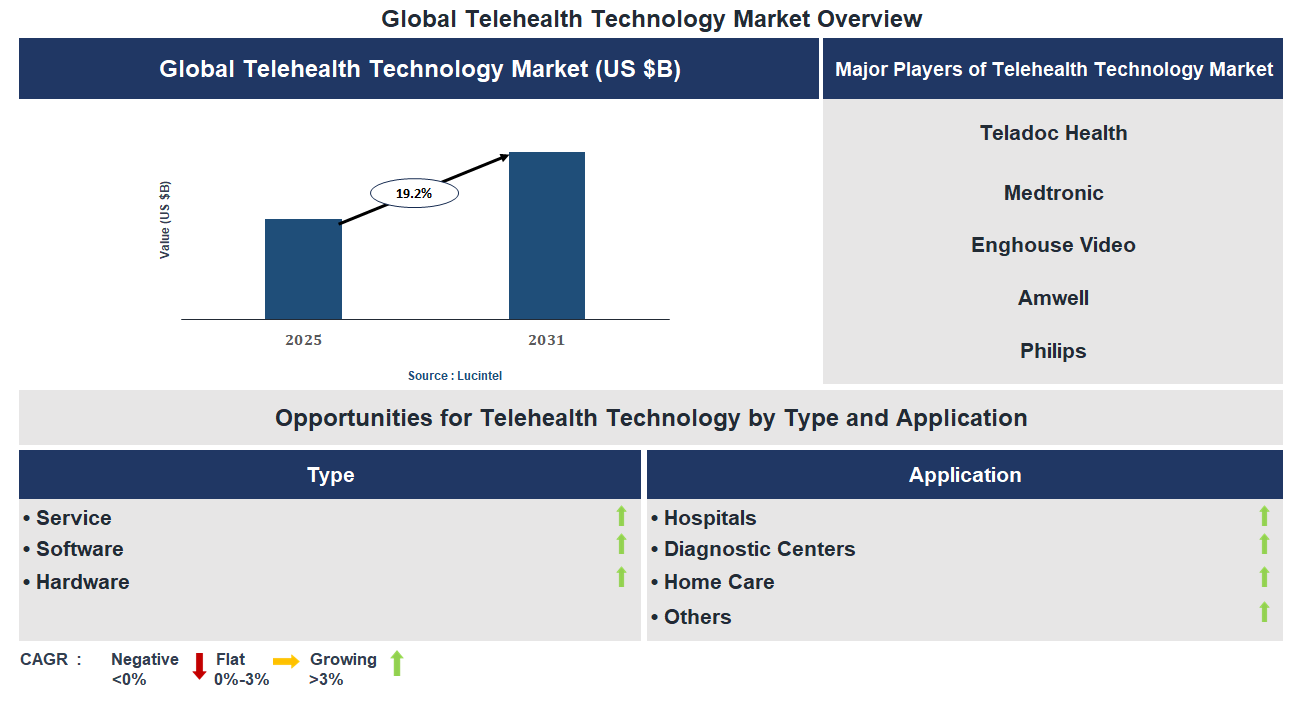
The future of the global telehealth technology market looks promising with opportunities in the hospital, diagnostic center, and home care markets. The global telehealth technology market is expected to grow with a CAGR of 19.2% from 2025 to 2031. The major drivers for this market are the increasing demand for remote healthcare services, the rising adoption of virtual consultations, and the growing focus on healthcare accessibility solutions.• Lucintel forecasts that, within the type category, service is expected to witness the highest growth over the forecast period.
• Within the application category, home care is expected to witness the highest growth.
• In terms of region, APAC is expected to witness the highest growth over the forecast period. Gain valuable insights for your business decisions with our comprehensive 150+ page report. Sample figures with some insights are shown below.
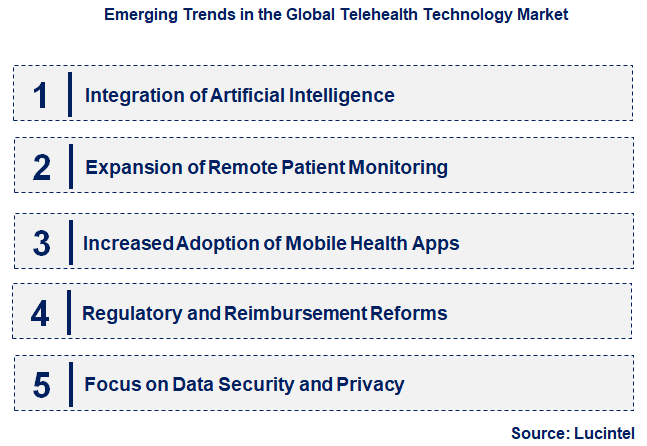
Emerging Trends in the Telehealth Technology Market
The telehealth technology market is experiencing rapid growth driven by technological advancements, changing healthcare needs, and increased demand for accessible medical services. As digital health solutions become more integrated into everyday healthcare practices, several emerging trends are shaping the future of this industry. These developments are not only improving patient outcomes but also transforming healthcare delivery models, making services more efficient, personalized, and accessible. Stakeholders must adapt to these trends to stay competitive and meet evolving consumer expectations. The following are five key trends currently influencing the telehealth technology market.• Integration of Artificial Intelligence: AI is increasingly being incorporated into telehealth platforms to enhance diagnostics, personalize treatment plans, and automate administrative tasks. AI-powered chatbots and virtual health assistants provide 24/7 support, improving patient engagement and reducing healthcare provider workload. Machine learning algorithms analyze large datasets to identify health patterns, enabling early intervention and more accurate diagnoses. This trend is making telehealth services smarter, more efficient, and capable of delivering personalized care at scale, ultimately improving patient outcomes and operational efficiency.
• Expansion of Remote Patient Monitoring: RPM devices are becoming more sophisticated, allowing continuous monitoring of vital signs, chronic conditions, and post-surgical recovery outside clinical settings. Wearable sensors and connected devices transmit real-time data to healthcare providers, enabling proactive management of patient health. This trend reduces hospital readmissions, enhances chronic disease management, and provides patients with greater independence. The integration of RPM into telehealth platforms is transforming traditional reactive care into proactive, data-driven healthcare, leading to better health outcomes and cost savings.
• Increased Adoption of Mobile Health Apps: The proliferation of smartphones has led to a surge in mHealth applications for fitness, mental health, medication management, and symptom tracking. These apps empower users to take control of their health and facilitate remote consultations with healthcare professionals. mHealth apps improve accessibility, especially in remote or underserved areas, and foster continuous health engagement. Their user-friendly interfaces and personalized features are driving higher adoption rates, making healthcare more consumer-centric and convenient, and expanding the reach of telehealth services.
• Regulatory and Reimbursement Reforms: Governments and regulatory bodies are updating policies to support telehealth expansion, including reimbursement models for virtual consultations and remote monitoring. These reforms reduce financial barriers for providers and patients, encouraging wider adoption of telehealth solutions. Clearer guidelines on data privacy, security, and licensing are also being established, fostering trust and compliance. This trend is crucial for sustainable growth, ensuring telehealth services are financially viable and legally compliant, which in turn accelerates innovation and integration into mainstream healthcare systems.
• Focus on Data Security and Privacy: As telehealth platforms handle sensitive health information, there is a growing emphasis on cybersecurity measures to protect patient data. Advanced encryption, secure authentication, and compliance with regulations like HIPAA are becoming standard practices. The increasing frequency of cyber threats has prompted investments in robust security infrastructure. Ensuring data privacy not only maintains patient trust but also complies with legal requirements, which is vital for the continued expansion of telehealth services. This trend underscores the importance of balancing technological innovation with security to sustain market growth. In summary, these trends are collectively reshaping the telehealth technology market by making healthcare more personalized, accessible, and efficient. The integration of AI, expansion of remote monitoring, adoption of mobile apps, regulatory reforms, and heightened focus on data security are driving innovation and broadening the scope of telehealth services. As these developments continue, they will lead to more patient-centered care, reduced healthcare costs, and a more resilient healthcare infrastructure capable of meeting future demands.
Recent Development in the Telehealth Technology Market
The telehealth technology market has experienced rapid growth driven by technological advancements, increasing healthcare demands, and the global push for remote medical services. The COVID-19 pandemic accelerated adoption, highlighting the importance of telehealth solutions in providing accessible, efficient healthcare. As the market evolves, key developments are shaping its future trajectory, influencing providers, patients, and policymakers alike. These innovations are enhancing service delivery, expanding reach, and improving patient outcomes. Understanding these developments is crucial for stakeholders aiming to capitalize on emerging opportunities and navigate challenges in this dynamic landscape.• Integration of AI and Machine Learning: AI-powered telehealth platforms are enabling more accurate diagnostics, personalized treatment plans, and predictive analytics, which improve patient care and operational efficiency. This development reduces clinician workload and enhances decision-making, leading to better health outcomes and increased trust in telehealth services.
• Expansion of Remote Patient Monitoring (RPM): Advances in wearable devices and IoT technology have expanded RPM capabilities, allowing continuous monitoring of chronic conditions and post-surgical recovery. This development reduces hospital readmissions, improves patient engagement, and provides real-time data for clinicians, ultimately lowering healthcare costs.
• Regulatory and Reimbursement Reforms: Governments and insurers are updating policies to support telehealth services, including expanded reimbursement models and relaxed licensing requirements. These reforms facilitate wider adoption, ensure financial viability for providers, and promote equitable access to telehealth across diverse populations.
• Enhanced Data Security and Privacy Measures: As telehealth involves sensitive health data, recent developments focus on strengthening cybersecurity protocols, encryption, and compliance with privacy laws. These measures build patient trust, prevent data breaches, and ensure the sustainable growth of telehealth services.
• Integration of Virtual Reality (VR) and Augmented Reality (AR): Emerging VR and AR technologies are being incorporated into telehealth for immersive therapy, training, and patient education. This innovation enhances engagement, improves treatment adherence, and broadens the scope of remote healthcare applications. In summary, these developments are significantly transforming the telehealth technology market by improving service quality, expanding access, and ensuring security. They are driving increased adoption among healthcare providers and patients, fostering innovation, and shaping a more resilient, efficient healthcare ecosystem.
Strategic Growth Opportunities in the Telehealth Technology Market
The telehealth technology market is experiencing rapid expansion driven by technological advancements, increasing healthcare demands, and a shift towards remote patient care. As healthcare providers and patients seek more accessible, efficient, and cost-effective solutions, the market is poised for significant growth across various applications. Key growth opportunities are emerging in teleconsultations, remote patient monitoring, telepharmacy, tele-mental health, and chronic disease management. These developments are transforming healthcare delivery, improving patient outcomes, and expanding market reach. Stakeholders must capitalize on these opportunities to stay competitive and meet evolving healthcare needs effectively.• Expanding Access and Convenience: Teleconsultations are revolutionizing primary care by enabling patients to consult healthcare providers remotely, reducing wait times, and increasing access in rural or underserved areas. This growth enhances patient engagement, improves health outcomes, and reduces healthcare costs, making telehealth a vital component of modern healthcare delivery.
• Continuous Health Tracking: Remote monitoring devices allow real-time tracking of vital signs and chronic conditions outside clinical settings. This technology improves early detection of health issues, reduces hospital readmissions, and supports personalized treatment plans, leading to better patient management and cost savings for healthcare providers.
• Expanding Medication Access: Telepharmacy services facilitate remote prescription fulfillment and medication counseling, especially in remote or underserved regions. This growth ensures timely medication access, enhances medication adherence, and reduces pharmacy wait times, thereby improving overall medication management and patient safety.
• Increasing Mental Health Support: The rise of tele-mental health services addresses the growing demand for mental health care by providing remote counseling and therapy sessions. This application reduces stigma, increases accessibility, and offers flexible scheduling, significantly expanding mental health support and improving patient well-being.
• Remote Management Solutions: Telehealth tools for chronic disease management enable continuous monitoring and virtual consultations, improving disease control and reducing complications. This growth supports proactive care, enhances patient quality of life, and decreases long-term healthcare costs. In summary, these growth opportunities are significantly impacting the telehealth technology market by broadening service accessibility, improving patient outcomes, and reducing healthcare costs. As these applications evolve, they are driving innovation, expanding market reach, and transforming healthcare delivery worldwide.
Telehealth Technology Market Driver and Challenges
The telehealth technology market is influenced by a variety of technological, economic, and regulatory factors that shape its growth and development. Advances in digital health tools, increasing demand for remote healthcare services, and supportive government policies are key drivers. However, challenges such as data security concerns, regulatory complexities, and technological disparities pose significant hurdles. Understanding these drivers and challenges is essential for stakeholders to navigate the evolving landscape effectively and capitalize on emerging opportunities. The factors responsible for driving the telehealth technology market include:• Technological Advancements: Rapid innovations in telecommunication and healthcare devices have revolutionized remote patient monitoring, virtual consultations, and health data management. The integration of AI, IoT, and high-speed internet enhances service quality and accessibility, making telehealth more efficient and user-friendly. These technological improvements reduce costs, improve patient outcomes, and expand reach, especially in rural and underserved areas. As technology continues to evolve, the market is expected to experience sustained growth driven by increased adoption and new application development.
• Rising Healthcare Costs and Demand for Cost-Effective Solutions: The escalating costs of traditional healthcare delivery systems have prompted both providers and patients to seek more affordable alternatives. Telehealth offers a cost-effective solution by reducing hospital visits, minimizing travel expenses, and enabling early diagnosis and management of chronic conditions. This economic advantage encourages healthcare providers to adopt telehealth services, especially in regions with limited healthcare infrastructure. The growing burden of chronic diseases further amplifies the need for remote monitoring and management, fueling market expansion.
• Increasing Adoption of Digital Health Records and Data Analytics: The integration of electronic health records (EHRs) and advanced data analytics into telehealth platforms enhances patient care by providing comprehensive health insights. Data-driven decision-making improves treatment accuracy and personalization, leading to better health outcomes. Additionally, analytics facilitate population health management and predictive modeling, which are vital for proactive healthcare strategies. The widespread adoption of digital records and analytics tools supports the scalability and effectiveness of telehealth services, driving market growth.
• Supportive Regulatory Environment and Reimbursement Policies: Governments and regulatory bodies worldwide are recognizing telehealths potential and are implementing policies to promote its adoption. Reimbursement frameworks for virtual consultations and remote monitoring are being established, making telehealth financially viable for providers. Regulatory standards ensure quality, safety, and privacy, fostering trust among users. These supportive policies lower barriers to entry and encourage innovation, thereby accelerating market expansion and integration into mainstream healthcare systems.
• Growing Patient Acceptance and Preference for Remote Care: Patients increasingly prefer the convenience and safety of remote healthcare services, especially amid the COVID-19 pandemic. The flexibility of scheduling, reduced travel, and immediate access to specialists enhance patient satisfaction. As awareness and digital literacy improve, more individuals are willing to adopt telehealth solutions. This shift in patient behavior drives demand, prompting healthcare providers to expand telehealth offerings and invest in user-friendly platforms, further propelling market growth. The challenges facing this telehealth technology market include:
• Data Security and Privacy Concerns: The sensitive nature of health data necessitates robust security measures. Cybersecurity threats, data breaches, and unauthorized access pose significant risks, potentially compromising patient confidentiality and trust. Ensuring compliance with privacy regulations like HIPAA and GDPR adds complexity and cost to telehealth operations. Failure to adequately protect data can lead to legal repercussions, financial losses, and diminished user confidence, hindering market growth and adoption.
• Regulatory and Reimbursement Complexities: Despite supportive policies, inconsistent regulations across regions create barriers to widespread telehealth implementation. Variations in licensing, cross-border practice laws, and reimbursement policies complicate service delivery and provider operations. Navigating these regulatory landscapes requires significant effort and resources, which can delay market expansion and limit access, especially in emerging markets with less developed frameworks.
• Technological Disparities and Infrastructure Limitations: Unequal access to high-speed internet, modern devices, and digital literacy creates disparities in telehealth adoption. Rural and underserved populations often lack the necessary infrastructure, limiting the reach of telehealth services. These technological gaps hinder equitable healthcare delivery and slow overall market growth. Addressing infrastructure deficiencies and ensuring user-friendly platforms are critical challenges for sustained expansion. In summary, the telehealth technology market is driven by rapid technological innovations, economic incentives, supportive policies, and changing patient preferences. However, challenges such as data security, regulatory complexities, and infrastructural disparities must be addressed to realize its full potential. Overcoming these hurdles will require coordinated efforts among stakeholders, technological advancements, and policy reforms. The markets future hinges on balancing innovation with security and accessibility, ultimately transforming healthcare delivery worldwide.
List of Telehealth Technology Companies
Companies in the market compete on the basis of product quality offered. Major players in this market focus on expanding their manufacturing facilities, R&D investments, infrastructural development, and leverage integration opportunities across the value chain. With these strategies telehealth technology companies cater increasing demand, ensure competitive effectiveness, develop innovative products & technologies, reduce production costs, and expand their customer base. Some of the telehealth technology companies profiled in this report include-• Teladoc Health
• Medtronic
• Enghouse Video
• Amwell
• Philips
• Hims & Hers Health
• Yuantu Tech
Telehealth Technology Market by Segment
The study includes a forecast for the global telehealth technology market by type, application, and region.Telehealth Technology Market by Type [Value from 2019 to 2031]:
• Service
• Software
• Hardware
Telehealth Technology Market by Application [Value from 2019 to 2031]:
• Hospitals
• Diagnostic Centers
• Home Care
• Others
Telehealth Technology Market by Region [Value from 2019 to 2031]:
• North America
• Europe
• Asia Pacific
• The Rest of the World
Country Wise Outlook for the Telehealth Technology Market
The telehealth technology market has experienced rapid growth globally, driven by technological advancements, increased healthcare demands, and the COVID-19 pandemic. Countries are adopting innovative solutions to improve healthcare access, reduce costs, and enhance patient outcomes. Regulatory changes and investments in digital infrastructure are further accelerating this trend. Each country’s approach reflects its unique healthcare needs, technological capabilities, and policy environment, shaping the future landscape of telehealth services worldwide.• United States: The US has seen significant expansion in telehealth adoption, supported by policy reforms and increased investment in digital health infrastructure. Major healthcare providers are integrating telehealth into routine care, especially in rural and underserved areas. Innovations include remote patient monitoring, AI-driven diagnostics, and virtual mental health services. The government’s temporary relaxation of telehealth regulations during the pandemic has become more permanent, fostering sustained growth. Private insurers are expanding coverage, and startups are developing specialized telehealth platforms, making healthcare more accessible and efficient.
• China: China’s telehealth market is rapidly evolving, driven by government initiatives to improve rural healthcare access and digital infrastructure development. Major tech companies like Alibaba and Tencent are investing heavily in telemedicine platforms, integrating AI and big data analytics. The government’s policies promote telehealth as part of broader healthcare reform, with pilot programs expanding across provinces. The pandemic accelerated adoption, especially for chronic disease management and remote consultations. Mobile health apps and online pharmacies are also gaining popularity, making healthcare more accessible to the vast population.
• Germany: Germany’s telehealth market is characterized by a strong regulatory framework and high digital literacy. Recent developments include the expansion of video consultation services and the integration of telehealth into the statutory health insurance system. The Digital Healthcare Act (DVG) has facilitated reimbursement for digital health applications, encouraging innovation. Hospitals and clinics are increasingly adopting remote monitoring and e-prescriptions. The focus remains on improving chronic disease management and elderly care, with ongoing investments in secure data exchange and interoperability to ensure patient privacy and data security.
• India: India’s telehealth sector is experiencing rapid growth, fueled by increasing smartphone penetration and government initiatives like the National Digital Health Mission. The pandemic highlighted the need for accessible healthcare, prompting widespread adoption of teleconsultations, especially in rural areas. Startups are developing affordable telehealth platforms tailored to local needs, including language support and low-bandwidth solutions. The government is promoting digital health infrastructure, including electronic health records and telemedicine guidelines. Challenges remain around internet connectivity and digital literacy, but the overall trajectory points toward broader telehealth integration into India’s healthcare system.
• Japan: Japan’s telehealth market is expanding steadily, with a focus on aging population. Recent developments include increased use of remote monitoring devices for elderly care and virtual consultations to reduce hospital visits. Regulatory adjustments have eased restrictions on telehealth services, especially during the pandemic. The government promotes digital health initiatives to support elderly independence and chronic disease management. Collaboration between tech firms and healthcare providers is fostering innovative solutions like AI-based health assessments. Japan’s emphasis on data security and privacy continues to shape the development of its telehealth ecosystem, ensuring patient trust and compliance.

Features of the Global Telehealth Technology Market
Market Size Estimates: Telehealth technology market size estimation in terms of value ($B). Trend and Forecast Analysis: Market trends (2019 to 2024) and forecast (2025 to 2031) by various segments and regions. Segmentation Analysis: Telehealth technology market size by type, application, and region in terms of value ($B). Regional Analysis: Telehealth technology market breakdown by North America, Europe, Asia Pacific, and Rest of the World. Growth Opportunities: Analysis of growth opportunities in different types, applications, and regions for the telehealth technology market. Strategic Analysis: This includes M&A, new product development, and competitive landscape of the telehealth technology market. Analysis of competitive intensity of the industry based on Porter’s Five Forces model.
FAQ
Q1. What is the growth forecast for telehealth technology market? Answer: The global telehealth technology market is expected to grow with a CAGR of 19.2% from 2025 to 2031. Q2. What are the major drivers influencing the growth of the telehealth technology market? Answer: The major drivers for this market are the increasing demand for remote healthcare services, the rising adoption of virtual consultations, and the growing focus on healthcare accessibility solutions. Q3. What are the major segments for telehealth technology market? Answer: The future of the telehealth technology market looks promising with opportunities in the hospital, diagnostic center, and home care markets. Q4. Who are the key telehealth technology market companies? Answer: Some of the key telehealth technology companies are as follows:• Teladoc Health
• Medtronic
• Enghouse Video
• Amwell
• Philips
• Hims & Hers Health
• Yuantu Tech Q5. Which telehealth technology market segment will be the largest in future? Answer: Lucintel forecasts that, within the type category, service is expected to witness the highest growth over the forecast period. Q6. In telehealth technology market, which region is expected to be the largest in next 5 years? Answer: In terms of region, APAC is expected to witness the highest growth over the forecast period. Q7. Do we receive customization in this report? Answer: Yes, Lucintel provides 10% customization without any additional cost.
Table of Contents
List of Figures
List of Tables
Methodology
- In-depth interviews of the major players in this market
- Detailed secondary research from competitors’ financial statements and published data
- Extensive searches of published works, market, and database information pertaining to industry news, company press releases, and customer intentions
- A compilation of the experiences, judgments, and insights of Lucintel’s professionals, who have analyzed and tracked this market over the years.


Buy Now
Choose a license that fits your team. Instant PDF delivery.
Prices exclude taxes. Instant delivery. Custom licensing available on request.
Key Questions
- • What are some of the most promising, high-growth opportunities for the telehealth technology market by type (service, software, and hardware), application (hospitals, diagnostic centers, home care, and others), and region (North America, Europe, Asia Pacific, and the Rest of the World)?
- • Which segments will grow at a faster pace and why?
- • Which region will grow at a faster pace and why?
- • What are the key factors affecting market dynamics? What are the key challenges and business risks in this market?
- • What are the business risks and competitive threats in this market?
- • What are the emerging trends in this market and the reasons behind them?
- • What are some of the changing demands of customers in the market?
- • What are the new developments in the market? Which companies are leading these developments?
- • Who are the major players in this market? What strategic initiatives are key players pursuing for business growth?
- • What are some of the competing products in this market and how big of a threat do they pose for loss of market share by material or product substitution?
- • What M&A activity has occurred in the last 5 years and what has its impact been on the industry? For any questions related to Telehealth Technology Market, Telehealth Technology Market Size, Telehealth Technology Market Growth, Telehealth Technology Market Analysis, Telehealth Technology Market Report, Telehealth Technology Market Share, Telehealth Technology Market Trends, Telehealth Technology Market Forecast, Telehealth Technology Companies, write Lucintel analyst at email: helpdesk@lucintel.com. We will be glad to get back to you soon.


