
Market Report · July 16, 2026

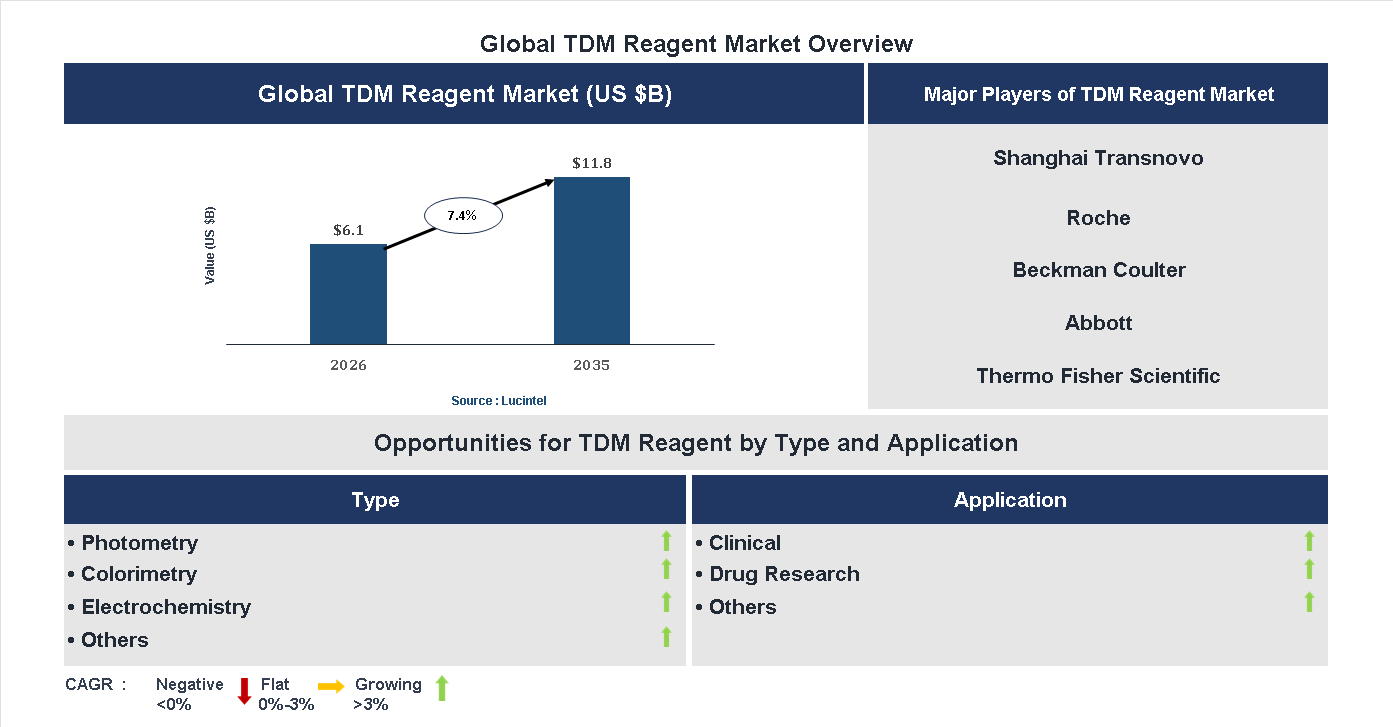
Key data points: The market size in 2035 = $11.8 billion, growth forecast = 7.4% annually for the next 8 years. Scroll below to get more insights. This market report covers trends, opportunities and forecasts in TDM reagent market to 2035 by type (photometry, colorimetry, electrochemistry, and others), application (clinical, drug research, and others), and region (North America, Europe, Asia Pacific, and the Rest of the World)
We'll send your sample report shortly.
• Lucintel forecasts that, within the type category, photometry is expected to witness the highest growth over the forecast period.
• Within the application category, drug research is expected to witness higher growth.
• In terms of region, APAC is expected to witness the highest growth over the forecast period. Gain valuable insights for your business decisions with our comprehensive 150+ page report. Sample figures with some insights are shown below.
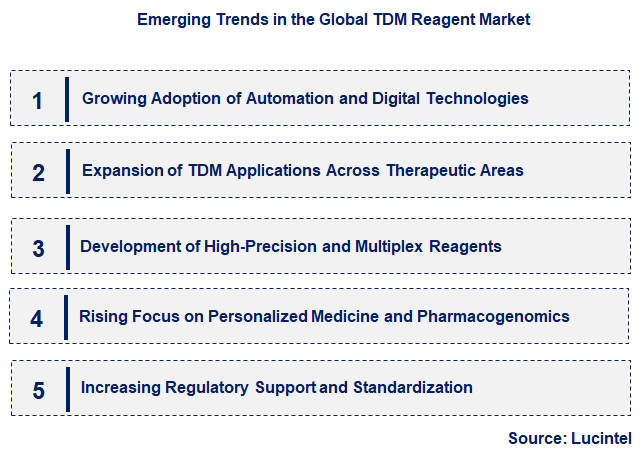
• Growing Adoption of Automation and Digital Technologies: The integration of automation in TDM processes is streamlining workflows, reducing human error, and increasing throughput. Digital technologies such as AI and machine learning are enabling more precise data analysis, leading to faster and more accurate results. This trend enhances laboratory efficiency, reduces turnaround times, and supports large-scale testing, which is vital for managing chronic diseases and personalized treatment plans. As automation becomes more accessible, smaller labs and clinics can adopt advanced TDM solutions, broadening market reach and improving overall healthcare delivery.
• Expansion of TDM Applications Across Therapeutic Areas: Originally focused on drugs like anticonvulsants and immunosuppressants, TDM is now expanding into new therapeutic areas such as oncology, psychiatry, and infectious diseases. This diversification is driven by the need for precise dosing and monitoring of complex medications. The broader application of TDM reagents enhances patient safety, optimizes therapeutic efficacy, and reduces adverse effects. As new drugs and treatment protocols emerge, the demand for specialized reagents tailored to these therapies is expected to grow, opening new market segments and increasing revenue streams.
• Development of High-Precision and Multiplex Reagents: The market is witnessing a shift towards high-precision reagents capable of detecting multiple drugs simultaneously. Multiplex testing reduces sample volume requirements, saves time, and provides comprehensive drug profiles in a single assay. Advances in reagent chemistry and detection technologies are improving sensitivity and specificity, which are critical for accurate monitoring. These high-precision reagents are particularly valuable in complex cases requiring detailed pharmacokinetic data, thereby enhancing clinical decision-making and patient management.
• Rising Focus on Personalized Medicine and Pharmacogenomics: Personalized medicine aims to tailor treatments based on individual genetic profiles, and TDM plays a crucial role in this approach. The development of pharmacogenomic-based reagents allows for more precise dosing and minimizes adverse reactions. This trend is driven by increasing awareness of genetic variability affecting drug metabolism and response. As healthcare providers adopt personalized treatment strategies, the demand for specialized TDM reagents aligned with pharmacogenomic data is expected to surge, fostering innovation and expanding the market.
• Increasing Regulatory Support and Standardization: Governments and regulatory bodies are emphasizing the importance of standardized TDM practices to ensure accuracy and reliability. Enhanced regulatory frameworks and quality standards are encouraging manufacturers to develop validated, high-quality reagents. This trend promotes consistency across laboratories, improves patient safety, and facilitates global market expansion. Additionally, regulatory support accelerates the adoption of new technologies and reagents, fostering innovation and ensuring that TDM practices meet evolving clinical needs. In summary, these emerging trends are transforming the TDM reagent market by enhancing technological capabilities, broadening application scopes, and emphasizing personalized healthcare. These developments are leading to more accurate, efficient, and patient-centric diagnostic solutions, ultimately reshaping the landscape of therapeutic drug monitoring and improving healthcare outcomes worldwide.
• Technological Innovation: Advancements in reagent formulations and automation technologies are significantly improving the precision and efficiency of therapeutic drug monitoring. These innovations reduce manual errors, streamline workflows, and enable real-time analysis, which enhances patient outcomes. As automation becomes more accessible, laboratories and healthcare providers are adopting these solutions rapidly, leading to increased market demand. This technological progress is also fostering the development of new, more sensitive reagents, expanding the scope of TDM applications, and driving overall market growth.
• Demand for Personalized Medicine: The rising focus on personalized medicine is a key driver for the TDM reagent market. Tailoring drug dosages based on individual patient profiles improves treatment efficacy and minimizes adverse effects. This trend is increasing the need for precise, reliable TDM reagents capable of measuring drug levels accurately. As healthcare providers seek more targeted therapies, the demand for advanced TDM reagents is expected to grow, creating opportunities for innovation and market expansion in diagnostics and pharmaceutical sectors.
• Expanding Applications: The application scope of TDM reagents is broadening beyond traditional therapeutic areas like psychiatry and cardiology to include oncology, neurology, and infectious diseases. This diversification is driven by the increasing prevalence of chronic diseases and the need for precise drug management. The expanding applications are encouraging reagent manufacturers to develop specialized products, which in turn boosts market growth. This trend also opens new revenue streams and enhances the overall market size, making TDM reagents more integral to modern healthcare.
• Regulatory Support and Investments: Governments and regulatory bodies are increasingly supporting the adoption of TDM practices through policies and funding initiatives. This support encourages healthcare institutions to implement advanced monitoring systems, boosting demand for high-quality reagents. Additionally, rising investments from pharmaceutical and biotech companies are fueling research and development activities, leading to innovative reagent solutions. These regulatory and financial incentives are vital for market growth, ensuring the availability of reliable, compliant TDM reagents and fostering industry expansion.
• Global Market Expansion: The TDM reagent market is witnessing significant growth in emerging economies due to increasing healthcare infrastructure and awareness. Rising prevalence of chronic diseases and expanding healthcare access are driving demand for effective drug monitoring solutions. International collaborations and investments are facilitating technology transfer and market penetration in these regions. This global expansion is diversifying the market landscape, increasing competition, and creating new opportunities for local and international players to capitalize on emerging markets, ultimately contributing to the overall growth of the TDM reagent industry. The overall impact of these developments is a robust, innovative, and expanding TDM reagent market. Enhanced technological capabilities, personalized medicine, broader applications, supportive regulations, and global expansion are collectively driving growth. These factors are improving healthcare outcomes, increasing market competitiveness, and fostering innovation, which benefits manufacturers, healthcare providers, and patients alike, shaping a dynamic future for the industry.
• Expanding Use of TDM Reagents in Personalized Medicine: The rise of personalized medicine has increased the need for precise drug monitoring to optimize therapeutic outcomes. TDM reagents enable clinicians to tailor drug dosages based on individual patient responses, reducing adverse effects and improving efficacy. As healthcare shifts toward individualized treatment plans, demand for specialized TDM reagents is expected to grow across hospitals, clinics, and research institutions, creating significant market expansion opportunities.
• Increasing Adoption of TDM in Oncology and Infectious Diseases: The growing prevalence of cancer and infectious diseases has heightened the importance of therapeutic drug monitoring for effective treatment management. TDM reagents help in monitoring drug levels for chemotherapeutics and antibiotics, ensuring optimal dosing. Advances in assay sensitivity and specificity are facilitating broader application in these fields, encouraging pharmaceutical companies and healthcare providers to invest in innovative reagents to improve patient outcomes.
• Technological Advancements Driving Development of Innovative TDM reagents: Innovations such as high-throughput screening, automation, and multiplexing are transforming TDM reagent development. These technologies enable faster, more accurate, and cost-efficient testing, expanding their application scope. Companies investing in R&D to develop next-generation reagents with enhanced stability, sensitivity, and ease of use are poised to capture larger market shares, meeting the increasing demand for reliable diagnostic tools.
• Growing Regulatory Support and Reimbursement Policies: Governments and regulatory agencies are increasingly recognizing the importance of TDM in ensuring drug safety and efficacy, leading to supportive policies and reimbursement frameworks. This regulatory environment encourages healthcare providers to adopt TDM practices, boosting demand for high-quality reagents. Additionally, reimbursement coverage for TDM testing incentivizes laboratories and clinics to expand their testing capabilities, further fueling market growth.
• Rising Awareness and Training on TDM Practices Among Healthcare Professionals: Education and training initiatives are raising awareness about the benefits of therapeutic drug monitoring. As clinicians become more proficient in TDM application, the utilization of reagents increases. This trend supports market growth by expanding the user base beyond specialized centers to general healthcare settings, fostering broader adoption and encouraging manufacturers to develop user-friendly, versatile reagents suitable for diverse clinical environments. The overall impact of these growth opportunities is set to significantly enhance the TDM reagent market, fostering innovation, expanding application areas, and improving patient care standards globally. As these factors converge, the market is expected to witness sustained growth, driven by technological progress, regulatory support, and increasing clinical awareness.
• Technological Advancements: The development of more sensitive and specific TDM reagents has significantly improved diagnostic accuracy. Innovations such as automation and multiplex testing have enhanced efficiency, reduced turnaround times, and lowered costs. These technological improvements enable healthcare providers to deliver personalized treatment plans, especially for complex conditions like cancer and infectious diseases. As research continues, the introduction of novel reagents and platforms is expected to further expand market opportunities, making TDM testing more accessible and reliable worldwide.
• Rising Prevalence of Chronic Diseases: The increasing incidence of chronic conditions such as HIV/AIDS, tuberculosis, and various cancers has driven demand for therapeutic drug monitoring. TDM helps optimize drug dosages, minimize adverse effects, and improve patient outcomes. As populations age and lifestyle-related health issues grow, the need for precise medication management becomes more critical. This trend boosts the adoption of TDM reagents across hospitals, clinics, and research institutions, fueling market expansion.
• Growing Adoption of Personalized Medicine: The shift towards personalized medicine emphasizes tailored treatment strategies based on individual patient profiles. TDM plays a vital role in this approach by providing real-time data on drug levels, enabling clinicians to adjust dosages accurately. The increasing focus on targeted therapies and pharmacogenomics further amplifies the demand for specialized TDM reagents. This trend is expected to continue, fostering innovation and expanding the market scope for advanced TDM solutions.
• Increasing Healthcare Expenditure: Rising healthcare spending globally supports the adoption of advanced diagnostic tools, including TDM reagents. Governments and the private sector are investing heavily in healthcare infrastructure, research, and development. This financial support facilitates the procurement of sophisticated testing kits and reagents, especially in developed regions. Additionally, insurance coverage and reimbursement policies are improving, making TDM testing more accessible to a broader patient population, thereby driving market growth.
• Expansion of Diagnostic Laboratories and Research Activities: The proliferation of diagnostic laboratories and research centers worldwide has increased the demand for reliable TDM reagents. These facilities require high-quality reagents for accurate testing and research purposes. The growing emphasis on clinical research and drug development further boosts demand, as TDM is integral to pharmacokinetic studies. This expansion enhances market reach and encourages innovation, ultimately supporting the growth of the TDM reagent market. The challenges facing the TDM reagent market include:
• High Cost of Reagents and Testing: The expense associated with advanced TDM reagents and sophisticated testing equipment can be prohibitive, especially for smaller healthcare facilities and in developing regions. High costs limit widespread adoption and may restrict access to essential diagnostic services. Additionally, ongoing expenses for reagent procurement and maintenance can impact profitability and sustainability for laboratories, hindering market growth and innovation.
• Stringent Regulatory Environment: The approval process for new TDM reagents involves rigorous testing and compliance with strict regulatory standards set by agencies such as the FDA and EMA. These procedures are time-consuming and costly, delaying product launches and increasing development expenses. Navigating complex regulatory landscapes can pose significant barriers for manufacturers, impacting market entry and innovation.
• Limited Awareness and Skilled Workforce: In many regions, there is a lack of awareness regarding the benefits of TDM testing among healthcare providers and patients. This hampers demand and adoption rates. Additionally, a shortage of trained personnel capable of performing and interpreting TDM tests limits the effective utilization of available reagents. Addressing these gaps requires targeted education and training initiatives, which can be resource-intensive. In summary, the TDM reagent market is driven by technological innovations, increasing disease prevalence, personalized medicine trends, healthcare investments, and expanding diagnostic infrastructure. However, high costs, regulatory hurdles, and awareness challenges pose significant barriers. These factors collectively influence market growth, requiring strategic efforts to overcome obstacles and leverage opportunities. The overall impact suggests a promising yet complex landscape, where continued innovation and policy support are essential for sustained expansion.
• Shanghai Transnovo
• Roche
• Beckman Coulter
• Abbott
• Thermo Fisher Scientific
• Siemens Healthineers
• Bio-Rad Laboratories
• bioMerieux
• Chromsystems Instruments
• Randox Laboratories
• Photometry
• Colorimetry
• Electrochemistry
• Others
• Clinical
• Drug Research
• Others
• North America
• Europe
• Asia Pacific
• The Rest of the World
• United States: The US market for TDM reagents has seen rapid growth due to increased adoption in clinical diagnostics and pharmaceutical research. Innovations in automation and digital health integration are improving testing efficiency. Regulatory agencies like the FDA are approving new reagents, boosting market confidence. Major biotech firms are investing heavily in R&D to develop more accurate and cost-effective solutions. The rise of personalized medicine has further driven demand, especially in oncology and infectious diseases. Additionally, collaborations between hospitals and biotech companies are expanding the application scope of TDM reagents across various therapeutic areas.
• China: China’s TDM reagent market is expanding swiftly, supported by government initiatives to modernize healthcare infrastructure and promote biotech innovation. Local manufacturers are increasing their R&D efforts to develop affordable, high-quality reagents tailored to regional needs. The growing prevalence of chronic diseases and infectious conditions has heightened demand for therapeutic monitoring. The government’s focus on healthcare digitization and partnerships with international firms is facilitating technology transfer and market growth. Additionally, increasing clinical research activities and investments in biotech startups are contributing to the rapid development of the TDM reagent sector in China.
• Germany: Germany remains a key player in the European TDM reagent market, driven by its strong pharmaceutical and biotech industries. The country emphasizes high-quality, regulatory-compliant reagents, with a focus on precision medicine. Innovations in analytical techniques and automation are enhancing testing accuracy and throughput. Germany’s robust healthcare system and research institutions are fostering collaborations that accelerate product development. The adoption of sustainable practices and digital health solutions is also gaining momentum. Furthermore, strict regulatory standards ensure the market’s stability and growth, with an increasing number of clinical laboratories adopting advanced TDM reagents for better patient management.
• India: India’s TDM reagent market is witnessing rapid growth due to rising healthcare awareness, increasing prevalence of chronic diseases, and expanding pharmaceutical manufacturing. Local companies are focusing on developing affordable, high-quality reagents to meet domestic demand. Government initiatives to improve healthcare infrastructure and promote biotech innovation are supporting market expansion. The increasing number of diagnostic laboratories and clinical research centers is driving demand for advanced therapeutic monitoring solutions. Additionally, collaborations with international firms are facilitating technology transfer and product development, positioning India as a significant emerging market for TDM reagents.
• Japan: Japan’s TDM reagent market is characterized by technological innovation and high regulatory standards. The country’s aging population has increased the need for precise therapeutic monitoring, especially in chronic and age-related diseases. Japanese firms are investing in R&D to develop highly accurate, automated reagents that integrate with digital health systems. The government’s focus on healthcare innovation and aging population management is fostering market growth. Additionally, collaborations between academia and industry are leading to advanced diagnostic solutions. The emphasis on sustainability and quality assurance further supports the market’s stability and ongoing development in Japan.


• Shanghai Transnovo
• Roche
• Beckman Coulter
• Abbott
• Thermo Fisher Scientific
• Siemens Healthineers
• Bio-Rad Laboratories
• bioMerieux
• Chromsystems Instruments
• Randox Laboratories Q6. Which TDM reagent market segment will be the largest in future? Answer: Lucintel forecasts that, within the type category, photometry is expected to witness the highest growth over the forecast period. Q7. In TDM reagent market, which region is expected to be the largest in next 5 years? Answer: In terms of region, APAC is expected to witness the highest growth over the forecast period. Q8. Do we receive customization in this report? Answer: Yes, Lucintel provides 10% customization without any additional cost.


Choose a license that fits your team. Instant PDF delivery.
Prices exclude taxes. Instant delivery. Custom licensing available on request.
Market Report · July 16, 2026
Market Report · July 15, 2026
Market Report · July 15, 2026
Trusted partner for strategic intelligence and business growth


Receive a complimentary market analysis tailored to your industry. Our analysts will identify key growth opportunities and competitive dynamics specific to your business.

Market size, growth rate, and key trend analysis for your specific sector.

Top competitor positioning and market share analysis.

Strategic recommendations backed by data-driven insights.
Get curated market intelligence and competitive moves straight to your inbox.
By subscribing, you agree to receive our monthly insights. Unsubscribe anytime.
Receive a complimentary market analysis tailored to your industry. Our analysts will identify key growth opportunities and competitive dynamics specific to your business.
Market size, growth rate, and key trend analysis for your specific sector.
Top competitor positioning and market share analysis.
Strategic recommendations backed by data-driven insights.
Get curated market intelligence, emerging trends, and competitive moves straight to your inbox each month.
By subscribing, you agree to receive our monthly insights. Unsubscribe anytime.
We'll send your sample report shortly.