
Market Report · July 20, 2026

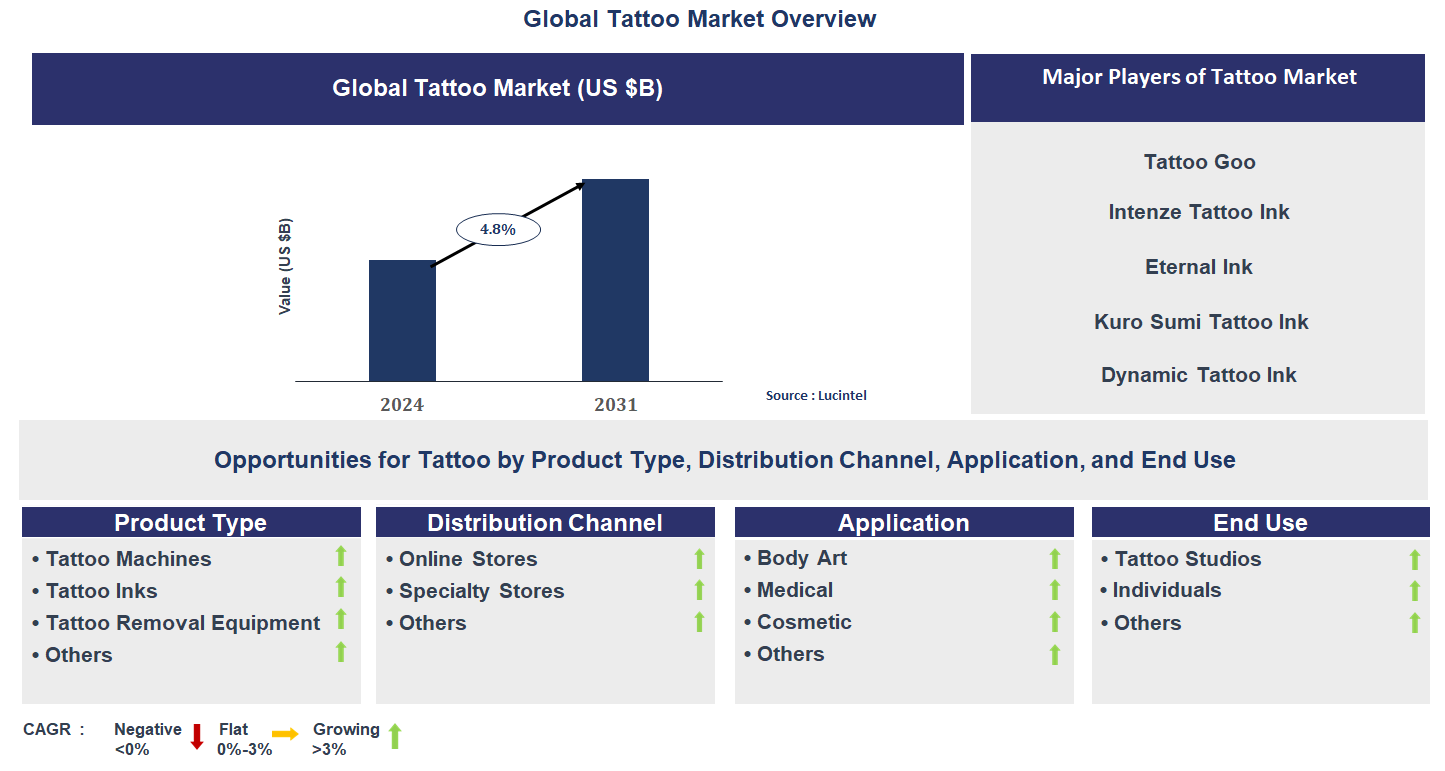
Key data points: The growth forecast = 4.8% annually for the next 7 years. Scroll below to get more insights. This market report covers trends, opportunities and forecasts in tattoo market to 2031 by product type (tattoo machines, tattoo inks, tattoo removal equipment, and others), distribution channel (online stores, specialty stores, and others), application (body art, medical, cosmetic, and others), end use (tattoo studios, individuals, and others), and region (North America, Europe, Asia Pacific, and the Rest of the World)
We'll send your sample report shortly.
• Lucintel forecasts that, within the product type category, tattoo machine is expected to witness the highest growth over the forecast period.
• Within the application category, body art is expected to witness the highest growth.
• In terms of region, North America will remain the largest region over the forecast period. Gain valuable insights for your business decisions with our comprehensive 150+ page report. Sample figures with some insights are shown below.
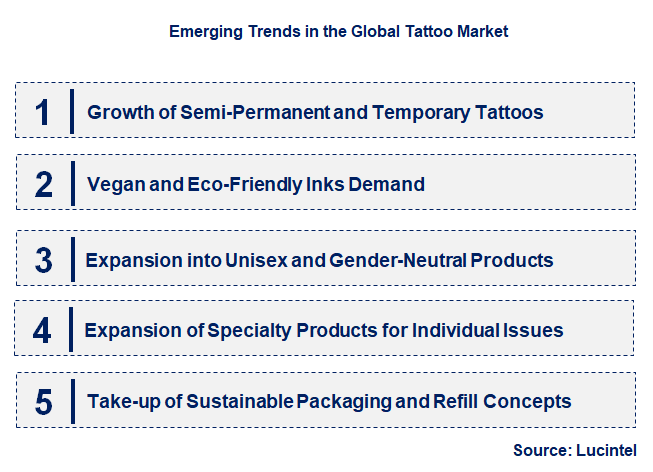
• Growth of Semi-Permanent and Temporary Tattoos: One of the major trends is the growth in the popularity of semi-permanent and temporary tattoos. This is a counter-reaction to consumer needs for a less long-lasting method of self-expression. Brands are now making products that deliver a number of benefits at once, like moisturizing, exfoliating, and brightening. This trend is opening up the market for new brands and is forcing conventional companies to re-formulate products in order to cater to the health-conscious consumer base.
• Vegan and Eco-Friendly Inks Demand: The market is experiencing a significant trend towards clean label products that are produced using natural and organic ingredients. This is forcing manufacturers to take out toxic chemicals such as parabens and synthetic fragrances and opt for ingredients that are sourced in an ethical manner. Customers are today more critically examining a brands ethical behavior, and transparency is becoming an integral consideration in their purchase decision-making process. This phenomenon is because customers are now better aware of the possible health hazards caused by synthetic ingredients.
• Expansion into Unisex and Gender-Neutral Products: The industry is seeing a robust trend towards unisex and gender-neutral products. Brands are now presenting formulas and fragrances that resonate with a broad array of consumers. It is a direct reaction to a cultural realignment in which personal care items are becoming more gender-neutral. This shift is creating a large, untapped market segment for brands to pursue and invest in, representing a new opportunity for growth and differentiation.
• Expansion of Specialty Products for Individual Issues: One trend gaining steam is the mass production of specialty toners for individual skin types and issues. The market is experiencing growth in sensitive-skin products and product development geared towards a specific consumer group, like teenagers with acne skin. This trend is enabling brands to reach out to niche consumer groups and provide customized solutions that are more efficient than an indiscriminate, one-product-fits-all approach.
• Take-up of Sustainable Packaging and Refill Concepts: It is an emerging trend to move towards sustainable and environmentally friendly packaging. The market is witnessing an increase in products based on the usage of recyclable material and refillable packaging. It is a reflection of a growing consumer awareness of the environmental consequences of plastic waste. This is not only attractive to a new generation of consumers but is also building a new category of green products that can differentiate a company in a competitive market. These new trends together are remodeling the tattoo market by increasing its responsiveness to contemporary consumer values. The emphasis on multi-functional products is responding to the requirement for efficiency and simplicity, and the accent on sustainability is responding to global challenges. The specialization of the different consumer segments and the new business model’s adoption are increasing the market reach. The future of the industry will be determined by how it responds to these strong trends in terms of innovating and responding.
• Rollout of Hydrating and Therapeutic Toners: A major development has been the mass rollout of toners that target hydrating and calming the skin. Following consumer pressure for gentle product lines, alcohol-based products are being replaced by products containing hyaluronic acid and glycerin. This trend is revolutionizing the role of a toner from being a harsh astringent to a moisturizing skincare step. This is also making room for a wider variety of products tailored to individual skin types.
• Active Ingredient Formulation Development: There has been significant improvement in applying active ingredients to toners. Firms are launching innovative products with sophisticated attributes such as AHAs and BHAs for gentle exfoliation and niacinamide for brightening. Such developments are enhancing the performance of toners and are one of the major drivers of consumer satisfaction improvement. These new products are the direct outcome of increased consumer knowledge and demand for products with visible outcomes.
• E-commerce and Subscription Model Growth: One notable development is the emergence and popularity of the e-commerce and subscription model. It is a model of business that makes it easy for consumers to buy a variety of toners from home. It generates a consistent revenue source for businesses and enables them to establish a direct connection with consumers. It also facilitates easier entry of new niche brands in the market and challenging the big players.
• Male Grooming and Gender-Neutral Lines: The other major development is the growth of male grooming and gender-neutral product lines. The market is witnessing an increase in toners specially formulated for a male consumers skin and lifestyle requirements. This is the direct consequence of the increasing male grooming market. Products are also being launched that are gender-neutral, with an emphasis on universal appeal, which is tapping into a huge, untapped market.
• Focus on Sustainable and Green Products: Another significant trend is the increasing focus on sustainable and green products. This involves using recyclable packaging and sourcing ingredients that are environmentally friendly and ethically sourced. Brands are now leveraging the marketing of their green practices. This trend is attractive to a generation of green-conscious consumers and is one of the drivers of ongoing product innovation in the category. These recent trends are collectively shaping the tattoo industry by propelling it toward a more specialized, therapeutic, and consumer-oriented future. The move to sustainable ingredients and the launch of new forms are meeting both health and environmental demands. The move into new segments and the emergence of new business models are opening up new opportunities for market growth and brand distinction.
• Addressing the Male Grooming Segment: One of the most significant growth opportunities is to enter into the men’s grooming segment. Most skin toners are gender-neutral, and there is a definite opportunity for products designed for male consumers specifically. This encompasses creating products with a masculine fragrance and addressing formulation that is non-greasy and long-lasting. This is a growth segment that is expanding quickly and offers a stable, high-value revenue stream.
• Creating a Premium, Multi-benefit Product Line: There is immense growth potential in creating a premium product line centered around multi-benefit offerings. This entails incorporating high-performance ingredients such as vitamins and moisturizers within toner products. This move addresses the increasing number of consumers who are willing to invest more in products delivering enhanced skincare benefits. It also facilitates a brand creating a strong innovation reputation, which is an effective differentiator within a competitive marketplace.
• Taking Advantage of E-commerce with Personalized Services: E-commerce and direct-to-consumer businesses offer a large growth opportunity. Brands can take advantage of these platforms to provide personalized services, including quizzes that suggest products by a users skin type and issues. A subscription service can also be used to offer a predictable and recurring revenue stream. It not only offers convenience but also establishes a direct relationship with the customer, resulting in greater brand loyalty and repeat buying.
• Penetrating the Teenager and Acne-Prone Skin Segment: A growth opportunity of high importance is to penetrate the teenager and acne-prone skin segment. By providing a low-cost but quality product and by collaborating with dermatologists, brands can gain a presence in this segment. The teenage population is greatly impacted by social media and is a major driver of emerging trends. By providing them with products that cater to their specific issues, brands can gain a long-term and loyal customer base.
• Emerging Markets Expansion: There is a strategic opportunity for growth in moving into emerging markets. With increasing disposable incomes and a new consumer generation that is increasingly health-aware, there will be increasing demand for cheaper, but still effective skin tones. Through the provision of a selection of adequately crafted but competitively priced products, companies can gain entry in these markets and establish a long-term growth path. These strategic growth prospects are all combined influencing the tattoo industry to move towards a specialized and consumer-oriented future. Through niche uses and demographics, companies are broadening the market reach. Focus on multifunctional value and new models for business is establishing new premium and value-based product segments. The new market penetration strategy also ensures that the industry will keep growing and adapting to the needs of consumers all over the world.
• Tattoo Goo
• Intenze Tattoo Ink
• Eternal Ink
• Kuro Sumi Tattoo Ink
• Dynamic Tattoo Ink
• Starbrite Colors
• Alla Prima Ink
• Bloodline Tattoo Ink
• Fusion Tattoo Ink
• Radiant Colors
• Tattoo Machines
• Tattoo Inks
• Tattoo Removal Equipment
• Others
• Online Stores
• Specialty Stores
• Others
• Body Art
• Medical
• Cosmetic
• Others
• Tattoo Studios
• Individuals
• Others
• North America
• Europe
• Asia Pacific
• The Rest of the World
• United States: In the United States, the tattoo industry is moving towards premium zed, specialist services and an intense focus on aftercare. A significant trend is the mainstream recognition of tattoos in workplaces, and this is fueling demand from a wider range of consumers. Shoppers are looking more for bespoke, unique designs and are spending money on high-quality, long-lasting products. There is also growth in specialized aftercare with natural and organic ingredients, echoing a wider wellness trend.
• China: Chinas tattoo industry is growing at a fast pace, driven by the development of a wealthy middle class and an increasing emphasis on personal hygiene. The market is experiencing a high demand for products that are both therapeutic as well as aesthetic in nature. There is a tilt towards products containing herbal extracts and emphasis on sophisticated formulations. Online portals and social media are the key growth drivers, with brands using influencers to tap into a large customer base across geographies and segments.
• Germany: The German tattoo market is marked by a dominant consumer focus on product quality, safety, and rigorous regulatory standards. The market is also experiencing increased demand for sustainable packaging solutions such as refills based on a strong consumer interest in the zero-waste movement. German innovation is focused on developing high-performance products that are clinically proven and effective, with a high emphasis on dermatological health and a low environmental impact.
• India: Indias tattoo industry is growing very fast, driven by increasing disposable incomes and an increasing concern about personal grooming. Although the market is dominated as yet by low-cost products, there is an unmistakable shift towards premium, multi-tasking products. The market is also seeing growth in demand for Ayurvedic ingredients-infused products. The ease of availability of products through conventional retail as well as a rapidly expanding e-commerce market is one of the main drivers of growth, with local and international brands both able to access a very broad base of consumers.
• Japan: The mature Japanese tattoo industry is famous for its emphasis on high-tech and high-quality products. The Japanese population not only expects effective products but also gentle and luxurious ones. To cater to this expectation, products with distinct benefits have been developed, including specialized formulations that are grease-free and absorbing. The market is also experiencing high demand for products that not only tone but also provide skincare benefits, mirroring the cultural focus on total personal care and having a clean, professional look.


• Tattoo Goo
• Intenze Tattoo Ink
• Eternal Ink
• Kuro Sumi Tattoo Ink
• Dynamic Tattoo Ink
• Starbrite Colors
• Alla Prima Ink
• Bloodline Tattoo Ink
• Fusion Tattoo Ink
• Radiant Colors Q5. Which tattoo market segment will be the largest in future? Answer: Lucintel forecasts that, within the product type category, tattoo machine is expected to witness the highest growth over the forecast period. Q6. In tattoo market, which region is expected to be the largest in next 5 years? Answer: In terms of region, North America will remain the largest region over the forecast period. Q7. Do we receive customization in this report? Answer: Yes, Lucintel provides 10% customization without any additional cost.


Choose a license that fits your team. Instant PDF delivery.
Prices exclude taxes. Instant delivery. Custom licensing available on request.
Market Report · July 20, 2026
Market Report · July 15, 2026
Market Report · July 15, 2026
Trusted partner for strategic intelligence and business growth


Receive a complimentary market analysis tailored to your industry. Our analysts will identify key growth opportunities and competitive dynamics specific to your business.

Market size, growth rate, and key trend analysis for your specific sector.

Top competitor positioning and market share analysis.

Strategic recommendations backed by data-driven insights.
Get curated market intelligence and competitive moves straight to your inbox.
By subscribing, you agree to receive our monthly insights. Unsubscribe anytime.
Receive a complimentary market analysis tailored to your industry. Our analysts will identify key growth opportunities and competitive dynamics specific to your business.
Market size, growth rate, and key trend analysis for your specific sector.
Top competitor positioning and market share analysis.
Strategic recommendations backed by data-driven insights.
Get curated market intelligence, emerging trends, and competitive moves straight to your inbox each month.
By subscribing, you agree to receive our monthly insights. Unsubscribe anytime.
We'll send your sample report shortly.