
Market Report · May 18, 2026

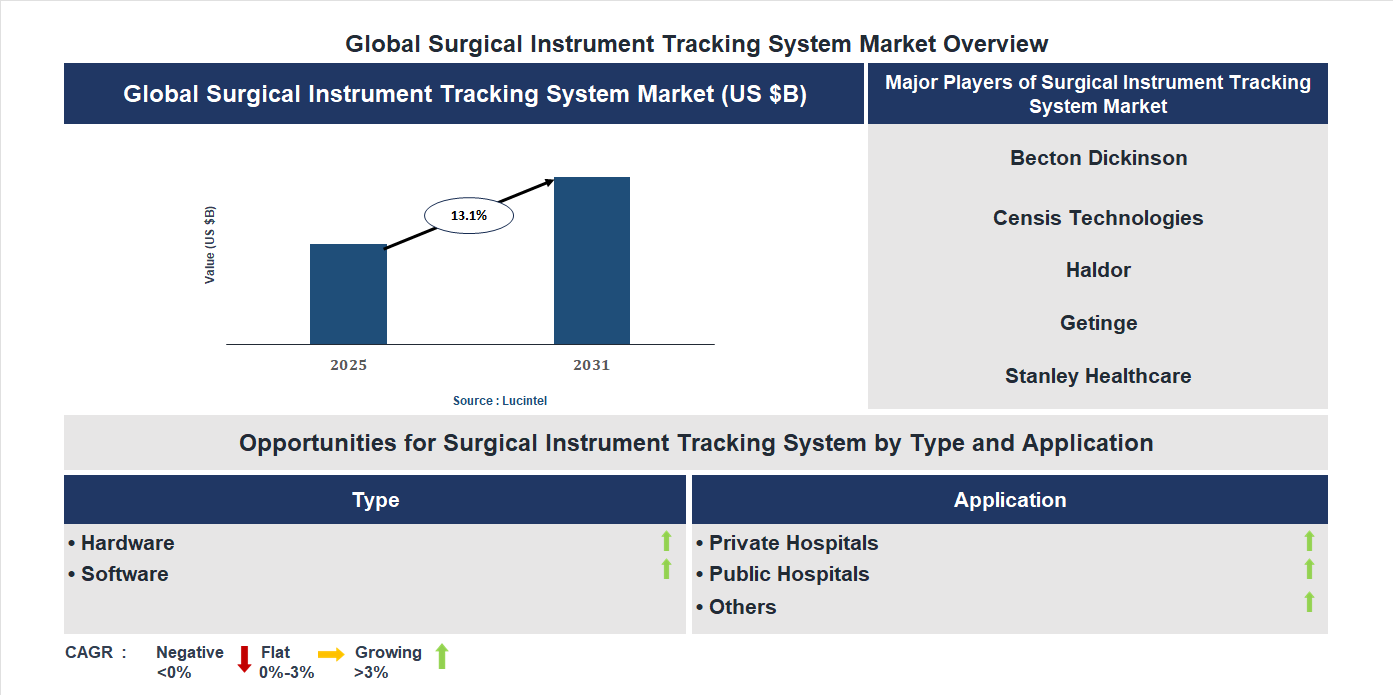
Key data points: The growth forecast = 13.1% annually for the next 7 years. Scroll below to get more insights. This market report covers trends, opportunities and forecasts in surgical instrument tracking system market to 2031 by type (hardware and software), application (private hospitals, public hospitals, and others), and region (North America, Europe, Asia Pacific, and the Rest of the World)
We'll send your sample report shortly.
• Lucintel forecasts that, within the type category, software is expected to witness higher growth over the forecast period.
• Within the application category, private hospital is expected to witness higher growth.
• In terms of region, APAC is expected to witness the highest growth over the forecast period. Gain valuable insights for your business decisions with our comprehensive 150+ page report. Sample figures with some insights are shown below.
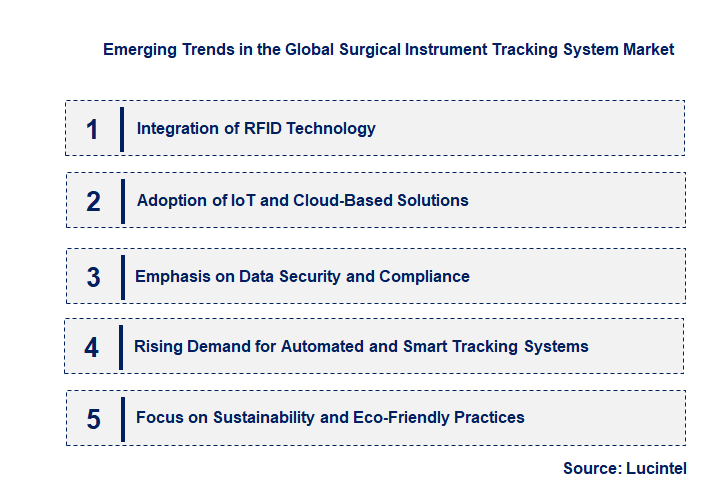
• Integration of RFID Technology: RFID (Radio Frequency Identification) is increasingly used for real-time tracking of surgical instruments. This technology allows for automatic identification and data collection, reducing manual errors and improving inventory accuracy. RFID systems enable quick instrument counts, enhance sterilization processes, and ensure that instruments are properly tracked throughout their lifecycle. The adoption of RFID is driven by its ability to provide real-time data, improve operational efficiency, and enhance patient safety. As RFID becomes more affordable and reliable, its integration into tracking systems is expected to become standard practice across healthcare facilities.
• Adoption of IoT and Cloud-Based Solutions: The Internet of Things (IoT) and cloud computing are revolutionizing surgical instrument management. IoT-enabled devices can transmit data wirelessly, allowing for remote monitoring and management of instruments. Cloud-based platforms facilitate centralized data storage, real-time analytics, and seamless access across multiple locations. This connectivity improves inventory management, reduces loss, and enhances compliance with regulatory standards. Healthcare providers benefit from improved data accuracy, faster decision-making, and reduced administrative burdens. As IoT and cloud solutions become more secure and cost-effective, their adoption is set to expand significantly in the surgical instrument tracking market.
• Emphasis on Data Security and Compliance: With increased digitalization, data security and regulatory compliance are critical concerns. Market players are investing in advanced cybersecurity measures to protect sensitive patient and inventory data. Compliance with standards such as HIPAA and GDPR is essential to avoid penalties and maintain trust. Data security features include encryption, access controls, and audit trails. Ensuring data integrity and confidentiality is vital for healthcare providers to meet legal requirements and safeguard patient information. As regulations evolve, vendors are continuously updating their systems to ensure compliance, which influences product development and market growth.
• Rising Demand for Automated and Smart Tracking Systems: Automation is transforming surgical instrument management by reducing manual labor and human error. Smart tracking systems incorporate sensors, AI, and machine learning to predict instrument maintenance needs, optimize sterilization cycles, and streamline inventory processes. These systems improve operational efficiency, reduce instrument loss, and enhance surgical safety. Hospitals are increasingly adopting automated solutions to meet high standards of care and regulatory requirements. The integration of AI-driven analytics enables proactive decision-making, leading to better resource utilization and cost savings, thus driving market expansion.
• Focus on Sustainability and Eco-Friendly Practices: Environmental concerns are influencing the development of sustainable tracking systems. Manufacturers are designing eco-friendly devices that reduce waste, energy consumption, and the use of hazardous materials. Reusable and recyclable components are gaining popularity, aligning with hospital sustainability initiatives. Additionally, digital tracking reduces paper-based records and minimizes resource use. This trend not only supports environmental goals but also appeals to healthcare providers seeking cost-effective and responsible solutions. As sustainability becomes a priority, the market will see increased innovation in eco-conscious tracking technologies. In summary, these trends are reshaping the surgical instrument tracking system market by enhancing technological capabilities, improving data security, promoting automation, and emphasizing sustainability. These developments are leading to more efficient, accurate, and environmentally responsible instrument management practices, ultimately improving patient safety and operational efficiency across healthcare facilities.
• Adoption of RFID Technology: The integration of RFID tags into surgical instruments has revolutionized tracking accuracy. RFID systems enable real-time monitoring, reducing the risk of instrument loss or misplacement during surgeries. This technology enhances inventory management, streamlines sterilization processes, and ensures compliance with safety standards. As RFID becomes more affordable and reliable, its adoption is expected to grow rapidly, significantly improving operational efficiency and patient safety.
• IoT-Enabled Tracking Solutions: The Internet of Things (IoT) has enabled the development of interconnected tracking systems that provide continuous data on instrument location and status. IoT devices facilitate remote monitoring, predictive maintenance, and automated reporting, which reduce manual errors and operational delays. Hospitals benefit from improved instrument lifecycle management and reduced sterilization costs. The integration of IoT into surgical instrument tracking is a key driver of digital transformation in healthcare facilities.
• Regulatory and Compliance Enhancements: Governments and health authorities are imposing stricter regulations regarding instrument sterilization and tracking. These regulations mandate detailed documentation and traceability of surgical instruments to prevent infections and ensure patient safety. Market players are investing in compliant tracking systems that meet these standards, which boosts market credibility and adoption. Enhanced regulatory frameworks are fostering innovation and raising the overall quality of surgical instrument management.
• Integration with Hospital Information Systems (HIS): Seamless integration of tracking systems with existing hospital information systems has become a priority. This integration allows for centralized data management, improved workflow coordination, and better resource allocation. It also facilitates comprehensive reporting and analytics, aiding in decision-making. As hospitals seek to optimize operational efficiency, integrated tracking solutions are becoming essential, driving market growth and technological convergence.
• Focus on Data Security and Privacy: With increased digitalization, data security and patient privacy concerns have gained prominence. Market players are investing in secure tracking platforms that comply with data protection regulations such as HIPAA. Advanced encryption, access controls, and audit trails are being implemented to safeguard sensitive information. Ensuring data security not only builds trust among healthcare providers but also encourages wider adoption of tracking systems, fostering a more secure healthcare environment. In summary, these developments are significantly impacting the surgical instrument tracking system market by enhancing accuracy, safety, and efficiency. The adoption of RFID and IoT technologies, coupled with stricter regulations and system integrations, is driving market expansion. Emphasis on data security further supports sustainable growth, ultimately leading to safer surgical practices and improved patient outcomes.
• Hospital Settings: Enhanced Patient Safety and Operational Efficiency : Hospitals are increasingly adopting tracking systems to reduce instrument loss, prevent infections, and streamline sterilization processes, leading to improved patient outcomes and operational workflows.
• Outpatient Clinics: Cost-Effective Asset Management : Outpatient clinics benefit from affordable, easy-to-use tracking solutions that help manage instruments efficiently, reduce turnaround times, and lower inventory costs, supporting their focus on quick, quality care.
• Surgical Centers: Compliance and Quality Assurance : Surgical centers are leveraging tracking systems to ensure compliance with safety standards, improve instrument sterilization tracking, and enhance overall surgical quality, boosting confidence among patients and staff.
• Research and Development Institutions: Accurate Instrument Tracking for Innovation : R&D facilities utilize advanced tracking to monitor specialized surgical tools during experiments and development, facilitating innovation and ensuring precise data collection.
• Sterilization Units: Streamlined Sterilization Processes : Sterilization units are adopting automated tracking to monitor instrument sterilization cycles, reduce human error, and ensure regulatory compliance, thereby increasing sterilization efficiency and safety. In summary, these growth opportunities are significantly impacting the surgical instrument tracking system market by driving technological adoption, improving safety standards, and optimizing operational workflows across healthcare settings. This evolution is fostering increased market demand, innovation, and overall improvements in surgical instrument management.
• Technological Advancements: The continuous development of RFID, IoT, and barcode technologies has revolutionized instrument tracking, enabling real-time monitoring, improved accuracy, and enhanced inventory management. These innovations reduce manual errors, streamline workflows, and ensure compliance with safety standards, thereby increasing adoption across healthcare facilities. As technology becomes more affordable and sophisticated, the market is expected to expand rapidly, driven by hospitals and surgical centers need for efficient asset management.
• Increasing Patient Safety Concerns: Rising awareness about surgical site infections and the importance of instrument sterilization has heightened the focus on tracking systems. Accurate tracking ensures proper sterilization, reduces the risk of retained surgical items, and enhances overall patient safety. Regulatory bodies are also mandating stricter protocols, encouraging healthcare providers to adopt advanced tracking solutions to meet compliance standards and improve clinical outcomes.
• Regulatory and Accreditation Standards: Governments and accreditation organizations are implementing stringent regulations requiring detailed documentation and tracking of surgical instruments. Compliance with standards such as those from the FDA, CDC, and Joint Commission necessitates the deployment of reliable tracking systems. These regulations act as a catalyst for market growth, compelling healthcare providers to invest in compliant solutions to avoid penalties and ensure accreditation.
• Growing Healthcare Infrastructure and Surgical Procedures: The expansion of healthcare infrastructure, especially in emerging economies, and the rising volume of surgical procedures are fueling demand for efficient instrument management. Hospitals and clinics are increasingly adopting tracking systems to handle large inventories, reduce instrument loss, and optimize surgical workflows. This growth is further supported by the rising prevalence of chronic diseases requiring surgical interventions. The challenges in the surgical instrument tracking system market are:
• High Implementation Costs: The initial investment required for purchasing, installing, and maintaining advanced tracking systems can be substantial, especially for small and mid-sized healthcare facilities. These costs include hardware, software, staff training, and ongoing support, which may deter some providers from adopting these solutions. Additionally, the return on investment may take time to realize, creating financial barriers in budget-constrained environments.
• Data Security and Privacy Concerns: As tracking systems collect and store sensitive patient and operational data, they become attractive targets for cyberattacks. Ensuring data security and compliance with privacy regulations such as HIPAA is critical but challenging. Breaches can lead to legal liabilities, loss of trust, and financial penalties, making data security a significant concern for market participants.
• Integration with Existing Systems: Many healthcare facilities operate with legacy systems that may not seamlessly integrate with new tracking technologies. Compatibility issues, lack of standardized protocols, and technical complexities can hinder smooth implementation. This integration challenge can delay deployment, increase costs, and reduce the overall effectiveness of tracking solutions. In summary, the surgical instrument tracking system market is driven by technological innovations, safety regulations, and expanding healthcare infrastructure, which collectively promote growth and efficiency. However, high costs, data security issues, and integration hurdles pose significant challenges that could impede market expansion. Overall, the markets future will depend on how effectively stakeholders address these barriers while leveraging technological advancements to improve surgical safety and operational efficiency.
• Becton Dickinson
• Censis Technologies
• Haldor
• Getinge
• Stanley Healthcare
• SpaTrack Medical
• TGX Medical Systems
• Sonavex
• Xerafy
• Stryker Corporation
• Hardware
• Software
• Private Hospitals
• Public Hospitals
• Others
• North America
• Europe
• Asia Pacific
• The Rest of the World
• United States: The US market has seen rapid adoption of RFID-based tracking systems, driven by stringent regulatory requirements and a focus on patient safety. Major hospitals are integrating these systems with electronic health records for seamless inventory management. Innovations include real-time location tracking and automated sterilization monitoring, which improve operational efficiency. The US government’s initiatives to reduce surgical errors and improve sterilization standards further propel market growth. Leading companies are investing heavily in R&D to develop more sophisticated, user-friendly solutions tailored to large healthcare networks.
• China: China’s surgical instrument tracking market is expanding due to government initiatives promoting healthcare digitization and hospital automation. The country is witnessing increased adoption of RFID and barcode systems in major hospitals to enhance inventory control and reduce theft or loss. Local manufacturers are developing cost-effective solutions to cater to the growing demand in tier-2 and tier-3 cities. The focus on improving surgical safety standards and reducing infection rates is driving market growth. Additionally, collaborations with international firms are facilitating technology transfer and innovation in tracking systems.
• Germany: Germany’s market is characterized by high adoption of advanced tracking technologies, driven by strict European Union regulations on medical device management and sterilization. Hospitals are implementing integrated systems that combine RFID, barcode, and IoT solutions for comprehensive instrument tracking. The emphasis on sustainability and reducing waste has led to innovations in reusable tracking tags and eco-friendly materials. Germany’s focus on quality assurance and patient safety makes it a leader in adopting cutting-edge tracking solutions, with a strong presence of local and international vendors providing tailored systems for healthcare facilities.
• India: The Indian surgical instrument tracking market is witnessing rapid growth due to increasing healthcare infrastructure development and rising awareness of infection control. Hospitals are adopting barcode and RFID systems to improve inventory accuracy and reduce surgical delays. Government initiatives aimed at modernizing healthcare facilities and promoting digital health are supporting market expansion. Cost-effective solutions are prioritized to cater to a large and diverse healthcare sector, including small and rural hospitals. The trend towards automation and real-time tracking is gaining momentum, driven by the need to enhance operational efficiency and patient safety.
• Japan: Japan’s market is characterized by high technological adoption and stringent regulatory standards. Hospitals are integrating RFID and IoT-based tracking systems to ensure precise instrument management and sterilization compliance. The focus on aging population healthcare needs has accelerated the adoption of automated tracking solutions to streamline surgical workflows. Japanese companies are investing in innovative, compact, and energy-efficient tracking devices. The government’s emphasis on healthcare quality and safety, along with collaborations with global technology providers, is fostering a competitive environment for advanced surgical instrument tracking systems.


• Becton Dickinson
• Censis Technologies
• Haldor
• Getinge
• Stanley Healthcare
• SpaTrack Medical
• TGX Medical Systems
• Sonavex
• Xerafy
• Stryker Corporation Q5. Which surgical instrument tracking system market segment will be the largest in future? Answer: Lucintel forecasts that, within the type category, software is expected to witness higher growth over the forecast period. Q6. In surgical instrument tracking system market, which region is expected to be the largest in next 5 years? Answer: In terms of region, APAC is expected to witness the highest growth over the forecast period. Q7. Do we receive customization in this report? Answer: Yes, Lucintel provides 10% customization without any additional cost.


Choose a license that fits your team. Instant PDF delivery.
Prices exclude taxes. Instant delivery. Custom licensing available on request.
Market Report · May 18, 2026
Market Report · May 18, 2026
Market Report · May 18, 2026
Trusted partner for strategic intelligence and business growth


Receive a complimentary market analysis tailored to your industry. Our analysts will identify key growth opportunities and competitive dynamics specific to your business.

Market size, growth rate, and key trend analysis for your specific sector.

Top competitor positioning and market share analysis.

Strategic recommendations backed by data-driven insights.
Get curated market intelligence and competitive moves straight to your inbox.
By subscribing, you agree to receive our monthly insights. Unsubscribe anytime.
Receive a complimentary market analysis tailored to your industry. Our analysts will identify key growth opportunities and competitive dynamics specific to your business.
Market size, growth rate, and key trend analysis for your specific sector.
Top competitor positioning and market share analysis.
Strategic recommendations backed by data-driven insights.
Get curated market intelligence, emerging trends, and competitive moves straight to your inbox each month.
By subscribing, you agree to receive our monthly insights. Unsubscribe anytime.
We'll send your sample report shortly.