
Market Report · July 24, 2026

Key data points: The growth forecast = 11.9% annually for the next 7 years. Scroll below to get more insights. This market report covers trends, opportunities and forecasts in superconductor wire market to 2031 by type (low temperature superconductor and high temperature superconductor), application (medical, electric power, science & engineering, and others), and region (North America, Europe, Asia Pacific, and the Rest of the World)
We'll send your sample report shortly.
• Lucintel forecasts that, within the type category, high temperature superconductor is expected to witness higher growth over the forecast period.
• Within the application category, electric power is expected to witness the highest growth.
• In terms of region, APAC is expected to witness the highest growth over the forecast period. Gain valuable insights for your business decisions with our comprehensive 150+ page report. Sample figures with some insights are shown below.

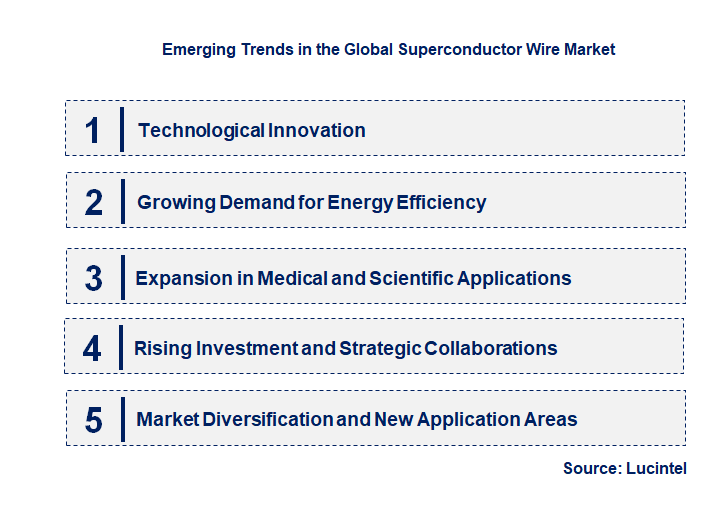
• Technological Innovation: Advancements in superconductor materials such as high-temperature superconductors (HTS) are enabling wires to operate at higher temperatures, reducing cooling costs and expanding practical applications. Researchers are developing new compounds and fabrication techniques to improve critical current density and stability. This innovation is making superconductor wires more viable for large-scale deployment in power transmission, magnetic resonance imaging (MRI), and particle accelerators. As a result, the market is witnessing increased adoption driven by improved performance and cost-effectiveness, fostering growth in both developed and emerging economies.
• Growing Demand for Energy Efficiency: The global push toward sustainable energy solutions is significantly boosting the superconductor wire market. Superconductors enable lossless power transmission, which minimizes energy wastage in electrical grids. This trend is particularly prominent in renewable energy integration, where efficient transmission of electricity from wind and solar farms is crucial. Governments and utilities are investing in superconducting technologies to modernize aging infrastructure and meet climate goals. The demand for high-capacity, low-loss wires is expected to rise sharply, positioning superconductors as a key component in future smart grids and energy storage systems.
• Expansion in Medical and Scientific Applications: Superconductor wires are increasingly vital in medical imaging devices like MRI machines and scientific research equipment such as particle accelerators. The need for high magnetic fields and precise control has driven innovations in superconductor technology. As medical and scientific institutions seek more powerful, reliable, and cost-effective solutions, the market for superconductor wires is expanding. This trend is also encouraging collaborations between industry and academia to develop specialized wires tailored for specific applications, further fueling market growth and technological progress.
• Rising Investment and Strategic Collaborations: Major corporations, startups, and government agencies are investing heavily in superconductor research and commercialization. Strategic partnerships aim to accelerate the development of scalable, affordable superconductor wire manufacturing processes. Funding initiatives and grants are supporting innovation in material science and production techniques. These investments are crucial for overcoming current cost barriers and enabling widespread adoption. As a result, the market is witnessing a surge in new entrants and collaborative projects, which are driving technological breakthroughs and expanding the global footprint of superconductor wire applications.
• Market Diversification and New Application Areas: The versatility of superconductor wires is leading to diversification into new sectors such as transportation (magnetic levitation trains), aerospace, and defense. These emerging applications require high-performance, lightweight, and durable wires, prompting manufacturers to develop specialized products. The increasing adoption in electric vehicles and advanced transportation systems is particularly notable, as superconductors can significantly enhance efficiency and speed. This diversification is broadening the market scope, creating new revenue streams, and fostering innovation across multiple industries, ultimately reshaping the market landscape. In summary, these trends are collectively transforming the superconductor wire market by enhancing technological capabilities, expanding application horizons, and fostering sustainable growth. The focus on innovation, efficiency, and strategic collaborations is positioning superconductors as a critical component in the future of energy, healthcare, and transportation, leading to a more interconnected and sustainable technological ecosystem.
• Material Innovation: Development of high-temperature superconductors has improved operational efficiency and reduced cooling costs, making superconducting wires more viable for commercial use. This innovation enhances performance in power transmission, medical imaging, and transportation, thereby expanding market applications and driving growth.
• Manufacturing Process Improvements: Advanced manufacturing techniques, such as reel-to-reel processing and better wire fabrication methods, have increased production efficiency and wire quality. These improvements lower costs and enable large-scale deployment, boosting market competitiveness and adoption rates.
• Expansion into Renewable Energy: Superconductor wires are increasingly used in renewable energy projects, such as wind turbines and power grids, to enhance energy transmission efficiency. This integration supports the global shift toward sustainable energy sources and accelerates market expansion.
• Growing Adoption in Medical Technologies: The use of superconducting wires in MRI machines and other medical devices has surged, driven by demand for higher resolution imaging and reduced operational costs. This trend has strengthened the medical segment of the market and opened new revenue streams.
• Strategic Collaborations and Investments: Major industry players are forming partnerships and investing in research to develop next-generation superconducting wires. These collaborations foster innovation, accelerate commercialization, and ensure the market remains competitive and forward-looking. In summary, these developments are collectively propelling the superconductor wire market toward increased efficiency, broader application scope, and cost reduction. The market is becoming more dynamic, with technological advancements and strategic initiatives fueling growth. As a result, the industry is poised for substantial expansion, driven by the demand for sustainable, high-performance solutions across multiple sectors.
• Energy Transmission: Enhanced efficiency and reduced losses are driving the adoption of superconductor wires in power grids, enabling more reliable and sustainable energy distribution. This reduces operational costs and supports the integration of renewable energy sources, significantly impacting the energy sectors modernization efforts.
• Medical Imaging: Superconductor wires are critical in MRI and other imaging technologies, offering higher magnetic field strengths and improved image quality. Growing healthcare infrastructure investments and technological advancements are expanding their application, improving diagnostic capabilities worldwide.
• Transportation: The development of superconducting magnets for maglev trains and electric vehicles presents a transformative opportunity. These applications promise faster, more efficient transportation systems, reducing travel time and energy consumption, and fostering innovation in mobility solutions.
• Electronics and Computing: Superconductor wires are increasingly used in quantum computing and high-performance electronics, enabling faster processing speeds and lower energy consumption. This growth supports the evolution of next-generation computing technologies and data centers.
• Renewable Energy Storage: Superconductor-based energy storage systems are emerging as a solution for efficient, large-scale energy storage, facilitating grid stability and supporting intermittent renewable sources. This application enhances energy reliability and promotes sustainable development. In summary, these growth opportunities are significantly impacting the superconductor wire market by expanding its application scope, improving technological capabilities, and driving industry investments. As these opportunities mature, they will foster innovation, enhance efficiency, and accelerate market growth across multiple sectors.
• Technological Innovation: The continuous development of high-temperature superconductors and improved manufacturing techniques enhances wire performance, efficiency, and application scope. Innovations reduce costs and expand usability in sectors like energy, healthcare, and transportation, fueling market growth. Advances in cryogenic technology and material processing are making superconductors more practical and accessible, thus attracting investments and fostering industry expansion.
• Growing Energy Demand and Efficiency Needs: The rising global energy consumption necessitates more efficient transmission and storage solutions. Superconductor wires offer zero electrical resistance, reducing energy losses significantly. This efficiency is critical for modern power grids, renewable energy integration, and electric vehicles, driving increased adoption and market expansion as stakeholders seek sustainable and cost-effective energy solutions.
• Government Policies and Regulatory Support: Governments worldwide are implementing policies to promote clean energy and reduce carbon emissions. Incentives, subsidies, and regulatory standards favor the adoption of superconducting technologies in power transmission, medical imaging, and transportation. Such supportive frameworks accelerate market growth by encouraging investments and research in superconductor wire technologies.
• Increasing Investment in R&D: The surge in research and development activities by private companies and public institutions aims to overcome existing technological barriers. Funding for innovative projects enhances material properties, reduces costs, and broadens application areas. This investment accelerates commercialization and helps establish a competitive market landscape, fostering long-term growth.
• Expansion in End-Use Industries: The rising adoption of superconductor wires in healthcare (MRI machines), transportation (magnetic levitation trains), and energy sectors (power cables) is expanding market opportunities. As these industries grow and seek more efficient, compact, and reliable solutions, the demand for superconductor wires increases, further propelling market development. The challenges facing this superconductor wire market include:-
• High Production Costs: Manufacturing superconductor wires involves complex processes, expensive raw materials, and stringent quality controls, leading to high costs. These costs hinder widespread adoption, especially in cost-sensitive markets, and limit the scalability of production. Overcoming cost barriers is essential for broader market penetration and competitiveness.
• Technological Limitations: Despite advancements, issues such as material brittleness, limited critical current densities, and cryogenic cooling requirements pose significant challenges. These limitations restrict the performance and durability of superconductor wires, impeding their application in demanding environments and slowing market growth.
• Regulatory and Standardization Challenges: The lack of uniform standards and regulatory frameworks across regions complicates product development, certification, and deployment. Navigating diverse regulatory landscapes increases time-to-market and costs for manufacturers, creating barriers to global expansion and adoption of superconductor wire technologies. In summary, the superconductor wire market is driven by technological advancements, increasing energy efficiency demands, supportive policies, R&D investments, and expanding end-use industries. However, high costs, technological hurdles, and regulatory complexities pose significant challenges. These factors collectively influence the market’s growth potential, requiring strategic innovation and policy support to realize the full benefits of superconductor wire applications. The market’s future depends on overcoming these barriers while leveraging technological and industrial opportunities to achieve sustainable growth.
• Sumitomo Electric Industries
• Fujikura
• Furukawa Electric
• Bruker
• American Superconductor
• JASTEC
• Kiswire
• Luvata
• SuNam
• MetOx
• Low Temperature Superconductor
• High Temperature Superconductor
• Medical
• Electric Power
• Science & Engineering
• Others
• North America
• Europe
• Asia Pacific
• The Rest of the World
• United States: The U.S. market has seen substantial investments in research, particularly in high-temperature superconductors for power grids and medical imaging. Leading institutions and companies are developing next-generation wires with improved critical current densities. Federal funding initiatives support innovation, and collaborations between academia and industry accelerate commercialization. The adoption of superconducting magnets in MRI and particle accelerators continues to grow, boosting demand. Additionally, the U.S. government’s focus on clean energy and smart grid projects is fostering market expansion, with several startups emerging in this space.
• China: China has rapidly advanced in superconductor wire technology, driven by government policies aimed at technological self-sufficiency. Major investments are directed toward developing high-performance superconducting materials for power transmission and maglev trains. Local companies are making significant progress in reducing production costs and increasing scalability. The country’s focus on renewable energy integration and high-speed rail projects has created a robust demand for superconductor wires. Strategic collaborations with international firms and increased R&D funding are further strengthening China’s position as a key player in this market.
• Germany: Germany remains at the forefront of superconductor research, particularly in applications related to energy transmission and medical technology. The country’s strong industrial base and emphasis on innovation have led to the development of high-quality, reliable superconductor wires. Several research institutes and companies are working on improving material stability and reducing manufacturing costs. Germany’s commitment to renewable energy and smart grid initiatives is driving demand for advanced superconducting solutions. The integration of superconductor technology into existing infrastructure and ongoing pilot projects highlight its strategic importance in Germany’s energy transition.
• India: India is increasingly investing in superconductor technology to support its expanding power and transportation sectors. Government initiatives aim to develop indigenous high-temperature superconductors to reduce reliance on imports. The country is focusing on applications such as power cables, fault current limiters, and magnetic resonance imaging (MRI). R&D activities are gaining momentum, with collaborations between academia and industry. The growing demand for reliable and efficient energy transmission solutions amid rising energy consumption is fueling market growth. India’s strategic focus on infrastructure development and renewable energy integration presents significant opportunities for superconductor wire adoption.
• Japan: Japan continues to lead in superconductor research, especially in medical, transportation, and energy sectors. The country has made notable progress in developing superconducting wires with enhanced performance and durability. Japanese firms are actively working on commercializing superconducting cables for power grids and maglev train systems. The government’s support for innovation and sustainable infrastructure projects has bolstered market growth. Japan’s focus on reducing energy losses and advancing superconducting technology aligns with its broader goals of energy efficiency and environmental sustainability. Ongoing pilot projects and international collaborations underscore Japan’s commitment to maintaining its leadership in this industry.


• Sumitomo Electric Industries
• Fujikura
• Furukawa Electric
• Bruker
• American Superconductor
• JASTEC
• Kiswire
• Luvata
• SuNam
• MetOx Q5. Which superconductor wire market segment will be the largest in future? Answer: Lucintel forecasts that, within the type category, high temperature superconductor is expected to witness higher growth over the forecast period. Q6. In superconductor wire market, which region is expected to be the largest in next 5 years? Answer: In terms of region, APAC is expected to witness the highest growth over the forecast period. Q7. Do we receive customization in this report? Answer: Yes, Lucintel provides 10% customization without any additional cost.


Choose a license that fits your team. Instant PDF delivery.
Prices exclude taxes. Instant delivery. Custom licensing available on request.
Market Report · July 24, 2026
Market Report · July 20, 2026
Market Report · July 20, 2026
Trusted partner for strategic intelligence and business growth


Receive a complimentary market analysis tailored to your industry. Our analysts will identify key growth opportunities and competitive dynamics specific to your business.

Market size, growth rate, and key trend analysis for your specific sector.

Top competitor positioning and market share analysis.

Strategic recommendations backed by data-driven insights.
Get curated market intelligence and competitive moves straight to your inbox.
By subscribing, you agree to receive our monthly insights. Unsubscribe anytime.
Receive a complimentary market analysis tailored to your industry. Our analysts will identify key growth opportunities and competitive dynamics specific to your business.
Market size, growth rate, and key trend analysis for your specific sector.
Top competitor positioning and market share analysis.
Strategic recommendations backed by data-driven insights.
Get curated market intelligence, emerging trends, and competitive moves straight to your inbox each month.
By subscribing, you agree to receive our monthly insights. Unsubscribe anytime.
We'll send your sample report shortly.