
Market Report · July 22, 2026

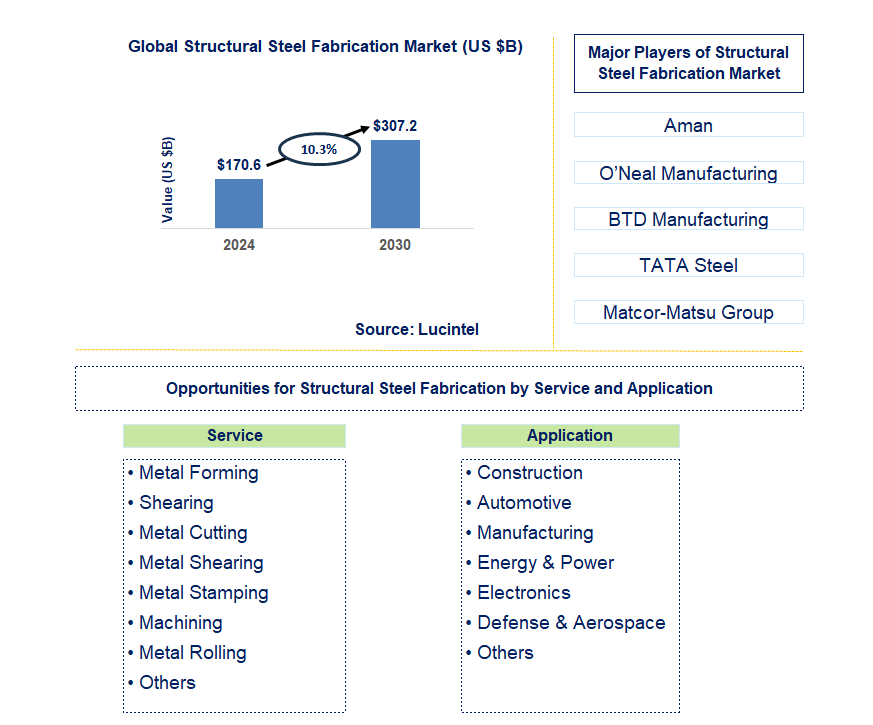
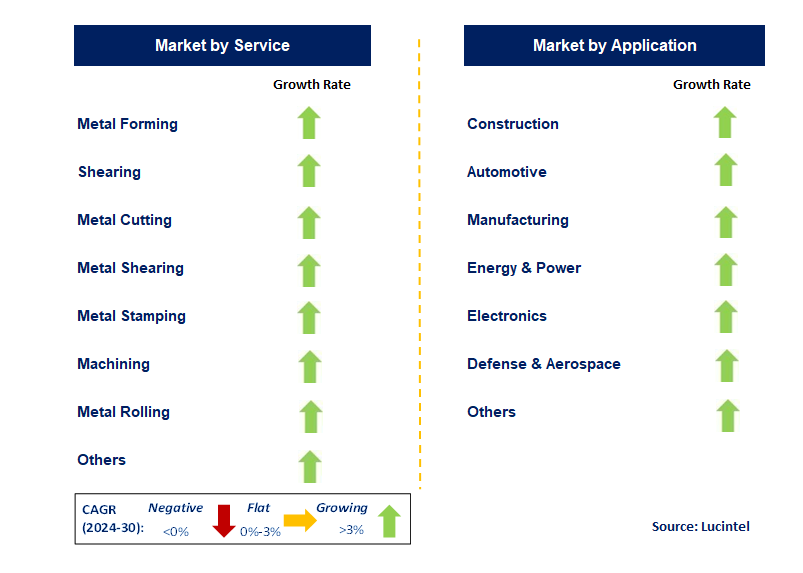
Key data points: The market size in 2030 = $307.2 billion, growth forecast = 10.3% annually for the next 6 years. Scroll below to get more insights. This market report covers trends, opportunities, and forecasts in the global structural steel fabrication market to 2030 by service (metal forming, shearing, metal cutting, metal shearing, metal stamping, machining, metal rolling, and others), application (construction, automotive, manufacturing, energy & power, electronics, defense & aerospace, and others), and region (North America, Europe, Asia Pacific, and the Rest of the World)
We'll send your sample report shortly.
• Lucintel forecasts that, within the type category, machining segment will remain the largest segment over the forecast period due to scientific and technological advancements, the fast growth of automated equipment and technologies, and the growing variety of applications for machines.
• In terms of regions, APAC will remain the largest region over the forecast period due to the presence of emerging countries such as India, China, and Japan owing to the high population density in these areas and additional requirement for the residential houses. A more than 150-page report is developed to help in your business decisions.
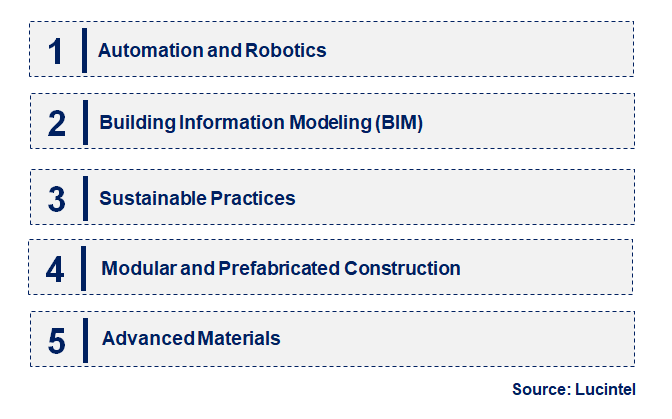
• Automation and Robotics: The integration of robotics in the fabrication process is enhancing precision, speed, and consistency. Automated systems for cutting, welding, and assembling steel components are becoming more prevalent, reducing the need for manual labor while improving production efficiency.
• Building Information Modeling (BIM): BIM technology is being increasingly adopted in structural steel fabrication to streamline communication, coordination, and project management. This digital approach helps in designing and visualizing projects more effectively, ensuring higher accuracy and reducing errors during construction.
• Sustainable Practices: As green building practices gain importance, the steel fabrication industry is focusing on reducing energy consumption, minimizing waste, and using recycled materials. The adoption of sustainable materials and processes helps meet the growing demand for environmentally friendly construction solutions.
• Modular and Prefabricated Construction: Modular and prefabricated construction techniques are gaining traction, allowing steel components to be manufactured off-site and assembled on-site. This method cuts down on construction time, reduces site disruption, and improves overall project efficiency.
• Advanced Materials: The use of high-strength, lightweight steel alloys is on the rise, enabling the construction of more durable and efficient structures. These materials offer improved performance in demanding applications, facilitating more innovative and complex designs in structural steel. These trends are collectively advancing the capabilities of the structural steel industry, leading to more efficient, sustainable, and cost-effective construction methods.
• Robotic Welding Systems: Robotic welding systems are increasingly being used in steel fabrication, offering improved accuracy and faster production rates. These systems reduce human error, increase productivity, and enhance the overall quality of the welded joints.
• Advanced Coating Technologies: New coating technologies are being implemented to enhance the durability of steel structures. Protective coatings improve resistance to physical and chemical damage, extending the life of steel components and reducing the need for maintenance.
• Smart Fabrication Technologies: The integration of IoT sensors and smart systems into the fabrication process allows for real-time monitoring and adjustments. This ensures better quality control, reduces waste, and improves the efficiency of the manufacturing process.
• High-Performance Steel Alloys: The use of high-performance steel alloys is becoming more common in structural fabrication. These alloys provide a favorable strength-to-weight ratio, making them ideal for demanding applications, such as in high-rise buildings and complex industrial structures.
• Lean Manufacturing: The adoption of lean manufacturing principles in steel fabrication has resulted in reduced waste, lower production costs, and faster project turnaround times. This approach focuses on improving workflow, reducing inefficiencies, and maximizing the value of every step in the fabrication process. These developments are enhancing the steel fabrication industry's capabilities, making it more competitive, cost-efficient, and responsive to market demands.
• Infrastructure Development: As governments and businesses increase their investments in infrastructure projects, there is a steady demand for high-quality structural steel. Major infrastructure developments, including transportation and energy facilities, create long-term growth prospects for steel fabricators.
• High-Rise Building Construction: The demand for tall structures, particularly skyscrapers, is growing due to urbanization. Steel's strength, flexibility, and ability to support large-scale, high-rise projects present significant opportunities for structural steel fabrication companies.
• Green Building Projects: With the rise of green building initiatives and energy-efficient construction, there is an increasing need for sustainable steel components. This demand opens up opportunities for companies offering eco-friendly steel solutions and green building certifications.
• Industrial Facilities: The expansion of industrial facilities, such as factories and warehouses, continues to drive the demand for structural steel. Steel is the preferred material for large-scale industrial constructions due to its durability and ability to support heavy loads.
• Prefabrication and Modular Construction: As the construction industry shifts toward prefabrication and modular building methods, there is growing demand for pre-manufactured steel components. This approach reduces on-site construction time and labor costs, offering a competitive advantage to fabricators who adopt this method. These growth opportunities reflect the increasing need for efficient, durable, and sustainable steel solutions in construction projects worldwide.
• Technological Advancements: Technological changes in fabrication processes which include robotics and use of smart systems are beneficial to the efficiency and accuracy of steel fabrication. These improvements raise productivity and lessen the number of workers required.
• Infrastructure Investment: The growing number of structural steel demand is supported by the increased expenditure on infrastructure projects. The construction of buildings requires the use of strong and lasting materials hence the market growth.
• Urbanization and Construction Demand: Urbanization and construction works have been a pull factor for structural steel. Steel is needed in commercial, high-rise and residential buildings on a high level.
• Sustainability Trends: There is a sustainable and green architecture and building trend which encourages the application of environmentally friendly steel and advanced fabrication methods. Such trends are beneficial since they comply with the government regulations aimed at protecting the environment.
• Globalization of Construction Projects: Globalization of construction projects allows tapping into new markets. Global construction is usually associated with the use of high-grade metal, requiring advanced techniques of fabrication which in turn is good for the industry. Challenges in the structural steel fabrication market are:
• Cost Fluctuations: Volatile prices for raw materials, particularly steel, can impact profit margins and make it challenging for fabricators to maintain competitive pricing while managing costs.
• Regulatory Compliance: Adhering to a range of safety, environmental, and quality standards across different regions can be complex. Compliance with these regulations is essential but can be costly and time-consuming.
• Supply Chain Disruptions: Global supply chain challenges, such as material shortages or transportation delays, can disrupt production schedules and impact project timelines.
• Skilled Labor Shortages: The demand for skilled labor in steel fabrication is outpacing supply, making it difficult for companies to find qualified workers to maintain high standards of quality and efficiency.
• Technological Integration: Adopting new technologies, such as smart fabrication systems or robotic welding, can be challenging for established companies with legacy systems. The initial investment and training required for successful integration can be barriers to entry for smaller firms. These drivers and challenges are shaping the future of the structural steel fabrication market, requiring companies to innovate and adapt to remain competitive.
• Aman
• O’Neal Manufacturing Service
• BTD Manufacturing
• TATA Steel
• Matcor-Matsu Group
• Mayville Engineering Comp
• Defiance Metal Products
• Metal Forming
• Shearing
• Metal Cutting
• Metal Shearing
• Metal Stamping
• Machining
• Metal Rolling
• Others
• Construction
• Automotive
• Manufacturing
• Energy & Power
• Electronics
• Defense & Aerospace
• Others
• North America
• Europe
• Asia Pacific
• The Rest of the World
• United States: The U.S. market for structural steel fabrication is expanding, fueled by increased infrastructure investment and the adoption of advanced technologies like robotics and BIM. These innovations are improving project efficiency and reducing construction timelines.
• China: China remains a major player in the global structural steel fabrication market. The country’s rapid urbanization and massive infrastructure projects are driving demand for high-strength steel and modular construction systems.
• Germany: Germany’s market is characterized by a focus on green technologies and sustainable practices. Steel fabricators in the country are investing in eco-friendly materials and energy-efficient manufacturing processes to comply with stringent environmental regulations.
• India: India’s structural steel fabrication market is experiencing rapid growth, driven by urbanization and infrastructure development. The adoption of modern fabrication technologies is helping Indian companies meet the increasing demand for high-quality steel products.
• Japan: Japan is focusing on advanced fabrication techniques, including earthquake-resistant steel structures and high-performance materials. The country’s emphasis on innovation and quality control is positioning it as a leader in the global structural steel market. These regional trends highlight the global demand for efficient, high-quality steel fabrication solutions and the diverse opportunities for companies operating in the market.


• Aman
• O’Neal Manufacturing Service
• BTD Manufacturing
• TATA Steel
• Matcor-Matsu Group
• Mayville Engineering Comp
• Defiance Metal Products Q6. Which structural steel fabrication market segment will be the largest in future? Answer: Lucintel forecasts that machining segment will remain the largest segment over the forecast period due to scientific and technological advancements, the fast growth of automated equipment and technologies, and the growing variety of applications for machines. Q7. In structural steel fabrication market, which region is expected to be the largest in next 5 years? Answer: APAC will remain the largest region over the forecast period due to the presence of emerging countries such as India, China, and Japan owing to the high population density in these areas and additional requirement for the residential houses. Q.8 Do we receive customization in this report? Answer: Yes, Lucintel provides 10% customization without any additional cost.


Choose a license that fits your team. Instant PDF delivery.
Prices exclude taxes. Instant delivery. Custom licensing available on request.
Market Report · July 22, 2026
Market Report · July 22, 2026
Market Report · July 22, 2026
Trusted partner for strategic intelligence and business growth


Receive a complimentary market analysis tailored to your industry. Our analysts will identify key growth opportunities and competitive dynamics specific to your business.

Market size, growth rate, and key trend analysis for your specific sector.

Top competitor positioning and market share analysis.

Strategic recommendations backed by data-driven insights.
Get curated market intelligence and competitive moves straight to your inbox.
By subscribing, you agree to receive our monthly insights. Unsubscribe anytime.
Receive a complimentary market analysis tailored to your industry. Our analysts will identify key growth opportunities and competitive dynamics specific to your business.
Market size, growth rate, and key trend analysis for your specific sector.
Top competitor positioning and market share analysis.
Strategic recommendations backed by data-driven insights.
Get curated market intelligence, emerging trends, and competitive moves straight to your inbox each month.
By subscribing, you agree to receive our monthly insights. Unsubscribe anytime.
We'll send your sample report shortly.