
Report Feature
Sterile Tourniquet Market Trends and Forecast
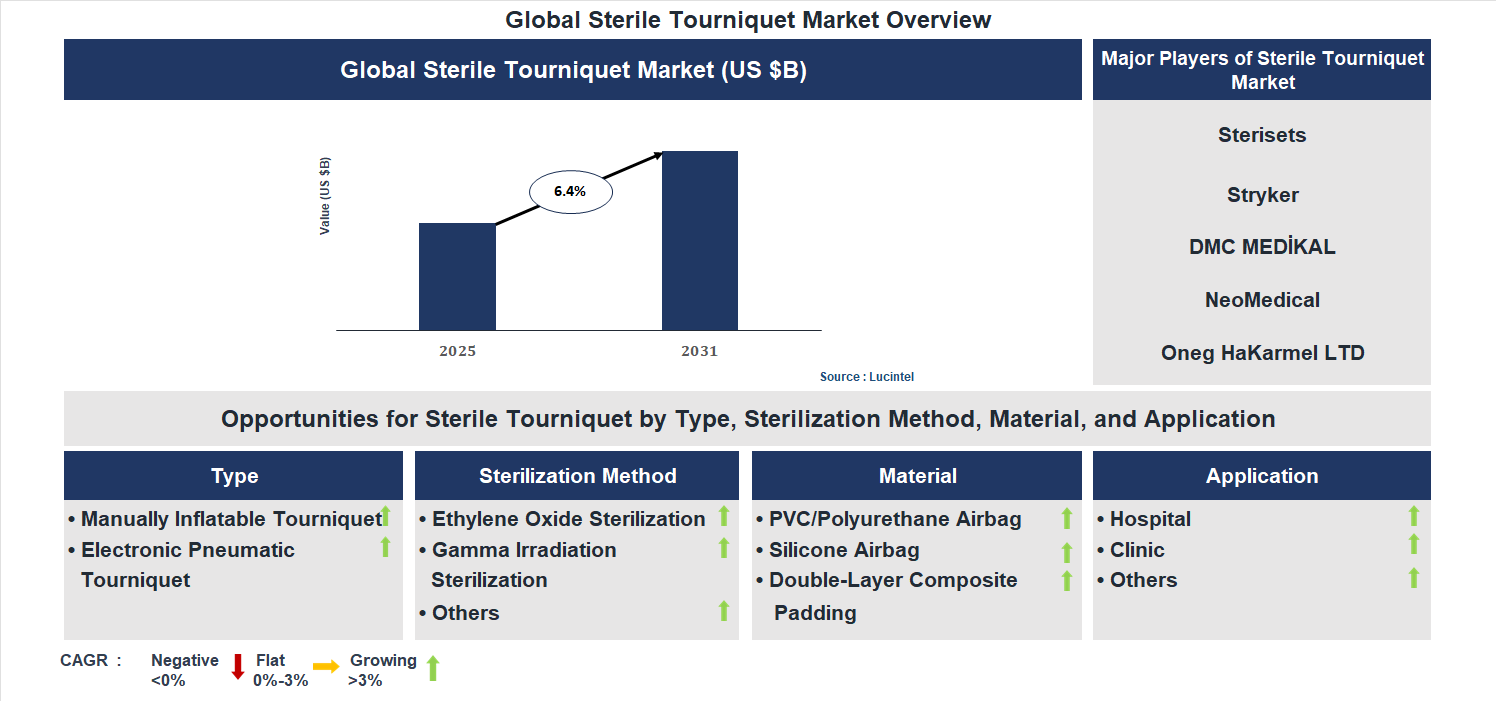
The future of the global sterile tourniquet market looks promising with opportunities in the hospital and clinic markets. The global sterile tourniquet market is expected to grow with a CAGR of 6.4% from 2025 to 2031. The major drivers for this market are the growing number of surgical procedures, the rising preference for single-use medical devices, and the increasing incidence of trauma & emergency care cases.• Lucintel forecasts that, within the type category, electronic pneumatic tourniquet is expected to witness higher growth over the forecast period.
• Within the application category, hospital is expected to witness higher growth.
• In terms of region, APAC is expected to witness the highest growth over the forecast period. Gain valuable insights for your business decisions with our comprehensive 150+ page report. Sample figures with some insights are shown below.
Emerging Trends in the Sterile Tourniquet Market
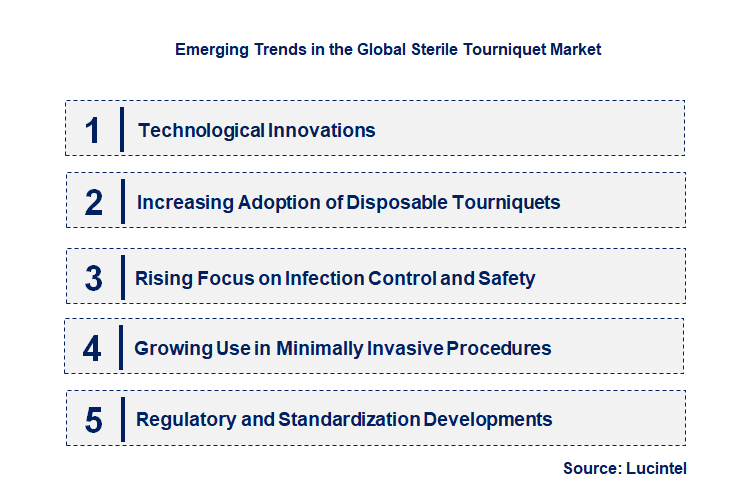
The sterile tourniquet market is experiencing significant evolution driven by advancements in healthcare practices, technological innovations, and increasing demand for infection control measures. As hospitals and clinics prioritize patient safety and operational efficiency, new products and strategies are emerging to meet these needs. The market is also influenced by regulatory changes, rising awareness about infection prevention, and the adoption of minimally invasive procedures. These developments are shaping a more efficient, safe, and patient-centric landscape, prompting manufacturers and healthcare providers to adapt quickly. Understanding these trends is crucial for stakeholders aiming to stay competitive and improve clinical outcomes in this dynamic environment.• Technological Innovations: The integration of smart materials and advanced manufacturing techniques is revolutionizing sterile tourniquets. Innovations such as antimicrobial coatings, disposable designs, and ergonomic features enhance safety and ease of use. These technological advancements reduce infection risks, improve patient comfort, and streamline clinical workflows. As research progresses, more sophisticated products are expected to emerge, further elevating standards of care and operational efficiency in healthcare settings.
• Increasing Adoption of Disposable Tourniquets: The shift towards single-use, disposable tourniquets is driven by the need to prevent cross-contamination and ensure sterility. Disposable options eliminate the need for sterilization processes, saving time and reducing infection risks. Hospitals and clinics are increasingly favoring these products for their convenience, safety, and compliance with infection control protocols. This trend is expected to continue as healthcare facilities prioritize patient safety and regulatory compliance, boosting market growth.
• Rising Focus on Infection Control and Safety: The emphasis on infection prevention is a key driver in the market. Healthcare providers are adopting stricter sterilization standards and using sterile tourniquets to minimize infection transmission. This focus is reinforced by regulatory guidelines and increasing awareness about healthcare-associated infections. As a result, manufacturers are developing products that meet high safety standards, which in turn boosts demand and market expansion.
• Growing Use in Minimally Invasive Procedures: The rise of minimally invasive surgeries and outpatient procedures is fueling demand for sterile tourniquets. These procedures require precise, sterile equipment to prevent infections and ensure optimal outcomes. The portability and ease of use of modern tourniquets make them ideal for such settings. This trend is expanding the market beyond traditional surgical environments, encouraging innovation and diversification of product offerings tailored to outpatient and ambulatory care.
• Regulatory and Standardization Developments: Evolving regulatory frameworks and standardization efforts are shaping the market landscape. Governments and health organizations are implementing stricter guidelines for sterilization, material safety, and product labeling. Compliance with these standards is essential for market entry and growth. Manufacturers are investing in quality assurance and certification processes to meet these requirements, which enhances product credibility and fosters market trust. This trend ensures higher safety standards and promotes innovation aligned with regulatory expectations. In summary, these trends are collectively transforming the sterile tourniquet market by emphasizing safety, innovation, and adaptability. They are driving the development of more effective, user-friendly, and infection-resistant products, ultimately improving patient outcomes and operational efficiency across healthcare settings.
Recent Development in the Sterile Tourniquet Market
The sterile tourniquet market is experiencing rapid growth driven by increasing demand for infection control, advancements in medical technology, and rising surgical procedures worldwide. Healthcare providers are prioritizing patient safety and hygiene, leading to innovations in sterile equipment. The markets expansion is also fueled by the growing prevalence of chronic diseases requiring frequent surgeries. Additionally, regulatory standards are pushing manufacturers to develop safer, more effective tourniquets. These developments are transforming the landscape, offering new opportunities for manufacturers and healthcare providers alike.• Growing Demand for Infection Control: The increasing focus on preventing infections in hospitals and clinics is boosting the adoption of sterile tourniquets. Hospitals are prioritizing hygiene standards, which has led to a surge in demand for sterile, single-use tourniquets. This trend is driven by rising awareness of hospital-acquired infections and regulatory mandates. As a result, manufacturers are innovating to meet these needs, expanding product lines and improving sterilization techniques. This growth enhances patient safety and reduces healthcare-associated infections, positively impacting the market.
• Technological Advancements in Tourniquet Design: Innovations in materials and design are significantly impacting the market. New sterile tourniquets incorporate advanced, hypoallergenic, and durable materials that improve patient comfort and safety. Smart tourniquets with integrated sensors are emerging, providing real-time data on blood flow and pressure. These technological improvements enable more precise procedures, reduce complications, and enhance clinical outcomes. As technology continues to evolve, the market benefits from increased efficiency, better patient experiences, and expanded application possibilities, driving overall growth.
• Rising Surgical Procedures Globally: The global increase in surgical interventions, driven by aging populations and rising chronic diseases, is a key growth factor. More surgeries require reliable tourniquets to control bleeding and improve visibility. The demand for sterile tourniquets is rising in both developed and developing countries, supported by healthcare infrastructure improvements. This surge in surgical procedures creates a steady market expansion, encouraging manufacturers to develop specialized sterile tourniquets for various surgical needs, ultimately improving surgical safety and outcomes.
• Regulatory Standards and Quality Assurance: Stringent regulatory requirements are shaping the market landscape. Governments and health organizations are enforcing strict sterilization and safety standards for medical devices, including tourniquets. Compliance ensures product safety and efficacy, fostering trust among healthcare providers. Manufacturers are investing in quality assurance processes, obtaining certifications, and adhering to international standards. These regulations drive innovation, improve product quality, and open new markets, ultimately supporting sustainable growth in the sterile tourniquet industry.
• Increasing Adoption in Outpatient and Emergency Settings: The shift towards outpatient surgeries and emergency care is expanding the use of sterile tourniquets. These settings demand quick, reliable, and sterile devices to ensure patient safety and procedural efficiency. Portable and easy-to-use sterile tourniquets are gaining popularity in ambulatory care and emergency response units. This trend broadens market reach beyond traditional hospital settings, encouraging manufacturers to develop versatile products. The increased adoption enhances procedural safety, reduces infection risks, and supports the overall growth of the market. The overall impact of these developments is a robust expansion of the sterile tourniquet market, driven by technological innovation, regulatory compliance, and increasing surgical needs. These factors collectively improve patient safety, operational efficiency, and market competitiveness, fostering sustained growth and new opportunities for industry stakeholders.
Strategic Growth Opportunities in the Sterile Tourniquet Market
The sterile tourniquet market is experiencing significant growth driven by increasing demand for safe and effective blood control solutions in medical procedures. Advancements in material technology, rising surgical volumes, and a focus on infection prevention are key factors fueling market expansion. Additionally, the growing adoption of disposable tourniquets and the expanding healthcare infrastructure in emerging economies present substantial opportunities. Strategic investments and innovation are expected to further accelerate market growth, making sterile tourniquets a critical component in modern medical practices worldwide.• Innovation in Material Technology Enhances Safety and Comfort: Developing advanced, hypoallergenic, and durable materials for sterile tourniquets improves patient safety and comfort. These innovations reduce the risk of infections and skin irritation, encouraging wider adoption. Manufacturers are focusing on biodegradable and eco-friendly options to meet environmental standards. Enhanced material properties also allow for better elasticity and ease of use, supporting clinical efficiency. This ongoing innovation sustains market growth by aligning with healthcare providers safety and sustainability priorities.
• Rising Surgical Procedures Drive Demand for Sterile Tourniquets: The increasing volume of surgeries globally, including minimally invasive and outpatient procedures, boosts the need for reliable blood control devices. Sterile tourniquets are essential for maintaining a sterile environment and preventing cross-contamination. As healthcare infrastructure expands, especially in emerging markets, the demand for high-quality sterile tourniquets grows. This trend is further supported by the rising prevalence of chronic diseases requiring frequent surgical interventions, creating a steady market expansion.
• Growing Adoption of Disposable Tourniquets Promotes Market Expansion: The shift from reusable to disposable sterile tourniquets is driven by infection control protocols and convenience. Disposable options eliminate the need for sterilization, reduce cross-contamination risks, and improve workflow efficiency. Hospitals and clinics prefer single-use products for their safety benefits, which propels market growth. Manufacturers are innovating with cost-effective, eco-friendly disposable tourniquets to meet increasing demand, especially in resource-constrained settings, thereby expanding the market footprint.
• Increasing Focus on Infection Prevention and Control: Stringent infection control standards in healthcare settings are fueling the demand for sterile tourniquets. Hospitals and clinics prioritize single-use, sterile devices to minimize infection risks. Regulatory agencies are implementing stricter guidelines, encouraging the adoption of disposable tourniquets. This focus on safety and hygiene is driving innovation and procurement of advanced sterile tourniquets. The emphasis on infection prevention sustains market growth by ensuring compliance and enhancing patient outcomes.
• Expansion of Healthcare Infrastructure in Emerging Economies: Rapid development of healthcare facilities in regions like Asia-Pacific and Latin America creates new opportunities for sterile tourniquet manufacturers. Increased healthcare spending, government initiatives, and rising awareness about infection control contribute to market growth. The demand for high-quality, sterile blood control devices is rising alongside expanding surgical and diagnostic services. Local manufacturing and strategic partnerships are further facilitating market penetration, making emerging economies key growth drivers in the global sterile tourniquet market. The overall impact of these opportunities is a robust expansion of the sterile tourniquet market, driven by technological innovation, increased surgical activity, and heightened focus on infection control. As healthcare systems evolve and adopt advanced safety protocols, the market is poised for sustained growth, benefiting manufacturers, healthcare providers, and patients through improved safety, efficiency, and accessibility.
Sterile Tourniquet Market Driver and Challenges
The sterile tourniquet market is influenced by a variety of technological, economic, and regulatory factors that shape its growth and development. Advances in medical device technology, increasing healthcare expenditure, and stringent safety standards are key drivers. Conversely, challenges such as regulatory hurdles, high product costs, and concerns over infection control pose significant obstacles. Understanding these drivers and challenges is essential for stakeholders to navigate the market effectively and capitalize on emerging opportunities while addressing potential risks. The factors responsible for driving the sterile tourniquet market include:-• Technological Innovations: The development of advanced, user-friendly, and disposable sterile tourniquets has significantly improved patient safety and procedural efficiency. Innovations such as antimicrobial coatings and ergonomic designs enhance usability and reduce infection risks, encouraging adoption across hospitals and clinics. Continuous R&D efforts are expected to further improve product features, driving market growth.
• Increasing Healthcare Expenditure: Rising healthcare spending worldwide, especially in emerging economies, boosts demand for sterile tourniquets. Governments and private healthcare providers are investing more in surgical and emergency care, which directly increases the need for sterile tourniquets to ensure patient safety and infection control.
• Growing Prevalence of Chronic Diseases and Surgical Procedures: The rising incidence of chronic conditions like cardiovascular diseases and the increasing number of surgical interventions necessitate the use of sterile tourniquets. This trend is particularly prominent in aging populations, leading to sustained demand for sterile, reliable tourniquets in hospitals and clinics.
• Regulatory Approvals and Standards: Stringent regulatory frameworks and safety standards, such as those from the FDA and CE marking, ensure product quality and safety. Compliance with these regulations fosters trust among healthcare providers and patients, thereby promoting market expansion and product acceptance. The challenges in the sterile tourniquet market are:
• Regulatory Hurdles and Approval Processes: Navigating complex regulatory pathways can delay product launches and increase costs for manufacturers. Variations in approval requirements across regions complicate market entry and expansion, potentially hindering growth.
• High Product Costs and Reimbursement Issues: The cost of sterile tourniquets, especially those with advanced features, can be prohibitive for some healthcare providers. Limited reimbursement policies further restrict adoption, particularly in cost-sensitive markets, impacting overall sales.
• Infection Control and Safety Concerns: Despite sterilization, there are ongoing concerns about cross-contamination and infection transmission if products are improperly handled or manufactured. Ensuring consistent sterilization standards and safety protocols is critical but challenging, affecting market confidence and usage rates. In summary, the sterile tourniquet market is driven by technological advancements, increasing healthcare investments, and rising surgical procedures, which collectively promote growth. However, regulatory complexities, high costs, and safety concerns pose significant challenges that could impede market expansion. Addressing these issues through innovation, regulatory compliance, and cost management will be vital for sustained growth. Overall, the markets future depends on balancing these drivers and challenges to meet evolving healthcare needs effectively.
List of Sterile Tourniquet Companies
Companies in the market compete on the basis of product quality offered. Major players in this market focus on expanding their manufacturing facilities, R&D investments, infrastructural development, and leverage integration opportunities across the value chain. With these strategies sterile tourniquet companies cater increasing demand, ensure competitive effectiveness, develop innovative products & technologies, reduce production costs, and expand their customer base. Some of the sterile tourniquet companies profiled in this report include-• Sterisets
• Stryker
• DMC MEDİKAL
• NeoMedical
• Oneg HaKarmel LTD
• Trinity Sterile
• VBM Medizintechnik GmbH
• ASP Global
• BOENMED
• ZHENGDA
Sterile Tourniquet Market by Segment
The study includes a forecast for the global sterile tourniquet market by type, sterilization method, material, application, and region.Sterile Tourniquet Market by Type [Value from 2019 to 2031]:
• Manually Inflatable Tourniquet
• Electronic Pneumatic Tourniquet
Sterile Tourniquet Market by Sterilization Method [Value from 2019 to 2031]:
• Ethylene Oxide Sterilization
• Gamma Irradiation Sterilization
• Others
Sterile Tourniquet Market by Material [Value from 2019 to 2031]:
• PVC/Polyurethane Airbag
• Silicone Airbag
• Double-Layer Composite Padding
Sterile Tourniquet Market by Application [Value from 2019 to 2031]:
• Hospital
• Clinic
• Others
Sterile Tourniquet Market by Region [Value from 2019 to 2031]:
• North America
• Europe
• Asia Pacific
• The Rest of the World
Country Wise Outlook for the Sterile Tourniquet Market
The sterile tourniquet market has experienced significant growth driven by increasing demand for minimally invasive procedures, advancements in medical technology, and rising healthcare investments worldwide. As hospitals and clinics seek more effective and safe tools for vascular access and surgery, innovations and regulatory approvals have propelled market expansion. Different countries are adopting new standards, improving product quality, and integrating advanced materials to enhance patient safety and comfort. These developments reflect a global shift towards more efficient, reliable, and user-friendly sterile tourniquet solutions, shaping the future landscape of vascular and surgical care.• United States: The US market has seen rapid adoption of advanced sterile tourniquets with features like antimicrobial coatings and ergonomic designs. Increasing procedural volumes and regulatory approvals have boosted sales, while hospitals focus on infection control and patient safety. The rise of outpatient surgeries and minimally invasive techniques further drives demand, with key players investing in R&D to develop innovative products that improve usability and safety.
• China: Chinas market is expanding due to rising healthcare infrastructure and government initiatives to improve medical device standards. Local manufacturers are increasingly adopting international quality standards, leading to a surge in domestically produced sterile tourniquets. The growing prevalence of chronic diseases and surgical procedures has also contributed to market growth, with a focus on cost-effective, high-quality products to meet the needs of a large population.
• Germany: Germanys market is characterized by high-quality standards and stringent regulatory frameworks. The country emphasizes the use of eco-friendly and sustainable materials in sterile tourniquets. Innovations in design, such as adjustable and reusable options, are gaining popularity. The presence of leading medical device companies and a strong healthcare system supports continuous advancements and the adoption of cutting-edge solutions.
• India: The Indian market is witnessing rapid growth driven by increasing healthcare expenditure and a rising number of surgical procedures. Local manufacturers are expanding their product portfolios to include sterile tourniquets that are affordable yet meet international safety standards. The government’s focus on improving healthcare infrastructure and the growing awareness of infection prevention are key factors fueling market expansion.
• Japan: Japans market is characterized by high technological integration and strict quality controls. The focus is on developing sterile tourniquets with advanced features like antimicrobial properties and enhanced comfort. An aging population and a high prevalence of chronic conditions have increased demand for reliable vascular access tools. Japanese companies are investing in innovative materials and designs to maintain their competitive edge in the global market.

Features of the Global Sterile Tourniquet Market
Market Size Estimates: Sterile tourniquet market size estimation in terms of value ($B). Trend and Forecast Analysis: Market trends (2019 to 2024) and forecast (2025 to 2031) by various segments and regions. Segmentation Analysis: Sterile tourniquet market size by various segments, such as by type, sterilization method, material, application, and region in terms of value ($B). Regional Analysis: Sterile tourniquet market breakdown by North America, Europe, Asia Pacific, and Rest of the World. Growth Opportunities: Analysis of growth opportunities in different type, sterilization method, material, application, and regions for the sterile tourniquet market. Strategic Analysis: This includes M&A, new product development, and competitive landscape of the sterile tourniquet market. Analysis of competitive intensity of the industry based on Porter’s Five Forces model.
FAQ
Q1. What is the growth forecast for sterile tourniquet market? Answer: The global sterile tourniquet market is expected to grow with a CAGR of 6.4% from 2025 to 2031. Q2. What are the major drivers influencing the growth of the sterile tourniquet market? Answer: The major drivers for this market are the growing number of surgical procedures, the rising preference for single-use medical devices, and the increasing incidence of trauma & emergency care cases. Q3. What are the major segments for sterile tourniquet market? Answer: The future of the sterile tourniquet market looks promising with opportunities in the hospital and clinic markets. Q4. Who are the key sterile tourniquet market companies? Answer: Some of the key sterile tourniquet companies are as follows:• Sterisets
• Stryker
• DMC MEDİKAL
• NeoMedical
• Oneg HaKarmel LTD
• Trinity Sterile
• VBM Medizintechnik GmbH
• ASP Global
• BOENMED
• ZHENGDA Q5. Which sterile tourniquet market segment will be the largest in future? Answer: Lucintel forecasts that, within the type category, electronic pneumatic tourniquet is expected to witness higher growth over the forecast period. Q6. In sterile tourniquet market, which region is expected to be the largest in next 5 years? Answer: In terms of region, APAC is expected to witness the highest growth over the forecast period. Q7. Do we receive customization in this report? Answer: Yes, Lucintel provides 10% customization without any additional cost.
Table of Contents
List of Figures
List of Tables
Methodology
- In-depth interviews of the major players in this market
- Detailed secondary research from competitors’ financial statements and published data
- Extensive searches of published works, market, and database information pertaining to industry news, company press releases, and customer intentions
- A compilation of the experiences, judgments, and insights of Lucintel’s professionals, who have analyzed and tracked this market over the years.


Key Questions
- • What are some of the most promising, high-growth opportunities for the sterile tourniquet market by type (manually inflatable tourniquet and electronic pneumatic tourniquet), sterilization method (ethylene oxide sterilization, gamma irradiation sterilization, and others), material (PVC/polyurethane airbag, silicone airbag, and double-layer composite padding), application (hospital, clinic, and others), and region (North America, Europe, Asia Pacific, and the Rest of the World)?
- • Which segments will grow at a faster pace and why?
- • Which region will grow at a faster pace and why?
- • What are the key factors affecting market dynamics? What are the key challenges and business risks in this market?
- • What are the business risks and competitive threats in this market?
- • What are the emerging trends in this market and the reasons behind them?
- • What are some of the changing demands of customers in the market?
- • What are the new developments in the market? Which companies are leading these developments?
- • Who are the major players in this market? What strategic initiatives are key players pursuing for business growth?
- • What are some of the competing products in this market and how big of a threat do they pose for loss of market share by material or product substitution?
- • What M&A activity has occurred in the last 6 years and what has its impact been on the industry? For any questions related to Sterile Tourniquet Market, Sterile Tourniquet Market Size, Sterile Tourniquet Market Growth, Sterile Tourniquet Market Analysis, Sterile Tourniquet Market Report, Sterile Tourniquet Market Share, Sterile Tourniquet Market Trends, Sterile Tourniquet Market Forecast, Sterile Tourniquet Companies, write Lucintel analyst at email: helpdesk@lucintel.com. We will be glad to get back to you soon.


