
Market Report · July 16, 2026

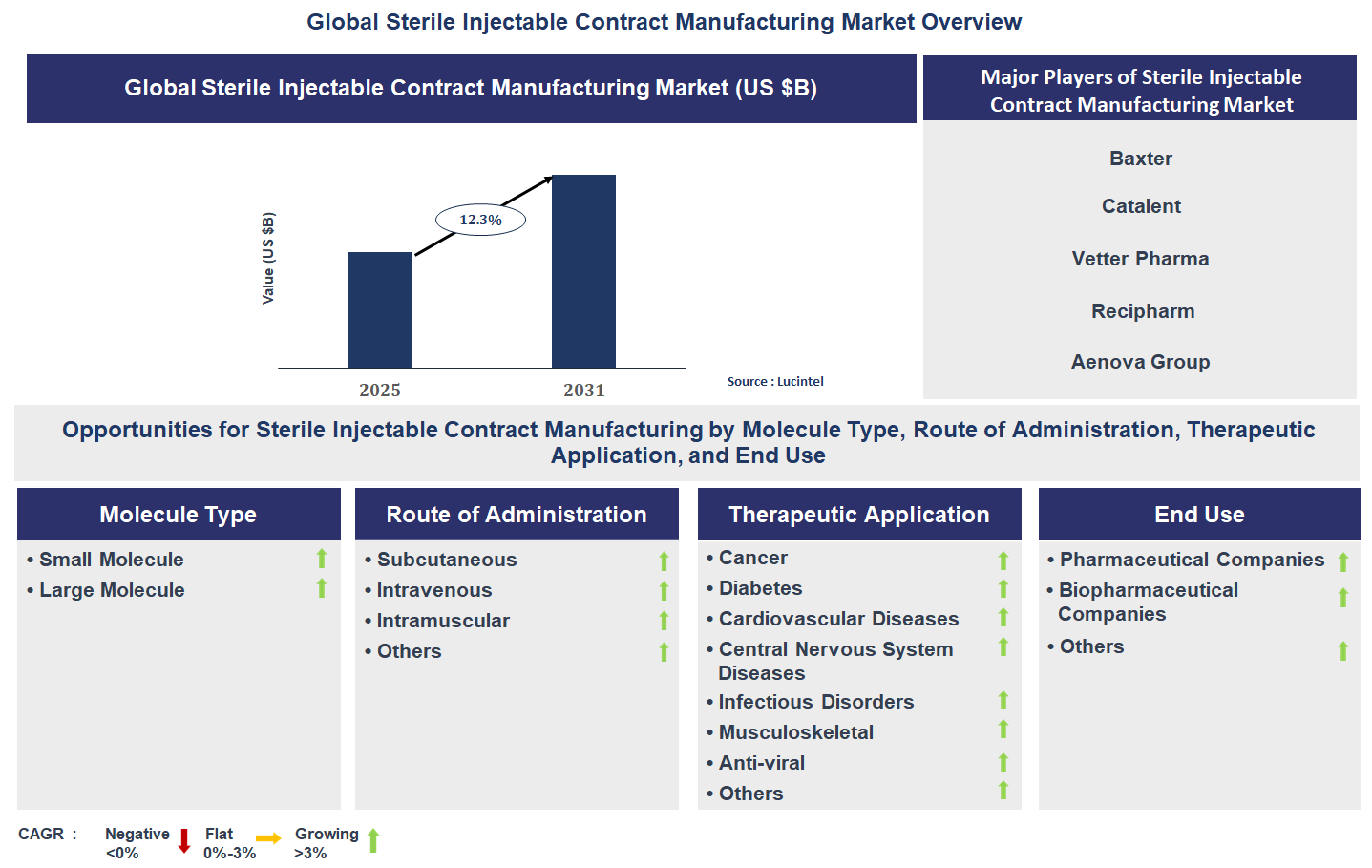
Key data points: The growth forecast = 12.3% annually for the next 7 years. Scroll below to get more insights. This market report covers trends, opportunities and forecasts in sterile injectable contract manufacturing market to 2031 by molecule type (small molecule and large molecule), route of administration (subcutaneous, intravenous, intramuscular, and others), therapeutic application (cancer, diabetes, cardiovascular diseases, central nervous system diseases, infectious disorders, musculoskeletal, anti-viral, and others), end use (pharmaceutical companies, biopharmaceutical companies, and others), and region (North America, Europe, Asia Pacific, and the Rest of the World)
We'll send your sample report shortly.
• Lucintel forecasts that, within the molecule type category, large molecule will remain a larger segment over the forecast period.
• Within the end use category, pharmaceutical company will remain a larger segment.
• In terms of region, North America will remain the largest region over the forecast period. Gain valuable insights for your business decisions with our comprehensive 150+ page report. Sample figures with some insights are shown below.
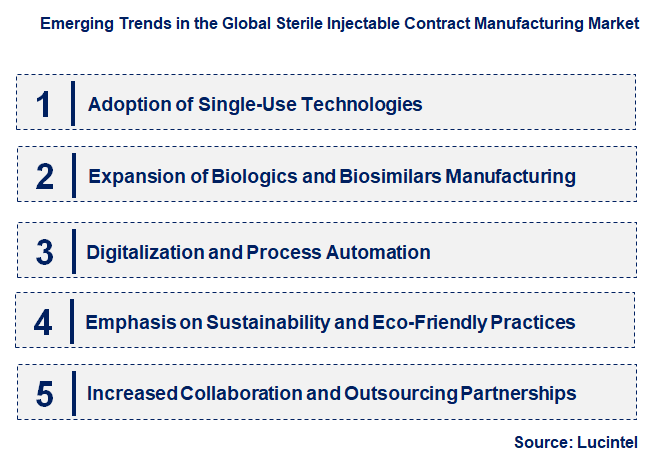
• Adoption of Single-Use Technologies: Contract manufacturers are increasingly using single-use systems to reduce cross-contamination, increase flexibility, and lower cleaning validation requirements. This trend improves efficiency in multi-product facilities and supports faster batch turnaround times.
• Expansion of Biologics and Biosimilars Manufacturing: The growing pipeline of biologics and biosimilars is driving investment in high-capacity sterile facilities. CMOs are upgrading their aseptic filling lines and adopting technologies compatible with protein-based formulations.
• Digitalization and Process Automation: Manufacturers are integrating digital monitoring, data analytics, and automated filling systems to ensure consistency, traceability, and regulatory compliance. These technologies enhance real-time process control.
• Emphasis on Sustainability and Eco-Friendly Practices: Green manufacturing practices are becoming essential, with CMOs focusing on energy-efficient operations, waste reduction, and sustainable packaging materials.
• Increased Collaboration and Outsourcing Partnerships: Rising drug complexity has encouraged more partnerships between pharmaceutical companies and CMOs for technology transfer, risk-sharing, and global market expansion. Emerging trends in the sterile injectable contract manufacturing market highlight a shift toward digitalization, automation, and sustainability. The adoption of single-use systems and expansion in biologics manufacturing are increasing efficiency and flexibility. Collaborative partnerships are ensuring better quality control and faster product delivery. These advancements are redefining contract manufacturing, making it more adaptable and innovation-driven to meet the evolving needs of the global pharmaceutical industry.
• Facility Expansion and Modernization: Leading CMOs are investing in new aseptic manufacturing units equipped with isolators and robotic filling lines to enhance efficiency.
• Increased Investment in Biologic Injectable Capabilities: Companies are expanding their service portfolios to include large-molecule and biosimilar injectables to meet rising global demand.
• Technological Integration and Process Automation: Digital technologies such as real-time monitoring and automated inspection systems are improving precision and reducing human error.
• Strategic Collaborations and Mergers: Partnerships between global pharmaceutical firms and CMOs are strengthening production capabilities and ensuring regulatory compliance across markets.
• Regulatory Alignment with Global Standards: Manufacturers are aligning with international quality frameworks such as GMP and ISO standards to enhance global export potential. Recent developments emphasize efficiency, scalability, and global standardization in sterile injectable manufacturing. Technological upgrades and strategic collaborations are helping CMOs enhance capacity and maintain compliance. The ongoing digital transformation and expansion in biologic injectables are positioning the market for long-term growth.
• Biologics and Biosimilars Production: Increasing demand for monoclonal antibodies and biosimilars is creating growth opportunities for sterile biologic injectables.
• Vaccine Manufacturing Support: Contract manufacturers are partnering with pharmaceutical companies to develop and fill sterile vaccine formulations.
• Oncology Injectable Development: Growth in targeted cancer therapies is increasing demand for high-potency sterile injectables.
• Pre-Filled Syringe and Vial Solutions: Expansion in prefilled packaging options is improving drug delivery convenience and reducing contamination risks.
• Advanced Aseptic and Lyophilization Capabilities: Integration of freeze-drying and aseptic processing technologies is enhancing drug stability and shelf life. Strategic growth opportunities in the sterile injectable contract manufacturing market focus on biologics, oncology drugs, and vaccine production. Technological innovation and capacity expansion are enabling CMOs to support complex injectable formulations. These opportunities are driving diversification and strengthening the global presence of contract manufacturers.
• Baxter
• Catalent
• Vetter Pharma
• Recipharm
• Aenova Group
• Fresenius Kabi
• Unither Pharmaceuticals
• FAMAR Health Care Services
• Cipla
• NextPharma Technologies
• Small Molecule
• Large Molecule
• Subcutaneous
• Intravenous
• Intramuscular
• Others
• Cancer
• Diabetes
• Cardiovascular Diseases
• Central Nervous System Diseases
• Infectious Disorders
• Musculoskeletal
• Anti-viral
• Others
• Pharmaceutical Companies
• Biopharmaceutical Companies
• Others
• North America
• Europe
• Asia Pacific
• The Rest of the World
• United States: In the United States, sterile injectable contract manufacturing is expanding rapidly with strong investments in biologics and biosimilars. Leading CMOs are enhancing their sterile fill-finish capabilities and adopting advanced aseptic technologies to meet FDA compliance standards. The growing need for personalized therapies and vaccines has encouraged expansion of modular manufacturing facilities. Several companies are forming partnerships to strengthen their biologics pipeline support. Automation and quality assurance integration are improving production efficiency.
• China: China’s sterile injectable contract manufacturing market is witnessing strong growth driven by government support for pharmaceutical innovation and local manufacturing. Contract manufacturers are investing in high-grade cleanroom facilities and adopting advanced aseptic filling technologies to meet global quality standards. The country’s increasing focus on biologics, vaccines, and oncology injectables is boosting capacity expansion. Collaboration between domestic and international CMOs is helping enhance technical expertise and compliance with global regulatory guidelines.
• Germany: Germany remains a key European market for sterile injectable contract manufacturing due to its advanced pharmaceutical infrastructure and stringent quality regulations. Local CMOs are focusing on capacity expansion for complex biologics, biosimilars, and small-batch injectables. The adoption of robotic systems and single-use technologies is enhancing aseptic precision and reducing contamination risks. Collaborations with multinational drug developers are fostering innovation in sterile drug delivery. Germany’s strong emphasis on GMP compliance and sustainable manufacturing practices ensures high production standards.
• India: India’s sterile injectable contract manufacturing market is growing rapidly due to its cost-efficient production capabilities and expanding export opportunities. Indian CMOs are upgrading facilities to meet global regulatory standards set by agencies such as the FDA and EMA. Increased demand for oncology drugs, vaccines, and biologics is driving infrastructure modernization. Domestic manufacturers are focusing on sterile filling technologies and integrated supply chain solutions. Government initiatives under the “Make in India” program are attracting foreign investments in pharmaceutical manufacturing. India continues to strengthen its position as a preferred outsourcing hub for sterile injectables.
• Japan: Japan’s sterile injectable contract manufacturing market is advancing through the integration of high-quality aseptic technologies and strict regulatory compliance. Local manufacturers are collaborating with global pharmaceutical companies to produce biologics and specialty injectables. The country’s aging population and rising demand for chronic disease treatments are boosting sterile production requirements. Japanese CMOs are investing in robotic filling systems, cleanroom automation, and lyophilization technologies. The focus on high precision, safety, and innovation supports Japan’s reputation as a center for advanced pharmaceutical manufacturing.


• Baxter
• Catalent
• Vetter Pharma
• Recipharm
• Aenova Group
• Fresenius Kabi
• Unither Pharmaceuticals
• FAMAR Health Care Services
• Cipla
• NextPharma Technologies Q5. Which sterile injectable contract manufacturing market segment will be the largest in future? Answer: Lucintel forecasts that, within the molecule type category, large molecule will remain a larger segment over the forecast period. Q6. In sterile injectable contract manufacturing market, which region is expected to be the largest in next 5 years? Answer: In terms of region, North America will remain the largest region over the forecast period. Q7. Do we receive customization in this report? Answer: Yes, Lucintel provides 10% customization without any additional cost.


Choose a license that fits your team. Instant PDF delivery.
Prices exclude taxes. Instant delivery. Custom licensing available on request.
Market Report · July 16, 2026
Market Report · July 15, 2026
Market Report · July 15, 2026
Trusted partner for strategic intelligence and business growth


Receive a complimentary market analysis tailored to your industry. Our analysts will identify key growth opportunities and competitive dynamics specific to your business.

Market size, growth rate, and key trend analysis for your specific sector.

Top competitor positioning and market share analysis.

Strategic recommendations backed by data-driven insights.
Get curated market intelligence and competitive moves straight to your inbox.
By subscribing, you agree to receive our monthly insights. Unsubscribe anytime.
Receive a complimentary market analysis tailored to your industry. Our analysts will identify key growth opportunities and competitive dynamics specific to your business.
Market size, growth rate, and key trend analysis for your specific sector.
Top competitor positioning and market share analysis.
Strategic recommendations backed by data-driven insights.
Get curated market intelligence, emerging trends, and competitive moves straight to your inbox each month.
By subscribing, you agree to receive our monthly insights. Unsubscribe anytime.
We'll send your sample report shortly.