
Report Feature
Stage Lighting Equipment Market Trends and Forecast
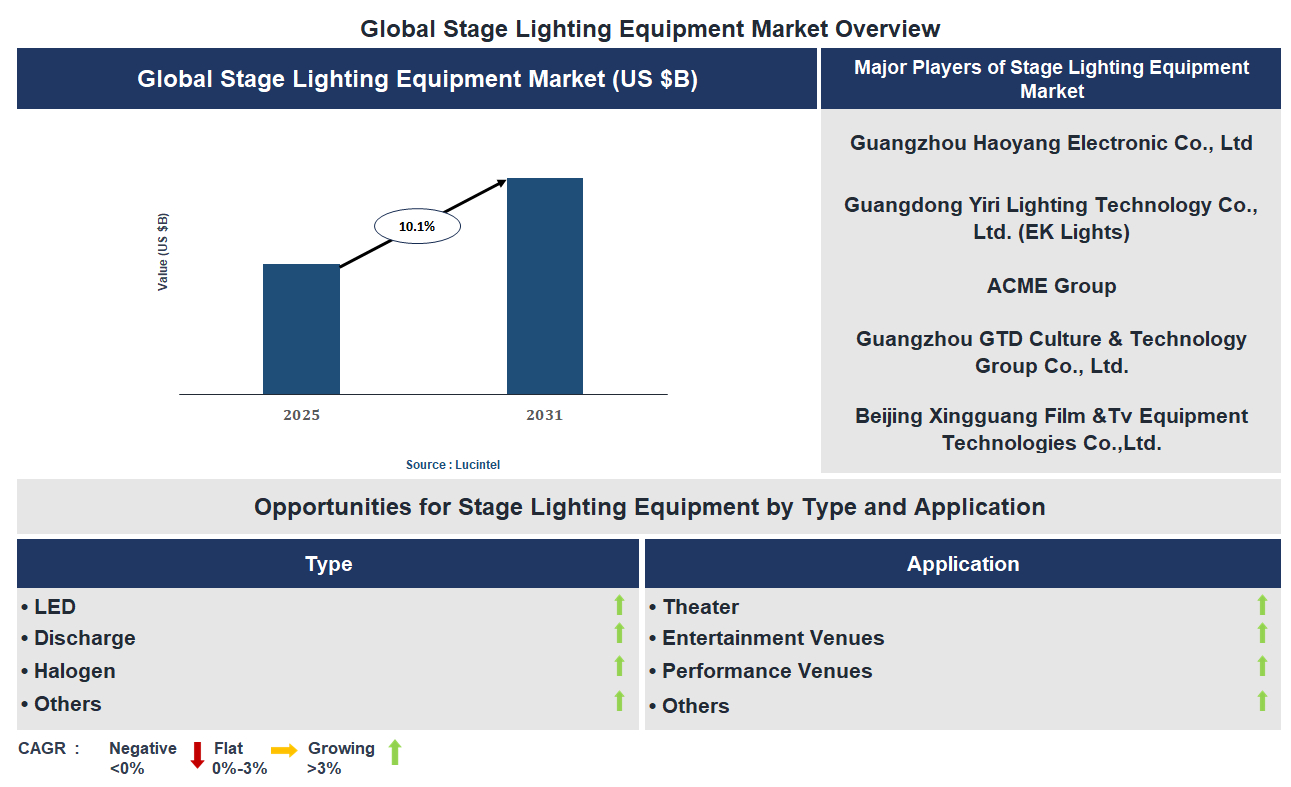
The future of the global stage lighting equipment market looks promising with opportunities in the theater, entertainment venue, and performance venue markets. The global stage lighting equipment market is expected to grow with a CAGR of 10.1% from 2025 to 2031. The major drivers for this market are the increasing demand for live entertainment experiences, the rising popularity of concerts & events, and the growing adoption of energy-efficient lighting solutions.• Lucintel forecasts that, within the type category, LED is expected to witness the highest growth over the forecast period.
• Within the application category, entertainment venue is expected to witness the highest growth.
• In terms of region, APAC is expected to witness the highest growth over the forecast period. Gain valuable insights for your business decisions with our comprehensive 150+ page report. Sample figures with some insights are shown below.
Emerging Trends in the Stage Lighting Equipment Market
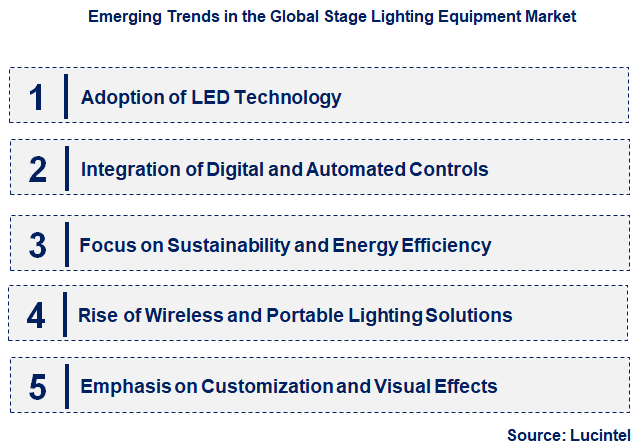
The stage lighting equipment market is experiencing rapid evolution driven by technological advancements, changing consumer preferences, and a focus on sustainability. As live events, theater productions, and corporate events grow in scale and complexity, the demand for innovative, efficient, and versatile lighting solutions increases. Market players are investing in new technologies to enhance visual effects, improve energy efficiency, and offer customizable options. Additionally, the integration of digital controls and automation is transforming how lighting is designed and operated. These developments are not only expanding the market’s scope but also redefining industry standards, making it more dynamic and competitive.• Adoption of LED Technology: The shift from traditional halogen and incandescent lights to LED lighting is a major trend. LED lights offer higher energy efficiency, longer lifespan, and lower heat emission, which reduces operational costs and enhances safety. They also provide a broader spectrum of colors and more precise control, enabling designers to create more dynamic and visually appealing effects. This trend is driven by environmental concerns and cost savings, making LED technology the preferred choice for new installations and upgrades.
• Integration of Digital and Automated Controls: Digital control systems and automation are revolutionizing stage lighting. These systems allow for precise programming, synchronization with other stage elements, and remote operation, increasing flexibility and efficiency. Automated lighting fixtures can change colors, patterns, and intensity seamlessly, enabling complex lighting sequences that enhance storytelling and audience engagement. This trend reduces manual labor, minimizes errors, and allows for quick adjustments during live performances, significantly improving production quality.
• Focus on Sustainability and Energy Efficiency: Environmental sustainability is increasingly influencing market trends. Manufacturers are developing eco-friendly lighting solutions that consume less power and have minimal environmental impact. The use of recyclable materials and energy-efficient designs aligns with global sustainability goals. This focus not only appeals to environmentally conscious clients but also helps reduce operational costs, making sustainable lighting solutions a strategic choice for venues and production companies aiming to meet green standards.
• Rise of Wireless and Portable Lighting Solutions: Wireless technology is enabling more flexible and portable lighting setups. Battery-powered fixtures eliminate the need for extensive cabling, simplifying installation and reducing setup time. Portable lighting solutions are ideal for outdoor events, temporary installations, and touring productions. Wireless controls facilitate quick adjustments and programming from a distance, enhancing convenience and safety. This trend is expanding the market by making high-quality lighting accessible for a wider range of applications and environments, especially where traditional wiring is impractical.
• Emphasis on Customization and Visual Effects: The demand for highly customizable lighting solutions is growing. Advanced fixtures with programmable features allow designers to create unique visual effects tailored to specific themes or branding requirements. The integration of projection mapping and 3D effects further enhances visual storytelling. This trend is driven by the need for immersive experiences in entertainment, corporate events, and exhibitions. It encourages innovation among manufacturers and provides clients with more creative control, ultimately elevating the overall quality and impact of stage productions. In summary, these trends are reshaping the stage lighting equipment market by promoting greater efficiency, flexibility, and creativity. The adoption of LED technology, automation, sustainability initiatives, wireless solutions, and customization options are collectively driving growth and innovation. As these developments continue, the market is becoming more competitive, environmentally conscious, and capable of delivering highly immersive and engaging experiences for audiences worldwide.
Recent Development in the Stage Lighting Equipment Market
The stage lighting equipment market has experienced significant evolution driven by technological advancements, changing consumer preferences, and the increasing demand for immersive entertainment experiences. As live events, theater productions, and concerts continue to grow globally, the industry is adapting with innovative solutions to enhance visual effects and energy efficiency. Recent developments reflect a shift towards smarter, more sustainable, and versatile lighting systems that cater to diverse production needs. These changes are shaping the competitive landscape, influencing market growth, and expanding opportunities for manufacturers and service providers. Understanding these key developments is essential for stakeholders aiming to capitalize on emerging trends and maintain a competitive edge.• Adoption of LED Technology: The shift from traditional halogen and incandescent lights to LED lighting has revolutionized the market by offering energy efficiency, longer lifespan, and enhanced color options. This development reduces operational costs and environmental impact, making LED fixtures the preferred choice for venues and productions. The increased adoption is driving market growth and encouraging manufacturers to innovate with more advanced, customizable LED solutions.
• Integration of Smart Lighting Systems: The integration of IoT-enabled smart lighting systems allows for remote control, automation, and real-time adjustments during performances. This technology enhances flexibility, precision, and synchronization with other stage effects, improving overall production quality. It also enables operators to reduce labor costs and increase efficiency, thereby expanding the market for intelligent lighting solutions.
• Focus on Sustainability and Energy Efficiency: Growing environmental concerns have prompted manufacturers to develop eco-friendly lighting options that consume less power and generate minimal heat. The emphasis on sustainability is influencing product design and procurement decisions, leading to increased demand for energy-efficient lighting systems. This trend aligns with global efforts to reduce carbon footprints and promotes market growth through eco-conscious innovations.
• Expansion of Wireless and Battery-Powered Lighting: Wireless and battery-powered lighting fixtures offer greater mobility and ease of setup, especially in temporary or outdoor venues. These developments facilitate quick installation and flexible stage arrangements, broadening application possibilities. The convenience and versatility of wireless solutions are making them increasingly popular, thereby expanding market opportunities.
• Development of Hybrid Lighting Solutions: Hybrid lighting systems combining traditional and modern technologies provide versatile options for various production requirements. These systems enable seamless integration of different lighting types, offering enhanced control and creative possibilities. The development of hybrid solutions caters to diverse customer needs and helps manufacturers differentiate their offerings in a competitive market. In summary, these recent developments are significantly impacting the stage lighting equipment market by driving innovation, improving energy efficiency, and expanding application possibilities. The adoption of LED and smart systems is reducing costs and increasing operational flexibility, while sustainability initiatives are aligning the industry with global environmental goals. Wireless and hybrid solutions are enhancing mobility and creative control, ultimately fostering market growth and competitiveness. These trends are shaping a dynamic landscape that offers new opportunities for stakeholders across the industry.
Strategic Growth Opportunities in the Stage Lighting Equipment Market
The stage lighting equipment market is experiencing rapid evolution driven by technological advancements, increasing demand for immersive entertainment experiences, and the need for energy-efficient solutions. As the entertainment industry expands globally, new applications and innovative lighting technologies are opening up significant growth opportunities. These developments are transforming how productions are designed, executed, and experienced, creating a dynamic landscape for manufacturers and service providers. Key growth opportunities across various applications are shaping the future of this market, offering avenues for increased revenue, enhanced user experiences, and sustainable practices.• Concerts and Live Events: Expansion of large-scale events and festivals is driving demand for versatile, high-intensity lighting solutions. These setups require dynamic lighting effects to enhance audience engagement, leading to increased adoption of intelligent and programmable lighting systems that offer flexibility and visual impact.
• Theatrical Productions: The demand for innovative lighting to create immersive storytelling is boosting the adoption of LED and automated lighting fixtures. These technologies enable precise control over lighting cues, improving production quality and reducing operational costs, thus elevating theatrical experiences.
• Broadcast and Film: The need for high-quality, adaptable lighting in broadcast studios and film sets is fueling growth. Advanced lighting equipment that offers superior color rendering and control enhances visual clarity and realism, meeting the increasing standards of digital content production.
• Corporate Events and Conferences: Growing reliance on professional lighting to create impactful presentations and brand experiences is expanding this segment. Portable, easy-to-install lighting solutions are preferred for their convenience and ability to quickly transform event spaces.
• Architectural and Commercial Installations: The integration of stage lighting in architectural projects is rising, driven by the desire for aesthetic enhancement and energy efficiency. Smart lighting systems that can be remotely controlled and programmed are increasingly being adopted for both functional and decorative purposes. In summary, these growth opportunities are significantly impacting the stage lighting equipment market by fostering innovation, expanding application scopes, and promoting sustainable practices. They are enabling providers to meet diverse customer needs, improve production quality, and capitalize on emerging trends, ultimately driving market expansion and technological advancement.
Stage Lighting Equipment Market Driver and Challenges
The stage lighting equipment market is influenced by a variety of technological, economic, and regulatory factors that shape its growth and development. Advances in lighting technology, such as LED and smart lighting systems, have revolutionized stage productions by offering enhanced flexibility and energy efficiency. Economic factors, including increasing investments in entertainment and live events, drive demand for sophisticated lighting solutions. Regulatory standards related to safety and environmental impact also influence product development and market compliance. Additionally, the rise of digital and automation technologies is transforming how lighting is designed and operated, creating new opportunities and challenges for manufacturers and users alike. These multifaceted drivers and challenges collectively determine the markets trajectory. The factors responsible for driving the stage lighting equipment market include:• Technological Innovation: The rapid development of LED lighting, automation, and digital control systems has significantly enhanced stage lighting capabilities. These innovations allow for more dynamic, energy-efficient, and cost-effective lighting solutions, appealing to a broad range of clients from theaters to large concert venues. As technology continues to evolve, manufacturers are able to offer more versatile and customizable products, which in turn fuels market growth. The integration of smart lighting systems also enables remote operation and complex programming, increasing efficiency and creative possibilities for producers and designers.
• Growing Entertainment Industry Investment: The global expansion of the entertainment sector, including live concerts, theater productions, and festivals, is a major driver. Increased disposable income and a rising middle class in emerging markets contribute to higher demand for high-quality stage lighting. Major events and productions require advanced lighting setups to enhance visual appeal and audience engagement, prompting venues and production companies to invest heavily in state-of-the-art equipment. This sustained investment supports continuous market expansion and innovation.
• Adoption of Energy-Efficient Solutions: Environmental concerns and rising energy costs have prompted a shift toward energy-efficient lighting options like LEDs. These solutions consume less power, generate less heat, and have longer lifespans, reducing operational costs for venues and production companies. Regulatory pressures to reduce carbon footprints further accelerate this trend. As a result, manufacturers are focusing on developing sustainable lighting products, which not only meet regulatory standards but also appeal to environmentally conscious consumers, thereby expanding market opportunities.
• Integration of Digital and Automation Technologies: The incorporation of digital controls, automation, and computer-aided design in stage lighting has transformed the industry. Automated lighting rigs and programmable systems enable complex light shows with minimal manual intervention, increasing efficiency and creative flexibility. This integration allows for synchronized lighting effects with music and multimedia, enhancing audience experience. As digital technology becomes more affordable and accessible, more venues and producers adopt these systems, driving demand for sophisticated lighting equipment and fostering innovation within the market.
• Increasing Focus on Safety and Compliance Standards: Regulatory frameworks concerning safety, electrical standards, and environmental impact are becoming more stringent worldwide. Compliance with these standards is essential for market players to operate legally and avoid penalties. This focus on safety influences product design, requiring advanced features such as fail-safes and proper insulation. Additionally, environmental regulations promote the use of eco-friendly materials and energy-efficient products. Companies investing in compliance and safety measures gain competitive advantages, but also face higher R&D costs, which can impact pricing and market dynamics. The challenges facing this stage lighting equipment market include:
• High Cost of Advanced Equipment: While technological advancements have improved lighting solutions, the cost of sophisticated equipment remains high. This can limit adoption among smaller production companies and venues with limited budgets. The expense of purchasing, installing, and maintaining high-end lighting systems can be prohibitive, restricting market growth in price-sensitive regions. Additionally, rapid technological changes can lead to obsolescence, requiring frequent upgrades that further increase costs for users.
• Rapid Technological Obsolescence: The fast pace of innovation in stage lighting technology results in frequent product updates and new releases. This rapid obsolescence pressures manufacturers to continuously innovate, often leading to increased R&D costs. For consumers, it can mean that equipment quickly becomes outdated, discouraging long-term investments. This cycle can create market volatility and complicate inventory management, ultimately impacting profitability and slowing down the adoption of new technologies.
• Regulatory and Environmental Compliance Challenges: Navigating diverse and evolving safety, environmental, and electrical standards across different regions poses a significant challenge. Companies must invest heavily in compliance measures, which can delay product launches and increase costs. Non-compliance risks legal penalties and damage to reputation. Moreover, balancing innovation with regulatory requirements can limit the development of certain features or materials, constraining product design and market expansion, especially in emerging markets with less stringent standards. In summary, the stage lighting equipment market is driven by technological innovation, increased entertainment investments, energy efficiency, digital integration, and safety standards. However, high costs, rapid technological changes, and complex regulatory environments pose significant challenges. These factors collectively influence market growth, pushing companies toward innovation while managing costs and compliance. Overall, the markets future will depend on balancing these drivers and challenges to foster sustainable growth and technological advancement.
List of Stage Lighting Equipment Companies
Companies in the market compete on the basis of product quality offered. Major players in this market focus on expanding their manufacturing facilities, R&D investments, infrastructural development, and leverage integration opportunities across the value chain. With these strategies stage lighting equipment companies cater increasing demand, ensure competitive effectiveness, develop innovative products & technologies, reduce production costs, and expand their customer base. Some of the stage lighting equipment companies profiled in this report include-• Guangzhou Haoyang Electronic Co., Ltd
• Guangdong Yiri Lighting Technology Co., Ltd. (EK Lights)
• ACME Group
• Guangzhou GTD Culture & Technology Group Co., Ltd.
• Beijing Xingguang Film &Tv Equipment Technologies Co.,Ltd.
• Guangzhou Yajiang Photoelectric Equipment Co.,Ltd
• PR Lighting Ltd
• Fine Art
• Fly Dragon Lighting Equipment Co.,Ltd
• Guangzhou Dasen Lighting Corporation Limited
Stage Lighting Equipment Market by Segment
The study includes a forecast for the global stage lighting equipment market by type, application, and region.Stage Lighting Equipment Market by Type [Value from 2019 to 2031]:
• LED
• Discharge
• Halogen
• Others
Stage Lighting Equipment Market by Application [Value from 2019 to 2031]:
• Theater
• Entertainment Venues
• Performance Venues
• Others
Stage Lighting Equipment Market by Region [Value from 2019 to 2031]:
• North America
• Europe
• Asia Pacific
• The Rest of the World
Country Wise Outlook for the Stage Lighting Equipment Market
The stage lighting equipment market has experienced significant evolution driven by technological innovations, increasing demand for immersive entertainment experiences, and the adoption of energy-efficient solutions. As live events, theater productions, and concerts continue to grow globally, countries are investing in advanced lighting systems to enhance visual effects and audience engagement. The markets development varies across regions, influenced by technological adoption, economic factors, and industry trends. Here is a country-specific overview of recent developments in this dynamic market.• United States: The US market has seen a surge in the adoption of LED lighting systems, driven by their energy efficiency and long lifespan. Major entertainment venues and production companies are investing in smart lighting solutions with automation and remote control capabilities. The rise of virtual concerts and live streaming has further increased demand for innovative stage lighting. Additionally, technological advancements such as wireless control systems and integration with digital platforms are gaining popularity. The US remains a leader in R&D, fostering new product development and industry standards.
• China: China has experienced rapid growth in stage lighting equipment, fueled by a booming entertainment industry and government support for cultural events. The country is focusing on developing cost-effective LED lighting products to cater to domestic and international markets. There is a notable increase in large-scale concerts, festivals, and theater productions, which require advanced lighting solutions. Chinese manufacturers are expanding their global footprint through strategic partnerships and exports. The government’s emphasis on technological innovation and infrastructure development continues to propel market growth.
• Germany: Germanys market is characterized by high-quality, innovative lighting solutions emphasizing energy efficiency and sustainability. The country is a hub for professional stage lighting manufacturers and hosts numerous trade shows showcasing cutting-edge technology. There is a growing trend toward integrating lighting with digital control systems and automation for complex productions. Germany also emphasizes eco-friendly products, aligning with European Union regulations. The market benefits from a strong entertainment sector, including theater, opera, and live music, which demands sophisticated lighting equipment.
• India: The Indian stage lighting equipment market is expanding rapidly, driven by a rising number of live events, film productions, and cultural festivals. The adoption of LED lighting is increasing due to its affordability and energy savings. The government’s initiatives to promote cultural events and the growth of the entertainment industry are significant factors. Local manufacturers are improving product quality and offering customized solutions to meet diverse needs. The market is also witnessing technological upgrades, including wireless control and automation, to enhance production quality and audience experience.
• Japan: Japans market focuses on high-end, technologically advanced lighting solutions for theater, concerts, and television productions. The country emphasizes innovation, with a strong presence of R&D activities in developing energy-efficient and compact lighting systems. There is a growing trend toward integrating lighting with digital and multimedia technologies for immersive experiences. Japan’s entertainment industry’s sophistication drives demand for precision and reliability in lighting equipment. Additionally, sustainability practices and eco-friendly products are increasingly prioritized, aligning with national environmental policies. The market remains competitive with a focus on quality and technological excellence.

Features of the Global Stage Lighting Equipment Market
Market Size Estimates: Stage lighting equipment market size estimation in terms of value ($B). Trend and Forecast Analysis: Market trends (2019 to 2024) and forecast (2025 to 2031) by various segments and regions. Segmentation Analysis: Stage lighting equipment market size by type, application, and region in terms of value ($B). Regional Analysis: Stage lighting equipment market breakdown by North America, Europe, Asia Pacific, and Rest of the World. Growth Opportunities: Analysis of growth opportunities in different types, applications, and regions for the stage lighting equipment market. Strategic Analysis: This includes M&A, new product development, and competitive landscape of the stage lighting equipment market. Analysis of competitive intensity of the industry based on Porter’s Five Forces model.
FAQ
Q1. What is the growth forecast for stage lighting equipment market? Answer: The global stage lighting equipment market is expected to grow with a CAGR of 10.1% from 2025 to 2031. Q2. What are the major drivers influencing the growth of the stage lighting equipment market? Answer: The major drivers for this market are the increasing demand for live entertainment experiences, the rising popularity of concerts & events, and the growing adoption of energy-efficient lighting solutions. Q3. What are the major segments for stage lighting equipment market? Answer: The future of the stage lighting equipment market looks promising with opportunities in the theater, entertainment venue, and performance venue markets. Q4. Who are the key stage lighting equipment market companies? Answer: Some of the key stage lighting equipment companies are as follows:• Guangzhou Haoyang Electronic Co., Ltd
• Guangdong Yiri Lighting Technology Co., Ltd. (EK Lights)
• ACME Group
• Guangzhou GTD Culture & Technology Group Co., Ltd.
• Beijing Xingguang Film &Tv Equipment Technologies Co.,Ltd.
• Guangzhou Yajiang Photoelectric Equipment Co.,Ltd
• PR Lighting Ltd
• Fine Art
• Fly Dragon Lighting Equipment Co.,Ltd
• Guangzhou Dasen Lighting Corporation Limited Q5. Which stage lighting equipment market segment will be the largest in future? Answer: Lucintel forecasts that, within the type category, LED is expected to witness the highest growth over the forecast period. Q6. In stage lighting equipment market, which region is expected to be the largest in next 5 years? Answer: In terms of region, APAC is expected to witness the highest growth over the forecast period. Q7. Do we receive customization in this report? Answer: Yes, Lucintel provides 10% customization without any additional cost.
Table of Contents
List of Figures
List of Tables
Methodology
- In-depth interviews of the major players in this market
- Detailed secondary research from competitors’ financial statements and published data
- Extensive searches of published works, market, and database information pertaining to industry news, company press releases, and customer intentions
- A compilation of the experiences, judgments, and insights of Lucintel’s professionals, who have analyzed and tracked this market over the years.


Buy Now
Choose a license that fits your team. Instant PDF delivery.
Prices exclude taxes. Instant delivery. Custom licensing available on request.
Key Questions
- • What are some of the most promising, high-growth opportunities for the stage lighting equipment market by type (LED, discharge, halogen, and others), application (theater, entertainment venues, performance venues, and others), and region (North America, Europe, Asia Pacific, and the Rest of the World)?
- • Which segments will grow at a faster pace and why?
- • Which region will grow at a faster pace and why?
- • What are the key factors affecting market dynamics? What are the key challenges and business risks in this market?
- • What are the business risks and competitive threats in this market?
- • What are the emerging trends in this market and the reasons behind them?
- • What are some of the changing demands of customers in the market?
- • What are the new developments in the market? Which companies are leading these developments?
- • Who are the major players in this market? What strategic initiatives are key players pursuing for business growth?
- • What are some of the competing products in this market and how big of a threat do they pose for loss of market share by material or product substitution?
- • What M&A activity has occurred in the last 5 years and what has its impact been on the industry? For any questions related to Stage Lighting Equipment Market, Stage Lighting Equipment Market Size, Stage Lighting Equipment Market Growth, Stage Lighting Equipment Market Analysis, Stage Lighting Equipment Market Report, Stage Lighting Equipment Market Share, Stage Lighting Equipment Market Trends, Stage Lighting Equipment Market Forecast, Stage Lighting Equipment Companies, write Lucintel analyst at email: helpdesk@lucintel.com. We will be glad to get back to you soon.


