
Report Feature
Sportswear Market Trends and Forecast
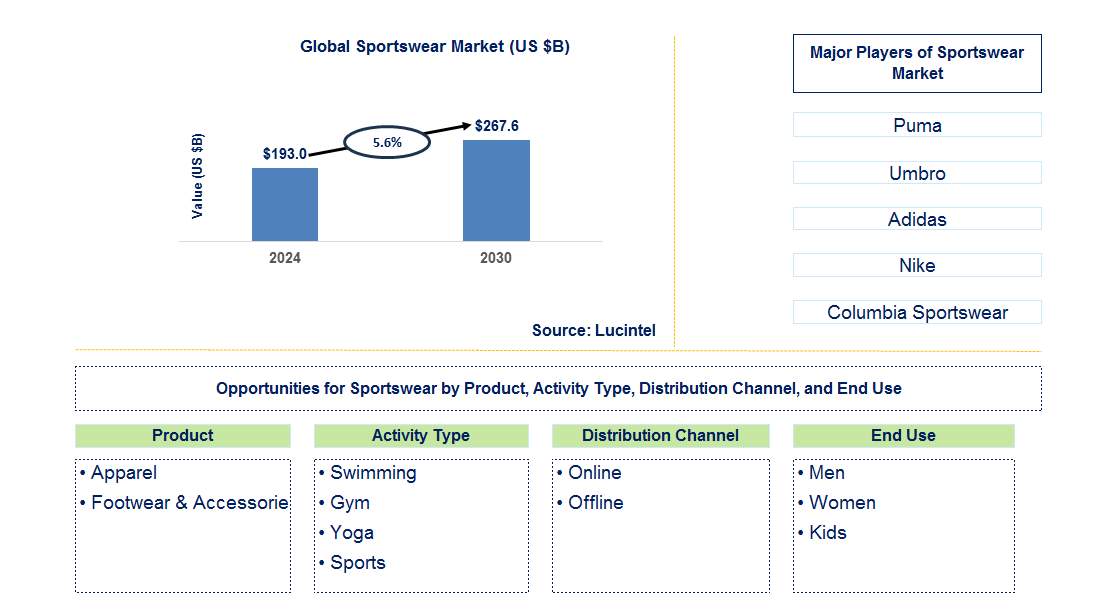
The future of the global sportswear market looks promising with opportunities in the e-commerce store and retail store markets. The global sportswear market is expected to grow with a CAGR of 7.8% from 2025 to 2031. The major drivers for this market are the increasing popularity of fitness activities, the rising awareness of health benefits, and the growing demand for athleisure products.• Lucintel forecasts that, within the product type category, footwear is expected to witness the highest growth over the forecast period.
• Within the distribution channel category, E-commerce store is expected to witness higher growth.
• In terms of region, APAC is expected to witness the highest growth over the forecast period. Gain valuable insights for your business decisions with our comprehensive 150+ page report. Sample figures with some insights are shown below.
Emerging Trends in the Sportswear Market
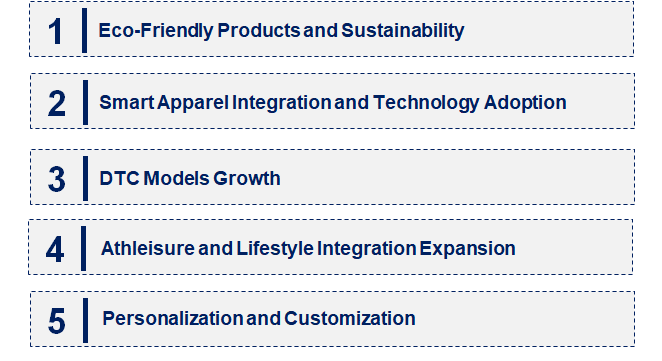
The sportswear market is undergoing a fundamental transformation, extending beyond its historic basis on athletic performance to include wider lifestyle and cultural considerations. The cause of this change is a need for products that are not merely functional but also sustainable, technologically sophisticated, and an expression of personal identity. These new trends are compelling brands to innovate every step of their value chain, from production and material sourcing through marketing and consumer interaction.• Sustainability and Responsible Production: This is the leading trend in the sportswear space. Consumers are insisting more and more on products that have less environmental footprint. Brands are turning to recycled and organic materials, like recycled polyester from plastic bottles and sustainable cotton. This also applies to production ethics, like fair labor and transparent supply chains. Circular economy models by way of take-back programs and repair services are being adopted by companies to show that they do care about minimizing waste and attracting environmentally aware consumers.
• Technological Integration and Smart Clothes: The marriage of technology and clothes is a significant trend. Smart athletic wear has features such as integrated biometric sensors to monitor heart rate, body temperature, and performance metrics. Textiles are being designed with innovative properties such as moisture-wicking, thermoregulation, and compression to improve athletic performance and comfort.
• Athleisure Revolution: Athleisure, the effortless convergence of sport and loungewear, has come from being a trend to becoming the prevailing lifestyle. Consumers are opting for sportswear as everyday wear, from workouts to social meetings. This has compelled brands to design flexible pieces that are both functional during exercise and fashionable for city life. The emphasis is on comfort, fit, and look, with brands experimenting with fresh silhouettes, colors, and shapes that will resonate with a fashion-conscious crowd and a blended work culture.
• Personalization and Customization: In a saturated market, personalization can be an incredibly potent differentiator. Brands are giving customers the option to personalize their sporting apparel, from selecting color and adding custom text to digitally printing an image. This trend taps into technology such as 3D printing and digital customization software to enable consumers to personalize their products.
• Emergence of the Conscious Consumer and Inclusivity: Today’s consumer is increasingly socially conscious and wants their values represented by brands. This has created a wave of radical inclusivity. Brands are going larger in size to accommodate all body shapes and developing adaptive clothing for the differently-abled. Marketing and advertising campaigns too are becoming more inclusive, showing a diverse variety of body shapes, ethnicities, and genders. These trends are essentially redefining the sportswear industry. They are revamping it from a sector that is solely concerned with athletic performance to a vibrant industry that weaves together technology, sustainability, and self-expression. Brands that effectively adopt these shifts will be in great position to satisfy the needs of the contemporary consumer and create long-term growth.
Recent Development in the Sportswear Market
The sportswear market is undergoing an era of dramatic transformation, with a number of significant developments remaking the landscape of the industry. These developments are fueled by a mix of technological advancement, a change in values among consumers, and a more globalized marketplace. These developments are not mutually exclusive but are interdependent, with each one creating a ripple effect that influences everything from product design and production to marketing and retailing strategies.• Material and Design Technology Advancements: One of the significant advancements is the development of performance fabrics. Marketers are using materials science to design clothes with better breathability, moisture management, and thermoregulation. For instance, certain brands are incorporating fabrics with built-in micro-capsules releasing cooling or warming substances on demand. Furthermore, 3D body scanning and printing are also employed to develop customized-fit footwear and apparel to maximize comfort and performance for a single athlete. This emphasis on innovative materials and accurate design is a differentiator.
• Expansion of the Athleisure and Lifestyle Segments: The ascendance of athleisure as a mass fashion trend is a critical evolution. Sportswear is no longer limited to the sports field or gym; it is a part of everyday wardrobes. This has encouraged brands to diversify their offerings to include products that combine style, comfort, and functionality. This trend has widened the market from the traditional sportsman to a new consumer group looking for comfortable, versatile, and stylish clothing for various uses.
• Emphasis on Sustainable and Circular Economy Models: Sustainability has transcended being a niche issue to becoming an integral business approach. One significant trend is the mass use of environmentally friendly materials such as recycled polyester, Tencel, and organic cotton. Brands are also adopting circular economy models by launching take-back schemes for old clothes, which are then upcycled into new pieces. This evolution is an immediate reaction to consumer pressure and makes brands accountable stewards of the environment, an important consideration among younger generations of consumers.
• Digital-First and Direct to Consumer Strategies: Brands are increasingly cutting out the middleman with retail channels and going direct-to-consumer. This enables them to establish a closer direct relationship with customers, manage their brand image, and gather valuable insights on consumer behaviors. This growth is buttressed by substantial investment in digital marketing, mobile applications, and e-commerce sites.
• Penetration into Emerging Markets: The expansion of the sportswear market is no longer localized in North America and Europe. One of the major developments is the swift growth in emerging markets such as China, India, and Southeast Asia. This is fueled by heightened disposable incomes, rising middle classes, and mounting government incentives for sports. The brands are modifying their strategies to suit the specific cultural needs and consumer tastes of these markets and, more frequently, establishing local alliances and launching region-specific product lines. These trends are individually and collectively influencing the sportswear industry to make it more innovative, sustainable, dynamic, and networked globally. They reveal an industry transforming to embrace emerging technologies and values of consumers, and in doing so, securing its future relevance and growth.
Strategic Growth Opportunities in the Sportswear Market
The sportswear industry provides ample strategic growth opportunities by identifying key applications and consumer groups. With increasing diversification in the market, a focused strategy for product development and marketing is essential in order to tap new sources of revenue. It is not merely about selling more and more products but creating specialist ecosystems addressing the specific requirements of various segments ranging from professional sportspeople to everyday style-driven consumers.• High Performance Athletic Wear: The elite and semi-professional athlete market is still a great growth area. The segment requires state-of-the-art technology, and companies can concentrate on innovation with developing high-performance materials that enhance performance, minimize injury, and promote recovery. This entails creating wear that offers targeted compression, better ventilation, and ergonomic fits for certain sports such as running, cycling, and basketball. There’s also the potential to develop specialty lines for various climates and conditions to give athletes the ultimate equipment for any setting.
• Athleisure and Lifestyle Apparel: Athleisure is a huge and sustainable growth opportunity. The emphasis is on developing apparel that’s comfortable and fashionable enough for daily wear. Brands can broaden their lines to feature a greater variety of useful pieces such as joggers, hoodies, and fashion leggings that one can dress down for workout sessions as well as social events. Cross-promotions with fashion designers and influencers are an intelligent means to tap into this trend while creating a fine line between sportswear and haute couture.
• Children’s and Youth Sportswear: This presents a big growth prospect, as children’s and youth sports participation keeps going up all over the world. Brands can target to create long-lasting, comfortable, and secure sportswear for this age group. The prospect also exists in producing attractive, fashionable designs that appeal to young buyers. By establishing brand loyalty at an early stage, firms can get long-term consumers. Marketing efforts should be targeted at online platforms and social media, which are highly used by young consumers.
• Personalization and Team Wear: The market for team sports presents a good growth prospect through personalization and customization. Companies can offer web-based platforms that enable teams, clubs, and schools to create and order their own customized uniforms and apparel. This prospect does not stop at professional teams but includes amateur and recreational teams. This not only earns revenue on bulk orders but also provides a special association with a local and highly active population.
• Plus Size and Adaptive Clothing: The sportswear industry has a huge growth potential by becoming inclusive. By providing a full range of plus-size clothing, companies can address an underserved but fast-growing consumer base. Likewise, creating adaptive clothing for individuals with disabilities, with magnetic closures and adjustable fits, taps into a new and worthwhile market. This is not only a business strategy but also a manner in which brands can express their commitment to social responsibility and social inclusion. These opportunities for growth are transforming the sportswear industry by promoting innovation, diversification, and a greater focus on the consumer. They are taking the industry towards a future where sportswear is no longer only about performance, but about lifestyle, identity, and being inclusive.
Sportswear Market Driver and Challenges
The sportswear industry is dictated by a complex interaction of key drivers and challenges that direct its growth path. The sector is dynamic, and technological, economic, as well as social factors, have a bearing. Awareness of these forces becomes a fundamental requirement for stakeholders to effectively navigate the industry. Though various drivers are driving growth, the sector also has to manage considerable challenges that necessitate creative measures. The general well-being of the market is contingent on how well it copes with these pressures. The factors responsible for driving the sportswear market include: 1. Increased Health and Fitness Awareness: This is the key driver globally, with health and wellness becoming increasingly important. As individuals have become more health-aware, they are doing more exercise, from gym sessions to sports. This is influenced by a need to fight lifestyle diseases and enhance mental well-being. This has resulted in a natural expansion in demand for functional, high performance sportswear that keeps up with an active lifestyle, from moisture-wicking clothing to high-tech running shoes. 2. Athleisure Trend: The crossover between sportswear and fashion wear has resulted in a huge market driver. Sportswear no longer just exists on the sports field; it is now a part of casual and city wear. This athleisure trend is fueled by a consumer need for comfort, style, and versatility. It has opened the market to people outside of traditional sports players and has prompted brands to create more stylish, multi-sport products. 3. E-commerce and Digital Marketing: The growth of online shopping has made sportswear more convenient and accessible for a global audience. E-commerce sites enable customers to shop for a variety of products at ease, compare prices, and purchase goods anywhere. This is a crucial factor, especially in emerging markets where physical retail infrastructure can be underdeveloped. Brands are also using digital marketing and social media to build a direct conversation with consumers, foster loyalty, and push sales. 4. Technology and Product Innovation: Sustained innovation in technology, design, and materials is a key driver of the market. Companies continuously launch new products with features like smart fabric with embedded sensors, ergonomic fit, and high-performance materials with enhanced performance features. This emphasis on leading-edge technology appeals to technology-conscious customers and provides a strong motivation for existing buyers to renew and update their equipment. 5. Government Programs and Sporting Events: Government programs to encourage sports and fitness, especially in emerging economies, are a primary motivator. Also, high-profile international sporting events such as the Olympics and the World Cup create strong consumer demand for sports and sporting equipment. This not only increases sales of team jerseys and apparel but also inspires more participation in sports, generating long-term demand for a broad variety of sportswear. Challenges in the sportswear market are: 1. High Competition and Market Saturation: The market for sportswear is very competitive, with numerous global and local brands competing for market share. Such high competition may result in price competition, low profit margins, and constant pressure to innovate in order to remain ahead. The market is also becoming saturated, especially in developed economies, which complicates the entry of new players and rapid growth for existing brands. 2. Supply Chain and Manufacturing Disruptions: The international scope of the sportswear sector exposes it to supply chain disruptions. Disruptions such as raw material price volatility, labor conflicts, and geopolitical crises can heavily affect the cost of production and lead times. There is also increasing pressure to resolve ethical and environmental concerns along the supply chain, including fair labor standards and manufacturing’s carbon footprint. 3. Intellectual Property and Counterfeiting: The success of big sportswear brands has created a huge issue with counterfeiting. The expansion of counterfeits, particularly online, undermines brand value, deceives consumers, and may also be dangerous. Intellectual property protection and anti-counterfeiting is an ongoing and costly task for brands. This involves regular investment in technology and legal enforcement to defend brand integrity. The combined effect of these drivers and challenges is a market that is both seeing strong growth and struggling with major challenges. As technological innovation and international expansion drive the business forward, it must also contend with problems stemming from intense competition, supply chain vulnerabilities, and the consistent threat of counterfeiting. Success will hinge upon the capacity of firms to innovate both their products and their business models in order to overcome these hurdles and secure long-term, sustainable growth.List of Sportswear Companies
Companies in the market compete on the basis of product quality offered. Major players in this market focus on expanding their manufacturing facilities, R&D investments, infrastructural development, and leverage integration opportunities across the value chain. With these strategies sportswear companies cater increasing demand, ensure competitive effectiveness, develop innovative products & technologies, reduce production costs, and expand their customer base. Some of the sportswear companies profiled in this report include-• Puma
• Umbro
• Adidas
• Nike
• Columbia Sportswear Company
• Under Armour
• Anta Sports Products Limited
• Lululemon Athletica
• Fila Holdings Corp
• Li Ning Company Limited
Sportswear Market by Segment
The study includes a forecast for the global sportswear market by product type, distribution channel, end use, and region.Sportswear Market by Product Type [Value from 2019 to 2031]:
• Footwear
• Apparel
• Wearables
Sportswear Market by Distribution Channel [Value from 2019 to 2031]:
• E-commerce Stores
• Retail Stores
Sportswear Market by End Use [Value from 2019 to 2031]:
• Men
• Women
• Children
Sportswear Market by Region [Value from 2019 to 2031]:
• North America
• Europe
• Asia Pacific
• The Rest of the World
Country Wise Outlook for the Sportswear Market
The sportswear market globally is going through an era of accelerated change fueled by increasing consumer interest in fitness and health, the eroding distinction between athletic and casual wear, and technological and material breakthroughs. This change is not the same across the world; it is influenced by distinctive cultural, economic, and social factors within each country. As the "athleisure" trend goes mainstream, demand for clothing that is both high-performance and fashion-forward is soaring.• United States: The largest sportswear market in the world, the US sportswear market, is controlled by the athleisure trend and a robust direct-to-consumer proposition. Large brands and emerging players are looking at performance apparel that easily rolls over into casual wear. There is increased focus on integrating technology, where intelligent fabrics provide moisture-wicking and thermal regulation, and the use of augmented reality for virtual fitting.
• China: China’s sportswear industry is undergoing a huge boom, driven by government campaigns to keep fit and healthy and the expanding middle class. Local brands like Li-Ning and Anta are increasingly posing a threat to global giants Nike and Adidas by putting massive amounts of money into research and development and establishing robust local brand names. Social media and online shopping also play a huge role in the market, with brands using platforms to engage with consumers and sell a lifestyle that mingles fashion and functionality.
• Germany: The sportswear market in Germany is mature and driven by innovation, with a significant consumer preference for quality, durability, and sustainability. Being the home of the big brands Adidas and Puma, the market is known for technological development, including the creation of high-performance fabrics and smart textiles. German consumers are strongly green conscious and drive a strong demand for sustainable and recycled material products.
• India: India’s sportswear market is incipient but emerging fast. This expansion is fueled by increasing disposable incomes, urbanization, and an increasing interest in fitness and wellness among the young population. Foreign brands are increasing their footprint, usually in the form of exclusive deals and online channels. There is also an increasing number of local brands such as HRX, which are building momentum by providing affordable yet fashion-forward athleisure wear.
• Japan: The sportswear market in Japan is a combination of old-world quality and technology. The market has a robust customer base for local brands such as Asics and Mizuno as well as international brands. New trends involve a comeback of Japanese sneaker companies, fueled by a revived interest in retro models and partnership with local designers. Sustainability is another trend that is gaining prominence, with companies creating products made of recycled components and emphasizing durability over the long term.

Features of the Global Sportswear Market
Market Size Estimates: Sportswear market size estimation in terms of value ($B). Trend and Forecast Analysis: Market trends (2019 to 2024) and forecast (2025 to 2031) by various segments and regions. Segmentation Analysis: Sportswear market size by product type, distribution channel, end use, and region in terms of value ($B). Regional Analysis: Sportswear market breakdown by North America, Europe, Asia Pacific, and Rest of the World. Growth Opportunities: Analysis of growth opportunities in different product type, distribution channel, end use, and regions for the sportswear market. Strategic Analysis: This includes M&A, new product development, and competitive landscape of the sportswear market. Analysis of competitive intensity of the industry based on Porter’s Five Forces model.
FAQ
Q1. What is the growth forecast for sportswear market? Answer: The global sportswear market is expected to grow with a CAGR of 7.8% from 2025 to 2031. Q2. What are the major drivers influencing the growth of the sportswear market? Answer: The major drivers for this market are the increasing popularity of fitness activities, the rising awareness of health benefits, and the growing demand for athleisure products. Q3. What are the major segments for sportswear market? Answer: The future of the sportswear market looks promising with opportunities in the e-commerce store and retail store markets. Q4. Who are the key sportswear market companies? Answer: Some of the key sportswear companies are as follows:• Puma
• Umbro
• Adidas
• Nike
• Columbia Sportswear Company
• Under Armour
• Anta Sports Products Limited
• Lululemon Athletica
• Fila Holdings Corp
• Li Ning Company Limited Q5. Which sportswear market segment will be the largest in future? Answer: Lucintel forecasts that, within the product type category, footwear is expected to witness the highest growth over the forecast period. Q6. In sportswear market, which region is expected to be the largest in next 5 years? Answer: In terms of region, APAC is expected to witness the highest growth over the forecast period. Q7. Do we receive customization in this report? Answer: Yes, Lucintel provides 10% customization without any additional cost.
Table of Contents
List of Figures
List of Tables
Methodology
- In-depth interviews of the major players in this market
- Detailed secondary research from competitors’ financial statements and published data
- Extensive searches of published works, market, and database information pertaining to industry news, company press releases, and customer intentions
- A compilation of the experiences, judgments, and insights of Lucintel’s professionals, who have analyzed and tracked this market over the years.


Buy Now
Choose a license that fits your team. Instant PDF delivery.
Prices exclude taxes. Instant delivery. Custom licensing available on request.
Key Questions
- • What are some of the most promising, high-growth opportunities for the sportswear market by product type (footwear, apparel, and wearables), distribution channel (E-commerce stores and retail stores), end use (men, women, and children), and region (North America, Europe, Asia Pacific, and the Rest of the World)?
- • Which segments will grow at a faster pace and why?
- • Which region will grow at a faster pace and why?
- • What are the key factors affecting market dynamics? What are the key challenges and business risks in this market?
- • What are the business risks and competitive threats in this market?
- • What are the emerging trends in this market and the reasons behind them?
- • What are some of the changing demands of customers in the market?
- • What are the new developments in the market? Which companies are leading these developments?
- • Who are the major players in this market? What strategic initiatives are key players pursuing for business growth?
- • What are some of the competing products in this market and how big of a threat do they pose for loss of market share by material or product substitution?
- • What M&A activity has occurred in the last 5 years and what has its impact been on the industry? For any questions related to Sportswear Market, Sportswear Market Size, Sportswear Market Growth, Sportswear Market Analysis, Sportswear Market Report, Sportswear Market Share, Sportswear Market Trends, Sportswear Market Forecast, Sportswear Companies, write Lucintel analyst at email: helpdesk@lucintel.com. We will be glad to get back to you soon.


