
Market Report · June 29, 2026

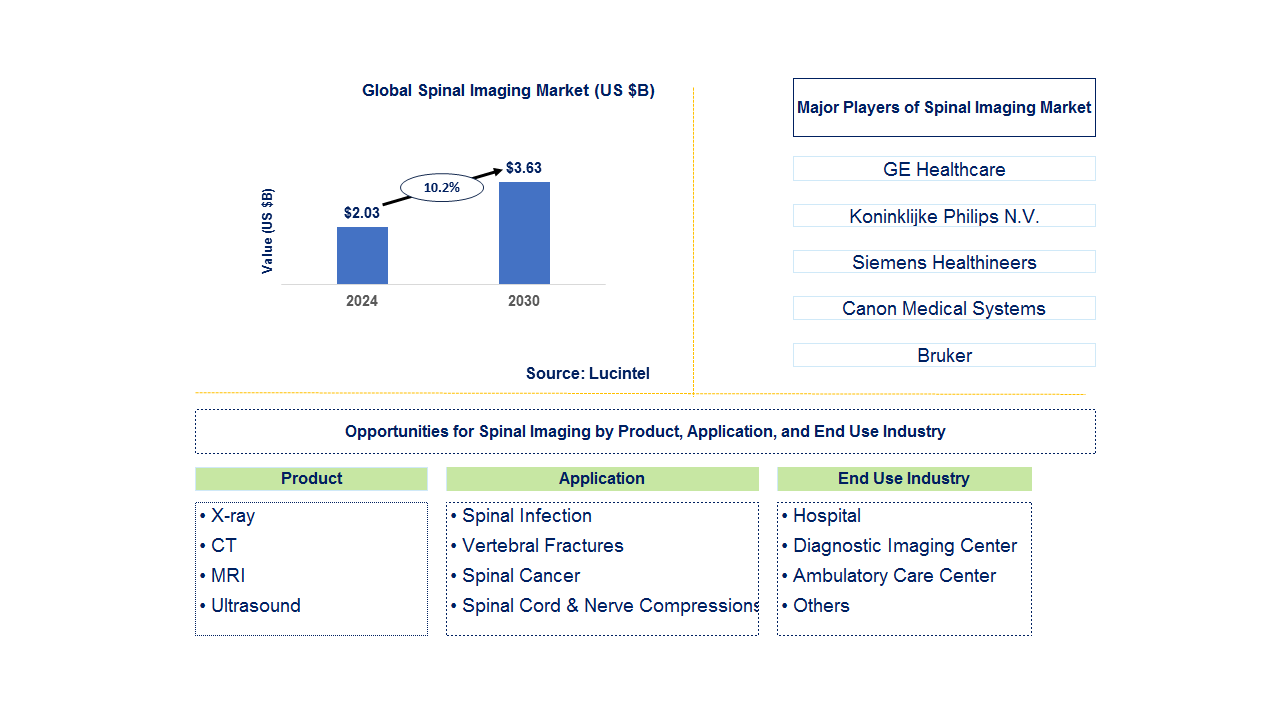
Key data points: The market size in 2030 = $3.63 billion, growth forecast = 10.2% annually for the next 6 years. Scroll below to get more insights. This market report covers trends, opportunities, and forecasts in the global spinal imaging market to 2030 by product (X-ray, CT, MRI, and ultrasound), application (spinal infection, vertebral fractures, spinal cancer, and spinal cord & nerve compressions), end use industry (hospital, diagnostic imaging center, ambulatory care center, and others), and region (North America, Europe, Asia Pacific, and the Rest of the World)
We'll send your sample report shortly.
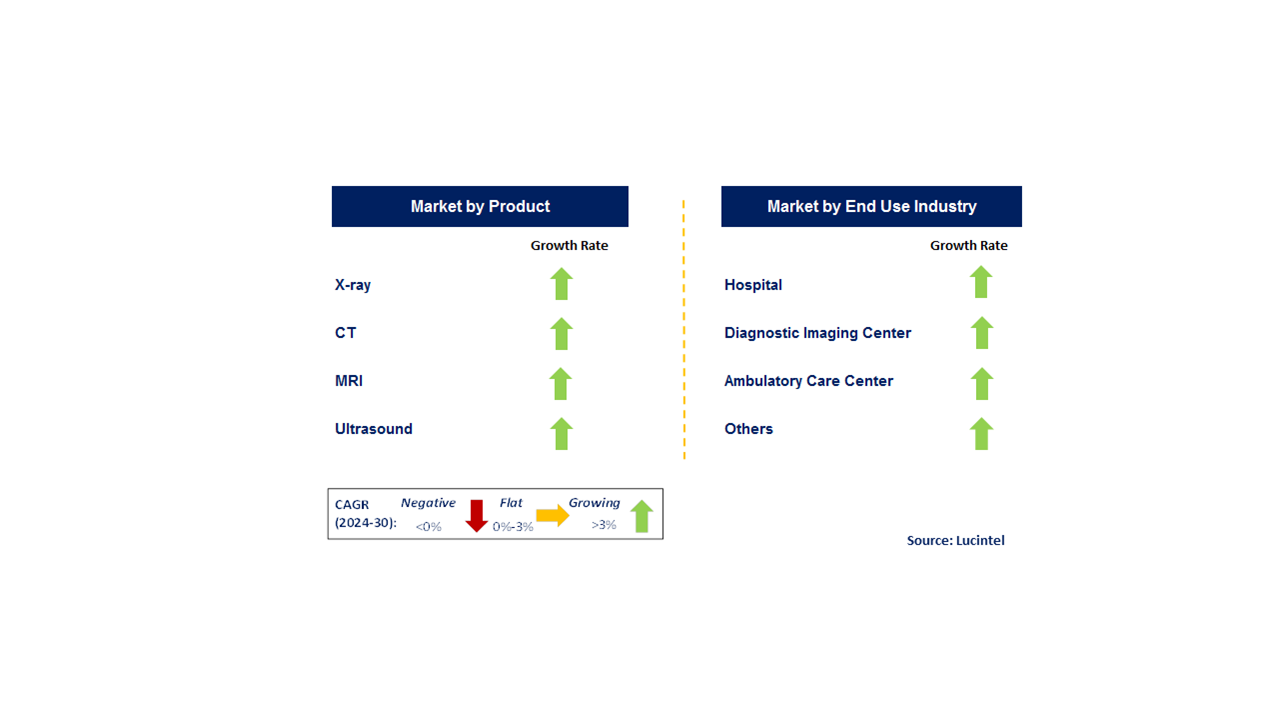
• Lucintel forecasts that, within the product category, MRI will remain the largest segment over the forecast period because it provides exceptional soft-tissue contrast, impressive spatial resolution along with ability to acquire multiplanar images, which helps in delivering prognostic and diagnostic infromation in spinal imaging.
• Within the application, Spinal cord & nerve compressions will remain the largest segment due to the increasing prevalence of spinal disorders, such as herniated disc, spinal stenosis, cauda equina syndrome, and radiculopathy.
• In terms of regions, North America will remain the largest segment over the forecast period due to the increasing prevalence of spinal surgeries and rising need for accurate and early diagnostic solutions in the region. Gain valuable insights for your business decisions with our comprehensive 150+ page report.
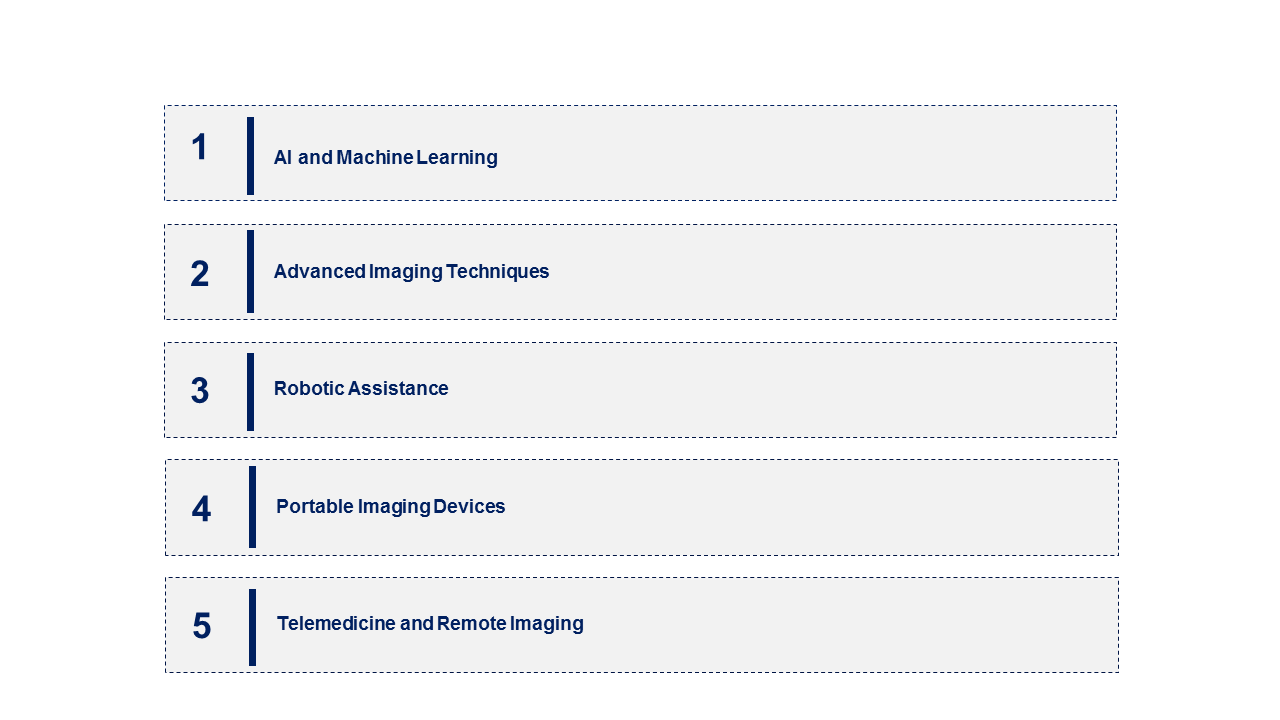
• AI and Machine Learning: The integration of AI for automating image analysis and improving diagnostic accuracy.
• Advanced Imaging Techniques: Development of high-field MRI and 3D imaging technologies for better spinal visualization.
• Robotic Assistance: The use of robotic systems to enhance precision and efficiency in imaging procedures.
• Portable Imaging Devices: Growth in the availability of portable and point-of-care imaging systems for easy access.
• Telemedicine and Remote Imaging: Expansion of telemedicine services for remote diagnosis and consultation. The spinal imaging market is evolving with the incorporation of AI, advanced imaging techniques, and robotic assistance. Portable devices and telemedicine are enhancing accessibility, reflecting a broader trend towards more efficient and precise diagnostic solutions. These trends indicate a shift towards more patient-centered care and advanced diagnostic capabilities.
• AI-Driven Diagnostics: Introduction of AI algorithms for real-time image analysis and enhanced diagnostic accuracy.
• High-Field MRI Systems: Launch of high-field MRI systems that offer superior image quality and faster scanning times.
• Robotic Imaging Systems: Development of robotic-assisted imaging technologies for precise diagnostics.
• Digital Imaging Solutions: Expansion of digital imaging systems, including portable and cloud-based solutions.
• Public-Private Partnerships: Increased collaboration between governments, private healthcare providers, and tech companies to improve imaging infrastructure. Recent developments in the spinal imaging market highlight advancements in AI, high-field MRI, and robotic systems. Digital and portable imaging solutions are becoming more prevalent, offering improved access and diagnostic capabilities. The market is also witnessing increased collaboration to enhance healthcare infrastructure and services.
• AI and Machine Learning: Opportunities for AI-driven software development to improve diagnostic precision and efficiency.
• 3D Imaging and Reconstruction: Growth potential in 3D imaging technologies for better visualization of spinal anatomy.
• Portable and Point-of-Care Devices: Expansion of portable imaging devices for easy access in remote and underserved areas.
• Robotic-Assisted Imaging: Development of robotic systems to enhance accuracy and reduce procedural times.
• Telemedicine Integration: Growth in telemedicine and remote imaging services for expanded diagnostic reach. The spinal imaging market offers significant growth opportunities in AI, 3D imaging, and portable devices. Robotic-assisted imaging and telemedicine services are also promising areas for expansion. These opportunities reflect the market's shift towards more advanced, accessible, and patient-centered diagnostic solutions.
• Rising Prevalence of Spinal Disorders: Increasing cases of spinal conditions driving demand for advanced imaging solutions.
• Technological Advancements: Ongoing innovations in imaging technologies, including AI and 3D imaging.
• Healthcare Infrastructure Development: Expansion of healthcare facilities and diagnostic centers globally.
• Aging Population: Growing elderly population requiring more frequent spinal imaging services. Challenges for the spinal imaging market:
• High Costs: Expensive imaging systems and technologies can limit accessibility.
• Regulatory Compliance: Navigating complex regulatory requirements can delay product approval and market entry.
• Skilled Workforce Shortage: Lack of trained professionals to handle advanced imaging systems.
• Data Privacy Concerns: Increasing use of digital and cloud-based systems raises concerns about data security and patient privacy. The spinal imaging market is driven by increasing demand for advanced diagnostics due to the rising prevalence of spinal disorders and technological advancements. However, challenges such as high costs, regulatory compliance, and workforce shortages need to be addressed to ensure broader access and effective use of these technologies.
• Ge Healthcare
• Koninklijke Philips N.V.
• Siemens Healthineers
• Canon Medical Systems
• Bruker
• Mediso
• Shimadzu
• Fujifilm
• Hitachi
• Toshiba Medical Systems
•
• X-ray
• CT
• MRI
• Ultrasound
• Spinal Infection
• Vertebral Fractures
• Spinal Cancer
• Spinal Cord & Nerve Compressions
• Hospital
• Diagnostic Imaging Center
• Ambulatory Care Center
• Others
• North America
• Europe
• Asia Pacific
• The Rest of the World
• United States: The US spinal imaging market has seen advancements in AI and machine learning applications for enhanced image analysis and diagnostic accuracy. The integration of AI-driven software in imaging equipment helps in the early detection of spinal disorders, improving patient outcomes. Moreover, major healthcare providers are investing in state-of-the-art imaging technologies to expand their diagnostic capabilities.
• Germany: Germany has been focusing on developing non-invasive imaging technologies, with significant advancements in MRI systems. Recent innovations include the introduction of high-field MRI systems that offer better image clarity and faster scanning times. The German market is also witnessing increased collaboration between medical device companies and research institutions to advance spinal imaging techniques.
• Japan: Japan has been at the forefront of integrating robotic technologies with imaging systems. Recent developments include the launch of robotic-assisted imaging systems that provide precise and efficient diagnostic capabilities. The Japanese market is also exploring the use of AI for automating image analysis, which can significantly reduce the workload on radiologists and improve diagnostic accuracy.
• China: The spinal imaging market in China is rapidly expanding due to growing healthcare infrastructure and increasing demand for advanced diagnostic tools. Recent developments include the widespread adoption of digital imaging systems and the introduction of portable imaging devices, making spinal imaging more accessible in remote areas. The Chinese government is also investing in healthcare reforms to improve diagnostic services.
• India: In India, the spinal imaging market is growing with the increasing availability of advanced imaging technologies in both urban and rural areas. Recent developments include the introduction of cost-effective imaging solutions and the growth of telemedicine services, which help extend diagnostic capabilities to underserved regions. The Indian market is also witnessing a rise in private healthcare investments, leading to the expansion of diagnostic facilities.


• GE Healthcare
• Koninklijke Philips N.V.
• Siemens Healthineers
• Canon Medical Systems
• Bruker
• Mediso
• Shimadzu
• FUJIFILM
• Hitachi
• Toshiba Medical Systems Q6. Which spinal imaging market segment will be the largest in future? Answer: Lucintel forecasts that MRI will remain the largest segment over the forecast period because it provides exceptional soft-tissue contrast, impressive spatial resolution along with ability to acquire multiplanar images, which helps in delivering prognostic and diagnostic infromation in spinal imaging. Q7. In spinal imaging market, which region is expected to be the largest in next 5 years? Answer: North America will remain the largest segment over the forecast period due to the increasing prevalence of spinal surgeries and rising need for accurate and early diagnostic solutions in the region. Q.8 Do we receive customization in this report? Answer: Yes, Lucintel provides 10% customization without any additional cost.


Choose a license that fits your team. Instant PDF delivery.
Prices exclude taxes. Instant delivery. Custom licensing available on request.
Market Report · June 29, 2026
Market Report · May 18, 2026
Trusted partner for strategic intelligence and business growth


Receive a complimentary market analysis tailored to your industry. Our analysts will identify key growth opportunities and competitive dynamics specific to your business.

Market size, growth rate, and key trend analysis for your specific sector.

Top competitor positioning and market share analysis.

Strategic recommendations backed by data-driven insights.
Get curated market intelligence and competitive moves straight to your inbox.
By subscribing, you agree to receive our monthly insights. Unsubscribe anytime.
Receive a complimentary market analysis tailored to your industry. Our analysts will identify key growth opportunities and competitive dynamics specific to your business.
Market size, growth rate, and key trend analysis for your specific sector.
Top competitor positioning and market share analysis.
Strategic recommendations backed by data-driven insights.
Get curated market intelligence, emerging trends, and competitive moves straight to your inbox each month.
By subscribing, you agree to receive our monthly insights. Unsubscribe anytime.
We'll send your sample report shortly.