
Market Report · July 22, 2026

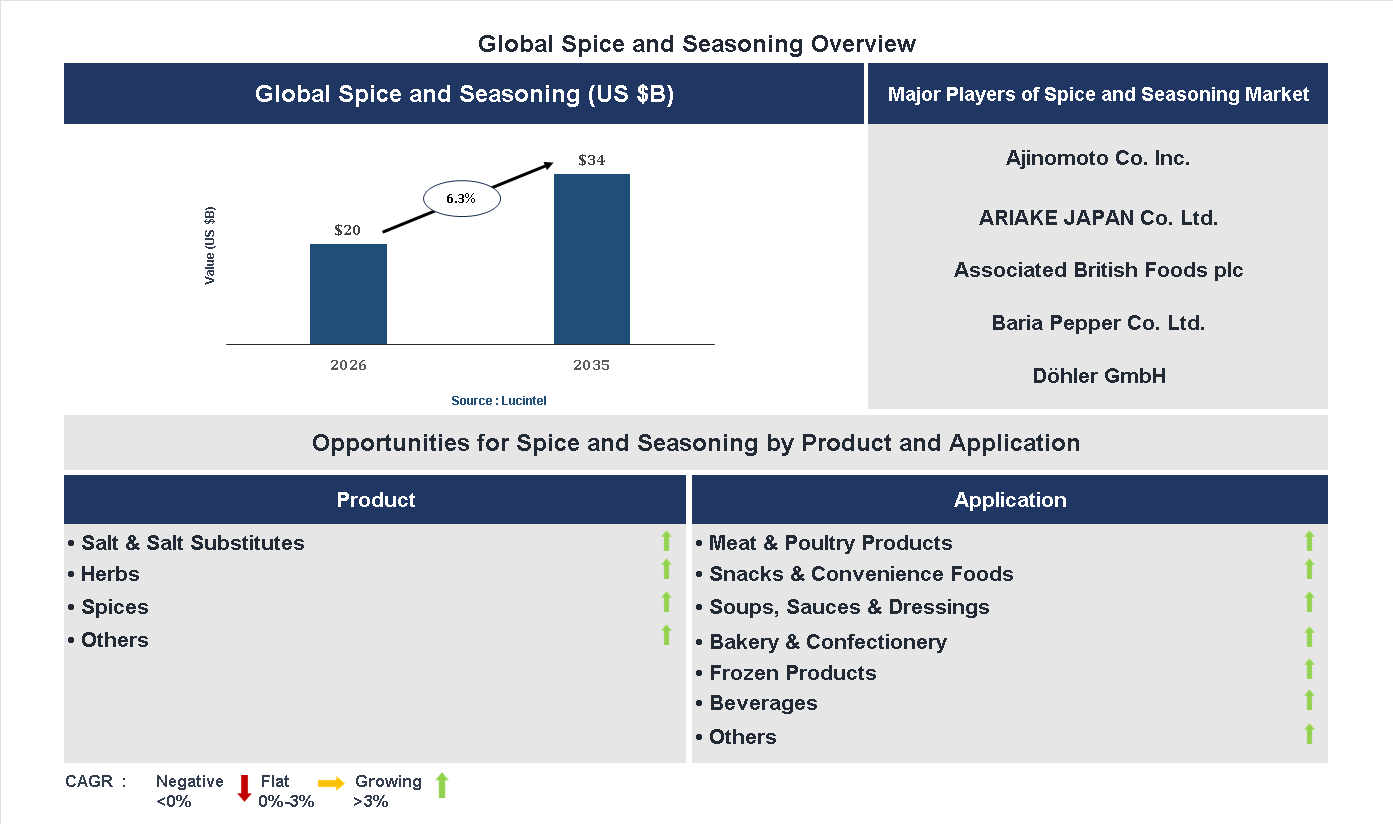
Key data points: The market size in 2035 = $34 billion, growth forecast = 6.3% annually for the next 8 years. Scroll below to get more insights. This market report covers trends, opportunities and forecasts in spice and seasoning market to 2035 by product (salt & salt substitutes, herbs, spices, and others), application (meat & poultry products, snacks & convenience foods, soups, sauces & dressings, bakery & confectionery, frozen products, beverages, and others), and region (North America, Europe, Asia Pacific, and the Rest of the World)
We'll send your sample report shortly.
• Lucintel forecasts that, within the product category, spice is expected to witness the highest growth over the forecast period.
• Within the application category, snack & convenience food is expected to witness the highest growth.
• In terms of region, APAC is expected to witness the highest growth over the forecast period. Gain valuable insights for your business decisions with our comprehensive 150+ page report. Sample figures with some insights are shown below.
• Growing Demand for Clean-Label and Natural Products: Consumers are increasingly seeking spices and seasonings with minimal artificial ingredients, preservatives, and additives. This trend is driven by health consciousness and a desire for transparency. Companies are responding by developing organic, non-GMO, and allergen-free options, which are gaining popularity. This shift influences sourcing, production, and marketing strategies, emphasizing authenticity and health benefits. As a result, the market is witnessing a surge in premium, natural product offerings, catering to a more informed and health-conscious customer base.
• Innovation in Flavor Profiles and Product Formats: The market is witnessing a surge in unique, global flavor combinations inspired by diverse cuisines. Additionally, new formats such as spice blends, ready-to-use seasonings, and powdered mixes are gaining traction for convenience. This innovation caters to adventurous consumers and busy lifestyles, expanding product portfolios. Companies are investing in R&D to create novel flavors and formats that enhance culinary experiences. This trend not only broadens consumer choices but also encourages experimentation, boosting market growth and differentiation among brands.
• Emphasis on Sustainability and Ethical Sourcing: Consumers are increasingly concerned about the environmental and social impact of their purchases. This has led to a focus on sustainable farming practices, fair trade sourcing, and eco-friendly packaging. Brands that demonstrate transparency and commitment to sustainability are gaining consumer trust and loyalty. This trend influences supply chain management and product development, prompting companies to adopt more responsible practices. As sustainability becomes a key purchasing criterion, it is reshaping sourcing strategies and elevating the importance of corporate social responsibility in the market.
• Expansion of E-Commerce and Digital Marketing Channels: The rise of online shopping platforms and digital marketing has transformed how spices and seasonings are marketed and purchased. Consumers now prefer the convenience of browsing, comparing, and ordering products online. Brands are leveraging social media, influencer collaborations, and targeted advertising to reach niche audiences. E-commerce also enables direct-to-consumer sales, expanding market reach beyond traditional retail outlets. This digital shift enhances consumer engagement, provides valuable data insights, and accelerates product launches, making it a critical driver of growth and innovation in the market.
• Increasing Focus on Health and Wellness Benefits: Consumers are seeking spices and seasonings that offer functional health benefits, such as anti-inflammatory, antioxidant, or digestive properties. This trend is driven by a growing awareness of holistic health and wellness. Companies are developing fortified products with added health benefits, including superfoods and herbal extracts. This focus influences product formulation, marketing, and positioning, emphasizing health claims and scientific backing. As health and wellness become central to consumer decision-making, this trend is fostering innovation and expanding the market into new segments focused on functional foods. In summary, these emerging trends are fundamentally reshaping the spice and seasoning market by emphasizing health, innovation, sustainability, digital engagement, and global influences. They are driving product development, influencing consumer preferences, and creating new opportunities for growth while challenging companies to adapt to a rapidly evolving landscape.

• Growing Demand for Organic and Natural Spices: The market is witnessing a surge in consumer preference for organic and natural spices, driven by health consciousness and clean-label trends. This shift encourages producers to adopt sustainable sourcing and organic certification, boosting product credibility and consumer trust. Organic spices command premium prices, expanding profit margins. The trend also promotes environmentally friendly farming practices, supporting sustainability goals. Overall, this growth enhances product diversity and market competitiveness, attracting health-conscious consumers worldwide.
• Innovation in Flavor Profiles and Blends: Companies are developing innovative spice blends and flavor profiles to cater to diverse culinary tastes. This includes fusion blends, ethnic-specific seasonings, and functional spices with added health benefits. Such innovation helps brands differentiate themselves in a competitive market, appealing to adventurous consumers seeking unique flavors. It also opens new segments for premium and specialty products. The continuous evolution of flavor offerings drives consumer engagement, increases sales, and encourages culinary experimentation, fostering market expansion and brand loyalty.
• Adoption of Sustainable Sourcing and Eco-Friendly Packaging: Sustainability is becoming a key focus, with companies adopting eco-friendly packaging and sustainable sourcing practices. This reduces environmental impact and appeals to eco-conscious consumers. Innovations include biodegradable packaging, recyclable materials, and transparent supply chains. Sustainable sourcing ensures quality and ethical standards, enhancing brand reputation. These initiatives support corporate social responsibility goals and meet regulatory requirements. Overall, sustainability efforts strengthen market positioning, attract environmentally aware customers, and promote long-term growth.
• Expansion into Emerging Markets: The industry is expanding into emerging markets with rising disposable incomes and growing culinary interest. Localized product offerings and affordable pricing strategies are tailored to these regions. Market entry is facilitated by partnerships, distribution networks, and cultural adaptation. This expansion diversifies revenue streams and reduces dependence on mature markets. It also stimulates local economies and encourages regional agricultural development. The growth in emerging markets significantly boosts the global market size and provides new opportunities for innovation and brand establishment.
• Integration of Digital Marketing and E-Commerce Channels: Digital platforms are transforming how spices and seasonings are marketed and sold. E-commerce enables direct-to-consumer sales, personalized marketing, and wider reach. Social media campaigns and influencer collaborations boost brand visibility and consumer engagement. Online platforms also facilitate product education and recipe sharing, increasing usage and loyalty. This digital shift reduces distribution costs and accelerates market penetration. Overall, digital integration enhances customer experience, drives sales growth, and supports rapid adaptation to market trends. The recent developments in sourcing, innovation, sustainability, market expansion, and digital marketing are collectively transforming the spice and seasoning industry. These opportunities are driving growth, enhancing product differentiation, and expanding global reach. As a result, the market is becoming more competitive, sustainable, and consumer-centric, positioning it for sustained long-term success and innovation.
• Expansion into Health-Focused and Organic Spice Segments: The rising consumer preference for natural, organic, and clean-label products is creating significant opportunities for brands to develop health-oriented spice and seasoning lines. These products cater to dietary restrictions, wellness trends, and transparency demands, driving sales growth. Companies investing in organic certification, sustainable sourcing, and transparent labeling can differentiate themselves and tap into premium markets, fostering brand loyalty and expanding their customer base.
• Growing Demand for Ethnic and Regional Flavors: As globalization influences consumer palates, there is increasing interest in authentic ethnic and regional spices. Markets are witnessing a surge in demand for traditional Indian, Middle Eastern, Asian, and Latin American seasonings. This trend encourages manufacturers to innovate with authentic recipes, packaging, and marketing strategies. Expanding product portfolios to include these flavors can attract adventurous consumers and capitalize on the multicultural culinary trend.
• Adoption of Innovative Packaging and Convenience Formats: Modern consumers seek convenience without compromising quality, prompting the development of innovative packaging solutions such as resealable pouches, single-serve sachets, and eco-friendly containers. These formats improve portability, freshness, and shelf life, enhancing consumer experience. Companies investing in sustainable, user-friendly packaging can differentiate their products, increase shelf visibility, and meet the demand for on-the-go seasoning solutions, thereby boosting sales and market penetration.
• Integration of Functional Ingredients for Health Benefits: Incorporating functional ingredients like antioxidants, probiotics, and superfoods into spice blends offers added health benefits, appealing to health-conscious consumers. This trend enables product differentiation and premium pricing. Developing seasonings with specific health claims, such as anti-inflammatory or digestive support, can attract niche markets and foster brand loyalty, while also aligning with the growing focus on wellness and preventive health.
• Expansion Through E-Commerce and Direct-to-Consumer Channels: The rise of online shopping provides a strategic platform for spice and seasoning brands to reach wider audiences directly. E-commerce enables personalized marketing, subscription models, and global reach, reducing reliance on traditional retail channels. Investing in digital marketing, online storefronts, and logistics can enhance brand visibility, facilitate product launches, and foster customer engagement, ultimately accelerating growth and capturing emerging markets. These growth opportunities are poised to significantly influence the spice and seasoning market by fostering innovation, expanding consumer choices, and enhancing distribution channels. Embracing health trends, ethnic flavors, convenience, functional ingredients, and digital channels will enable brands to strengthen their market position, meet evolving consumer demands, and sustain long-term growth in a competitive environment.
• Technological Advancements: The integration of innovative processing, packaging, and preservation technologies has significantly improved product quality, extended shelf life, and reduced costs. Automation and digitalization streamline production processes, enabling manufacturers to meet increasing demand efficiently. These advancements also facilitate the development of new flavor profiles and customized seasoning blends, catering to diverse consumer preferences. As technology continues to evolve, companies can innovate faster, improve product safety, and enhance supply chain management, thereby strengthening their market position and expanding global reach.
• Rising Consumer Demand for Natural and Organic Products: Consumers are increasingly seeking natural, organic, and clean-label spices and seasonings due to health consciousness and environmental concerns. This shift encourages manufacturers to source high-quality, non-GMO ingredients and avoid artificial additives. The demand for organic certifications and transparency in sourcing practices boosts market growth, especially in developed regions. Companies investing in organic farming and sustainable sourcing can differentiate themselves and capture premium segments. This trend also promotes innovation in organic seasoning blends, catering to a growing demographic that prioritizes health and wellness.
• Growing Foodservice and Hospitality Industry: The expansion of the foodservice sector, including restaurants, hotels, and catering services, significantly propels the demand for spices and seasonings. Chefs and culinary professionals seek diverse, high-quality flavoring options to enhance dishes and meet customer expectations. The globalization of cuisines introduces new flavor profiles, encouraging innovation and variety in seasoning products. As the hospitality industry recovers and expands post-pandemic, increased consumption of prepared foods and gourmet offerings will further stimulate market growth, creating opportunities for suppliers to develop tailored products for commercial use.
• Increasing Focus on Health and Wellness: Consumers are increasingly incorporating spices and seasonings known for their health benefits, such as turmeric, ginger, and garlic, into their diets. This trend is driven by rising awareness of functional foods and natural remedies. Market players are developing fortified and functional seasoning blends that promote health benefits, such as anti-inflammatory or antioxidant properties. The focus on health and wellness encourages innovation in product formulations and marketing strategies, appealing to health-conscious demographics. This trend not only boosts demand but also encourages the development of premium, specialty, and herbal seasoning products.
• Expansion of E-commerce and Digital Marketing: The rise of online retail platforms and digital marketing channels has transformed how spices and seasonings are marketed and sold. E-commerce provides access to a broader consumer base, including niche and premium segments, and facilitates direct-to-consumer sales. Digital marketing strategies, such as social media campaigns and influencer collaborations, enhance brand visibility and consumer engagement. The convenience of online shopping, coupled with detailed product information and reviews, influences purchasing decisions. This digital shift enables companies to quickly adapt to market trends, launch new products, and expand their geographic reach efficiently. The challenges facing this market include:-
• Stringent Regulatory Standards: Food safety regulations, labeling requirements, and quality standards vary across regions and pose significant compliance challenges. Manufacturers must navigate complex legal frameworks to ensure their products meet safety and labeling criteria, which can increase costs and time-to-market. Non-compliance risks include product recalls, legal penalties, and damage to brand reputation. As regulations evolve, companies need to invest in quality assurance, traceability systems, and certification processes to maintain market access and consumer trust, especially in international trade.
• Supply Chain Disruptions: The global spice and seasoning industry relies heavily on sourcing raw materials from diverse regions, making it vulnerable to supply chain disruptions caused by geopolitical tensions, climate change, and pandemics. These disruptions can lead to shortages, increased costs, and delays in production and distribution. Ensuring consistent quality and availability of raw ingredients is a persistent challenge, requiring strategic sourcing, inventory management, and diversification of supply sources. Supply chain instability can hinder growth and affect product pricing and availability in the market.
• Price Volatility of Raw Materials: The prices of key spices and herbs are subject to fluctuations due to seasonal variations, weather conditions, and geopolitical factors. Price volatility impacts profit margins and pricing strategies for manufacturers and retailers. Managing cost pressures while maintaining product quality becomes increasingly complex, especially when passing costs to consumers is limited by competitive pricing. Companies must develop risk mitigation strategies, such as long-term contracts and diversified sourcing, to stabilize costs and sustain profitability in a highly dynamic market environment. The spice and seasoning market is driven by technological innovations, health-conscious consumer trends, expanding foodservice sectors, and digital marketing opportunities. However, regulatory complexities, supply chain vulnerabilities, and raw material price fluctuations pose significant challenges. These drivers foster growth and innovation, while the challenges necessitate strategic planning and adaptability. Overall, the markets future depends on how effectively companies can leverage technological advancements and consumer trends while managing regulatory and supply chain risks, ensuring sustainable growth and competitive advantage.
• Ajinomoto Co. Inc.
• ARIAKE JAPAN Co. Ltd.
• Associated British Foods plc
• Baria Pepper Co. Ltd.
• Döhler GmbH
• DS Group
• EVEREST Food Products Pvt. Ltd.
• The Kraft Heinz Company
• Kerry Group plc
• McCormick & Company
• Salt & Salt Substitutes
• Herbs
• Spices
• Others
• Meat & Poultry Products
• Snacks & Convenience Foods
• Soups, Sauces & Dressings
• Bakery & Confectionery
• Frozen Products
• Beverages
• Others
• North America
• Europe
• Asia Pacific
• The Rest of the World
• United States: The U.S. market has seen a surge in organic and clean-label spice products, driven by health-conscious consumers. There is increased demand for ethnic and exotic seasonings, reflecting multicultural culinary trends. E-commerce sales have grown substantially, with online platforms expanding product availability. Major brands are investing in sustainable sourcing and transparent labeling to meet consumer expectations. Innovation in flavor blends and functional spices with added health benefits is also prominent. Additionally, private label brands are gaining market share, offering affordable options to consumers seeking quality and variety.
• China: China’s spice and seasoning market is expanding rapidly, fueled by rising disposable incomes and a growing middle class. Traditional Chinese flavors are being combined with international influences, creating innovative product offerings. E-commerce platforms like Alibaba and JD.com are major distribution channels, facilitating rapid market penetration. There is a focus on natural and preservative-free products, aligning with health trends. Local manufacturers are investing in R&D to develop unique blends tailored to regional tastes. Export opportunities are also increasing as Chinese consumers seek global flavors, boosting the countrys position in the international spice market.
• Germany: The German market emphasizes organic, sustainable, and high-quality seasonings, reflecting strong consumer preferences for health and environmental consciousness. There is a notable rise in plant-based and vegan-friendly spice products. Retailers are expanding their private label ranges to include innovative and regional flavors. The market is also witnessing increased demand for ethnic spices, driven by multicultural influences and culinary experimentation. Technological advancements in packaging and preservation are enhancing product shelf life. Germany’s strict regulations on food safety and labeling are encouraging companies to adopt transparent and sustainable practices.
• India: India remains a major hub for spice production and consumption, with a focus on traditional and regional flavors. Recent developments include the modernization of processing facilities and the increased export of premium spice blends. There is a growing trend towards organic and pesticide-free spices, driven by health and safety concerns. The rise of e-commerce platforms has expanded access to Indian spices globally. Local brands are innovating with new flavor combinations and packaging formats to appeal to younger consumers. Government initiatives promoting spice exports and sustainable farming practices are also contributing to market growth.
• Japan: Japan’s spice and seasoning market is characterized by a preference for high-quality, innovative, and health-oriented products. There is a rising demand for low-sodium and natural seasonings, aligning with the country’s health-conscious culture. Fusion cuisine trends are encouraging the development of unique spice blends that cater to both traditional and modern tastes. Retailers are expanding their offerings through online channels, and premium products are gaining popularity among affluent consumers. Japanese companies are investing in R&D to create functional spices with added health benefits, such as antioxidants and vitamins, to meet consumer demand for wellness-oriented products.


• Ajinomoto Co. Inc.
• ARIAKE JAPAN Co. Ltd.
• Associated British Foods plc
• Baria Pepper Co. Ltd.
• Döhler GmbH
• DS Group
• EVEREST Food Products Pvt. Ltd.
• The Kraft Heinz Company
• Kerry Group plc
• McCormick & Company Q6. Which spice and seasoning market segment will be the largest in future? Answer: Lucintel forecasts that, within the product category, spice is expected to witness the highest growth over the forecast period. Q7. In spice and seasoning market, which region is expected to be the largest in next 5 years? Answer: In terms of region, APAC is expected to witness the highest growth over the forecast period. Q8. Do we receive customization in this report? Answer: Yes, Lucintel provides 10% customization without any additional cost.


Choose a license that fits your team. Instant PDF delivery.
Prices exclude taxes. Instant delivery. Custom licensing available on request.
Market Report · July 22, 2026
Market Report · July 22, 2026
Market Report · July 22, 2026
Trusted partner for strategic intelligence and business growth


Receive a complimentary market analysis tailored to your industry. Our analysts will identify key growth opportunities and competitive dynamics specific to your business.

Market size, growth rate, and key trend analysis for your specific sector.

Top competitor positioning and market share analysis.

Strategic recommendations backed by data-driven insights.
Get curated market intelligence and competitive moves straight to your inbox.
By subscribing, you agree to receive our monthly insights. Unsubscribe anytime.
Receive a complimentary market analysis tailored to your industry. Our analysts will identify key growth opportunities and competitive dynamics specific to your business.
Market size, growth rate, and key trend analysis for your specific sector.
Top competitor positioning and market share analysis.
Strategic recommendations backed by data-driven insights.
Get curated market intelligence, emerging trends, and competitive moves straight to your inbox each month.
By subscribing, you agree to receive our monthly insights. Unsubscribe anytime.
We'll send your sample report shortly.