
Market Report · July 17, 2026

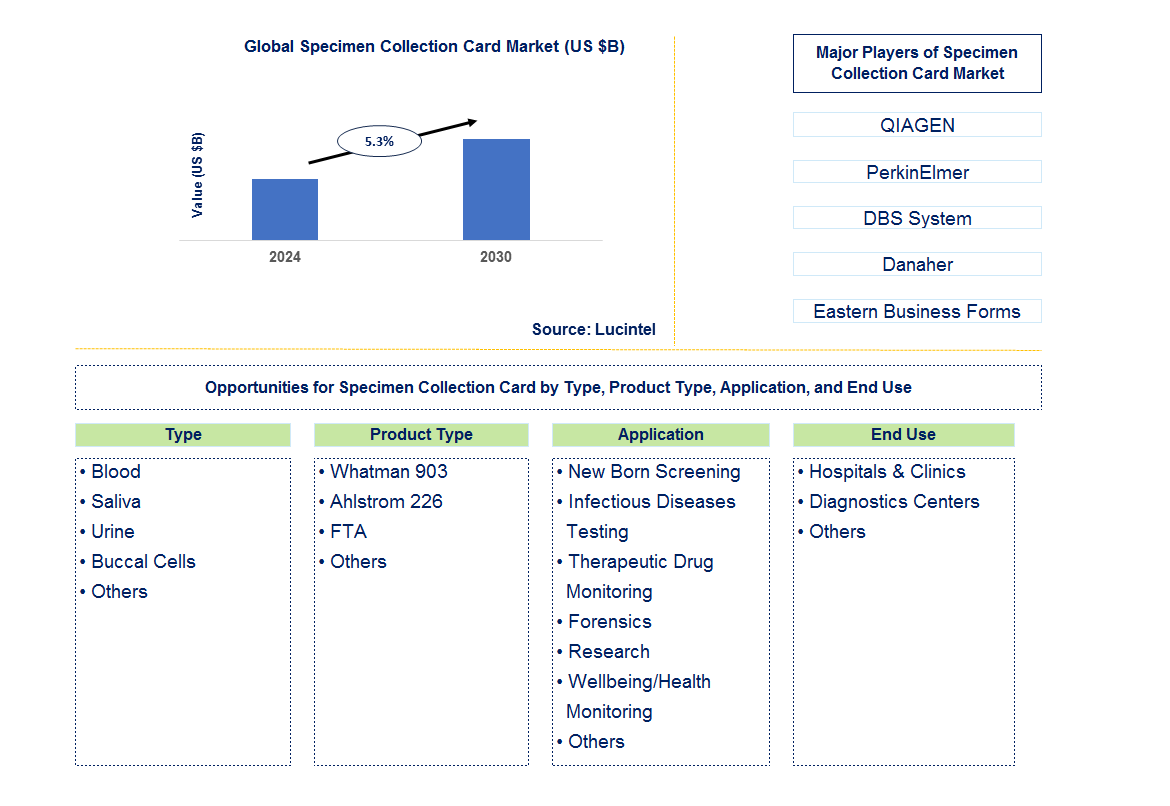
Key data points: The growth forecast = 5.3% annually for the next 6 years. Scroll below to get more insights. This market report covers trends, opportunities, and forecasts in the global specimen collection card market to 2030 by type (blood, saliva, urine, buccal cells, and others), product type (whatman 903, ahlstrom 226, FTA, and others), application (new born screening, infectious diseases testing, therapeutic drug monitoring, forensics, research, wellbeing/health monitoring, and others), end use (hospitals & clinics, diagnostics centers, and others), and region (North America, Europe, Asia Pacific, and the Rest of the World)
We'll send your sample report shortly.
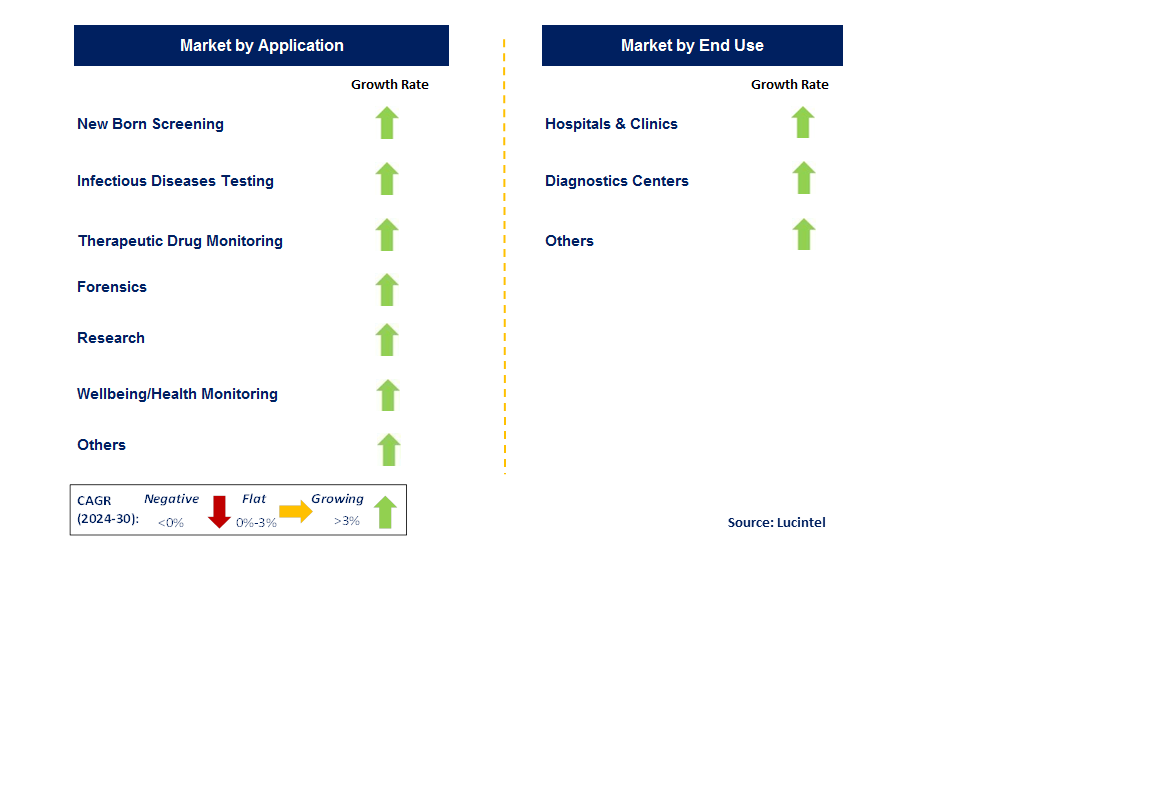
• Lucintel forecasts that, within the application category, new born screening will remain the largest segment over the forecast period.
• Within the end use category, hospital & clinic will remain a larger segment over the forecast period.
• In terms of regions, North America will remain the largest region over the forecast period. Gain valuable insights for your business decisions with our comprehensive 150+ page report.
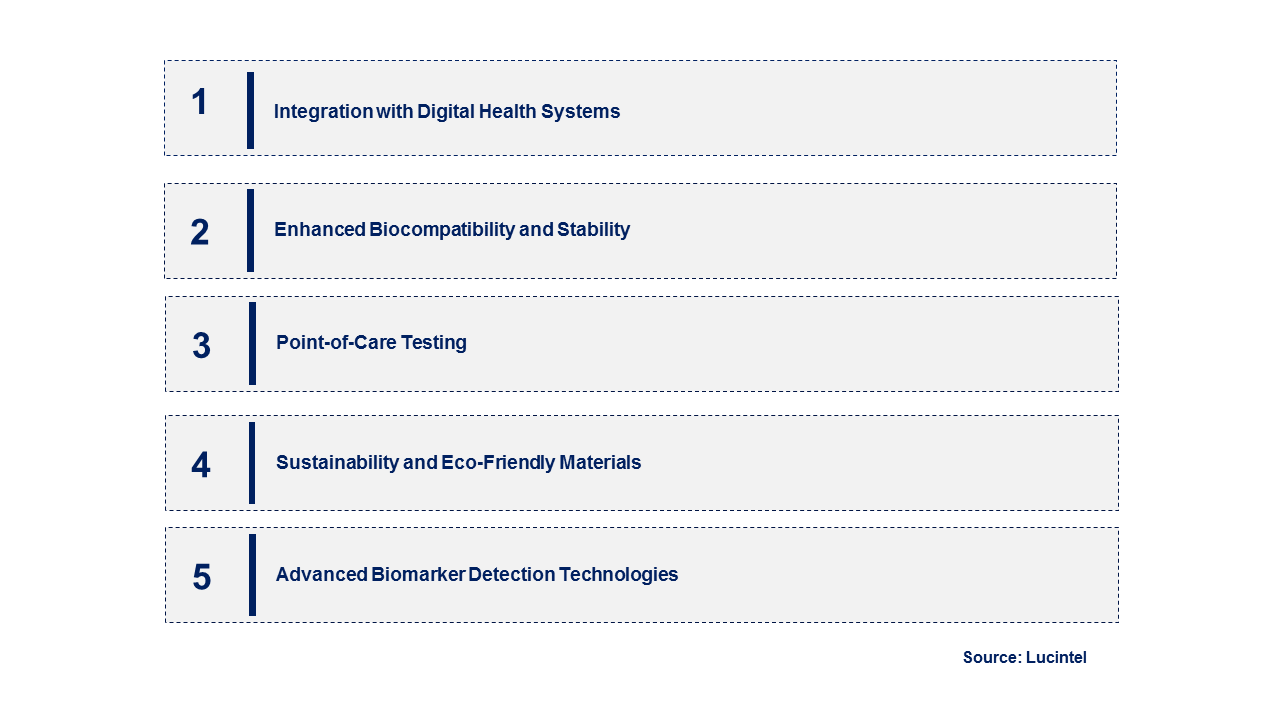
• Integration with Digital Health Systems: A growing number of specimen collection cards are becoming integrated with digital health platforms (Morris et al., 2015). This practice involves employing technologies that enable instantaneous or live transfer or upload of data, enhancing efficiency and accuracy when conducting diagnosis. Furthermore, it simplifies capturing information from patients’ EHRs, helping improve overall patient care outcomes since all essential elements are stored electronically.
• Enhanced Biocompatibility and Stability: Advances in materials science are resulting in the creation of new types of specimen collection cards that possess improved biocompatibility properties alongside other features like enhanced sample stability (Winkler, 2012). To ensure samples remain intact over long periods after being collected using them, novel coatings, adhesives, or polymers are necessary to preserve biomarkers without degrading the physicochemical characteristics vital for identification purposes later on in medical laboratories.
• Point-of-Care Testing: The use of specimen collection cards as a means of point-of-care (POC) testing has been increasing. This is due to a growing demand for diagnostic tools that are convenient and fast yet can be used outside the traditional laboratory environment. Innovations in card design and materials have made POC testing easier to reach and more reliable.
• Sustainability and Eco-Friendly Materials: In the market, there is a shift towards more sustainable and eco-friendly specimen collection cards. Manufacturers are exploring biodegradable or recyclable materials to improve environmental friendliness. Green solutions reflect global sustainability goals and address rising regulatory pressures as well as consumer preferences.
• Advanced Biomarker Detection Technologies: Developments in biomarker detection technologies are improving the capabilities of specimen collection cards. New advancements include better ways of detecting low levels of markers defined as biomarkers, increasing sensitivity and specificity in tests. These technologies allow for expanding disease spectra by using specimen collection cards. These emerging trends show how the specimen card collection market has dynamically grown due to technological change, a focus on sustainability, and the need for more efficient healthcare solutions.
• Digital Integration and Data Management: One of these significant advances includes linking electronic health systems with specimen collection cards. This involves utilizing barcodes or RFID tags that simplify information gathering and analysis processes. This will enable real-time monitoring of samples, ensuring that patient information is managed efficiently and improving accuracy and speed during the diagnostic process.
• Improved Stability through Advanced Materials: Recently, material science has resulted in the creation of sample test cards that are stable and compatible with living tissues. New material designs, such as special coatings or advanced polymers applied to these test plates, help maintain their integrity over time so accurate results can be obtained from an assay performed many years ago.
• Expansion of Applications: Apart from traditional uses, specimen collection cards are now being used in other areas. Developments in card design and materials have expanded their scope into different diagnostic realms such as newborn screening, infectious disease testing, and therapeutic drug monitoring. This expansion has been necessitated by the need for versatile and reliable diagnostic tools across various healthcare settings.
• Sustainability Focus: There is an increasing demand to develop green specimen collection cards. Biodegradable or recyclable alternatives are being explored by manufacturers to reduce environmental pollution. This movement aligns with global goals of sustainability while addressing regulatory pressures for more environmentally responsible products.
• Improved Quality Control and Manufacturing Processes: Advances in manufacturing technologies are leading to higher quality and consistency in specimen collection cards. Ensuring that the performance characteristics of cards meet exacting accuracy and reliability standards through enhanced quality control processes helps safeguard the validity of diagnostic tests and ensure patient safety. These developments demonstrate ongoing progress within the industry's commitment to innovation and quality, reflected in growth in digital integration, material advancements, and expanding applications, thus emphasizing the market progress being made towards further integrating digitalization in healthcare systems and developing advanced technologies that will facilitate new applications for diagnostic purposes.
• Expansion into Emerging Markets: Healthcare infrastructure has been growing rapidly in emerging markets, creating significant growth potential. This means that diagnostic tools that are affordable and accessible need to be made through the expansion of distribution and localizing manufacturing. The company can target regions where healthcare requirements are increasing to win new business and grow sales.
• Investment in Advanced Technologies: Advanced biomarker detection technologies and digital integration for specimen collection cards can help improve their functionality. Some of these may include real-time data transfer or sample stability enhancements, conferring them with a competitive edge over rivals. They should be developed according to the changing requirements of healthcare providers.
• Development of Eco-Friendly Products: Manufacturers can develop eco-friendly specimen collection cards because consumers increasingly demand sustainable products. This might involve using recyclable or biodegradable materials, appealing to environmentally conscious customers while adhering to global sustainability trends and regulatory requirements.
• Expansion into Point-of-Care Testing: Developing specimen collection cards for rapid and convenient diagnostics, due to the growing trend towards point-of-care testing, presents opportunities. Card features that support POC testing should be enhanced to create more market applications and efficient diagnostic solutions for various settings.
• Collaboration with Digital Health Platforms: The capabilities of specimen collection cards can be enhanced by collaborating with digital health technology providers. Linking electronic health records (EHRs) and digital diagnostic tools through card integration facilitates efficient data management throughout healthcare processes. These strategic growth opportunities highlight areas where companies can leverage innovation, market expansion, and sustainability efforts to drive growth and strengthen their competitive position in the specimen collection card market.
• Growing Demand for Diagnostic Testing: The increasing incidence of chronic diseases and infectious ailments is fueling a demand for reliable and effective diagnostic tools. Specimen collection cards are essential for various diagnostic applications, including newborn screening and infectious disease testing, thereby supporting market growth.
• Technological Advancements: Innovations in materials and technology, such as improved biomarker detection and digital integration, have enhanced the functionality of specimen collection cards. This has led to increased adoption by healthcare providers and an extension of their uses.
• Expansion of Healthcare Infrastructure: The expansion of healthcare infrastructure in emerging markets creates new opportunities for manufacturers of specimen collection cards. As access to quality healthcare improves, the demand for diagnostic tools, including specimen collection cards, will rise, leading to market expansion.
• Regulatory Support for Newborn Screening: Government policies that support early identification of genetic and metabolic disorders drive up demand for specimen collection cards used in these tests. This makes government policies on newborn screening one of the key drivers behind this market growth. Challenges in the specimen collection card market include:
• High Production Costs: Advanced materials and technologies can be costly, impacting the overall cost of producing specimen collection cards. The low-cost operating environment requires manufacturers to balance performance with affordability.
• Regulatory Compliance: Complying with stringent regulations regarding specimen collection cards can be complex and costly. Continuous investment in quality control and certification processes is necessary to meet diverse international and local regulations.
• Environmental Impact and Sustainability: Companies face challenges in addressing environmental impacts during the production and disposal of specimen collection cards. Compliance with regulations and meeting consumer demands for more eco-friendly alternatives require engaging in sustainable practices and the development of sound ecological materials.
• Market Competition: The specimen collection card market is competitive, with numerous players offering a range of products. Differentiation and maintaining a competitive advantage necessitate constant innovation and research investments. Addressing these drivers and challenges is crucial for companies to succeed in the specimen collection card market. To navigate through these dynamics and attain growth, there should be a focus on innovation, regulatory compliance, and sustainability efforts.
• QIAGEN
• PerkinElmer
• DBS System
• Danaher
• Eastern Business Forms
• Ahlstrom
• ARCHIMED Life Science
• GenTegra
• FortiusBio
• CENTOGENE
• Blood
• Saliva
• Urine
• Buccal Cells
• Others
• Whatman 903
• Ahlstrom 226
• FTA
• Others
• New Born Screening
• Infectious Diseases Testing
• Therapeutic Drug Monitoring
• Forensics
• Research
• Wellbeing/Health Monitoring
• Hospitals & Clinics
• Diagnostics Centers
• Others
• North America
• Europe
• Asia Pacific
• The Rest of the World
• United States: Newborn screening and infectious disease testing are two major areas where recent breakthroughs in specimen collection cards have concentrated on improving their accuracy in medicine. For instance, there is integration of high-performance biological marker detection techniques and improvements in card design to reduce risk from environmental contaminants. Additionally, digital integration has improved healthcare outcomes through streamlined data capture and analysis.
• China: Affordability and scalability are key trends driving the Chinese market for specimen collection cards. Recent developments involve rolling out affordable sample collection kits suitable for mass screening programs while enhancing the production process to comply with local regulations, including those set by international standards organizations like ISO9001/13485. This has helped improve quality control measures over time, reflecting China's growing capacity in this field.
• Germany: Innovations in materials science are shaping advances in the specimen collection card field across Germany today. These have seen enhancements in materials used for improved biocompatibility and integration with electronic health record systems. In strict compliance with European regulations and quality standards, German companies have embarked on research aimed at improving sensitivity and accuracy in tests involving these entities.
• India: To achieve greater accessibility and affordability, India’s specimen collection card market is undergoing transformations. Recent developments include cards designed for various diagnostic applications, such as newborn screening and infectious disease testing. Efforts are also being made to improve distribution networks and support systems targeted at rural healthcare settings.
• Japan: Japan is leading in incorporating the latest technology into specimen collection cards, such as digital health platforms. Recent innovations include highly functional materials that enhance sample stability and accuracy during analysis. There is also an emphasis on real-time monitoring and data analysis through the integration of specimen collection cards with digital healthcare platforms.


• QIAGEN
• PerkinElmer
• DBS System
• Danaher
• Eastern Business Forms
• Ahlstrom
• ARCHIMED Life Science
• GenTegra
• FortiusBio
• CENTOGENE Q5. Which specimen collection card market segment will be the largest in future? Answer: Lucintel forecasts that new born screening will remain the largest segment over the forecast period. Q6. In specimen collection card market, which region is expected to be the largest in next 5 years? Answer: North America will remain the largest region over the forecast period. Q7. Do we receive customization in this report? Answer: Yes, Lucintel provides 10% customization without any additional cost.


Choose a license that fits your team. Instant PDF delivery.
Prices exclude taxes. Instant delivery. Custom licensing available on request.
Market Report · July 17, 2026
Market Report · July 16, 2026
Market Report · July 10, 2026
Trusted partner for strategic intelligence and business growth


Receive a complimentary market analysis tailored to your industry. Our analysts will identify key growth opportunities and competitive dynamics specific to your business.

Market size, growth rate, and key trend analysis for your specific sector.

Top competitor positioning and market share analysis.

Strategic recommendations backed by data-driven insights.
Get curated market intelligence and competitive moves straight to your inbox.
By subscribing, you agree to receive our monthly insights. Unsubscribe anytime.
Receive a complimentary market analysis tailored to your industry. Our analysts will identify key growth opportunities and competitive dynamics specific to your business.
Market size, growth rate, and key trend analysis for your specific sector.
Top competitor positioning and market share analysis.
Strategic recommendations backed by data-driven insights.
Get curated market intelligence, emerging trends, and competitive moves straight to your inbox each month.
By subscribing, you agree to receive our monthly insights. Unsubscribe anytime.
We'll send your sample report shortly.