
Market Report · July 22, 2026

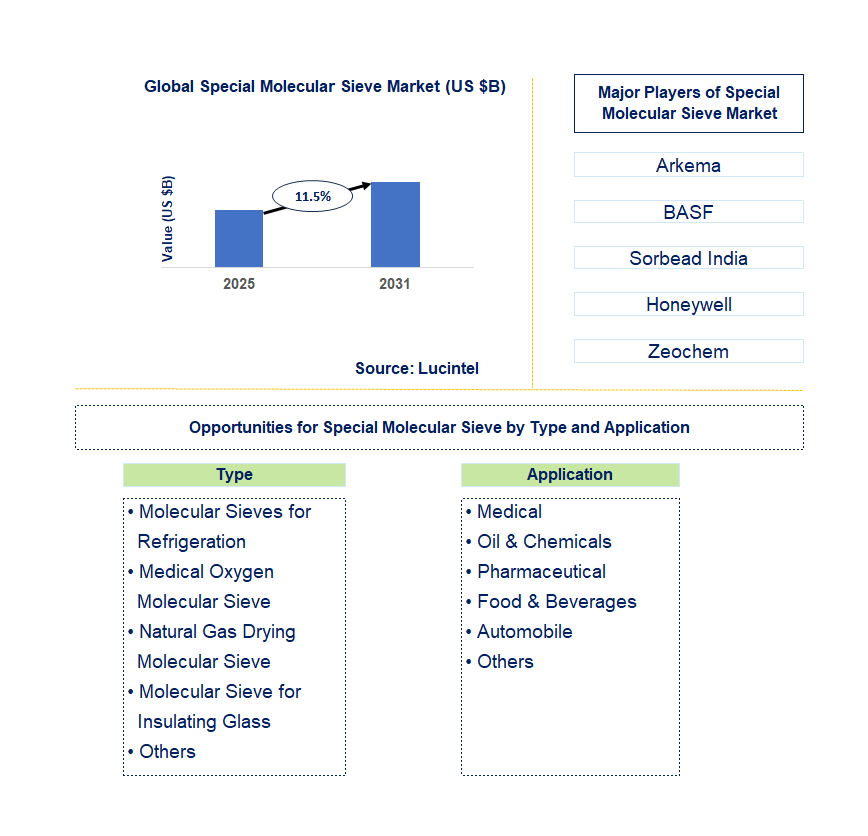
Key data points: The growth forecast = 11.5% annually for the next 7 years. Scroll below to get more insights. This market report covers Trends, opportunity and forecast in special molecular sieve market to 2031 by type (molecular sieves for refrigeration, medical oxygen molecular sieve, molecular sieve for air separation, natural gas drying molecular sieve, molecular sieve for insulating glass, and others), application (medical, oil & chemicals, pharmaceutical, food & beverages, automobile, and others), and region (North America, Europe, Asia Pacific, and the Rest of the World)
We'll send your sample report shortly.
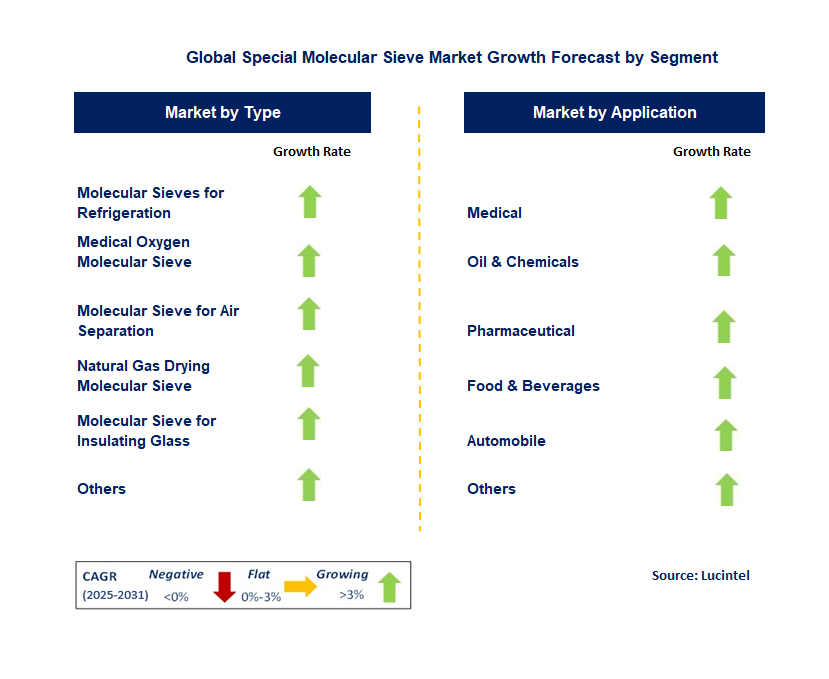
• Lucintel forecasts that, within the type category, molecular sieve for air separation will remain the largest segment over the forecast period due to strong demand across industries such as automotive and pharmaceuticals.
• Within the application category, oil & chemicals will remain the largest segment due to need for efficient gas separation, drying, and purification in the oil refining.
• In terms of region, North America will remain the largest region over the forecast period. Gain valuable insights for your business decisions with our comprehensive 150+ page report. Sample figures with some insights are shown below.
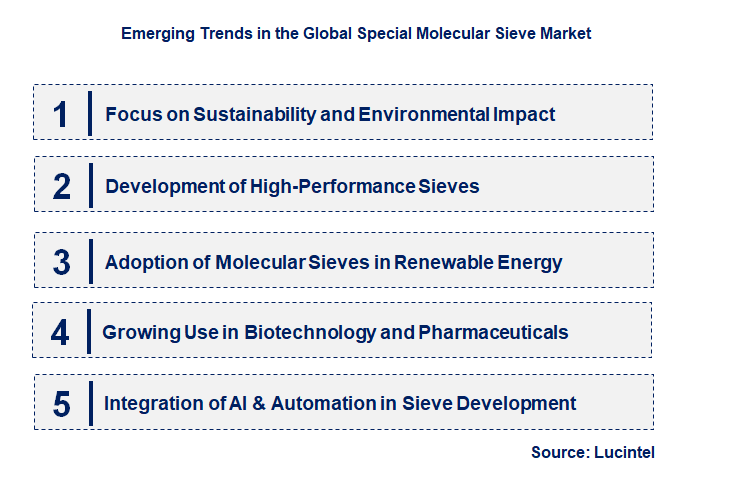
• Increased Focus on Sustainability and Environmental Impact: As environmental concerns rise globally, there is a growing focus on using special molecular sieves for sustainable applications. These sieves are being used in CO2 capture, water treatment, and air purification, contributing to the reduction of pollutants and greenhouse gas emissions. Manufacturers are increasingly developing sieves that can operate efficiently in green technologies, such as renewable energy and carbon capture systems. The trend toward sustainability is driving innovations that reduce energy consumption, improve the effectiveness of environmental technologies, and meet stricter regulatory standards.
• Development of High-Performance Sieves for Gas Separation: The demand for highly selective and efficient gas separation technologies is growing, particularly in the petrochemical, natural gas, and hydrogen industries. Special molecular sieves that can selectively adsorb specific molecules, such as CO2, hydrogen, and methane, are becoming increasingly important. This trend is driven by the need for cleaner fuels and more efficient industrial processes. Innovations in sieve materials, such as zeolites and mesoporous materials, are enabling better performance at higher pressures and temperatures, making them essential in industrial applications like natural gas processing and hydrogen purification.
• Adoption of Molecular Sieves in Renewable Energy Applications: Molecular sieves are gaining traction in renewable energy applications, particularly in energy storage and fuel cell technologies. In fuel cells, sieves are used for the separation of gases, improving fuel efficiency and energy conversion. Additionally, the use of molecular sieves in energy storage systems is expanding, as they help improve the efficiency of battery technologies by enhancing molecular diffusion and reducing energy loss. This trend aligns with global efforts to transition to cleaner energy systems, making molecular sieves a key component in the future of energy production and storage.
• Growing Use in Biotechnology and Pharmaceuticals: Special molecular sieves are increasingly being used in the biotechnology and pharmaceutical industries for tasks such as purification, separation, and controlled release of molecules. In drug manufacturing, sieves are used to separate specific compounds and to ensure the purity and effectiveness of the final product. Advances in sieving technologies are enabling more efficient drug delivery systems, and as biotechnology continues to grow, the demand for molecular sieves for applications like gene therapy and biopharmaceutical production is expected to increase, driving innovation in this field.
• Integration of AI & Automation in Molecular Sieve Development: The integration of artificial intelligence (AI) and automation in the development of molecular sieves is a growing trend. AI technologies are being used to optimize sieve design, predict material properties, and streamline the manufacturing process. Automation in the production of molecular sieves allows for more consistent quality, faster production times, and cost reductions. This trend is driving the development of smarter, more efficient molecular sieves that can be customized for specific industrial applications, ultimately enhancing their performance and market competitiveness. These emerging trends are significantly reshaping the special molecular sieve market by pushing for more sustainable, efficient, and specialized materials. Innovations in sustainability, gas separation, and renewable energy applications are expanding the scope of molecular sieve use across industries. The adoption of AI and automation is improving production efficiency, while the growing demand for sieves in biotechnology and pharmaceuticals opens up new market segments. As these trends continue to develop, the molecular sieve market will evolve to meet the needs of industries focused on sustainability, efficiency, and precision.
• Enhanced Zeolite-based Molecular Sieves for Gas Separation: Recent advancements in zeolite-based molecular sieves have led to improved efficiency in gas separation applications. These zeolites, known for their high selectivity and stability, are increasingly used in natural gas processing, CO2 capture, and hydrogen purification. The development of new zeolite materials with higher pore sizes and enhanced thermal stability is expanding their applications in more demanding environments. This innovation is critical for improving energy efficiency in industrial gas separation processes, making zeolite-based sieves a leading solution in the petrochemical and energy sectors.
• Advances in Molecular Sieve Materials for CO2 Capture: With the growing emphasis on reducing carbon emissions, the development of molecular sieves for CO2 capture has been a significant focus in recent years. Innovations in sieve materials, such as mesoporous silica and advanced zeolites, are enabling more efficient CO2 separation from industrial exhaust gases. These advancements are crucial in the context of global efforts to mitigate climate change and are positioning molecular sieves as key technologies in carbon capture and storage (CCS) systems. Their ability to selectively adsorb CO2 at lower costs is driving widespread adoption in energy and manufacturing industries.
• High-Temperature Molecular Sieve Development for Industrial Applications: Recent developments have led to the creation of special molecular sieves capable of operating at extremely high temperatures. These sieves are particularly valuable in petrochemical refineries, where they are used for catalytic cracking, gas separation, and desulfurization. The ability of these sieves to maintain high performance at elevated temperatures enhances the overall efficiency of industrial processes, making them essential in sectors that rely on heat-intensive operations. These innovations are driving growth in industries such as oil refining and natural gas processing.
• Improved Molecular Sieve Production Processes: Advances in the production processes of molecular sieves have improved both the cost-effectiveness and scalability of these materials. New synthesis techniques have led to the development of sieves with higher purity, better consistency, and enhanced performance in selective adsorption processes. These innovations are reducing production costs and enabling the commercialization of molecular sieves for a wider range of industrial applications. The improved manufacturing techniques also contribute to the sustainability of the sieve market by reducing waste and improving material efficiency.
• Molecular Sieves for Water Purification and Environmental Protection: Recent developments have seen molecular sieves being increasingly adopted in water purification and environmental protection applications. The ability of sieves to selectively adsorb heavy metals, organic contaminants, and other pollutants from water sources has positioned them as key technologies in addressing global water scarcity and pollution. Innovations in bio-based and eco-friendly molecular sieve materials are further driving their adoption in water treatment and waste management, contributing to cleaner water sources and enhanced environmental sustainability. Recent developments in the molecular sieve market are expanding the scope of their applications, improving their efficiency, and reducing costs. Innovations in CO2 capture, gas separation, and high-temperature sieves are enabling more sustainable industrial practices, while advancements in production techniques and water purification applications are making molecular sieves more accessible and effective. These developments are reshaping industries such as petrochemicals, energy, and environmental protection, positioning molecular sieves as critical components in the global push for efficiency and sustainability.
• Gas Separation and Natural Gas Processing: One of the most significant growth opportunities for special molecular sieves lies in the field of gas separation and natural gas processing. Sieves that can efficiently separate methane, hydrogen, and CO2 are in high demand for natural gas purification, hydrogen production, and CO2 capture technologies. As the world transitions to cleaner energy sources, molecular sieves are becoming essential in improving the efficiency of these processes. The growth in the natural gas industry and the emphasis on reducing carbon emissions create a high-potential market for these technologies.
• Carbon Capture and Environmental Sustainability: The increasing focus on environmental sustainability presents a major growth opportunity for molecular sieves in carbon capture applications. These sieves are crucial in capturing CO2 emissions from industrial processes, making them valuable in industries such as power generation and cement production. As governments and industries worldwide aim to meet carbon reduction targets, the demand for efficient and cost-effective CO2 capture technologies is set to rise, positioning molecular sieves as key players in global climate mitigation efforts.
• Water Treatment and Pollution Control: The growing global demand for clean water and the need for advanced pollution control technologies are creating significant growth opportunities for molecular sieves. These sieves can effectively remove harmful substances like heavy metals, organic pollutants, and toxins from water, making them essential in water purification systems. As environmental regulations tighten and water scarcity becomes a pressing issue, the demand for molecular sieves in water treatment and pollution control is expected to grow, driving innovation in the market.
• Biotechnology and Pharmaceutical Applications: Molecular sieves are increasingly being used in the biotechnology and pharmaceutical industries for processes like drug purification, separation, and controlled release. The growing demand for precision medicine and biopharmaceuticals is creating new opportunities for molecular sieves in drug manufacturing. Their ability to selectively separate molecules and ensure high purity levels is driving their adoption in pharmaceutical production, making this a key area for growth in the molecular sieve market.
• Hydrogen Production and Fuel Cells: With the increasing emphasis on clean energy and the global shift toward hydrogen as a sustainable fuel source, molecular sieves are gaining traction in hydrogen production and fuel cell applications. These sieves are used to separate hydrogen from other gases, ensuring the purity and efficiency of hydrogen fuel cells. As investments in hydrogen infrastructure grow, the demand for molecular sieves in this sector is expected to rise, presenting significant opportunities for market expansion in the energy industry. These strategic growth opportunities are driving the expansion of the special molecular sieve market across a range of industries, from energy and environmental protection to pharmaceuticals and biotechnology. As the global demand for sustainable solutions continues to rise, molecular sieves are emerging as key technologies in gas separation, CO2 capture, water treatment, and clean energy. By capitalizing on these opportunities, businesses can drive innovation and growth, ensuring the continued development and adoption of molecular sieve technologies.
• Arkema
• BASF
• Sorbead India
• Honeywell
• Zeochem
• Tosoh
• KNT Group
• Zeolites And Allied Products
• Van Air Systems
• Xian Lvneng Purification Technology
• Molecular Sieves for Refrigeration
• Medical Oxygen Molecular Sieve
• Molecular Sieve for Air Separation
• Natural Gas Drying Molecular Sieve
• Molecular Sieve for Insulating Glass
• Others
• Medical
• Oil & Chemicals
• Pharmaceutical
• Food & Beverages
• Automobile
• Others
• North America
• Europe
• Asia Pacific
• The Rest of the World
• United States: In the United States, recent advancements in special molecular sieve technology are centered on enhanced selectivity and efficiency in natural gas purification and petrochemical processing. Key players are focusing on developing sieves that can operate at higher temperatures and pressures, improving overall performance in industrial applications. Additionally, innovations in high-performance sieves for CO2 capture and molecular separation are gaining traction, driven by the need for cleaner energy solutions. Research institutions and collaborations between industry leaders are further pushing the boundaries of sieve material science to optimize production processes and reduce energy consumption.
• China: China has made significant strides in the development of special molecular sieves, primarily in the areas of petrochemical production and natural gas separation. Local companies have been innovating to create more energy-efficient and cost-effective sieves, with a focus on meeting the growing demand for clean energy and reducing emissions. The country is also expanding its research in environmental applications, with molecular sieves being used for air purification and water treatment. As China's chemical and energy industries continue to grow, advancements in special molecular sieve technology are key to meeting sustainability goals and improving industrial efficiency.
• Germany: Germany is at the forefront of special molecular sieve development, particularly in the chemical and pharmaceutical industries. German companies are focused on designing sieves for highly selective adsorption, specifically for gas separation and hydrogen purification. The automotive and energy sectors in Germany are leveraging molecular sieves for fuel cell applications, where efficient gas separation is critical. Research into more environmentally friendly and durable sieve materials is also gaining momentum. Germany’s emphasis on sustainability has led to the development of molecular sieves that can help reduce carbon footprints, making them essential in green technologies like CO2 capture and hydrogen production.
• India: India’s special molecular sieve market has been growing rapidly due to the expansion of the petrochemical and natural gas industries. The country is investing in advanced sieve technologies for use in refineries and natural gas processing plants to improve operational efficiency. There is also increasing interest in molecular sieves for air and water purification, driven by India’s environmental concerns and the need to address pollution. As India’s industrial base continues to expand, special molecular sieve applications in waste management and energy storage are emerging as key areas for future growth and technological advancement.
• Japan: Japan’s special molecular sieve market is driven by innovation in applications such as hydrogen production, petrochemical refining, and CO2 capture. Japanese companies are advancing the development of molecular sieves that are highly efficient in separating gases and liquids in industrial processes. Additionally, Japan’s focus on clean energy and sustainability has accelerated the use of molecular sieves in CO2 capture technologies. Research into improving the durability and efficiency of sieves at extreme temperatures and pressures is also a key focus. These advancements are not only optimizing industrial processes but also contributing to Japan's environmental goals.


• Arkema
• BASF
• Sorbead India
• Honeywell
• Zeochem
• Tosoh
• KNT Group
• Zeolites And Allied Products
• Van Air Systems
• Xian Lvneng Purification Technology Q5. Which special molecular sieve market segment will be the largest in future? Answer: Lucintel forecasts that molecular sieve for air separation will remain the largest segment over the forecast period due to strong demand across industries such as automotive and pharmaceuticals. Q6. In special molecular sieve market, which region is expected to be the largest in next 5 years? Answer: North America will remain the largest region over the forecast period. Q7. Do we receive customization in this report? Answer: Yes, Lucintel provides 10% customization without any additional cost.


Choose a license that fits your team. Instant PDF delivery.
Prices exclude taxes. Instant delivery. Custom licensing available on request.
Market Report · July 22, 2026
Market Report · July 22, 2026
Market Report · July 22, 2026
Trusted partner for strategic intelligence and business growth


Receive a complimentary market analysis tailored to your industry. Our analysts will identify key growth opportunities and competitive dynamics specific to your business.

Market size, growth rate, and key trend analysis for your specific sector.

Top competitor positioning and market share analysis.

Strategic recommendations backed by data-driven insights.
Get curated market intelligence and competitive moves straight to your inbox.
By subscribing, you agree to receive our monthly insights. Unsubscribe anytime.
Receive a complimentary market analysis tailored to your industry. Our analysts will identify key growth opportunities and competitive dynamics specific to your business.
Market size, growth rate, and key trend analysis for your specific sector.
Top competitor positioning and market share analysis.
Strategic recommendations backed by data-driven insights.
Get curated market intelligence, emerging trends, and competitive moves straight to your inbox each month.
By subscribing, you agree to receive our monthly insights. Unsubscribe anytime.
We'll send your sample report shortly.