
Market Report · July 31, 2026

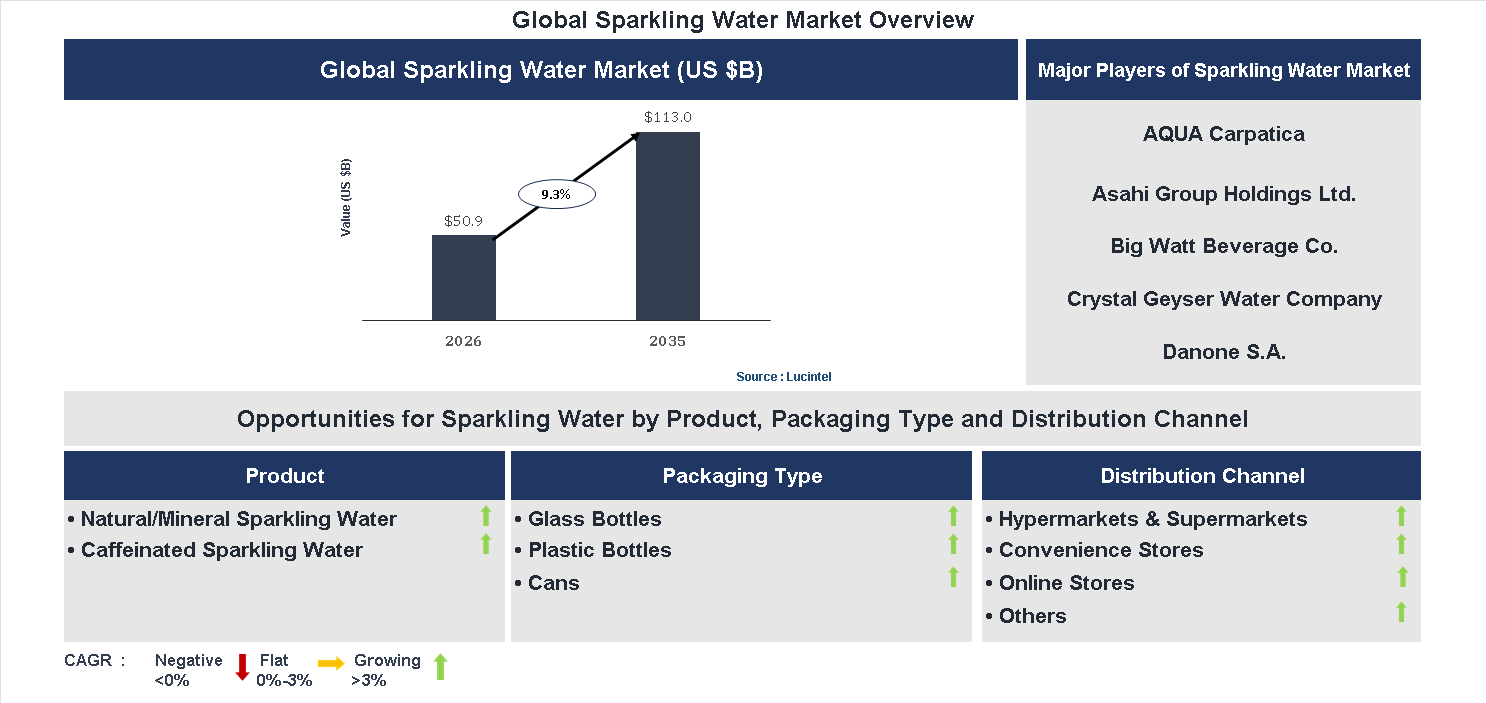
Key data points: The market size in 2035 = $82 billion, growth forecast = 6.2% annually for the next 8 years. Scroll below to get more insights. This market report covers trends, opportunities and forecasts in sparkling water market to 2035 by product type (flavored sparkling water and plain sparkling water), packaging type (cans, glass bottles, and rPET/PET bottles), category (mass and premium), distribution channel (on-trade/HoReCa and off-trade), and region (North America, Europe, Asia Pacific, and the Rest of the World)
We'll send your sample report shortly.
• Lucintel forecasts that, within the product type category, flavored sparkling water is expected to witness higher growth over the forecast period.
• Within the distribution channel category, on-trade/HoReCa is expected to witness higher growth.
• In terms of region, APAC is expected to witness the highest growth over the forecast period. Gain valuable insights for your business decisions with our comprehensive 150+ page report. Sample figures with some insights are shown below.
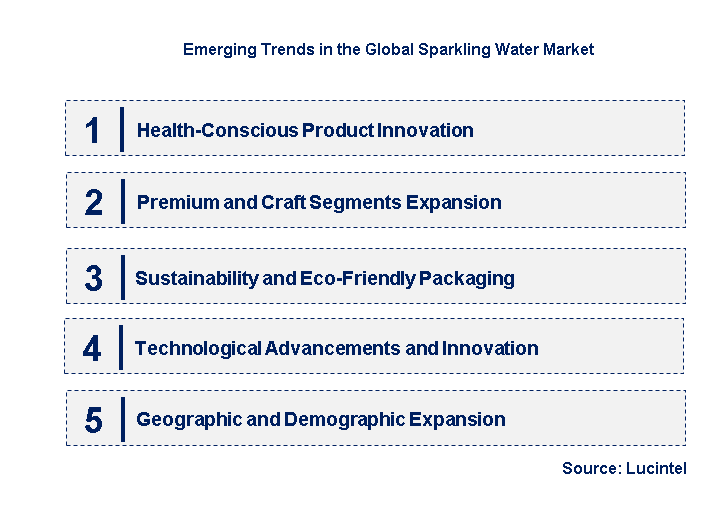
• Health-Conscious Product Innovation: Increasing demand for low-sugar, organic, and functional sparkling beverages is prompting brands to develop healthier options. Consumers are seeking products with natural ingredients, added vitamins, and functional benefits like energy or relaxation. This trend is leading to the launch of new product lines that cater to wellness-focused consumers, expanding the market beyond traditional soda-like drinks. Companies investing in clean-label formulations and functional ingredients are gaining a competitive edge, driving growth in the health-oriented segment.
• Premium and Craft Segments Expansion: Consumers are willing to pay more for unique, high-quality sparkling beverages. This has led to the rise of premium and craft segments, featuring artisanal flavors, small-batch production, and innovative packaging. These products appeal to consumers seeking exclusivity and authenticity, often emphasizing local ingredients and sustainable practices. The growth of craft sparkling waters and premium sparkling wines is reshaping the market landscape, attracting a more discerning customer base and increasing profit margins for brands.
• Sustainability and Eco-Friendly Packaging: Environmental concerns are influencing consumer choices, prompting brands to adopt sustainable practices. Innovations include biodegradable bottles, recyclable cans, and reduced plastic usage. Companies are also focusing on eco-friendly sourcing and production methods to appeal to environmentally conscious consumers. This trend not only enhances brand reputation but also aligns with global sustainability goals, encouraging industry-wide shifts toward greener packaging solutions and responsible sourcing.
• Technological Advancements and Innovation: New technologies are enabling better flavor development, packaging, and preservation. Innovations such as natural carbonation methods, smart packaging, and personalized beverage options are emerging. These advancements improve product quality, extend shelf life, and enhance consumer engagement. Digital platforms and data analytics are also helping brands tailor offerings to specific consumer preferences, fostering innovation and differentiation in a competitive market.
• Geographic and Demographic Expansion: The sparkling water market is expanding into emerging markets and targeting diverse demographic groups. Urbanization, rising disposable incomes, and changing lifestyles are driving demand in regions like Asia-Pacific, Latin America, and Africa. Additionally, brands are customizing products to suit local tastes and cultural preferences, broadening their consumer base. This geographic and demographic diversification is crucial for sustained growth and helps brands tap into new revenue streams. These trends are collectively reshaping the sparkling water market by fostering innovation, emphasizing sustainability, and expanding consumer reach. They are creating new opportunities for brands to differentiate themselves and meet evolving consumer expectations, ensuring continued growth and competitiveness in a dynamic industry landscape.
• Innovation in Flavors and Formulations: Expanding product variety with unique flavors and health-conscious options has attracted a broader consumer base. Companies are introducing natural, low-sugar, and functional sparkling beverages, which appeal to health-conscious consumers. This innovation drives market growth by offering differentiated products that meet diverse preferences, increasing consumer loyalty and opening new segments such as wellness-focused drinks. The result is a more dynamic market with increased sales and brand differentiation.
• Sustainability and Eco-Friendly Packaging: Adoption of eco-friendly packaging solutions, such as biodegradable bottles and recyclable cans, is gaining momentum. Brands are emphasizing sustainability to meet consumer expectations and regulatory requirements. This shift reduces environmental impact and enhances brand reputation, attracting environmentally conscious consumers. As sustainability becomes a key purchasing factor, companies investing in green initiatives are gaining competitive advantage, fostering long-term growth and aligning with global environmental goals.
• Digital Marketing and E-Commerce Expansion: Leveraging digital platforms and e-commerce channels has significantly increased market reach and consumer engagement. Brands are utilizing social media, influencer collaborations, and online advertising to target specific demographics effectively. The convenience of online purchasing and personalized marketing strategies boost sales and brand loyalty. This digital shift enables rapid market penetration, especially in emerging markets, and provides valuable consumer data for product development and marketing optimization.
• Premium and Craft Sparkling Beverages: The rise of premium and craft sparkling drinks caters to consumers seeking unique, high-quality experiences. Small-batch, artisanal, and locally sourced products are gaining popularity, offering distinctive flavors and storytelling. This trend enhances brand differentiation and allows premium pricing, boosting profit margins. The focus on craftsmanship and exclusivity attracts a niche but growing segment of consumers willing to pay more for authentic and innovative beverages, thereby elevating the overall market sophistication.
• Market Expansion in Emerging Economies: Rapid urbanization and rising disposable incomes in emerging markets are fueling demand for sparkling beverages. Companies are entering new territories with tailored marketing strategies and product offerings suited to local tastes. This expansion increases market size and diversifies revenue streams. As infrastructure and retail channels improve, the potential for growth in these regions is substantial, making emerging markets a critical focus for industry players aiming for global dominance and sustained growth. The overall impact of these developments is a more competitive, innovative, and sustainable sparkling water market. Enhanced product diversity, digital engagement, and global expansion are driving growth, attracting new consumers, and strengthening brand loyalty. These trends are positioning the industry for long-term success, with increased market share and profitability across diverse segments and geographies.
• Product Innovation and Premium Offerings: Developing unique flavors, organic options, and low-calorie variants can attract health-conscious consumers and premium buyers. Sub-segments like craft sparkling waters and functional beverages are gaining popularity, providing brands with opportunities to differentiate and command higher price points.
• Expansion into Emerging Markets: Increasing urbanization, rising disposable incomes, and changing lifestyles in regions like Asia-Pacific and Latin America create vast growth potential. Localized marketing strategies and affordable pricing can help brands penetrate these markets and establish a strong presence.
• Diversification of Distribution Channels: Leveraging e-commerce, convenience stores, and horeca (hotel, restaurant, catering) sectors enhances accessibility. Digital platforms enable targeted marketing and direct-to-consumer sales, expanding reach and consumer engagement in both developed and developing regions.
• Focus on Health and Wellness Trends: Offering low-sugar, functional, and fortified sparkling beverages aligns with consumer health priorities. Incorporating ingredients like vitamins, minerals, and botanicals can boost appeal and foster brand loyalty among health-conscious demographics.
• Adoption of Sustainable Packaging and Practices: Eco-friendly packaging, recyclable materials, and sustainable sourcing resonate with environmentally aware consumers. Implementing green initiatives can improve brand image, meet regulatory standards, and create a competitive advantage in the market. The overall market growth will be significantly influenced by these opportunities, fostering innovation, expanding consumer bases, and enhancing sustainability efforts. Companies that strategically capitalize on these trends will be well-positioned to lead in the evolving sparkling beverage landscape, ensuring long-term profitability and market relevance.
• Technological Innovation: The advancement of carbonation and packaging technologies has significantly improved product quality, shelf life, and consumer convenience. Innovations such as eco-friendly bottles and smart packaging attract environmentally conscious consumers and reduce costs. These technological improvements enable brands to differentiate themselves in a competitive market, expand product offerings, and meet evolving consumer expectations for sustainability and freshness. As a result, companies can increase market share and profitability by leveraging cutting-edge manufacturing processes that enhance product appeal and operational efficiency.
• Rising Consumer Preference for Premium and Flavored Sparkling Beverages: Consumers are increasingly seeking unique, high-quality, and flavored sparkling drinks that offer a premium experience. This trend is driven by a desire for healthier alternatives to sugary sodas and a preference for functional beverages with added health benefits. The demand for natural ingredients, exotic flavors, and innovative formulations encourages brands to diversify their portfolios. This shift not only boosts sales but also allows companies to target niche markets, command higher price points, and strengthen brand loyalty among discerning consumers.
• Economic Growth and Urbanization: Rapid economic development and urbanization in emerging markets have expanded the consumer base for sparkling beverages. Increased disposable incomes and changing lifestyles lead to higher consumption of ready-to-drink, convenient beverages. Urban consumers are more exposed to global trends and are willing to pay a premium for innovative and fashionable products. This economic momentum creates new opportunities for market expansion, product diversification, and increased distribution channels, ultimately fueling overall market growth.
• Strategic Marketing and Brand Positioning: Effective marketing campaigns and strong brand positioning are critical drivers in the sparkling water market. Companies investing in digital marketing, influencer collaborations, and experiential promotions successfully engage consumers and build brand loyalty. Clear positioning around health, sustainability, and lifestyle appeals resonate with target demographics. These strategies help brands differentiate themselves in a crowded marketplace, increase consumer awareness, and drive sales. As marketing becomes more sophisticated, brands can better capture consumer attention and foster long-term relationships, fueling market expansion.
• Growing E-commerce and Distribution Channels: The rise of online retail platforms and modern distribution networks has made sparkling beverages more accessible to consumers worldwide. E-commerce offers convenience, wider product variety, and targeted marketing opportunities. Improved logistics and supply chain management ensure product freshness and availability across diverse regions. This expansion into digital channels enables brands to reach new markets, especially in remote or underserved areas, and adapt quickly to changing consumer preferences. The increased penetration of e-commerce significantly contributes to overall market growth and diversification. The challenges facing the sparkling water market are:
• Regulatory and Health Concerns: Stringent regulations related to health standards, sugar content, and labeling requirements pose significant challenges. Governments are increasingly imposing taxes on sugary drinks and mandating clearer nutritional disclosures to combat health issues like obesity and diabetes. These regulations can restrict product formulations, increase compliance costs, and limit marketing strategies. Additionally, rising consumer awareness about health risks associated with excessive sugar intake pressures brands to reformulate products, which may impact taste and consumer acceptance. Navigating complex regulatory landscapes requires continuous adaptation and investment, potentially hindering innovation and profitability.
• Environmental Sustainability and Packaging Waste: Growing environmental concerns and regulations around plastic waste and carbon emissions challenge the industry to adopt sustainable practices. The reliance on single-use plastic bottles and cans faces criticism and bans in certain regions, compelling companies to innovate eco-friendly packaging solutions. Transitioning to biodegradable materials or reusable packaging involves significant costs and logistical adjustments. Failure to address sustainability issues can damage brand reputation and lead to consumer boycotts. Balancing environmental responsibility with cost-effectiveness remains a critical challenge for market players aiming to meet regulatory standards and consumer expectations.
• Market Saturation and Intense Competition: The sparkling beverage sector is highly competitive, with numerous established brands and new entrants vying for consumer attention. Market saturation in developed regions limits growth opportunities and intensifies price wars, promotional battles, and innovation races. Differentiating products becomes increasingly difficult, requiring substantial marketing investments and product innovation. Additionally, consumer preferences are rapidly evolving, demanding agility from companies to stay relevant. Overcoming saturation and maintaining market share necessitates strategic differentiation, innovation, and effective consumer engagement, which can strain resources and profitability. The sparkling water market is shaped by technological advancements, evolving consumer preferences, economic growth, strategic marketing, and expanding distribution channels. However, it faces significant challenges from regulatory pressures, environmental sustainability concerns, and intense competition. These drivers and challenges collectively influence market dynamics, requiring stakeholders to innovate, adapt, and strategize effectively. Success in this environment depends on balancing growth opportunities with responsible practices and regulatory compliance, ensuring sustainable and profitable market expansion in the long term.
• Nestlé S.A.
• PepsiCo Inc.
• The Coca-Cola Company
• Danone S.A.
• National Beverage Corp.
• Keurig Dr Pepper Inc.
• Primo Water Corp.
• Talking Rain Beverage Co.
• Spindrift Beverage Co.
• Waterloo Sparkling Water Corp.
• Flavored Sparkling Water
• Plain Sparkling Water
• Cans
• Glass Bottles
• rPET/PET Bottles
• Mass
• Premium
• On-Trade/HoReCa
• Off-Trade
• North America
• Europe
• Asia Pacific
• The Rest of the World
• United States: The U.S. market has seen a surge in health-conscious products, with increased demand for low-sugar and organic sparkling beverages. Innovative flavors and functional drinks, such as added vitamins and probiotics, are gaining popularity. Major brands are expanding their portfolios to include craft and premium options, while sustainability efforts focus on eco-friendly packaging and reducing carbon footprints. The market is also driven by a growing interest in alcohol-infused sparkling drinks, blending tradition with modern trends.
• China: China’s sparkling water market is rapidly expanding, fueled by urbanization and rising disposable incomes. Local brands are innovating with traditional flavors and integrating herbal ingredients to appeal to domestic tastes. The market benefits from a youthful demographic seeking trendy and premium products. E-commerce channels are crucial for distribution, and international brands are increasing their presence through strategic partnerships. Sustainability and health trends are gradually influencing product formulations, although price sensitivity remains a key factor.
• Germany: Germany’s sparkling water market emphasizes quality, authenticity, and sustainability. Consumers favor natural ingredients and minimal additives, leading to a rise in organic and artisanal sparkling drinks. The market is characterized by a strong preference for traditional flavors with a modern twist. Eco-conscious packaging and transparent sourcing are important trends. The craft segment is growing, with small producers gaining market share. Regulatory standards around health and safety are strictly adhered to, ensuring high product standards and consumer trust.
• India: The Indian sparkling water market is experiencing rapid growth driven by urbanization, changing lifestyles, and increasing disposable incomes. Local flavors such as mango, lemon, and regional herbs are popular, alongside international brands. The market is highly price-sensitive, prompting brands to offer affordable options. Health and wellness trends are emerging, with some products featuring reduced sugar and natural ingredients. Distribution channels are expanding through modern retail and e-commerce, and marketing campaigns focus on youth and urban consumers seeking trendy, refreshing beverages.
• Japan: Japan’s sparkling water market is characterized by innovation and a focus on health. Functional sparkling drinks with added vitamins, minerals, and herbal extracts are gaining traction. Flavored sparkling waters with subtle, sophisticated profiles appeal to health-conscious consumers. The market also sees a rise in premium and craft offerings, emphasizing quality and unique ingredients. Sustainability initiatives include eco-friendly packaging and transparent sourcing. Consumer preferences lean towards subtle flavors and natural ingredients, with a strong emphasis on product safety and regulatory compliance.


• Nestlé S.A.
• PepsiCo Inc.
• The Coca-Cola Company
• Danone S.A.
• National Beverage Corp.
• Keurig Dr Pepper Inc.
• Primo Water Corp.
• Talking Rain Beverage Co.
• Spindrift Beverage Co.
• Waterloo Sparkling Water Corp. Q6. Which sparkling water market segment will be the largest in future? Answer: Lucintel forecasts that, within the product type category, flavored sparkling water is expected to witness higher growth over the forecast period. Q7. In sparkling water market, which region is expected to be the largest in next 8 years? Answer: In terms of region, APAC is expected to witness the highest growth over the forecast period. Q8. Do we receive customization in this report? Answer: Yes, Lucintel provides 10% customization without any additional cost.


Choose a license that fits your team. Instant PDF delivery.
Prices exclude taxes. Instant delivery. Custom licensing available on request.
Market Report · July 31, 2026
Market Report · July 31, 2026
Market Report · July 31, 2026
Trusted partner for strategic intelligence and business growth


Receive a complimentary market analysis tailored to your industry. Our analysts will identify key growth opportunities and competitive dynamics specific to your business.

Market size, growth rate, and key trend analysis for your specific sector.

Top competitor positioning and market share analysis.

Strategic recommendations backed by data-driven insights.
Get curated market intelligence and competitive moves straight to your inbox.
By subscribing, you agree to receive our monthly insights. Unsubscribe anytime.
Receive a complimentary market analysis tailored to your industry. Our analysts will identify key growth opportunities and competitive dynamics specific to your business.
Market size, growth rate, and key trend analysis for your specific sector.
Top competitor positioning and market share analysis.
Strategic recommendations backed by data-driven insights.
Get curated market intelligence, emerging trends, and competitive moves straight to your inbox each month.
By subscribing, you agree to receive our monthly insights. Unsubscribe anytime.
We'll send your sample report shortly.