
Report Feature
Solar Panel Cleaning Market Trends and Forecast
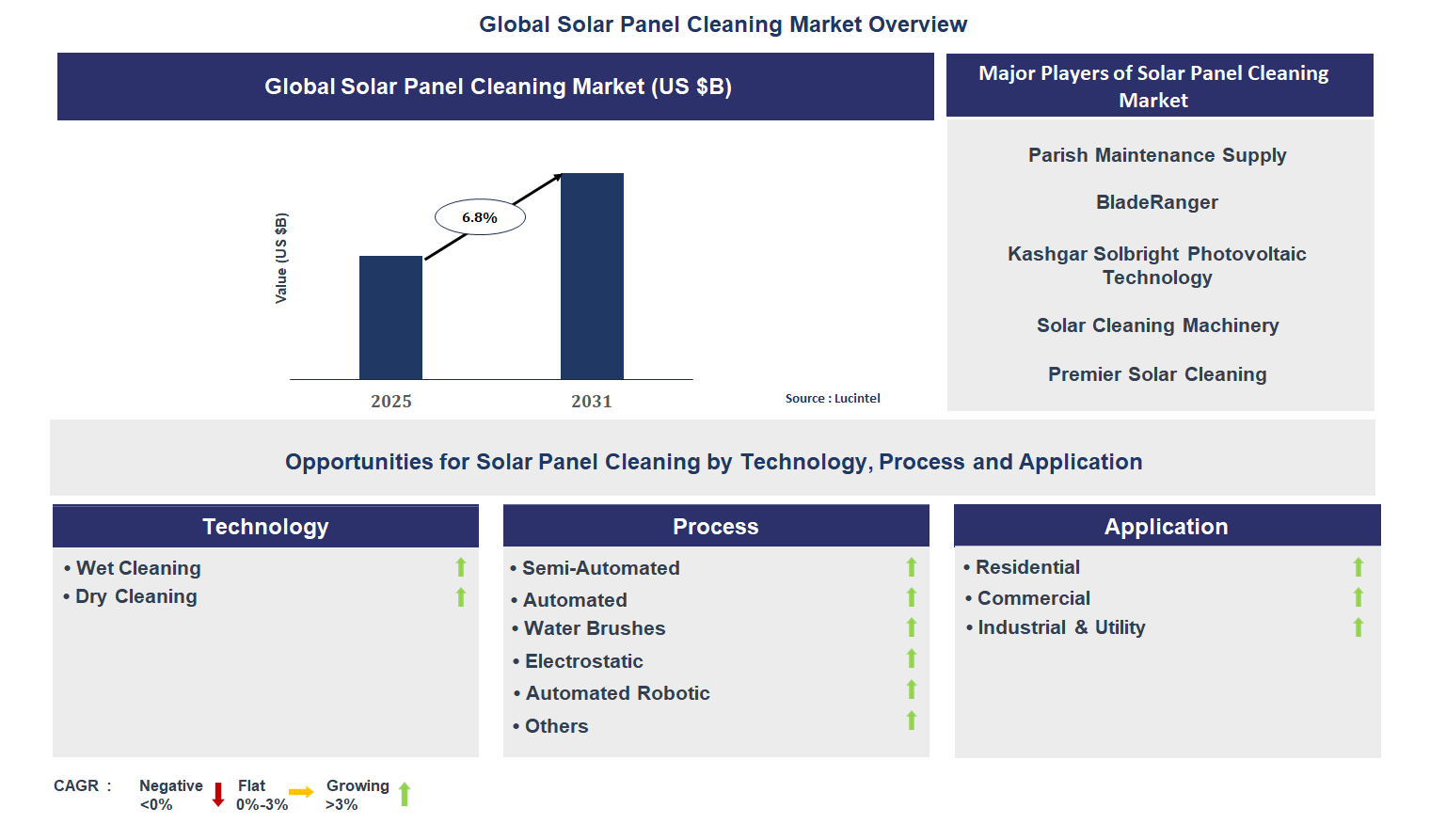
The future of the global solar panel cleaning market looks promising with opportunities in the residential, commercial, and industrial & utility markets. The global solar panel cleaning market is expected to grow with a CAGR of 6.8% from 2025 to 2031. The major drivers for this market are the increasing installation of large solar farms, the rising need for maintaining panel efficiency, and the growing adoption of automated cleaning technologies.• Lucintel forecasts that, within the technology category, wet cleaning is expected to witness higher growth over the forecast period.
• Within the application category, industrial & utility is expected to witness the highest growth.
• In terms of region, APAC is expected to witness the highest growth over the forecast period. Gain valuable insights for your business decisions with our comprehensive 150+ page report. Sample figures with some insights are shown below.
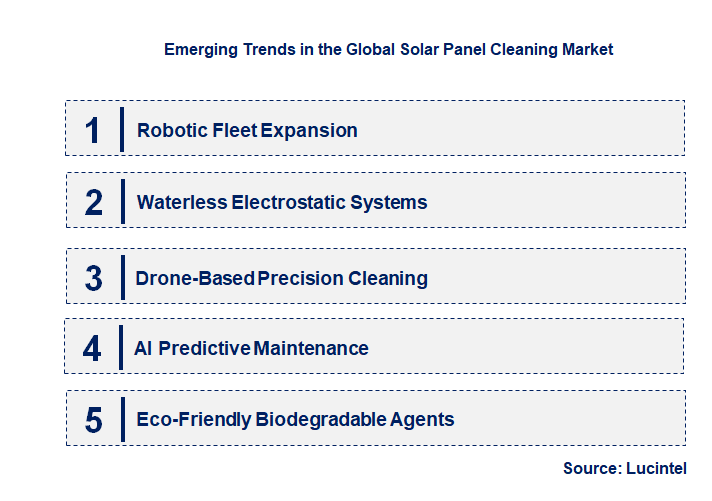
Emerging Trends in the Solar Panel Cleaning Market
Emerging trends in the solar panel cleaning market converge on automation and sustainability, responding to soilings 10-30% efficiency drag amid PV booms. These evolutions optimize maintenance for large farms and rooftops, integrating AI for precision in water-scarce regions.• Robotic Fleet Expansion: Autonomous robots with microfiber and air flows dominate utility farms, navigating terrains via AI paths. This slashes labor by 60%, boosts yields in dusty zones, and scales for gigawatt projects, cutting Opex while enabling 24/7 operations.
• Waterless Electrostatic Systems: Dry tech charges dust for electromagnetic repulsion, suiting arid bifacial arrays. Impacts include 95% transmittance retention, zero water use, and 20% Opex savings, revolutionizing desert farms and aligning with scarcity mandates.
• Drone-Based Precision Cleaning: Aerial drones deploy detergents for targeted soiling in rooftops and remotes. They reduce access risks, enable predictive scheduling via sensors, and enhance urban BIPV viability, democratizing maintenance for distributed assets.
• AI Predictive Maintenance: Algorithms forecast dirt via satellite imagery for timed interventions. This minimizes downtime, optimizes fleets across portfolios, and integrates with O&M platforms, driving 15% ROI uplifts for operators.
• Eco-Friendly Biodegradable Agents: pH-neutral solutions pass ecotoxicity tests for floating PV. They curb chemical runoff, comply with green standards, and extend panel life, appealing to ESG-focused utilities in sensitive ecosystems. These trends are reshaping the solar panel cleaning market by prioritizing efficiency and eco-alignment. They mitigate soiling barriers, scale via digital twins, and foster circular practices, embedding cleaning as integral to sustainable PV lifecycles.
Recent Development in the Solar Panel Cleaning Market
Recent developments in the solar panel cleaning market spotlight robotic fleets and dry innovations amid PV surges. These breakthroughs address soiling in expansive farms, enhancing yields and resilience for global renewable scaling.• Nighttime Robot Fleet Launch: SunBrush Mobil unveiled nocturnal microfiber robots for rooftops, using air flows for debris removal. This enables disruption-free operations, cuts energy losses by 20%, and suits urban commercial arrays for consistent performance.
• EDS Tech Prototyping: Sol Clarity advanced electrodynamic screens charging dust for wave repulsion. It revolutionizes waterless cleaning, retains 95% transmittance, and targets bifacial desert farms, slashing maintenance in arid utilities.
• Drone Inspection Acquisition: Singapore firm bought a drone startup for integrated monitoring-cleaning. This bundles aerial analytics with scheduling, optimizes rooftop fleets, and expands O&M in floating and distributed PV.
• JV for Autonomous Solutions: Japanese-Australian venture introduced cleaners for New South Wales parks. It customizes for Queenslands dust, boosts regional yields, and pioneers cross-border tech for large-scale agrivoltaics.
• Eco-Chemical Certification: Chemitek Solars agents cleared floating PV ecotoxicity tests. This enables safe applications in reservoirs, reduces runoff risks, and unlocks incentives for hybrid hydro-solar projects. These developments are impacting the solar panel cleaning market by fortifying automation and green tech. They curb water dependencies, ignite cross-regional synergies, and amplify PV returns, steering toward efficient, inclusive maintenance ecosystems.
Strategic Growth Opportunities in the Solar Panel Cleaning Market
Strategic growth opportunities in the solar panel cleaning market arise from PV diversification, as soiling cuts yields by 10-30%. Tailored solutions unlock efficiencies in scaling sectors, from farms to rooftops, leveraging incentives for broad adoption.• Utility-Scale Farms: Robotic fleets for gigawatt arrays minimize losses in deserts via AI paths. They integrate at design, hold soiling below 10%, and monetize via RaaS, propelling developer ROIs in arid belts.
• Commercial Rooftops: Drone-detergent combos target urban pollen and bird droppings. They enable safe access, schedule via apps, and cut bills 15%, fostering net-zero pledges in offices and warehouses.
• Residential Distributed Systems: Plug-in balcony cleaners with biodegradable agents suit homeowners. They boost self-consumption, align with metering, and scale microgrids, empowering urban independence.
• Agrivoltaic Crop Sites: Vertical electrostatics shade fields while repelling dust. Dual revenues conserve water, expand renewables without arable loss, and meet EU sustainability targets.
• Floating PV Arrays: Certified eco-agents for reservoirs prevent corrosion. They synergize with hydro, reduce evaporation, and tap non-arable waters, scaling in Asia-Pacific hubs. These opportunities are impacting the solar panel cleaning market by tailoring to niches and synergies. They diversify models, heighten demands, and solidify cleanings role in holistic PV evolutions.
Solar Panel Cleaning Market Driver and Challenges
The solar panel cleaning market is shaped by technological integrations, economic efficiencies, and regulatory emphases on renewables. These factors address soilings efficiency drag, ensuring optimal PV performance amid global clean energy shifts. The factors responsible for driving the solar panel cleaning market include: 1. Solar Installation Boom: Surging PV capacities in Asia-Pacific and MENA demand routine maintenance to curb 10-30% losses. This propels robotic adoptions, maximizes outputs, and aligns with net-zero mandates for utilities. 2. Water Scarcity Mandates: Arid regions favor dry electrostatics, reducing usage by 90%. Incentives spur eco-tech, cut Opex, and comply with conservation laws, expanding in deserts. 3. Labor Cost Escalations: Automation slashes manpower needs by 60%, suiting large farms. It enhances safety, scales via RaaS, and frees budgets for expansions in labor-tight markets. 4. Efficiency Optimization Push: Soiling mitigation boosts yields 15-20%, hastening ROIs. Predictive AI integrates with O&M, drawing investments in high-dust zones for sustained performance. 5. Regulatory Green Incentives: Subsidies fund waterless pilots, harmonizing with ESG goals. They unlock grants, standardize protocols, and broaden access in emerging PV hubs. Challenges in the solar panel cleaning market are: 1. High Initial Investments: Robotic setups strain budgets for small operators. This limits grassroots uptake, demands financing models, and favors phased rollouts in cost-sensitive areas. 2. Water Resource Constraints: Wet methods face scarcity bans in arid zones. Alternatives add premiums, complicating transitions and underscoring hybrid needs for compliance. 3. Skilled Labor Shortages: Training gaps hinder robotic deployments in remotes. This delays scalings, raises errors, and calls for certifications to build operator confidence. Drivers and challenges interplay in the solar panel cleaning market, with innovations tipping scales toward growth. This dynamic cultivates efficiencies, resilience, and inclusivity, anchoring cleaning as vital in sustainable PV frameworks.List of Solar Panel Cleaning Companies
Companies in the market compete on the basis of product quality offered. Major players in this market focus on expanding their manufacturing facilities, R&D investments, infrastructural development, and leverage integration opportunities across the value chain. With these strategies solar panel cleaning companies cater increasing demand, ensure competitive effectiveness, develop innovative products & technologies, reduce production costs, and expand their customer base. Some of the solar panel cleaning companies profiled in this report include-• Parish Maintenance Supply
• BladeRanger
• Kashgar Solbright Photovoltaic Technology
• Solar Cleaning Machinery
• Premier Solar Cleaning
• Sharp Corporation
• Indisolar Products Private Limited
• Sharp Corporation
• kärcher Türkiye
• Kashgar Solbright Photovoltaic Technology
Solar Panel Cleaning Market by Segment
The study includes a forecast for the global solar panel cleaning market by technology, process, application, and region.Solar Panel Cleaning Market by Technology [Value from 2019 to 2031]:
• Wet Cleaning
• Dry Cleaning
Solar Panel Cleaning Market by Process [Value from 2019 to 2031]:
• Semi-Automated
• Automated
• Water Brushes
• Electrostatic
• Automated Robotic
• Others
Solar Panel Cleaning Market by Application [Value from 2019 to 2031]:
• Residential
• Commercial
• Industrial & Utility
Solar Panel Cleaning Market by Region [Value from 2019 to 2031]:
• North America
• Europe
• Asia Pacific
• The Rest of the World
Country Wise Outlook for the Solar Panel Cleaning Market
The solar panel cleaning market is expanding rapidly, driven by surging photovoltaic installations and the need to combat efficiency losses from soiling. Innovations in automation and waterless technologies are addressing environmental and labor challenges, supporting global renewable goals across utility, commercial, and residential sectors.• United States: The United States is advancing electrostatic dust removal for bifacial panels, with a California startup acquisition integrating this into O&M services. Sunne Solars Texas center enhances rapid deployments for large farms, while water brushes dominate for cost-effective residential use, bolstering utility-scale efficiency amid data center growth.
• China: China leads with autonomous robots for vast highland farms, fueled by massive PV additions and export-driven manufacturing. Waterless systems address scarcity, while AI-optimized paths enhance yields in dusty regions, supporting urban rooftops and industrial hubs for emission reductions and grid stability.
• Germany: Germany innovates dry electrostatic cleaners for rooftop and agrivoltaic setups, aligning with EU green directives. Semi-autonomous drones tackle pollen and dust in manufacturing zones, promoting self-consumption and urban autonomy through efficient, low-water solutions for distributed systems.
• India: India expands robotic and drone cleaning via Adanis 10 GW portfolio, combating northern dust with water-efficient tech. PLI incentives spur local manufacturing for rural and utility tenders, bridging electrification gaps and fostering self-reliance in arid installations.
• Japan: Japan deploys microfiber robotic fleets for urban rooftops, operating nocturnally to minimize disruptions. Subsidies drive flexible, lightweight systems for BIPV and disaster-prone sites, enhancing resilience and outputs in space-limited environments.

Features of the Global Solar Panel Cleaning Market
Market Size Estimates: Solar panel cleaning market size estimation in terms of value ($B). Trend and Forecast Analysis: Market trends (2019 to 2024) and forecast (2025 to 2031) by various segments and regions. Segmentation Analysis: Solar panel cleaning market size by technology, process, application, and region in terms of value ($B). Regional Analysis: Solar panel cleaning market breakdown by North America, Europe, Asia Pacific, and Rest of the World. Growth Opportunities: Analysis of growth opportunities in different technologies, processes, applications, and regions for the solar panel cleaning market. Strategic Analysis: This includes M&A, new product development, and competitive landscape of the solar panel cleaning market. Analysis of competitive intensity of the industry based on Porter’s Five Forces model.
FAQ
Q1. What is the growth forecast for solar panel cleaning market? Answer: The global solar panel cleaning market is expected to grow with a CAGR of 6.8% from 2025 to 2031. Q2. What are the major drivers influencing the growth of the solar panel cleaning market? Answer: The major drivers for this market are the increasing installation of large solar farms, the rising need for maintaining panel efficiency, and the growing adoption of automated cleaning technologies. Q3. What are the major segments for solar panel cleaning market? Answer: The future of the solar panel cleaning market looks promising with opportunities in the residential, commercial, and industrial & utility markets. Q4. Who are the key solar panel cleaning market companies? Answer: Some of the key solar panel cleaning companies are as follows:• Parish Maintenance Supply
• BladeRanger
• Kashgar Solbright Photovoltaic Technology
• Solar Cleaning Machinery
• Premier Solar Cleaning
• Sharp Corporation
• Indisolar Products Private Limited
• Sharp Corporation
• kärcher Türkiye
• Kashgar Solbright Photovoltaic Technology Q5. Which solar panel cleaning market segment will be the largest in future? Answer: Lucintel forecasts that, within the technology category, wet cleaning is expected to witness higher growth over the forecast period. Q6. In solar panel cleaning market, which region is expected to be the largest in next 5 years? Answer: In terms of region, APAC is expected to witness the highest growth over the forecast period. Q7. Do we receive customization in this report? Answer: Yes, Lucintel provides 10% customization without any additional cost.
Table of Contents
List of Figures
List of Tables
Methodology
- In-depth interviews of the major players in this market
- Detailed secondary research from competitors’ financial statements and published data
- Extensive searches of published works, market, and database information pertaining to industry news, company press releases, and customer intentions
- A compilation of the experiences, judgments, and insights of Lucintel’s professionals, who have analyzed and tracked this market over the years.


Buy Now
Choose a license that fits your team. Instant PDF delivery.
Prices exclude taxes. Instant delivery. Custom licensing available on request.
Key Questions
- • What are some of the most promising, high-growth opportunities for the solar panel cleaning market by technology (wet cleaning and dry cleaning), process (semi-automated, automated, water brushes, electrostatic, automated robotic, and others), application (residential, commercial, and industrial & utility), and region (North America, Europe, Asia Pacific, and the Rest of the World)?
- • Which segments will grow at a faster pace and why?
- • Which region will grow at a faster pace and why?
- • What are the key factors affecting market dynamics? What are the key challenges and business risks in this market?
- • What are the business risks and competitive threats in this market?
- • What are the emerging trends in this market and the reasons behind them?
- • What are some of the changing demands of customers in the market?
- • What are the new developments in the market? Which companies are leading these developments?
- • Who are the major players in this market? What strategic initiatives are key players pursuing for business growth?
- • What are some of the competing products in this market and how big of a threat do they pose for loss of market share by material or product substitution?
- • What M&A activity has occurred in the last 5 years and what has its impact been on the industry? For any questions related to Solar Panel Cleaning Market, Solar Panel Cleaning Market Size, Solar Panel Cleaning Market Growth, Solar Panel Cleaning Market Analysis, Solar Panel Cleaning Market Report, Solar Panel Cleaning Market Share, Solar Panel Cleaning Market Trends, Solar Panel Cleaning Market Forecast, Solar Panel Cleaning Companies, write Lucintel analyst at email: helpdesk@lucintel.com. We will be glad to get back to you soon.


