
Market Report · May 16, 2026

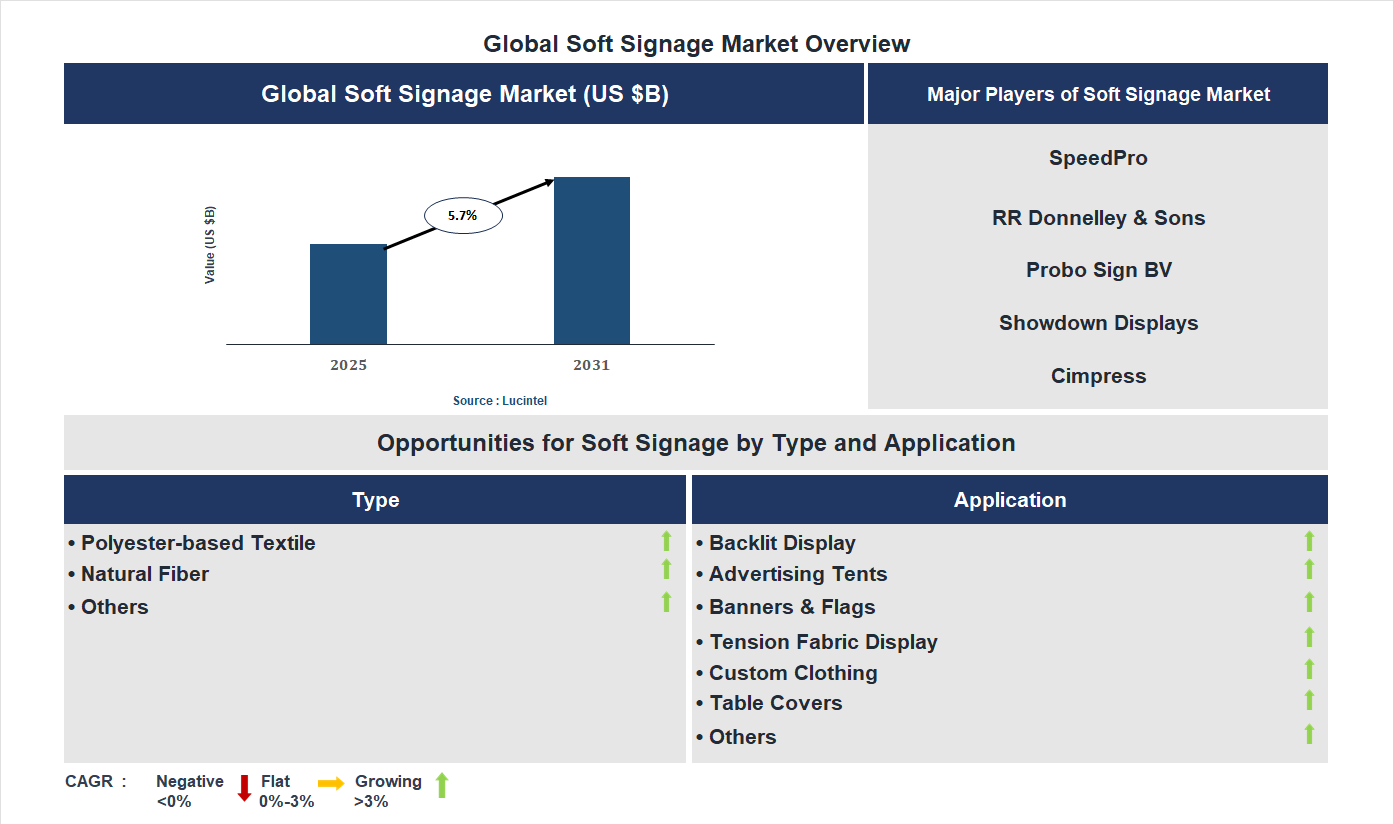
Key data points: The growth forecast = 5.7% annually for the next 7 years. Scroll below to get more insights. This market report covers trends, opportunities and forecasts in soft signage market to 2031 by type (polyester-based textile, natural fiber, and others), application (backlit display, advertising tents, banners & flags, tension fabric display, custom clothing, table covers, and others), and region (North America, Europe, Asia Pacific, and the Rest of the World)
We'll send your sample report shortly.
• Lucintel forecasts that, within the type category, polyester-based textile is expected to witness higher growth over the forecast period.
• Within the application category, backlit display is expected to witness the highest growth.
• In terms of region, APAC is expected to witness the highest growth over the forecast period. Gain valuable insights for your business decisions with our comprehensive 150+ page report. Sample figures with some insights are shown below.
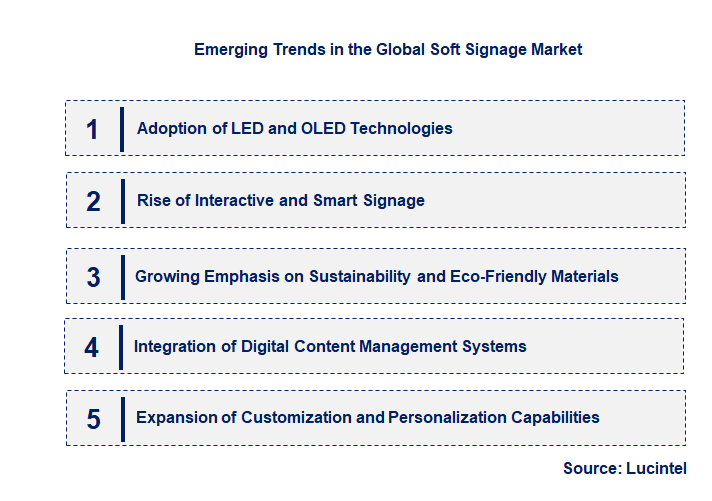
• Adoption of LED and OLED Technologies: The integration of LED and OLED displays in soft signage is revolutionizing visual quality. These technologies offer brighter, more vibrant images with better contrast and energy efficiency. They enable dynamic content updates, making signage more engaging and versatile. As costs decrease, more businesses are adopting these solutions for both indoor and outdoor applications, leading to increased market penetration and a shift toward high-definition, eye-catching displays that attract consumer attention effectively.
• Rise of Interactive and Smart Signage: Interactive soft signage incorporates touchscreens, motion sensors, and augmented reality, creating immersive experiences for viewers. These smart displays facilitate real-time engagement, data collection, and personalized content delivery. The impact is significant, as it enhances customer interaction, improves brand recall, and provides valuable insights into consumer behavior. This trend is driven by advancements in IoT and AI, making signage more responsive and tailored to individual preferences, thereby transforming traditional advertising into a two-way communication channel.
• Growing Emphasis on Sustainability and Eco-Friendly Materials: Environmental concerns are prompting manufacturers to develop sustainable soft signage solutions. This includes using recyclable, biodegradable, and low-energy materials, as well as incorporating energy-efficient lighting options. The shift toward eco-friendly signage reduces carbon footprints and aligns with corporate social responsibility goals. As consumers become more environmentally conscious, brands adopting sustainable signage are gaining favor, which is influencing market growth and encouraging innovation in green materials and manufacturing processes.
• Integration of Digital Content Management Systems: The deployment of advanced content management systems (CMS) allows for seamless control and scheduling of digital signage content. These systems enable remote updates, real-time content changes, and analytics tracking, making signage more adaptable and efficient. The impact is a significant reduction in operational costs and increased flexibility for businesses to tailor messages to specific audiences or events. This trend supports the shift from static to dynamic signage, empowering organizations to deliver timely, relevant content that enhances engagement and ROI.
• Expansion of Customization and Personalization Capabilities: Customizable soft signage solutions are gaining popularity, allowing brands to tailor displays to specific audiences, locations, or campaigns. Personalization features include variable data printing, adaptive content, and modular designs. This trend enhances relevance and emotional connection with viewers, leading to higher engagement rates. The ability to quickly adapt signage to different contexts and preferences is transforming the market, making soft signage more versatile and effective in diverse settings, from retail to corporate environments. In summary, these trends are collectively reshaping the soft signage market by making displays more vibrant, interactive, sustainable, manageable, and personalized. They are driving innovation, expanding application possibilities, and enabling brands to communicate more effectively in an increasingly digital and environmentally conscious world.
• Adoption of LED Technology: The integration of LED technology into soft signage has revolutionized visual displays by offering brighter, more energy-efficient, and longer-lasting options. This development enhances visual appeal and reduces operational costs, making LED-based signage more attractive for retail, events, and corporate branding. The increased adoption is driving market growth and expanding application possibilities.
• Rise of Interactive Signage: Interactive soft signage, incorporating touchscreens and motion sensors, is gaining popularity. This innovation allows consumers to engage directly with displays, providing personalized experiences and real-time information. It boosts customer engagement and brand interaction, especially in retail and entertainment sectors, thereby expanding market opportunities.
• Sustainability and Eco-Friendly Materials: There is a growing emphasis on using sustainable, recyclable, and eco-friendly materials in soft signage production. This shift responds to environmental concerns and regulatory pressures, appealing to eco-conscious consumers and businesses. The adoption of green materials is fostering a more sustainable market and opening avenues for eco-friendly product lines.
• Customization and Personalization: Advances in digital printing and flexible materials enable highly customizable soft signage solutions. Businesses can now tailor designs, sizes, and messages to specific campaigns or audiences quickly and cost-effectively. This trend enhances brand differentiation and customer targeting, fueling demand across various sectors.
• Integration of Digital and Traditional Signage: The convergence of digital displays with traditional soft signage offers hybrid solutions that combine static and dynamic content. This integration provides versatile advertising options, allowing real-time updates and multimedia content. It improves marketing effectiveness and broadens application scope, especially in retail, transportation, and hospitality industries. In summary, these developments are significantly impacting the soft signage market by driving innovation, enhancing sustainability, and increasing consumer engagement. They are enabling market players to offer more versatile, cost-effective, and environmentally friendly solutions, thereby fueling growth and expanding application areas. As these trends continue, the market is poised for sustained expansion and technological evolution.
• Retail: Enhanced Customer Engagement : Soft signage enables retailers to create eye-catching displays and interactive environments, attracting more customers and increasing sales. Its flexibility allows for frequent updates and customization, making it ideal for promotional campaigns and seasonal displays. This growth opportunity boosts retail marketing effectiveness and enhances in-store experiences, leading to higher customer retention and brand loyalty.
• Transportation: Dynamic Wayfinding Solutions : In transportation hubs like airports, train stations, and bus terminals, soft signage offers adaptable wayfinding and informational displays. Its lightweight and portable nature facilitate easy installation and updates, improving passenger experience and operational efficiency. This application reduces congestion and confusion, making travel more seamless and enhancing overall transit system effectiveness.
• Hospitality: Immersive Guest Experiences : Hotels, resorts, and entertainment venues utilize soft signage to craft immersive environments and personalized messaging. These displays can be easily changed to suit events or themes, elevating guest engagement and satisfaction. The growth in this area supports brand differentiation and enhances the overall ambiance, attracting more visitors and increasing revenue.
• Corporate: Internal Communication and Branding : Corporations leverage soft signage for internal communication, branding, and event displays. Its versatility allows for dynamic presentations during conferences, meetings, and corporate events, fostering a cohesive brand image. This opportunity improves employee engagement and streamlines communication, contributing to a more productive and unified organizational culture.
• Entertainment: Interactive and Immersive Installations : The entertainment industry adopts soft signage for interactive exhibits, stage backgrounds, and immersive experiences. Its adaptability supports innovative storytelling and audience engagement, creating memorable experiences. This growth opportunity drives demand for creative visual solutions, expanding the market and opening new revenue streams for entertainment providers. In summary, these growth opportunities across retail, transportation, hospitality, corporate, and entertainment applications are significantly impacting the soft signage market. They foster innovation, enhance user engagement, and provide flexible, cost-effective solutions that meet evolving consumer and business needs. As a result, the market is poised for sustained growth, driven by technological advancements and increasing adoption across diverse sectors.
• Technological Advancements: The rapid development of LED, LCD, and OLED display technologies has significantly enhanced the quality, brightness, and energy efficiency of soft signage. These innovations enable more vibrant visuals and interactive features, attracting advertisers and retailers seeking engaging content. As technology becomes more affordable and accessible, adoption rates increase across various sectors, including retail, hospitality, and transportation. The integration of IoT and AI further enhances content management and personalization, making soft signage more versatile and effective. This continuous innovation fuels market growth by expanding application possibilities and improving user experience.
• Growing Digital Advertising Demand: The surge in digital advertising expenditure worldwide is a major driver for the soft signage market. Businesses are shifting from traditional print and static displays to dynamic digital signage to capture consumer attention more effectively. Soft signage offers flexibility in content updates, targeted messaging, and real-time data integration, making it highly attractive for marketing campaigns. The increasing adoption of omnichannel marketing strategies and the need for immersive brand experiences further boost demand. As companies seek innovative ways to engage customers, soft signage becomes a preferred medium, driving market expansion across multiple industries.
• Retail Sector Expansion: The retail industry is increasingly adopting soft signage to enhance in-store experiences and promote products. Digital displays attract customers, provide product information, and create immersive environments that influence purchasing decisions. The growth of e-commerce and experiential retail concepts also contribute to the demand for engaging visual displays. Retailers recognize the value of soft signage in differentiating their brand and increasing foot traffic. As retail outlets continue to modernize and invest in experiential marketing, the soft signage market benefits from sustained growth, especially in emerging markets where retail infrastructure is expanding rapidly.
• Cost-Effective Marketing Solutions: Soft signage offers a cost-effective alternative to traditional advertising methods, providing high visibility with lower long-term costs. Digital displays can be reused and updated easily, reducing the need for printed materials and associated expenses. The ability to run multiple campaigns on a single display and schedule content remotely enhances operational efficiency. As businesses seek affordable yet impactful marketing tools, soft signage becomes an attractive option. The decreasing costs of display hardware and content management systems further facilitate adoption, making soft signage accessible to small and medium-sized enterprises and broadening market reach.
• Increasing Infrastructure Development: The expansion of urban infrastructure, including transportation hubs, airports, and public spaces, creates new opportunities for soft signage deployment. Governments and private entities invest in digital infrastructure to improve communication and enhance public engagement. The deployment of smart city initiatives incorporates digital signage for information dissemination, advertising, and wayfinding. This infrastructure development supports the proliferation of soft signage in high-traffic areas, boosting market growth. Additionally, the integration of 5G connectivity enables real-time content updates and interactive experiences, further expanding the potential applications and adoption of soft signage solutions. The challenges facing this soft signage market include:
• High Initial Investment Costs: Despite decreasing hardware prices, the upfront costs for deploying soft signage can be substantial, especially for large-scale installations. Expenses include digital displays, content management systems, installation, and maintenance. Small and medium-sized enterprises may find these costs prohibitive, limiting market penetration in certain segments. Additionally, ongoing expenses for content updates and hardware upgrades can strain budgets. This financial barrier can slow adoption rates, particularly in price-sensitive markets, and hinder the overall growth potential of the soft signage industry.
• Technological Obsolescence: Rapid technological advancements pose a significant challenge for the soft signage market. Display technologies and content management systems evolve quickly, making existing installations obsolete or less effective over time. Businesses may hesitate to invest heavily in current solutions fearing rapid obsolescence, leading to shorter product lifecycles and increased replacement costs. This constant need for upgrades can deter adoption and strain budgets, especially for organizations with limited resources. Manufacturers and service providers must continuously innovate to stay competitive, which can be resource-intensive and impact market stability.
• Regulatory and Compliance Issues: The soft signage market faces regulatory challenges related to advertising standards, data privacy, and content regulations. Different regions have varying rules governing digital advertising, which can complicate deployment and compliance. Privacy laws, such as GDPR, require strict data management practices, especially for interactive signage collecting user data. Non-compliance can result in legal penalties and damage to brand reputation. Navigating these regulatory landscapes requires significant effort and resources, potentially delaying projects and increasing costs. These hurdles can restrict market growth, particularly in regions with stringent regulatory environments. In summary, the soft signage market is driven by technological innovations, increasing digital advertising investments, retail sector growth, cost-effective marketing solutions, and infrastructure development. However, high initial costs, rapid technological changes, and regulatory complexities pose significant challenges. These factors collectively influence market dynamics, requiring stakeholders to strategize effectively. While opportunities for expansion are substantial, addressing these challenges is crucial for sustainable growth. Overall, the markets future depends on balancing innovation with cost management and regulatory compliance, ensuring continued adoption and development.
• SpeedPro
• RR Donnelley & Sons
• Probo Sign BV
• Showdown Displays
• Cimpress
• Image Options
• Sapti
• Studio Kolor Sp. z o.o.
• e-banner
• Northern Flags
• Polyester-based Textile
• Natural Fiber
• Others
• Backlit Display
• Advertising Tents
• Banners & Flags
• Tension Fabric Display
• Custom Clothing
• Table Covers
• Others
• North America
• Europe
• Asia Pacific
• The Rest of the World
• United States: The US soft signage market has seen rapid growth due to the expanding advertising and retail sectors. Innovations in digital printing and eco-friendly materials are gaining popularity. Major players are investing in automation and smart signage solutions, enhancing customization options. The adoption of sustainable practices is also increasing, driven by consumer demand and regulatory pressures. E-commerce and experiential marketing are further fueling demand for versatile, high-quality soft signage products. The market is expected to continue expanding as technological integration and sustainability become central themes.
• China: China remains a dominant force in the soft signage market, with significant manufacturing capabilities and a large domestic consumer base. The country is focusing on developing eco-friendly materials and reducing production costs through technological innovations. The government’s support for green initiatives is encouraging sustainable product development. Rapid urbanization and infrastructure projects are boosting demand for advertising signage. Additionally, China is investing in smart signage solutions, integrating digital and interactive features to enhance consumer engagement. The market is characterized by aggressive price competition and increasing exports to global markets.
• Germany: Germany’s soft signage market is characterized by high-quality standards and a focus on sustainability. The country is emphasizing eco-friendly materials and energy-efficient manufacturing processes. Technological advancements such as digital printing and 3D signage are gaining traction. The demand from the automotive, retail, and event sectors is driving growth. Germany’s strong emphasis on innovation and environmental responsibility is shaping the market’s development. Additionally, collaborations between manufacturers and designers are fostering the creation of customized, premium signage solutions. The market is expected to grow steadily, with a focus on sustainable and technologically advanced products.
• India: The Indian soft signage market is witnessing rapid expansion due to increasing urbanization, retail growth, and a rising advertising industry. The adoption of digital printing technology is increasing, enabling more vibrant and customizable signage. Local manufacturers are focusing on cost-effective, eco-friendly materials to cater to diverse customer needs. Government initiatives promoting Make in India and infrastructure development are further boosting demand. The market is also seeing a rise in small and medium enterprises adopting soft signage for branding. As awareness of sustainable practices grows, eco-friendly options are gaining popularity. The sector is poised for significant growth in the coming years.
• Japan: Japan’s soft signage market is driven by technological innovation and a focus on quality and sustainability. The country is adopting advanced digital printing techniques and smart signage solutions for various applications, including retail and transportation. There is a strong emphasis on eco-friendly materials and energy-efficient manufacturing processes. The aging population and urban development projects are creating new opportunities for signage solutions. Japanese companies are investing in R&D to develop durable, high-performance products with smart features. The market is expected to grow steadily, with a focus on integrating technology and sustainability to meet evolving consumer and business needs.


• SpeedPro
• RR Donnelley & Sons
• Probo Sign BV
• Showdown Displays
• Cimpress
• Image Options
• Sapti
• Studio Kolor Sp. z o.o.
• e-banner
• Northern Flags Q5. Which soft signage market segment will be the largest in future? Answer: Lucintel forecasts that, within the type category, polyester-based textile is expected to witness higher growth over the forecast period. Q6. In soft signage market, which region is expected to be the largest in next 5 years? Answer: In terms of region, APAC is expected to witness the highest growth over the forecast period. Q7. Do we receive customization in this report? Answer: Yes, Lucintel provides 10% customization without any additional cost.


Choose a license that fits your team. Instant PDF delivery.
Prices exclude taxes. Instant delivery. Custom licensing available on request.
Market Report · May 16, 2026
Market Report · May 16, 2026
Market Report · May 16, 2026
Trusted partner for strategic intelligence and business growth


Receive a complimentary market analysis tailored to your industry. Our analysts will identify key growth opportunities and competitive dynamics specific to your business.

Market size, growth rate, and key trend analysis for your specific sector.

Top competitor positioning and market share analysis.

Strategic recommendations backed by data-driven insights.
Get curated market intelligence and competitive moves straight to your inbox.
By subscribing, you agree to receive our monthly insights. Unsubscribe anytime.
Receive a complimentary market analysis tailored to your industry. Our analysts will identify key growth opportunities and competitive dynamics specific to your business.
Market size, growth rate, and key trend analysis for your specific sector.
Top competitor positioning and market share analysis.
Strategic recommendations backed by data-driven insights.
Get curated market intelligence, emerging trends, and competitive moves straight to your inbox each month.
By subscribing, you agree to receive our monthly insights. Unsubscribe anytime.
We'll send your sample report shortly.