
Market Report · July 29, 2026

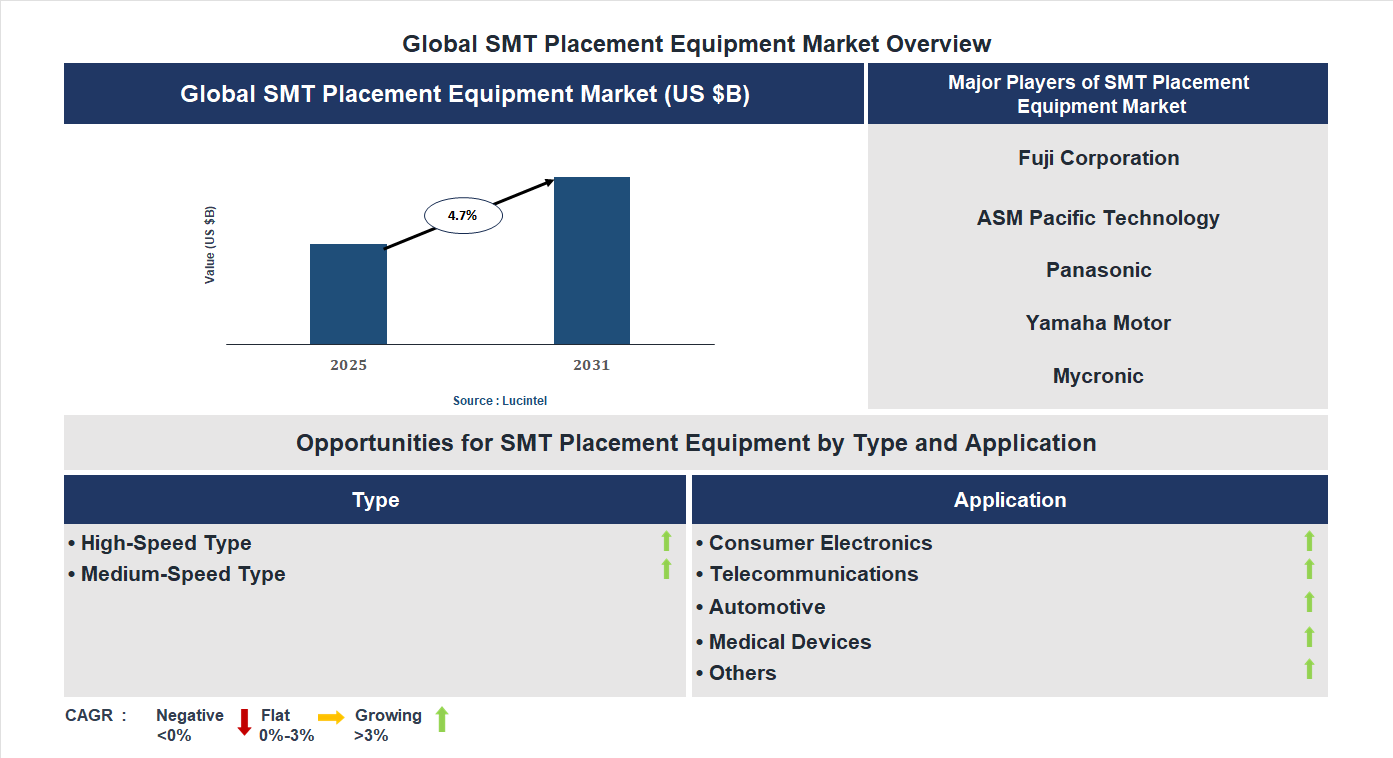
Key data points: The growth forecast = 4.7% annually for the next 7 years. Scroll below to get more insights. This market report covers trends, opportunities and forecasts in SMT placement equipment market to 2031 by type (high-speed type and medium-speed type), application (consumer electronics, telecommunications, automotive, medical devices, and others), and region (North America, Europe, Asia Pacific, and the Rest of the World)
We'll send your sample report shortly.
• Lucintel forecasts that, within the type category, high-speed type is expected to witness higher growth over the forecast period.
• Within the application category, automotive is expected to witness the highest growth.
• In terms of region, APAC is expected to witness the highest growth over the forecast period. Gain valuable insights for your business decisions with our comprehensive 150+ page report. Sample figures with some insights are shown below.
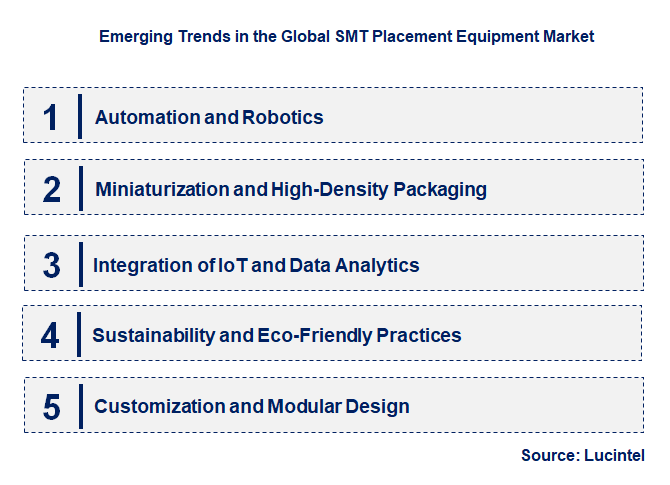
• Automation and Robotics: Increasing adoption of automated systems and robotic arms enhances precision and speed in component placement. This trend reduces human error, increases throughput, and lowers labor costs, making manufacturing more efficient. Advanced automation also enables 24/7 production capabilities, essential for meeting high-volume demands. As technology advances, more sophisticated AI-driven systems are being integrated, allowing for real-time adjustments and predictive maintenance, which further optimize production lines. This shift toward automation is transforming traditional manufacturing processes into highly intelligent, flexible operations.
• Miniaturization and High-Density Packaging: The demand for smaller, more powerful electronic devices drives the need for high-precision placement equipment capable of handling tiny components and dense circuit boards. This trend pushes equipment manufacturers to develop tools with higher accuracy, finer pitch capabilities, and better alignment features. The impact is significant, enabling the production of compact smartphones, wearables, and IoT devices. As miniaturization continues, equipment must also support complex multi-layer assemblies, demanding innovations in nozzle design, vision systems, and process control to ensure quality and reliability.
• Integration of IoT and Data Analytics: The incorporation of Internet of Things (IoT) technology into SMT equipment allows real-time monitoring, data collection, and remote management. Data analytics helps identify inefficiencies, predict maintenance needs, and optimize production schedules. This connectivity enhances transparency and control over manufacturing processes, reducing downtime and improving quality. Companies leveraging IoT can quickly adapt to changing demands and troubleshoot issues proactively. The integration of these digital tools is creating smarter factories, enabling manufacturers to achieve higher productivity and better product consistency.
• Sustainability and Eco-Friendly Practices: Environmental concerns are prompting manufacturers to adopt greener practices, such as energy-efficient equipment, waste reduction, and the use of eco-friendly materials. Equipment with lower power consumption and minimal waste generation aligns with global sustainability goals. This trend not only reduces operational costs but also enhances corporate social responsibility profiles. Innovations include recyclable nozzles, energy-saving modes, and environmentally safe cleaning processes. As regulations tighten and consumer awareness grows, sustainability is becoming a key differentiator in the SMT placement equipment market.
• Customization and Modular Design: The market is shifting toward flexible, customizable, and modular equipment solutions that can be tailored to specific manufacturing needs. Modular systems allow easy upgrades, maintenance, and reconfiguration, supporting diverse product lines and rapid changeovers. This trend provides manufacturers with agility, reducing downtime and investment costs. Customization also enables integration with other manufacturing systems, fostering seamless workflows. As product complexity increases, modular and adaptable equipment becomes essential for maintaining competitiveness and meeting evolving technological standards. In summary, these emerging trends—automation, miniaturization, IoT integration, sustainability, and modular design—are collectively transforming the SMT placement equipment market. They are driving increased efficiency, precision, and flexibility, enabling manufacturers to meet the demands of a rapidly evolving electronics industry. These developments are fostering smarter, more sustainable, and highly adaptable manufacturing environments, positioning companies to thrive in the competitive landscape.
• Automation Integration: Companies like Panasonic and samsung are incorporating advanced automation features into their SMT placement equipment, enabling higher throughput and reduced manual intervention. This development improves efficiency, minimizes errors, and accelerates production cycles, making manufacturing more cost-effective and reliable.
• AI and Machine Learning: Manufacturers such as Fuji and juki are integrating AI and machine learning algorithms into their equipment to optimize placement accuracy and predictive maintenance. This innovation reduces downtime, enhances precision, and allows for real-time adjustments, significantly boosting overall productivity.
• Sustainability Initiatives: Firms like assembleon are focusing on eco-friendly designs, including energy-efficient components and recyclable materials. These initiatives reduce the environmental footprint of SMT equipment, align with global sustainability goals, and appeal to environmentally conscious consumers and regulators.
• Miniaturization and High-Speed Placement: Companies like panasonic are developing smaller, faster placement machines capable of handling increasingly compact and complex electronic components. This development supports the trend toward miniaturization in electronics, enabling manufacturers to produce more sophisticated devices with higher component densities.
• Smart Factory Integration: Industry players such as yamaha are advancing towards fully integrated smart factory solutions, combining SMT placement equipment with IoT and data analytics. This integration facilitates real-time monitoring, remote management, and enhanced supply chain coordination, leading to increased operational efficiency. In summary, these recent developments are significantly transforming the SMT placement equipment market by enhancing automation, precision, sustainability, and connectivity. These innovations are enabling manufacturers to meet rising global demand more efficiently, reduce costs, and adopt more sustainable practices, thereby fostering a more competitive and resilient industry landscape.
• Consumer Electronics: Increasing demand for smartphones, tablets, and wearable devices is driving growth. Companies like samsung and apple are adopting advanced SMT equipment to enhance production speed and precision, reducing time-to-market and costs. This trend boosts market revenue and encourages innovation in miniaturization and multi-functional assembly solutions.
• Automotive Industry: The shift towards electric and autonomous vehicles necessitates high-precision electronic components. automotive manufacturers are investing in sophisticated SMT placement equipment to ensure reliability and safety standards. This growth enhances the market by expanding applications in automotive electronics, sensors, and control units.
• Healthcare Sector: The rising adoption of medical devices and diagnostic equipment requires compact, reliable electronic assemblies. companies like medtronic are leveraging advanced SMT solutions to improve device performance and compliance with regulatory standards, opening new avenues for market expansion in medical electronics.
• Industrial Automation: The increasing integration of IoT and Industry 4.0 concepts demands smart, flexible SMT equipment capable of handling complex assemblies. manufacturers are developing adaptive, high-speed machines to meet these needs, boosting productivity and enabling customized manufacturing solutions.
• Telecommunications: The rollout of 5G infrastructure and devices necessitates high-volume, high-precision electronic assembly. telecom equipment providers are adopting cutting-edge SMT placement systems to accelerate deployment and improve network performance, significantly impacting market growth. In summary, these key growth opportunities across applications are transforming the SMT placement equipment market by fostering innovation, increasing production efficiency, and expanding into new sectors. Companies like panasonic, juki, and asm international are capitalizing on these trends, which collectively drive market expansion and technological advancement, shaping a dynamic future for SMT assembly solutions.
• Technological Innovation: The continuous development of advanced placement machines with higher speed, accuracy, and automation capabilities significantly boosts market growth. Innovations such as AI integration and IoT connectivity enable manufacturers to improve efficiency, reduce errors, and meet increasing demand for miniaturized, complex electronic components. These technological advancements also facilitate the production of smarter devices, driving demand for sophisticated SMT equipment. As electronics become more complex, the need for cutting-edge placement solutions intensifies, making innovation a critical driver for market expansion.
• Growing Electronics Industry: The surge in consumer electronics, automotive electronics, and industrial automation fuels the demand for SMT placement equipment. The proliferation of smartphones, wearables, and IoT devices necessitates high-volume, precise assembly lines, which are supported by advanced SMT machinery. The expanding electronics manufacturing hubs in Asia-Pacific and other regions further contribute to this growth, creating a robust market environment. As electronic products become more integrated and compact, the need for efficient placement equipment becomes increasingly vital, propelling market growth.
• Economic Development in Emerging Markets: Rapid economic growth in countries like China, India, and Southeast Asian nations enhances manufacturing capabilities and infrastructure. This economic upliftment leads to increased investments in electronics manufacturing facilities, boosting demand for SMT placement equipment. The expansion of local industries and the attraction of foreign direct investment foster a conducive environment for market growth. Additionally, rising disposable incomes and consumer demand in these regions support the adoption of advanced electronic products, indirectly driving the need for sophisticated SMT solutions.
• Regulatory and Environmental Standards: Stringent regulations related to electronic waste management, energy efficiency, and safety standards influence the market. Manufacturers are compelled to adopt eco-friendly and energy-efficient equipment, which often incorporates the latest technological features. Compliance with these standards encourages innovation and upgrades in SMT machinery, fostering a competitive edge. Moreover, regulatory frameworks can also create barriers for new entrants, shaping market dynamics and encouraging existing players to invest in R&D for compliant solutions. The challenges facing this SMT placement equipment market include:
• High Capital Investment: The initial cost of acquiring advanced SMT placement equipment is substantial, often deterring small and medium-sized enterprises from adopting the latest technology. Maintenance, upgrades, and training further add to operational expenses. This high capital requirement limits market penetration in cost-sensitive regions and constrains smaller manufacturers from competing effectively. As technology evolves rapidly, continuous investment is necessary to stay competitive, which can strain financial resources and impact overall market growth.
• Rapid Technological Obsolescence: The fast-paced nature of technological innovation leads to frequent product upgrades and obsolescence. Companies must continually invest in new equipment to remain competitive, which can be costly and disruptive. This rapid change also results in increased waste and challenges related to equipment lifecycle management. Manufacturers face pressure to balance innovation with cost-effectiveness, and failure to keep pace can result in loss of market share.
• Stringent Regulatory Compliance: Evolving regulations related to environmental impact, safety, and quality standards impose additional costs and operational complexities. Companies must invest in R&D to develop compliant equipment, which can delay product launches and increase expenses. Non-compliance risks legal penalties and damage to reputation, making regulatory adherence a critical but challenging aspect of market participation. Navigating diverse standards across regions further complicates compliance efforts for global players. In summary, the SMT Placement Equipment Market is driven by technological advancements, expanding electronics industries, economic growth in emerging markets, and regulatory support. However, high capital costs, rapid technological changes, and strict regulatory requirements pose significant challenges. These factors collectively influence market dynamics, requiring stakeholders to innovate continuously, invest strategically, and adapt to evolving standards. The interplay of drivers and challenges will shape the future landscape, determining the pace and nature of market growth and competition.
• Fuji Corporation
• ASM Pacific Technology
• Panasonic
• Yamaha Motor
• Mycronic
• Juki
• Hanwha Precision Machinery
• Kulicke & Soffa
• Universal Instruments
• Europlacer
• High-Speed Type
• Medium-Speed Type
• Consumer Electronics
• Telecommunications
• Automotive
• Medical Devices
• Others
• North America
• Europe
• Asia Pacific
• The Rest of the World
• United States: The US market is witnessing significant innovation with companies like juki and panasonic developing high-speed, precise placement machines. Increased adoption of automation and Industry 4.0 integration is boosting productivity. Major investments are being made in R&D, and collaborations between tech firms and manufacturers are accelerating advancements. The US government’s focus on manufacturing resilience and supply chain security further supports growth in this sector.
• China: China remains the largest market for SMT placement equipment, driven by rapid industrialization and a booming electronics manufacturing sector. Companies such as smtmax and yamaha are expanding their production capacities and technological capabilities. The government’s policies favor automation and high-tech manufacturing, leading to increased adoption of advanced placement systems. China is also focusing on developing indigenous technologies to reduce reliance on imports, fostering innovation and local industry growth.
• Germany: Germany’s market is characterized by high-quality, precision equipment from companies like assembla and panasonic. The focus is on integrating automation with Industry 4.0 standards to enhance efficiency and flexibility. The country’s strong automotive and industrial sectors are key drivers, demanding sophisticated SMT solutions. Germany is also investing in sustainable manufacturing practices, promoting energy-efficient and eco-friendly equipment.
• India: India’s SMT placement market is rapidly expanding, supported by government initiatives like Make in India and Digital India. Companies such as koyo and yamaha are establishing manufacturing bases and upgrading existing facilities. The focus is on affordable, scalable solutions to meet the growing demand for electronics in sectors like consumer electronics, automotive, and telecommunications. Skill development and infrastructure improvements are also key priorities to support this growth.
• Japan: Japan remains a leader in SMT technology, with companies like juki and panasonic pioneering innovations in high-speed, high-precision placement equipment. The market is driven by the automotive, consumer electronics, and industrial sectors. Japan emphasizes R&D, automation, and miniaturization to maintain its competitive edge. The country is also exploring sustainable manufacturing practices and integrating IoT for smarter production lines, ensuring continued leadership in the global market.


• Fuji Corporation
• ASM Pacific Technology
• Panasonic
• Yamaha Motor
• Mycronic
• Juki
• Hanwha Precision Machinery
• Kulicke & Soffa
• Universal Instruments
• Europlacer Q5. Which SMT placement equipment market segment will be the largest in future? Answer: Lucintel forecasts that, within the type category, high-speed type is expected to witness higher growth over the forecast period. Q6. In SMT placement equipment market, which region is expected to be the largest in next 5 years? Answer: In terms of region, APAC is expected to witness the highest growth over the forecast period. Q7. Do we receive customization in this report? Answer: Yes, Lucintel provides 10% customization without any additional cost.


Choose a license that fits your team. Instant PDF delivery.
Prices exclude taxes. Instant delivery. Custom licensing available on request.
Market Report · July 29, 2026
Market Report · July 20, 2026
Market Report · July 20, 2026
Trusted partner for strategic intelligence and business growth


Receive a complimentary market analysis tailored to your industry. Our analysts will identify key growth opportunities and competitive dynamics specific to your business.

Market size, growth rate, and key trend analysis for your specific sector.

Top competitor positioning and market share analysis.

Strategic recommendations backed by data-driven insights.
Get curated market intelligence and competitive moves straight to your inbox.
By subscribing, you agree to receive our monthly insights. Unsubscribe anytime.
Receive a complimentary market analysis tailored to your industry. Our analysts will identify key growth opportunities and competitive dynamics specific to your business.
Market size, growth rate, and key trend analysis for your specific sector.
Top competitor positioning and market share analysis.
Strategic recommendations backed by data-driven insights.
Get curated market intelligence, emerging trends, and competitive moves straight to your inbox each month.
By subscribing, you agree to receive our monthly insights. Unsubscribe anytime.
We'll send your sample report shortly.