
Market Report · June 29, 2026

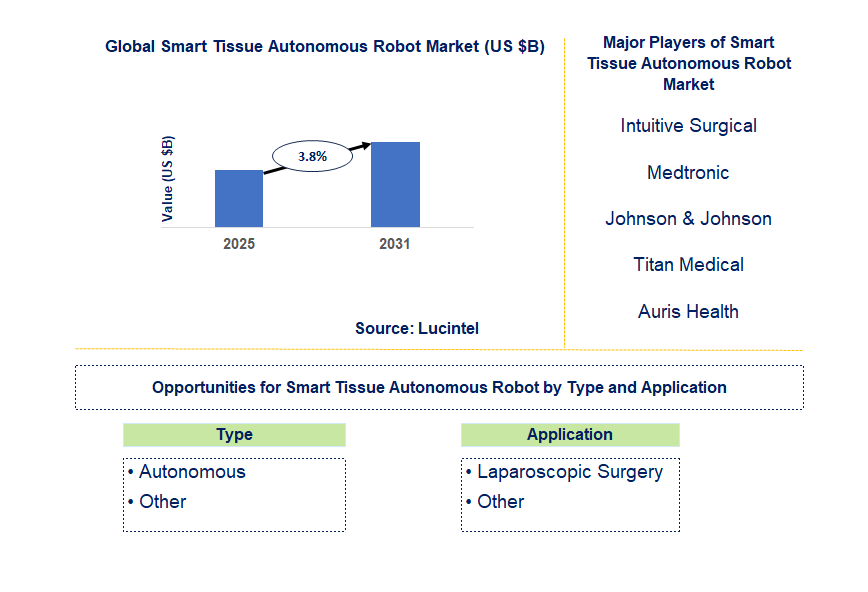
Key data points: The growth forecast = 3.8% annually for the next 7 years. Scroll below to get more insights. This market report covers Trends, opportunities and forecasts in smart tissue autonomous robot market to 2031 by type (autonomous and other), application (laparoscopic surgery and other), and region (North America, Europe, Asia Pacific, and the Rest of the World)
We'll send your sample report shortly.
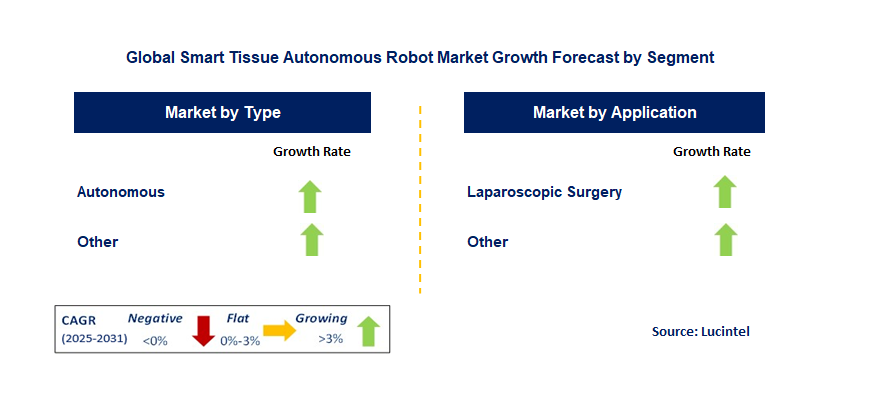
• Lucintel forecasts that, within the type category, autonomous is expected to witness higher growth over the forecast period.
• Within the application category, laparoscopic surgery is expected to witness higher growth.
• In terms of region, APAC is expected to witness the highest growth over the forecast period.
• Integration of Artificial Intelligence: The integration of artificial intelligence in smart tissue autonomous robots is revolutionizing medical procedures by enabling real-time decision-making and adaptive control. Advanced algorithms process complex data from sensors and imaging systems to guide robotic actions with high precision. This capability allows robots to learn from each procedure and continuously enhance performance. Predictive analytics anticipates potential complications during surgery, increasing overall safety and efficiency. As a result, these systems are becoming indispensable in both routine and complex procedures, leading to improved patient outcomes and operational efficiencies in hospitals worldwide.
• Advanced Sensor and Imaging Technologies: Advanced sensor and imaging technologies are critical for the success of smart tissue autonomous robots. High-resolution imaging and real-time three-dimensional mapping, combined with precise sensor networks, provide accurate monitoring of the surgical field. The resulting data guide robotic instruments during delicate procedures and reduce the risk of tissue damage. Enhanced imaging improves visualization, which assists surgeons in making well-informed decisions. The integration of these technologies not only increases procedural accuracy but also reduces operation times and risks, leading to better patient outcomes and higher overall efficiency in surgical environments.
• Collaborative Robotics and Human Robot Interaction: Collaborative robotics is emerging in the smart tissue autonomous robot market with systems designed to work alongside human surgeons. These robots assist with routine tasks while allowing medical professionals to retain control over critical decisions. The focus on effective human robot interaction ensures that technology complements medical expertise rather than replaces it. Such collaboration enhances precision and safety by combining human judgment with robotic accuracy. User friendly interfaces and robust safety features facilitate seamless integration into operating rooms, thereby increasing surgical efficiency and overall patient care.
• Regulatory Standardization and Quality Assurance: Regulatory standardization is becoming increasingly important as smart tissue autonomous robots gain prominence in medical applications. Standardized guidelines and quality assurance protocols are being established to ensure that these systems meet strict safety and performance criteria. The development of global benchmarks promotes consistent manufacturing practices and operational reliability. With clear regulatory frameworks, manufacturers can accelerate innovation while maintaining rigorous safety standards. This evolution in regulation builds trust among healthcare providers and patients, facilitating the broader adoption of advanced robotic systems in clinical settings.
• Integration with Digital Health and Data Analytics: The integration of smart tissue autonomous robots with digital health platforms and data analytics is a significant trend in the market. This convergence enables the comprehensive collection and analysis of clinical data to optimize surgical procedures and outcomes. Digital integration supports remote monitoring, predictive maintenance, and performance benchmarking of robotic systems. Data analytics provide insights that drive continuous improvement in robot design and functionality. The connected ecosystem created by this integration enhances communication between systems and medical teams, leading to improved surgical precision and operational efficiency.
Emerging trends in the smart tissue autonomous robot market are driving substantial improvements in surgical precision, safety, and efficiency. Advancements in artificial intelligence, sensor technologies, collaborative robotics, regulatory standardization, and digital health integration are redefining autonomous surgical systems. These trends not only enhance operational performance but also improve patient outcomes, setting new industry benchmarks. As these technologies evolve, they are expected to drive the adoption of smart tissue robots further, transforming medical procedures and solidifying their role as a cornerstone of modern healthcare.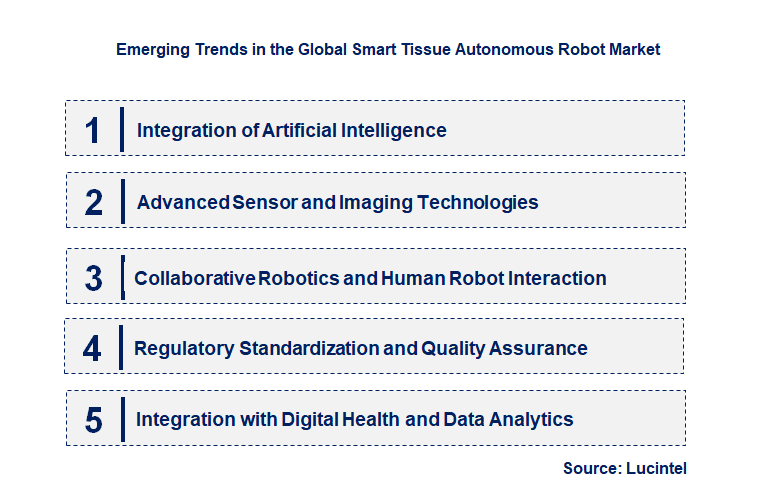
• Breakthrough in Imaging Systems: Recent advancements in imaging systems have significantly enhanced the performance of smart tissue autonomous robots. Innovations such as high resolution, real time three dimensional imaging provide detailed visualization of surgical fields. This improved imaging capability enables better guidance of robotic instruments during complex procedures and increases the precision of tissue manipulation. Enhanced imaging has contributed to reduced operative times and improved patient safety. Continuous advancements in this area promise even greater detail and clarity, driving further innovation and improving outcomes in minimally invasive surgical interventions.
• Enhanced Robot Dexterity: Innovations in robotic design have led to enhanced dexterity and flexibility in smart tissue autonomous robots. New mechanical structures with improved articulation allow for a wider range of motion and superior maneuverability in confined surgical environments. This increased dexterity enables precise, controlled movements during delicate procedures, reducing the risk of tissue damage. The development has improved the adaptability of robotic systems to a variety of surgical tasks, increasing overall efficiency and accuracy. Enhanced dexterity is setting new performance standards in medical robotics and contributes to better surgical outcomes and patient satisfaction.
• Real Time Adaptive Control Systems: The implementation of real-time adaptive control systems in smart tissue autonomous robots has transformed surgical procedures. Advanced algorithms analyze sensor data and adjust robotic movements dynamically during operations. This capability allows robots to respond immediately to changes in the surgical environment, ensuring consistent precision and safety. Adaptive control enhances the responsiveness of the systems and enables them to manage unexpected challenges during procedures. This development has significantly improved the operational efficiency of smart tissue robots and increased their success rates in complex surgical interventions.
• Improved Human Machine Interfaces: Developments in human-machine interfaces have made it easier for surgeons to interact with smart tissue autonomous robots. New user interfaces offer intuitive control and real-time feedback, which facilitate seamless collaboration between human operators and robotic systems. This improved interface reduces the learning curve and increases the precision and efficiency of surgical interventions. Enhanced communication between the surgeon and the robot is critical for optimizing performance and ensuring patient safety. The evolution of these interfaces is a key factor in the successful integration of robotics into clinical practice.
• Streamlined Regulatory Approvals: The smart tissue autonomous robot market has seen progress in regulatory approvals with the establishment of streamlined processes and clearer guidelines. Standardized testing protocols and consistent regulatory frameworks have accelerated the time to market for new robotic systems. This development reduces barriers for manufacturers and promotes faster adoption of advanced robotics in clinical settings. Streamlined approvals ensure that safety and performance standards are maintained while encouraging innovation. The improved regulatory environment is vital for sustaining rapid technological evolution and increasing confidence in the use of smart tissue autonomous robots.
Recent developments in the smart tissue autonomous robot market highlight a phase of rapid innovation. Breakthroughs in imaging, enhanced dexterity, adaptive control systems, improved interfaces, and streamlined regulatory processes are revolutionizing surgical procedures. These advancements have led to higher precision, better patient outcomes, and increased operational efficiency. As technology continues to advance, these developments are expected to drive the adoption of smart tissue autonomous robots in clinical settings further, transforming the landscape of minimally invasive surgery and setting new standards in medical robotics.• Specialized Surgical Procedures: There is a growing opportunity for smart tissue autonomous robots in specialized surgical procedures that demand high precision and minimal invasiveness. Procedures such as neurosurgery, cardiac interventions, and organ transplants benefit from advanced imaging and sensor integration. Autonomous robots provide real-time adjustments and enhanced control during complex operations, thereby reducing the risk of complications. With a rising emphasis on precision medicine and improved patient outcomes, tailored robotic solutions are expected to drive significant market expansion in this segment.
• Diagnostic Imaging and Interventional Procedures: The integration of smart tissue autonomous robots in diagnostic imaging and interventional procedures offers a promising growth opportunity. These robots assist in capturing high-resolution images and performing precise interventions based on real-time data analysis. Enhanced imaging capabilities lead to more accurate diagnoses and targeted treatments, while robotic assistance reduces procedure durations and minimizes errors. This opportunity is particularly relevant in oncology and vascular interventions where precision is critical and can contribute to improved patient outcomes and market growth.
• Rehabilitation and Postoperative Care: The use of smart tissue autonomous robots in rehabilitation and postoperative care represents an emerging growth opportunity. Robotic systems can monitor patient recovery and facilitate targeted therapy sessions following surgical interventions. Continuous feedback and personalized adjustments help accelerate recovery and improve overall treatment efficacy. Integration with digital health platforms allows for remote monitoring and data analytics to optimize care. As healthcare providers seek innovative solutions to improve recovery times and reduce readmissions, the deployment of these robots in rehabilitation is set to expand.
• Remote Surgery and Telemedicine: Remote surgery and telemedicine present key opportunities for smart tissue autonomous robots. Advanced robotics enables precise surgical procedures to be performed remotely, bridging the gap between expert surgeons and patients in underserved regions. Real-time data transmission and robust control systems facilitate effective remote interventions with minimal latency. This capability is particularly valuable in emergency scenarios and in areas lacking specialized medical expertise. Continued improvements in communication infrastructure and telemedicine are expected to drive the adoption of remote robotic surgical solutions further.
• Integration with Digital Health Platforms: A significant growth opportunity exists in integrating smart tissue autonomous robots with digital health platforms. This integration enables comprehensive data collection, real-time monitoring, and analytics of patient outcomes. Combining robotic precision with digital data facilitates optimized surgical procedures and improved postoperative care. Enhanced communication between robotic systems and healthcare providers supports better clinical decision-making. The resulting connected ecosystem paves the way for continuous improvement in robotic performance and operational efficiency, thereby driving market expansion and enhancing overall patient care.
Strategic growth opportunities in the smart tissue autonomous robot market are driving adoption across a range of key applications. Specialized surgical procedures, diagnostic imaging, rehabilitation, remote surgery, and digital health integration are contributing to enhanced patient outcomes and operational efficiencies. As the technology continues to evolve and healthcare systems increasingly embrace advanced robotics, these opportunities are expected to spur significant market expansion and innovation, ultimately transforming medical interventions and setting new standards in patient care.• Intuitive Surgical
• Medtronic
• Johnson & Johnson
• Titan Medical
• Auris Health
• Autonomous
• Other
• Laparoscopic Surgery
• Other
• North America
• Europe
• Asia Pacific
• The Rest of the World
• United States: The United States has seen significant advancements in smart tissue autonomous robots with improvements in imaging and sensor integration. Medical institutions are adopting robots that offer real time analysis and precise manipulation during complex procedures. The integration of artificial intelligence enhances the robot ability to learn from each operation and improve over time. Increased investments in research and collaborative projects between universities and technology firms have resulted in breakthrough designs that increase safety and efficiency. These developments have established the United States as a leader in advanced medical robotics innovation.
• China: In China the smart tissue autonomous robot market is experiencing rapid growth with major investments in research and development. Manufacturers focus on cost effective solutions that integrate advanced robotics with artificial intelligence to improve surgical precision and reduce human error. Government initiatives support the adoption of new medical technologies and promote collaborations between academic institutions and industry. Hospitals are increasingly implementing these systems for both diagnostic and therapeutic applications. The aggressive innovation strategies and supportive regulatory environment have positioned China as a competitive force in the global market.
• Germany: Germany has become a hub for innovative smart tissue autonomous robots owing to its strong engineering and medical research background. The market has seen technological upgrades, including enhanced imaging systems and sophisticated sensor networks that enable precise tissue manipulation. Collaborative efforts between research institutions and medical device manufacturers have produced robots that improve surgical accuracy and safety. A supportive regulatory framework has accelerated the approval of high-quality devices. These advancements have positioned Germany as an influential player in advanced medical robotics.
• India: India is gradually adopting smart tissue autonomous robot technology as the healthcare sector modernizes. Hospitals are beginning to integrate robotic systems that provide minimally invasive procedures with improved accuracy. Increased interest from domestic manufacturers and international collaborators is spurring the development of cost effective solutions suited to local needs. Government incentives and regulatory support are fostering the adoption of advanced robotics. Pilot projects in urban hospitals have demonstrated improved patient care and surgical outcomes, positioning India on a promising growth path in this innovative market.
• Japan: Japan has a long history of technological innovation and is now applying its expertise to smart tissue autonomous robots. Companies develop robots with advanced sensor technologies and precise control systems that facilitate delicate tissue handling during surgical procedures. The integration of artificial intelligence enables real-time analysis and adjustments during operations. Collaborative research between industry and academia has led to rapid advancements in design and functionality. A supportive regulatory environment and a focus on patient safety have resulted in widespread adoption in specialized medical centers, reinforcing Japan's leadership in medical robotics.


• Intuitive Surgical
• Medtronic
• Johnson & Johnson
• Titan Medical
• Auris Health
Q5. Which smart tissue autonomous robot market segment will be the largest in future?

Choose a license that fits your team. Instant PDF delivery.
Prices exclude taxes. Instant delivery. Custom licensing available on request.
Market Report · June 29, 2026
Market Report · May 18, 2026
Trusted partner for strategic intelligence and business growth


Receive a complimentary market analysis tailored to your industry. Our analysts will identify key growth opportunities and competitive dynamics specific to your business.

Market size, growth rate, and key trend analysis for your specific sector.

Top competitor positioning and market share analysis.

Strategic recommendations backed by data-driven insights.
Get curated market intelligence and competitive moves straight to your inbox.
By subscribing, you agree to receive our monthly insights. Unsubscribe anytime.
Receive a complimentary market analysis tailored to your industry. Our analysts will identify key growth opportunities and competitive dynamics specific to your business.
Market size, growth rate, and key trend analysis for your specific sector.
Top competitor positioning and market share analysis.
Strategic recommendations backed by data-driven insights.
Get curated market intelligence, emerging trends, and competitive moves straight to your inbox each month.
By subscribing, you agree to receive our monthly insights. Unsubscribe anytime.
We'll send your sample report shortly.