
Market Report · July 29, 2026

Key data points: The market size in 2035 = $65,942 million, growth forecast = 8.2% annually for the next 8 years. Scroll below to get more insights. This market report covers trends, opportunities and forecasts in smart elevator market to 2035 by component (control system, maintenance system, and communication system), service (new installation, modernization, and maintenance), end use (residential, commercial, institutional, and others), and region (North America, Europe, Asia Pacific, and the Rest of the World)
We'll send your sample report shortly.
• Lucintel forecasts that, within the component category, control system is expected to witness the highest growth over the forecast period.
• Within the end use category, commercial is expected to witness the highest growth.
• In terms of region, APAC is expected to witness the highest growth over the forecast period.
Gain valuable insights for your business decisions with our comprehensive 150+ page report. Sample figures with some insights are shown below.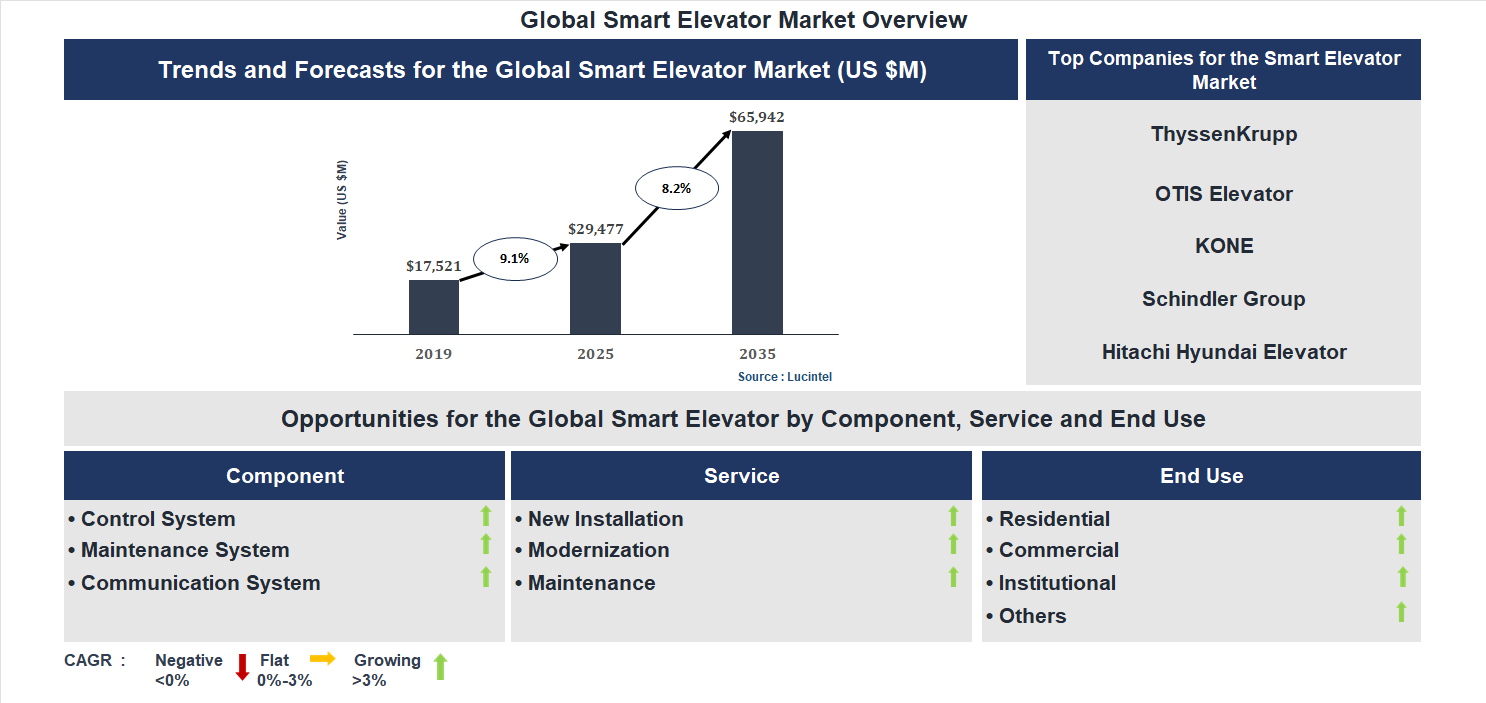
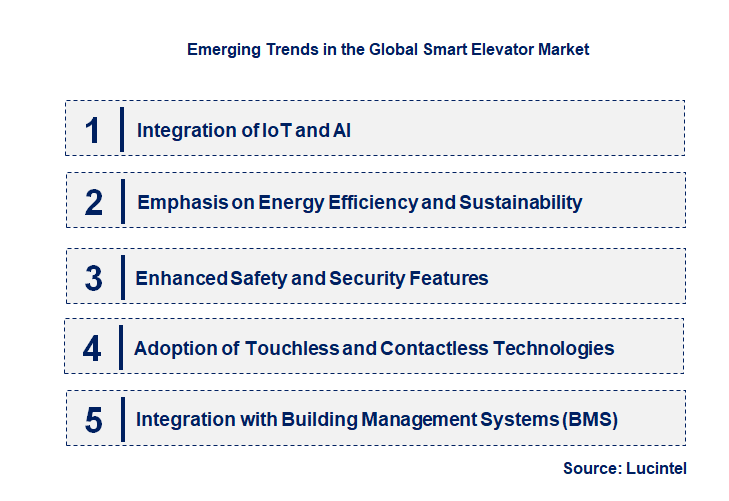
• Integration of IoT and AI: The adoption of Internet of Things (IoT) and Artificial Intelligence (AI) enables real-time monitoring, predictive maintenance, and enhanced user experience. Smart elevators can diagnose issues proactively, reducing downtime and maintenance costs. AI algorithms optimize elevator operations for energy efficiency and traffic management, leading to smoother rides and improved safety. This integration also allows for personalized user interfaces and remote management, making elevators more responsive and intelligent. As IoT and AI become more affordable and sophisticated, their adoption is expected to accelerate, transforming traditional elevator systems into highly connected, autonomous units.
• Emphasis on Energy Efficiency and Sustainability: Increasing environmental concerns and regulatory pressures are driving the development of energy-efficient smart elevators. These systems incorporate regenerative drives, LED lighting, and smart scheduling to minimize power consumption. Energy-efficient elevators not only reduce operational costs but also contribute to green building certifications like LEED. Manufacturers are investing in innovative technologies such as machine learning to optimize energy use during peak and off-peak hours. The focus on sustainability is reshaping the market by encouraging the adoption of eco-friendly solutions, aligning with global efforts to reduce carbon footprints and promote sustainable urban development.
• Enhanced Safety and Security Features: Safety remains a top priority in the smart elevator market. Advanced features such as biometric access control, CCTV surveillance, emergency communication systems, and fault detection sensors are becoming standard. These innovations improve passenger safety and security, especially in high-rise buildings and sensitive environments. Smart elevators can automatically detect malfunctions and alert maintenance teams before issues escalate, reducing risks. The integration of safety protocols with IoT allows for real-time monitoring and quick response to emergencies. As safety standards tighten worldwide, these features are becoming essential, boosting consumer confidence and compliance with regulations.
• Adoption of Touchless and Contactless Technologies: The COVID-19 pandemic accelerated the demand for contactless solutions to reduce virus transmission. Smart elevators now incorporate touchless controls, voice recognition, and smartphone app access, minimizing physical contact with surfaces. These technologies enhance hygiene and safety, especially in public and commercial buildings. Contactless systems also improve convenience and user experience, allowing passengers to select floors and call elevators remotely. As health concerns persist, the market is likely to see continued investment in contactless innovations, making elevators safer and more hygienic, and aligning with the broader trend toward touchless technology in building management.
• Integration with Building Management Systems (BMS): Smart elevators are increasingly integrated with comprehensive Building Management Systems to optimize overall building operations. This integration allows for coordinated control of lighting, HVAC, security, and elevators, leading to improved energy efficiency and operational efficiency. Data collected from elevators can inform building-wide maintenance schedules and occupancy analytics, enabling smarter space utilization. This holistic approach enhances occupant comfort and reduces operational costs. As buildings become smarter, the seamless integration of elevators with BMS is reshaping the market by creating interconnected, intelligent infrastructure that supports sustainable and efficient urban development.
• Integration of IoT for Real-Time Monitoring: This development allows elevators to communicate with building management systems, enabling predictive maintenance, reducing downtime, and enhancing safety. IoT integration improves operational efficiency and provides data-driven insights, leading to cost savings and better user experiences. It also facilitates remote diagnostics and faster response times, which are critical for high-rise buildings. Overall, IoT integration is transforming elevator management into a proactive, intelligent process, boosting market growth.
• Adoption of AI for Predictive Maintenance: AI-powered systems analyze data from elevator components to predict failures before they occur. This proactive approach minimizes unexpected breakdowns, reduces maintenance costs, and extends equipment lifespan. AI algorithms optimize maintenance schedules, improve safety protocols, and enhance user experience by ensuring smoother operation. As a result, building owners and operators see increased reliability and reduced operational disruptions, making AI a key driver in the evolution of smart elevators and expanding market opportunities.
• Focus on Energy-Efficient and Sustainable Solutions: The market is shifting towards eco-friendly elevators that consume less power and utilize renewable energy sources. Innovations include regenerative drives, LED lighting, and smart energy management systems. These solutions help buildings meet sustainability standards, reduce carbon footprints, and lower operational costs. The demand for green elevators is driven by regulatory pressures and corporate social responsibility initiatives, positioning energy-efficient systems as a critical growth area within the smart elevator market.
• Implementation of Advanced Safety Features: Enhanced safety measures such as AI-based surveillance, emergency communication systems, and touchless controls are becoming standard. These features improve passenger safety, especially in the context of health concerns like pandemics. Advanced safety systems also include earthquake detection and fire-resistant components, which are vital for high-rise buildings. The integration of these features increases consumer confidence and compliance with safety regulations, thereby expanding market adoption and encouraging manufacturers to innovate further.
• Development of Smart Building Integration Platforms: These platforms enable seamless connectivity between elevators and other building systems like HVAC, lighting, and security. They facilitate centralized control, data sharing, and automation, leading to improved building efficiency and occupant comfort. Such integration supports smart building initiatives, reduces operational costs, and enhances user experience. As urban infrastructure becomes smarter, these platforms are essential for creating cohesive, intelligent environments, driving growth in the smart elevator sector.
• Integration of IoT and AI for Predictive Maintenance: Smart elevators utilizing IoT sensors and AI algorithms enable real-time monitoring of components, predicting failures before they occur. This reduces downtime, maintenance costs, and enhances safety. The ability to analyze data for operational insights allows building managers to optimize performance, extend equipment lifespan, and improve user satisfaction, making predictive maintenance a key growth driver in the smart elevator market.
• Adoption of Energy-Efficient and Eco-Friendly Systems: Increasing emphasis on sustainability is driving the development of energy-efficient elevators with regenerative drives, LED lighting, and smart control systems. These innovations reduce power consumption and carbon footprint, appealing to environmentally conscious consumers and regulatory bodies. The demand for green building certifications further accelerates adoption, positioning energy-efficient smart elevators as a significant growth opportunity within the market.
• Expansion of Smart Building Integration and Automation: Smart elevators are increasingly integrated into comprehensive building management systems (BMS) that control lighting, HVAC, security, and access. This integration enhances operational efficiency, user convenience, and security. As buildings become more connected, the demand for seamless automation solutions grows, creating opportunities for vendors to offer integrated platforms that improve overall building performance and occupant experience.
• Development of Touchless and Contactless Elevator Controls: The COVID-19 pandemic accelerated the need for contactless solutions to reduce virus transmission. Smart elevators now incorporate touchless controls via smartphones, voice commands, or facial recognition, improving hygiene and safety. This trend is expected to continue, with demand rising across healthcare, commercial, and residential sectors, making contactless technology a crucial growth area for smart elevator manufacturers.
• Increasing Deployment in High-Rise and Smart City Projects: Urbanization and smart city initiatives are fueling the deployment of advanced elevator systems in skyscrapers and urban infrastructure. These elevators feature high-speed operation, destination dispatch, and intelligent routing to manage increased passenger flow efficiently. The focus on sustainable, connected urban environments presents significant growth opportunities for innovative elevator solutions that support smart city development and high-density urban living.
• Technological Innovation: The integration of IoT, AI, and automation enhances elevator efficiency, safety, and user experience. Smart sensors enable predictive maintenance, reducing downtime and operational costs. These technological advancements attract property developers and building managers seeking modern, energy-efficient solutions. As technology continues to evolve, the market benefits from increased adoption of intelligent systems that offer real-time monitoring and remote management, fostering a competitive edge and driving overall growth.
• Urbanization and Infrastructure Development: Rapid urban growth, especially in emerging economies, necessitates advanced vertical transportation solutions. Smart elevators are increasingly incorporated into high-rise buildings, commercial complexes, and residential towers to meet rising demand for efficient mobility. Governments investing in smart city initiatives promote the deployment of intelligent infrastructure, including smart elevators, which support sustainable urban development and improve quality of life, thereby expanding market opportunities.
• Energy Efficiency and Sustainability: Growing emphasis on reducing energy consumption and carbon footprint influences market growth. Smart elevators equipped with energy-saving features such as regenerative drives and intelligent control systems help buildings meet green building standards. This focus on sustainability attracts environmentally conscious developers and regulatory incentives, encouraging the adoption of energy-efficient elevator solutions and fostering market expansion.
• Regulatory and Safety Standards: Stringent safety regulations and standards for elevator operation and maintenance ensure passenger safety and system reliability. Compliance with these standards often necessitates the integration of advanced monitoring and safety features, which can increase initial costs but improve long-term safety and reliability. Regulatory frameworks also promote innovation in safety technologies, further stimulating market growth as stakeholders seek compliant and competitive solutions.
• Cost Reduction through Predictive Maintenance: The adoption of IoT-enabled predictive maintenance reduces operational costs by preventing unexpected failures and minimizing downtime. Building owners and facility managers recognize the long-term savings and improved service quality associated with smart maintenance systems. This economic benefit encourages investment in smart elevator technologies, supporting market growth by making advanced solutions more financially viable.
• High Implementation and Maintenance Costs: The deployment of smart elevator systems involves significant initial investment in hardware, software, and integration. Ongoing maintenance and updates can also be costly, especially for older buildings retrofitting smart technologies. These expenses may deter small-scale developers or property owners with limited budgets, potentially slowing market adoption and expansion.
• Cybersecurity Risks: As elevators become connected to networks and IoT platforms, they become vulnerable to cyber threats. Unauthorized access or hacking could compromise safety, privacy, and operational integrity. Ensuring robust cybersecurity measures requires continuous investment and expertise, which can be a barrier for some stakeholders. Addressing these risks is critical to maintaining trust and ensuring widespread adoption of smart elevator solutions.
• Regulatory Compliance and Standardization Challenges: The evolving regulatory landscape and lack of standardized protocols across regions pose challenges for manufacturers and operators. Navigating complex compliance requirements can delay project implementation and increase costs. Additionally, inconsistent standards may hinder interoperability and scalability of smart elevator systems, impacting overall market growth and technological integration.
• ThyssenKrupp
• OTIS Elevator
• KONE
• Schindler Group
• Hitachi Hyundai Elevator
• Hyundai Elevator
• Toshiba Elevators and Building Systems
• Mitsubishi Electric
• Fujitec
• Motion Control Engineering
• Control System
• Maintenance System
• Communication System
• New Installation
• Modernization
• Maintenance
• Residential
• Commercial
• Institutional
• Others
• North America
• Europe
• Asia Pacific
• The Rest of the World
• United States: The US market is focusing on integrating IoT and AI for predictive maintenance, enhancing safety features, and improving energy efficiency. Major players are developing smart control systems that enable remote monitoring and management, with a growing emphasis on sustainability and user experience. Urban centers are adopting these innovations to reduce downtime and operational costs, while regulatory standards are evolving to support smart elevator deployment.
• China: China is witnessing rapid adoption of smart elevator technology driven by urbanization and infrastructure expansion. The market emphasizes automation, AI-based safety systems, and energy-efficient designs. Chinese manufacturers are investing in R&D to develop intelligent elevators with features like voice recognition and remote diagnostics. Government policies supporting smart city initiatives are further accelerating market growth, making China a global leader in smart elevator deployment.
• Germany: The German market is characterized by a focus on high-quality, energy-efficient, and sustainable elevator solutions. Companies are integrating IoT and automation to enhance safety and maintenance processes. Germany’s emphasis on environmental standards and smart building integration is driving the development of eco-friendly elevators. The market also benefits from strong regulatory frameworks promoting innovation and safety in vertical transportation.
• India: India’s smart elevator market is expanding rapidly due to urbanization, infrastructure development, and government initiatives like Smart Cities. The focus is on affordable, energy-efficient, and safe elevator systems. Companies are adopting IoT and automation to improve maintenance and reduce operational costs. The market is also witnessing increased adoption of smart features in residential and commercial buildings, supported by rising disposable incomes and urban growth.
• Japan: Japan’s market is driven by technological innovation, aging population needs, and energy efficiency. Companies are developing smart elevators with advanced safety features, AI-based diagnostics, and energy-saving technologies. Japan emphasizes integrating elevators into smart building systems for seamless operation and maintenance. The focus on sustainability and safety standards is fostering the development of highly reliable and intelligent vertical transportation solutions.


• ThyssenKrupp
• OTIS Elevator
• KONE
• Schindler Group
• Hitachi Hyundai Elevator
• Hyundai Elevator
• Toshiba Elevators and Building Systems
• Mitsubishi Electric
• Fujitec
• Motion Control Engineering
Q6. Which smart elevator market segment will be the largest in future?

Choose a license that fits your team. Instant PDF delivery.
Prices exclude taxes. Instant delivery. Custom licensing available on request.
Market Report · July 29, 2026
Market Report · July 15, 2026
Market Report · July 13, 2026
Trusted partner for strategic intelligence and business growth


Receive a complimentary market analysis tailored to your industry. Our analysts will identify key growth opportunities and competitive dynamics specific to your business.

Market size, growth rate, and key trend analysis for your specific sector.

Top competitor positioning and market share analysis.

Strategic recommendations backed by data-driven insights.
Get curated market intelligence and competitive moves straight to your inbox.
By subscribing, you agree to receive our monthly insights. Unsubscribe anytime.
Receive a complimentary market analysis tailored to your industry. Our analysts will identify key growth opportunities and competitive dynamics specific to your business.
Market size, growth rate, and key trend analysis for your specific sector.
Top competitor positioning and market share analysis.
Strategic recommendations backed by data-driven insights.
Get curated market intelligence, emerging trends, and competitive moves straight to your inbox each month.
By subscribing, you agree to receive our monthly insights. Unsubscribe anytime.
We'll send your sample report shortly.