
Report Feature
Smart Doorbell Market Trends and Forecast
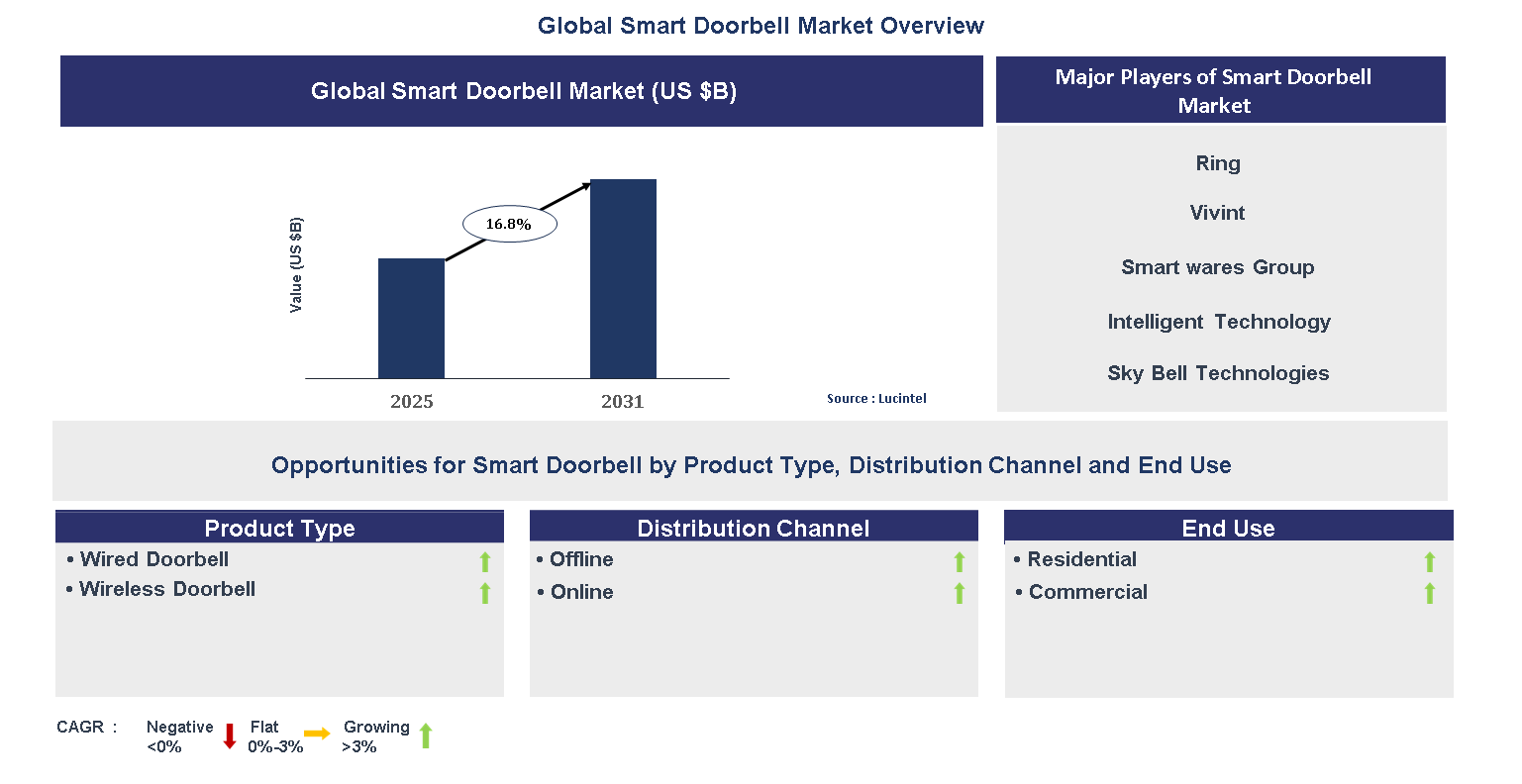
The future of the global smart doorbell market looks promising with opportunities in the residential and commercial markets. The global smart doorbell market is expected to grow with a CAGR of 16.8% from 2025 to 2031. The major drivers for this market are the increasing demand for home security solutions, the rising adoption of smart home technologies, and the growing need for remote surveillance capabilities.• Lucintel forecasts that, within the product type category, wired doorbell is expected to witness higher growth over the forecast period.
• Within the end use category, residential is expected to witness higher growth.
• In terms of region, APAC is expected to witness the highest growth over the forecast period. Gain valuable insights for your business decisions with our comprehensive 150+ page report. Sample figures with some insights are shown below.
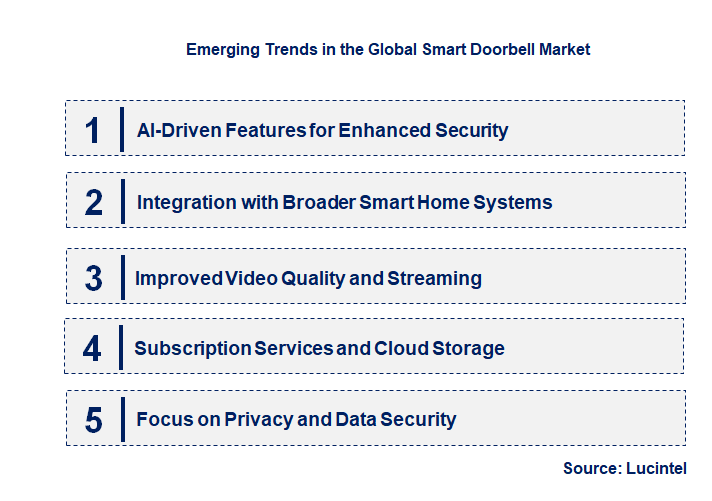
Emerging Trends in the Smart Doorbell Market
The smart doorbell market is evolving, with a range of emerging trends driven by technological innovations and consumer preferences for security and convenience. From AI-powered features to better integration with home automation systems, these trends are reshaping the landscape of connected security solutions.• AI-Driven Features for Enhanced Security: The integration of AI is transforming smart doorbells, allowing for features like facial recognition, vehicle recognition, and package detection. AI-powered systems can now identify familiar faces, screen out unwanted visitors, and alert homeowners about unusual activity, enhancing security and user experience.
• Integration with Broader Smart Home Systems: Smart doorbells are increasingly being integrated with other smart home devices such as smart locks, cameras, and alarms. This trend is creating a more cohesive smart home experience, allowing users to manage multiple devices through a single platform, improving convenience and home automation.
• Improved Video Quality and Streaming: The demand for high-definition video is driving advancements in video resolution, with many smart doorbells now offering 1080p and even 4K streaming capabilities. Consumers are looking for better image clarity, particularly in low-light conditions, and these advancements are ensuring that smart doorbells provide clear, reliable footage.
• Subscription Services and Cloud Storage: As the market matures, companies are offering subscription-based services for cloud storage, allowing consumers to store video footage securely. These services often come with additional features, such as video history and increased storage capacity, giving users better control over their security data.
• Focus on Privacy and Data Security: Given growing concerns about data privacy, manufacturers are focusing on enhancing the security of video footage and personal data. Many smart doorbells now include encryption, two-factor authentication, and data storage in secure cloud environments to address privacy issues and comply with regulations like GDPR. Emerging trends like AI-driven features, smart home integration, improved video quality, cloud storage options, and an increased focus on privacy are reshaping the smart doorbell market. These advancements are enhancing both the security and convenience that smart doorbells offer, making them integral to the smart home ecosystem.
Recent Development in the Smart Doorbell Market
Recent developments in the smart doorbell market are driven by innovations in video technology, AI, and data security. These advancements are enhancing the functionality and appeal of smart doorbells, making them a crucial element of home security and automation systems worldwide.• Advanced AI Integration: The integration of artificial intelligence in smart doorbells has led to innovations such as facial recognition, package detection, and vehicle recognition. These features improve the security capabilities of doorbells, helping users identify familiar faces and flagging unusual activity automatically, which adds another layer of protection.
• High-Resolution Video and Night Vision: Smart doorbells are now offering improved video quality, with many models supporting 1080p or even 4K streaming. Along with this, enhanced night vision capabilities ensure that homeowners can view crystal-clear footage even in low-light conditions. This development is addressing consumer demands for superior image clarity and reliability.
• Cloud Storage and Subscription Models: Subscription-based cloud storage services have become a major development in the market, offering consumers the ability to store video footage securely. These services often include features like video history, longer storage durations, and enhanced security, adding value to the basic functionality of the doorbell.
• Privacy-First Solutions: With privacy concerns becoming a central issue, many smart doorbell manufacturers are focusing on encrypting video data and providing secure cloud storage options. Companies are also integrating privacy-focused features, such as the ability to control who has access to video footage and complying with global data protection regulations.
• Seamless Smart Home Integration: Leading manufacturers have improved the integration of smart doorbells with other home automation systems, allowing seamless control through a single app. This integration with devices such as smart locks, alarms, and security cameras enhances the overall smart home ecosystem, offering a holistic approach to home security. Key developments in the smart doorbell market, including AI integration, high-definition video, cloud storage, privacy features, and improved smart home integration, are significantly enhancing the value and functionality of these devices. These advancements are solidifying smart doorbells as essential components of modern home security systems.
Strategic Growth Opportunities in the Smart Doorbell Market
The smart doorbell market is witnessing significant growth opportunities as the demand for integrated home security and automation continues to rise. By targeting key areas like AI, cloud services, privacy, and affordability, companies can capture an even larger market share in the evolving smart home space.• AI-Powered Security Features: AI features like facial recognition and vehicle detection present growth opportunities for manufacturers. As consumers increasingly prioritize advanced security, integrating AI-driven technologies into smart doorbells will enhance their value, making them more appealing to users who want smarter, more efficient security systems.
• Cloud Storage and Subscription-Based Services: As cloud storage becomes a standard offering, there is a significant growth opportunity in expanding subscription services. Offering additional features such as extended storage, advanced video analytics, and longer history will cater to users who seek more control over their security footage, thus increasing customer loyalty and recurring revenue.
• Affordable Smart Doorbells: With smart home adoption rising in emerging markets like India, affordable yet feature-rich smart doorbells present an untapped opportunity. Brands that offer cost-effective solutions without compromising on key features like video monitoring and two-way audio can capture a large segment of budget-conscious consumers.
• Integration with Other Smart Home Devices: As smart home systems become more interconnected, smart doorbells that integrate with other devices like smart locks, security cameras, and alarms will have increased appeal. Companies can expand their offerings by creating interoperable products, providing consumers with a comprehensive smart home security solution.
• Focus on Privacy and Security Features: With increasing concerns about data privacy, manufacturers that prioritize security features like end-to-end encryption and GDPR-compliant data storage can attract privacy-conscious consumers. This focus on privacy will be crucial as regulatory requirements around data protection continue to evolve. The smart doorbell market is full of growth opportunities, especially in AI-powered security, cloud services, affordability, smart home integration, and privacy. By focusing on these areas, manufacturers can cater to consumer needs for better security, convenience, and privacy, driving further growth in the industry.
Smart Doorbell Market Driver and Challenges
The smart doorbell market is being shaped by various drivers and challenges, including technological advancements, growing demand for security, and privacy concerns. Economic factors and regulations also play a role in market expansion, making it essential for companies to navigate these elements to remain competitive. The factors responsible for driving the smart doorbell market include: 1. Technological Innovation in AI: AI-powered features, including facial recognition and motion detection, are a significant driver in the smart doorbell market. These advancements enhance security and convenience, attracting consumers who want more intelligent, automated solutions for home monitoring. 2. Increased Focus on Home Security: Rising concerns about home security, especially in urban areas, are driving demand for connected security solutions like smart doorbells. These devices offer peace of mind through real-time video streaming, motion detection, and two-way communication, making them essential for modern homeowners. 3. Smart Home Integration: The growing adoption of smart home devices has fueled demand for connected doorbell solutions. As more homes integrate IoT devices, smart doorbells that seamlessly connect with other security systems, such as locks and cameras, are increasingly appealing to consumers. 4. Rising Disposable Income: As disposable incomes rise in both developed and emerging markets, consumers are more willing to invest in home automation and security solutions. This economic trend is driving the market for high-tech smart doorbells with advanced features. 5. Cloud Storage Services: Cloud storage options offer consumers the ability to securely store video footage, making it easy to access and review content at any time. Subscription models that provide added storage and additional services are driving recurring revenue in the market. Challenges in the smart doorbell market are: 1. Privacy and Data Security Concerns: Smart doorbells collect sensitive personal data, leading to concerns over data privacy. Consumers and regulators are increasingly focused on ensuring that video footage and personal information are protected, posing challenges for manufacturers to build secure systems. 2. High Costs for Premium Features: While smart doorbells offer great functionality, the cost of high-end models with advanced features like HD video, AI, and cloud services can be prohibitive for some consumers. High upfront costs may limit broader adoption in price-sensitive markets. 3. Fragmented Market with Compatibility Issues: The lack of standardization in smart home devices can cause compatibility issues. Consumers may face difficulties in integrating their smart doorbells with other home automation products, which can hinder growth and adoption. The smart doorbell market is driven by technological innovation, increasing security concerns, smart home adoption, and rising disposable incomes. However, challenges such as privacy concerns, high costs, and market fragmentation need to be addressed for sustainable growth. Manufacturers must focus on offering secure, affordable, and compatible solutions to capitalize on market opportunities.List of Smart Doorbell Companies
Companies in the market compete on the basis of product quality offered. Major players in this market focus on expanding their manufacturing facilities, R&D investments, infrastructural development, and leverage integration opportunities across the value chain. With these strategies smart doorbell companies cater increasing demand, ensure competitive effectiveness, develop innovative products & technologies, reduce production costs, and expand their customer base. Some of the smart doorbell companies profiled in this report include-• Ring
• Vivint
• Smart wares Group
• Intelligent Technology
• Sky Bell Technologies
• Aeotec Technology
• Arlo Technologies
• August Home
• Eques
• iseeBell
Smart Doorbell Market by Segment
The study includes a forecast for the global smart doorbell market by product type, distribution channel, end use, and region.Smart Doorbell Market by Product Type [Value from 2019 to 2031]:
• Wired Doorbell
• Wireless Doorbell
Smart Doorbell Market by Distribution Channel [Value from 2019 to 2031]:
• Offline
• Online
Smart Doorbell Market by End Use [Value from 2019 to 2031]:
• Residential
• Commercial
Smart Doorbell Market by Region [Value from 2019 to 2031]:
• North America
• Europe
• Asia Pacific
• The Rest of the World
Country Wise Outlook for the Smart Doorbell Market
The smart doorbell market has been experiencing rapid growth as consumers increasingly demand enhanced security, convenience, and smart home integration. With advancements in AI, video streaming, motion detection, and voice control, smart doorbells are becoming more sophisticated. Key regions like the United States, China, Germany, India, and Japan are at the forefront of this innovation, driven by both technology and consumer trends.• United States: In the U.S., the smart doorbell market has seen widespread adoption due to increasing concerns over security and home automation. Companies like Ring and Nest are leading the market, integrating video capabilities, AI, and compatibility with other smart devices. Consumers are drawn to features like live streaming, motion detection, and two-way audio, enhancing overall security and convenience.
• China: China’s smart doorbell market is expanding rapidly, driven by technological innovation and a surge in demand for smart home products. Local tech giants such as Xiaomi and Alibaba are offering affordable yet high-tech smart doorbells with AI-powered features like facial recognition and real-time video streaming. These advancements are making smart doorbells an integral part of the Chinese smart home ecosystem.
• Germany: In Germany, privacy concerns are central to the adoption of smart doorbells, with the market focusing on secure and data-protecting technologies. German consumers prioritize smart doorbells that integrate with home security systems, offering features such as encrypted video streaming and advanced motion detection. This demand for privacy-conscious solutions has led to the development of more secure, GDPR-compliant devices.
• India: In India, smart doorbells are gaining popularity due to affordability and the increasing demand for smart home devices. Local brands like Godrej and Qubo are offering cost-effective smart doorbells with video monitoring, two-way audio, and mobile app integration. These devices are being marketed as both security tools and convenient home automation solutions, appealing to a growing middle class.
• Japan: Japans smart doorbell market is growing, with a focus on integrating doorbells into the broader smart home ecosystem. Leading brands like Panasonic and Sony are introducing advanced models that combine high-definition video, facial recognition, and seamless integration with other home automation devices. Japanese consumers are looking for high-tech, secure, and convenient products to enhance their living environments.

Features of the Global Smart Doorbell Market
Market Size Estimates: Smart doorbell market size estimation in terms of value ($B). Trend and Forecast Analysis: Market trends (2019 to 2024) and forecast (2025 to 2031) by various segments and regions. Segmentation Analysis: Smart doorbell market size by product type, distribution channel, end use, and region in terms of value ($B). Regional Analysis: Smart doorbell market breakdown by North America, Europe, Asia Pacific, and Rest of the World. Growth Opportunities: Analysis of growth opportunities in different product types, distribution channels, end uses, and regions for the smart doorbell market. Strategic Analysis: This includes M&A, new product development, and competitive landscape of the smart doorbell market. Analysis of competitive intensity of the industry based on Porter’s Five Forces model.
FAQ
Q1. What is the growth forecast for smart doorbell market? Answer: The global smart doorbell market is expected to grow with a CAGR of 16.8% from 2025 to 2031. Q2. What are the major drivers influencing the growth of the smart doorbell market? Answer: The major drivers for this market are the increasing demand for home security solutions, the rising adoption of smart home technologies, and the growing need for remote surveillance capabilities. Q3. What are the major segments for smart doorbell market? Answer: The future of the smart doorbell market looks promising with opportunities in the residential and commercial markets. Q4. Who are the key smart doorbell market companies? Answer: Some of the key smart doorbell companies are as follows:• Ring
• Vivint
• Smart wares Group
• Intelligent Technology
• Sky Bell Technologies
• Aeotec Technology
• Arlo Technologies
• August Home
• Eques
• iseeBell Q5. Which smart doorbell market segment will be the largest in future? Answer: Lucintel forecasts that, within the product type category, wired doorbell is expected to witness higher growth over the forecast period. Q6. In smart doorbell market, which region is expected to be the largest in next 5 years? Answer: In terms of region, APAC is expected to witness the highest growth over the forecast period. Q7. Do we receive customization in this report? Answer: Yes, Lucintel provides 10% customization without any additional cost.
Table of Contents
List of Figures
List of Tables
Methodology
- In-depth interviews of the major players in this market
- Detailed secondary research from competitors’ financial statements and published data
- Extensive searches of published works, market, and database information pertaining to industry news, company press releases, and customer intentions
- A compilation of the experiences, judgments, and insights of Lucintel’s professionals, who have analyzed and tracked this market over the years.


Buy Now
Choose a license that fits your team. Instant PDF delivery.
Prices exclude taxes. Instant delivery. Custom licensing available on request.
Key Questions
- • What are some of the most promising, high-growth opportunities for the smart doorbell market by product type (wired doorbell and wireless doorbell), distribution channel (offline and online), end use (residential and commercial), and region (North America, Europe, Asia Pacific, and the Rest of the World)?
- • Which segments will grow at a faster pace and why?
- • Which region will grow at a faster pace and why?
- • What are the key factors affecting market dynamics? What are the key challenges and business risks in this market?
- • What are the business risks and competitive threats in this market?
- • What are the emerging trends in this market and the reasons behind them?
- • What are some of the changing demands of customers in the market?
- • What are the new developments in the market? Which companies are leading these developments?
- • Who are the major players in this market? What strategic initiatives are key players pursuing for business growth?
- • What are some of the competing products in this market and how big of a threat do they pose for loss of market share by material or product substitution?
- • What M&A activity has occurred in the last 5 years and what has its impact been on the industry? For any questions related to Smart Doorbell Market, Smart Doorbell Market Size, Smart Doorbell Market Growth, Smart Doorbell Market Analysis, Smart Doorbell Market Report, Smart Doorbell Market Share, Smart Doorbell Market Trends, Smart Doorbell Market Forecast, Smart Doorbell Companies, write Lucintel analyst at email: helpdesk@lucintel.com. We will be glad to get back to you soon.


