
Report Feature
Smart Card Market Trends and Forecast
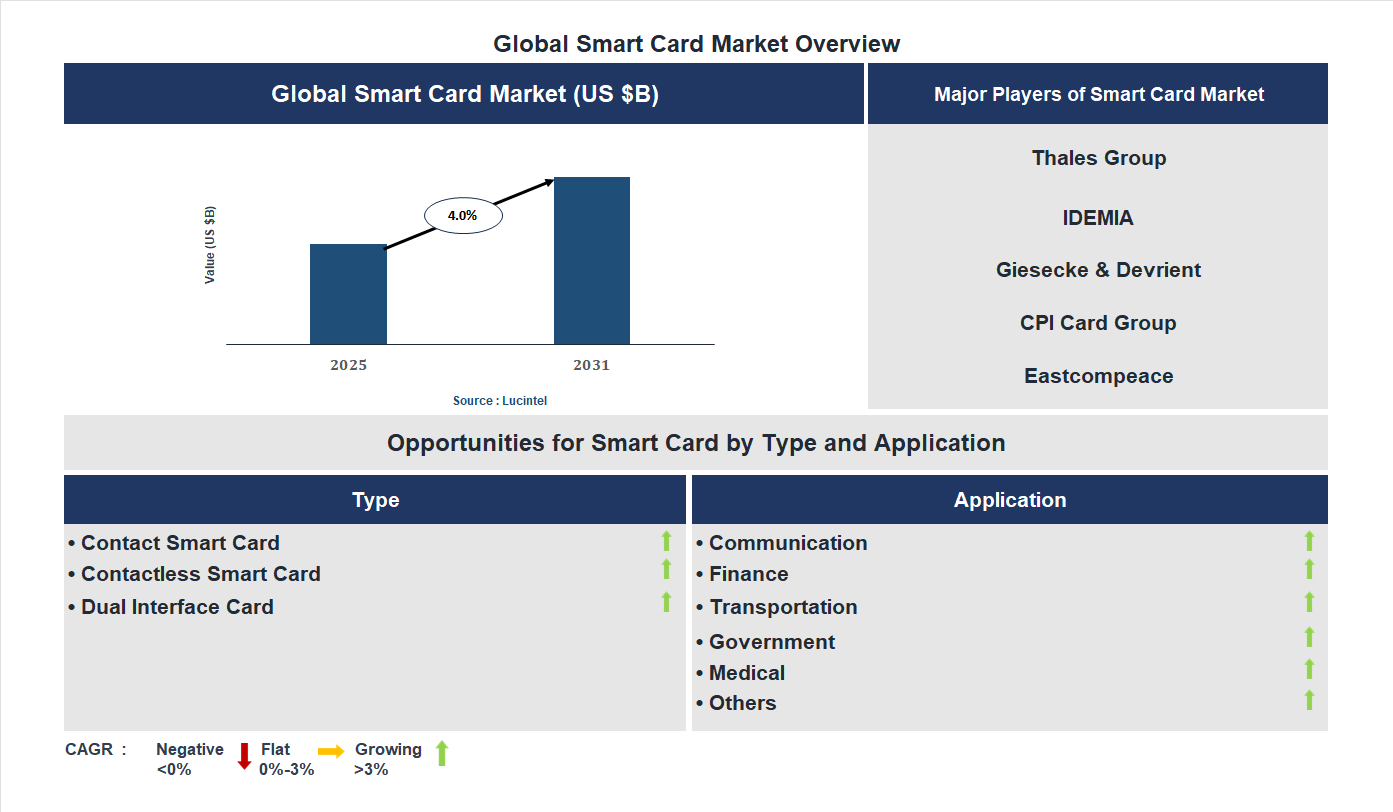
The future of the global smart card market looks promising with opportunities in the communication, finance, transportation, government, and medical markets. The global smart card market is expected to grow with a CAGR of 4% from 2025 to 2031. The major drivers for this market are the increasing adoption of cashless payment solutions, the rising demand for secure identity verification, and the growing use of smart cards in healthcare.• Lucintel forecasts that, within the type category, contactless smart card is expected to witness the highest growth over the forecast period.
• Within the application category, finance is expected to witness the highest growth.
• In terms of region, APAC is expected to witness the highest growth over the forecast period. Gain valuable insights for your business decisions with our comprehensive 150+ page report. Sample figures with some insights are shown below.
Emerging Trends in the Smart Card Market
The smart card market is experiencing rapid evolution driven by technological advancements, increasing security needs, and expanding applications across various sectors. As digital transformation accelerates, smart cards are becoming integral to secure identification, payment systems, and access control. Innovations in card technology, integration with mobile devices, and rising demand for personalized solutions are shaping the future landscape. These developments are not only enhancing user convenience but also addressing growing security concerns. The market's trajectory indicates a shift towards more sophisticated, versatile, and secure smart card solutions, influencing industries from banking to healthcare and government services.• Adoption of Contactless Technology: The shift towards contactless smart cards is driven by consumer demand for faster, more convenient transactions. Contactless cards use RFID or NFC technology, enabling quick payments and access without physical contact. This trend is particularly prominent in retail, transportation, and hospitality sectors, reducing wait times and enhancing user experience. The COVID-19 pandemic further accelerated this adoption due to hygiene concerns. As contactless technology becomes standard, it is expected to dominate the market, prompting manufacturers to innovate with more secure and versatile contactless solutions.
• Integration with Mobile and Digital Platforms: Smart cards are increasingly integrated with mobile devices and digital wallets, creating seamless user experiences. This trend allows users to carry multiple credentials on a single device, such as smartphones or wearables, reducing the need for physical cards. It also enables remote management and personalization of cards, improving security and convenience. Financial institutions, government agencies, and enterprises are adopting this integration to streamline operations and enhance security protocols. The rise of digital integration is transforming traditional smart card applications into more flexible, user-centric solutions.
• Enhanced Security Features: As cyber threats grow more sophisticated, the market is focusing on advanced security features for smart cards. Innovations include biometric authentication, encryption, and dynamic data generation to prevent cloning and fraud. These features are critical for applications in banking, government identification, and access control, where security is paramount. The development of multi-factor authentication and tamper-resistant designs is also gaining traction. Enhanced security not only protects sensitive data but also builds consumer trust, making it a key driver for market growth and adoption of smart card technology.
• Customization and Personalization: The demand for personalized smart cards is rising across various sectors. Customization includes tailored designs, embedded chips with specific functionalities, and personalized data storage. This trend enhances user engagement and brand recognition, especially in loyalty programs, corporate ID cards, and healthcare. Advanced printing techniques and flexible chip integration allow for unique, secure, and aesthetically appealing cards. Personalization also enables targeted services and improved user experience, making smart cards more relevant and valuable to individual users and organizations alike.
• Growing Use in Emerging Markets: Emerging economies are increasingly adopting smart card technology to improve security, streamline services, and promote financial inclusion. Governments are deploying smart ID cards for social welfare, voting, and national identification. The expansion of banking infrastructure and mobile penetration in these regions is driving demand for secure payment cards and digital identity solutions. This growth presents significant opportunities for market players to expand their reach and innovate tailored solutions for diverse socio-economic contexts. The increasing adoption in emerging markets is a key factor fueling overall market expansion and diversification. In summary, these trends are collectively transforming the smart card market by making solutions more secure, convenient, and adaptable. The integration of contactless and digital technologies, coupled with enhanced security and customization, is broadening application scopes and improving user experiences. As emerging markets embrace smart card solutions, the market is poised for sustained growth, innovation, and increased relevance across multiple industries.
Recent Development in the Smart Card Market
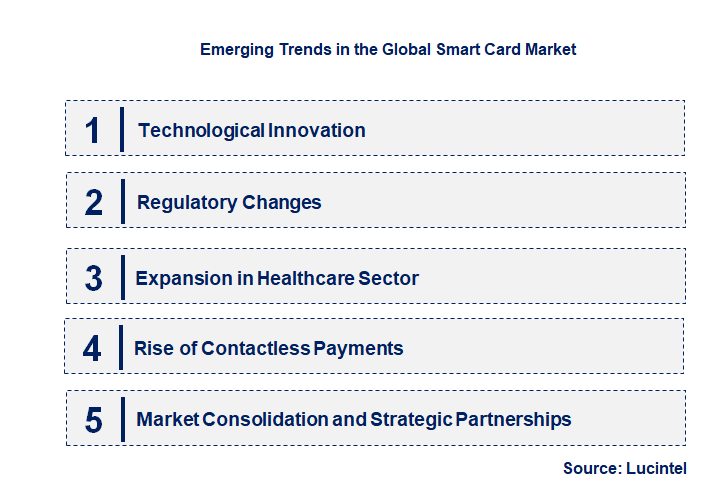
The smart card market has experienced significant growth driven by technological advancements, increasing security concerns, and expanding applications across various sectors such as banking, healthcare, and government. As digital transformation accelerates, the demand for secure, efficient, and versatile card solutions continues to rise. Recent developments reflect innovations in technology, regulatory changes, and shifts in consumer preferences, shaping the future landscape of this market. These changes are not only enhancing product capabilities but also expanding market reach and adoption rates, ultimately influencing the competitive dynamics and growth trajectory of the industry.• Technological Innovation: Integration of biometric authentication and contactless technology has revolutionized smart card functionalities, offering enhanced security and convenience. This development has increased consumer trust and expanded applications in secure access and payment systems, boosting market growth.
• Regulatory Changes: Governments and financial institutions are implementing stricter security standards and compliance regulations, such as EMV standards and GDPR. These regulations drive manufacturers to innovate and upgrade their products, ensuring market players meet new security and privacy requirements.
• Expansion in Healthcare Sector: The adoption of smart cards in healthcare for patient identification, record management, and access control has surged. This expansion improves data security, streamlines operations, and enhances patient care, opening new revenue streams for market participants.
• Rise of Contactless Payments: The growing preference for contactless payment methods has accelerated the deployment of contactless smart cards. This trend enhances transaction speed and hygiene, especially post-pandemic, leading to increased market penetration and consumer adoption.
• Market Consolidation and Strategic Partnerships: Major players are engaging in mergers, acquisitions, and collaborations to strengthen their market position. These strategic moves facilitate technological innovation, broaden product portfolios, and expand geographical reach, fostering overall industry growth. In summary, these developments are collectively propelling the smart card market towards greater innovation, security, and application diversity. They are fostering increased adoption across sectors, enhancing product offerings, and driving competitive dynamics, which ultimately contribute to sustained market growth and evolution.
Strategic Growth Opportunities in the Smart Card Market
The smart card market is experiencing rapid expansion driven by technological advancements, increasing security needs, and the proliferation of digital transactions. As industries adopt smart card solutions for enhanced security, convenience, and efficiency, several key growth opportunities are emerging across various applications. These opportunities are shaping the future landscape of the market, offering innovative solutions to meet evolving consumer and enterprise demands. Understanding these growth avenues is essential for stakeholders aiming to capitalize on the market's potential and stay competitive in a dynamic environment.• Payment and Banking: Increased adoption of contactless and EMV cards is transforming financial transactions by offering faster, secure, and convenient payment options. This growth enhances customer experience and reduces fraud risks, driving market expansion in retail, banking, and e-wallet sectors.
• Government and ID: Governments worldwide are deploying smart cards for secure identification, national ID programs, and e-governance initiatives. This improves security, streamlines administrative processes, and enhances citizen services, significantly expanding market opportunities.
• Healthcare: Smart cards are increasingly used for patient identification, access control, and secure health records management. This reduces errors, improves data security, and facilitates efficient healthcare delivery, creating substantial growth prospects in medical institutions.
• Telecom: The telecom industry leverages smart cards for SIM cards, enabling secure subscriber authentication and management. The shift towards 5G and IoT connectivity further accelerates demand, fostering market growth in this sector.
• Transportation: Smart cards are widely adopted for fare collection, access control, and ticketing in public transportation systems. Their use enhances operational efficiency and passenger convenience, leading to increased deployment worldwide. In summary, these growth opportunities are significantly impacting the smart card market by driving innovation, expanding application scopes, and increasing adoption across sectors. This evolution is fostering a more secure, efficient, and user-friendly environment, positioning the market for sustained growth and technological advancement.
Smart Card Market Driver and Challenges
The smart card market is influenced by a variety of technological, economic, and regulatory factors that shape its growth and development. Advances in digital security, increasing demand for secure payment solutions, and government initiatives to enhance identification systems are key drivers. Conversely, challenges such as technological obsolescence, data security concerns, and regulatory complexities pose significant hurdles. Understanding these drivers and challenges is essential for stakeholders to navigate the evolving landscape effectively. The interplay of innovation, regulatory compliance, and market demand determines the trajectory of the smart card industry, impacting manufacturers, service providers, and end-users alike. The factors responsible for driving the smart card market include:-• Technological Advancements: Rapid innovations in chip technology, biometric integration, and contactless interfaces are propelling the market forward. These advancements enable smarter, more secure, and user-friendly cards, meeting the increasing demand for digital security and convenience. As technology evolves, smart cards are becoming integral to various applications such as banking, healthcare, and government ID programs. The continuous development of secure, durable, and versatile smart card solutions attracts investments and encourages adoption across sectors, fostering market expansion.
• Growing Adoption in Banking and Payment Systems: The surge in digital transactions and contactless payments has significantly boosted smart card adoption. Financial institutions seek secure, efficient, and fast payment methods to enhance customer experience. Contactless smart cards reduce transaction times and improve security, making them preferred for everyday transactions. The expansion of e-wallets and mobile banking further complements this trend. As consumers and businesses prioritize convenience and security, the demand for smart cards in payment systems is expected to grow steadily, driving market growth.
• Government Initiatives and Regulations: Governments worldwide are implementing policies to improve identification, security, and access control through smart card technology. Initiatives such as national ID programs, e-passports, and health cards promote widespread adoption. Regulatory frameworks ensure data security and privacy, fostering consumer trust. These policies often mandate the use of smart cards for secure access to services, thereby expanding the market. Additionally, government investments in digital infrastructure and security standards support the development and deployment of smart card solutions, further fueling market growth.
• Increasing Use in Healthcare and Identity Verification: The healthcare sector increasingly relies on smart cards for patient identification, access to medical records, and secure prescriptions. Smart cards improve data accuracy, reduce fraud, and streamline administrative processes. Similarly, identity verification applications in government and corporate sectors benefit from smart card technology, enhancing security and efficiency. The rising need for reliable, tamper-proof identification solutions is driving demand. As healthcare and identity management become more digitized, the market for smart cards in these sectors is expected to expand significantly.
• Rising Demand for Secure Access Control Solutions: The need for robust security measures in corporate, government, and residential settings is fueling the adoption of smart card-based access control systems. These cards provide a high level of security, convenience, and auditability. Industries such as hospitality, transportation, and retail are increasingly implementing smart card access solutions to prevent unauthorized entry and ensure safety. The integration of biometric authentication with smart cards further enhances security. Growing concerns over security breaches and theft are compelling organizations to adopt advanced access control systems, thereby driving market growth. The challenges facing this smart card market include:-
• Technological Obsolescence and Compatibility Issues: Rapid technological changes can render existing smart card solutions obsolete, leading to increased costs for upgrades and replacements. Compatibility issues between different card types and systems can hinder seamless integration and adoption. Legacy systems may not support new features, creating barriers for organizations transitioning to advanced solutions. This obsolescence risk discourages investment and slows market growth, especially in sectors with long-term infrastructure commitments. Ensuring backward compatibility and managing upgrade costs are critical challenges for manufacturers and users alike.
• Data Security and Privacy Concerns: Despite the enhanced security features of smart cards, vulnerabilities such as hacking, cloning, and data breaches remain significant concerns. As cyber threats evolve, protecting sensitive information stored on smart cards becomes increasingly complex. Privacy issues related to data collection and usage also pose regulatory and reputational risks. Failure to adequately secure data can lead to legal penalties and loss of consumer trust, impeding market expansion. Addressing these security challenges requires continuous innovation and strict compliance with data protection standards.
• Regulatory and Standardization Challenges: The lack of uniform standards across regions complicates the development, deployment, and interoperability of smart card solutions. Differing regulatory requirements can delay product launches and increase compliance costs. Additionally, evolving regulations related to data privacy, security, and biometric data impose additional constraints. Navigating these complex regulatory landscapes requires significant resources and expertise, which can hinder market growth, especially for smaller players. Harmonization of standards and proactive regulatory engagement are essential to overcoming these barriers. In summary, the smart card market is driven by technological innovation, increasing demand in financial, healthcare, and government sectors, and supportive regulatory initiatives. However, challenges such as technological obsolescence, security concerns, and regulatory complexities pose significant hurdles. These factors collectively influence the pace and direction of market growth. While opportunities for expansion are substantial, addressing these challenges is crucial for sustainable development. The market's future will depend on how effectively stakeholders can innovate, adapt to regulatory changes, and mitigate security risks, ensuring continued trust and adoption across diverse applications.
List of Smart Card Companies
Companies in the market compete on the basis of product quality offered. Major players in this market focus on expanding their manufacturing facilities, R&D investments, infrastructural development, and leverage integration opportunities across the value chain. With these strategies smart card companies cater increasing demand, ensure competitive effectiveness, develop innovative products & technologies, reduce production costs, and expand their customer base. Some of the smart card companies profiled in this report include-• Thales Group
• IDEMIA
• Giesecke & Devrient
• CPI Card Group
• Eastcompeace
• Valid
• Watchdata
• Hengbao
• HID Global
• Chutian Dragon
Smart Card Market by Segment
The study includes a forecast for the global smart card market by type, application, and region.Smart Card Market by Type [Value from 2019 to 2031]:
• Contact Smart Card
• Contactless Smart Card
• Dual Interface Card
Smart Card Market by Application [Value from 2019 to 2031]:
• Communication
• Finance
• Transportation
• Government
• Medical
• Others
Smart Card Market by Region [Value from 2019 to 2031]:
• North America
• Europe
• Asia Pacific
• The Rest of the World
Country Wise Outlook for the Smart Card Market
The smart card market has experienced rapid growth driven by technological advancements, increasing security concerns, and expanding applications across various sectors such as banking, healthcare, and government services. As digital transformation accelerates globally, countries are adopting innovative solutions to enhance security, convenience, and efficiency. Regulatory changes, technological innovations, and consumer demand are shaping the landscape, leading to new opportunities and challenges. The United States, China, Germany, India, and Japan are key players with distinct developments reflecting their technological capabilities and market needs. Understanding these regional trends provides insight into the global trajectory of the smart card industry.• United States: The US market has seen significant advancements in contactless and biometric smart cards, driven by increasing security requirements and consumer demand for convenience. Major financial institutions are adopting EMV chip technology, and government agencies are deploying secure ID cards. Innovations in mobile integration and digital wallets are expanding the use cases. The market is also witnessing growth in healthcare and transportation sectors, with regulatory standards promoting secure data management. Companies are investing heavily in R&D to develop more secure, durable, and versatile smart card solutions, positioning the US as a leader in technological innovation.
• China: China’s smart card market is rapidly expanding, fueled by government initiatives to digitize public services and enhance security. The adoption of national ID cards, transportation cards, and healthcare cards is widespread. The country is focusing on integrating smart cards with mobile payment systems like Alipay and WeChat Pay, promoting seamless transactions. Local manufacturers are investing in advanced chip technology and IoT integration. The government’s push for smart city projects and digital infrastructure development is further boosting demand. China’s emphasis on domestic production and innovation is helping it become a major player in the global smart card industry.
• Germany: Germany’s market emphasizes high-security and high-quality smart card solutions, especially in banking, healthcare, and government sectors. The country is adopting contactless and dual-interface cards to meet stringent European data protection standards. Innovations in biometric authentication and secure access control are prominent. German companies are focusing on sustainable and eco-friendly smart card manufacturing processes. The integration of smart cards with digital identity and e-government initiatives is also progressing. The market benefits from strong regulatory frameworks and a focus on privacy, positioning Germany as a leader in secure and reliable smart card solutions within Europe.
• India: India’s smart card market is experiencing rapid growth driven by government initiatives like Aadhaar, which provides biometric ID for over a billion citizens. The country is deploying smart cards for banking, transportation, and healthcare to promote financial inclusion and digital governance. Local manufacturers are developing cost-effective, durable smart cards suitable for diverse environments. The government’s push for digital payments and cashless transactions is accelerating adoption. Additionally, smart cards are being integrated into smart city projects and public distribution systems. The focus remains on affordability, scalability, and security, making India a significant emerging market for smart card technology.
• Japan: Japan’s market is characterized by advanced security features and integration with digital services. The country is adopting contactless smart cards for transportation, banking, and government services, emphasizing convenience and security. Innovations include biometric authentication and multi-application cards. Japan’s focus on aging population solutions has led to the development of smart health and ID cards. The market also benefits from strong regulatory standards and a culture of technological innovation. Collaboration between government and private sectors is fostering the development of next-generation smart card solutions, including IoT-enabled cards, to support smart city and digital transformation initiatives.

Features of the Global Smart Card Market
Market Size Estimates: Smart card market size estimation in terms of value ($B). Trend and Forecast Analysis: Market trends (2019 to 2024) and forecast (2025 to 2031) by various segments and regions. Segmentation Analysis: Smart card market size by type, application, and region in terms of value ($B). Regional Analysis: Smart card market breakdown by North America, Europe, Asia Pacific, and Rest of the World. Growth Opportunities: Analysis of growth opportunities in different types, applications, and regions for the smart card market. Strategic Analysis: This includes M&A, new product development, and competitive landscape of the smart card market. Analysis of competitive intensity of the industry based on Porter’s Five Forces model.
FAQ
Q1. What is the growth forecast for smart card market? Answer: The global smart card market is expected to grow with a CAGR of 4% from 2025 to 2031. Q2. What are the major drivers influencing the growth of the smart card market? Answer: The major drivers for this market are the increasing adoption of cashless payment solutions, the rising demand for secure identity verification, and the growing use of smart cards in healthcare. Q3. What are the major segments for smart card market? Answer: The future of the smart card market looks promising with opportunities in the communication, finance, transportation, government, and medical markets. Q4. Who are the key smart card market companies? Answer: Some of the key smart card companies are as follows:• Thales Group
• IDEMIA
• Giesecke & Devrient
• CPI Card Group
• Eastcompeace
• Valid
• Watchdata
• Hengbao
• HID Global
• Chutian Dragon Q5. Which smart card market segment will be the largest in future? Answer: Lucintel forecasts that, within the type category, contactless smart card is expected to witness the highest growth over the forecast period. Q6. In smart card market, which region is expected to be the largest in next 5 years? Answer: In terms of region, APAC is expected to witness the highest growth over the forecast period. Q7. Do we receive customization in this report? Answer: Yes, Lucintel provides 10% customization without any additional cost.
Table of Contents
List of Figures
List of Tables
Methodology
- In-depth interviews of the major players in this market
- Detailed secondary research from competitors’ financial statements and published data
- Extensive searches of published works, market, and database information pertaining to industry news, company press releases, and customer intentions
- A compilation of the experiences, judgments, and insights of Lucintel’s professionals, who have analyzed and tracked this market over the years.


Buy Now
Choose a license that fits your team. Instant PDF delivery.
Prices exclude taxes. Instant delivery. Custom licensing available on request.
Key Questions
- • What are some of the most promising, high-growth opportunities for the smart card market by type (contact smart card, contactless smart card, and dual interface card), application (communication, finance, transportation, government, medical, and others), and region (North America, Europe, Asia Pacific, and the Rest of the World)?
- • Which segments will grow at a faster pace and why?
- • Which region will grow at a faster pace and why?
- • What are the key factors affecting market dynamics? What are the key challenges and business risks in this market?
- • What are the business risks and competitive threats in this market?
- • What are the emerging trends in this market and the reasons behind them?
- • What are some of the changing demands of customers in the market?
- • What are the new developments in the market? Which companies are leading these developments?
- • Who are the major players in this market? What strategic initiatives are key players pursuing for business growth?
- • What are some of the competing products in this market and how big of a threat do they pose for loss of market share by material or product substitution?
- • What M&A activity has occurred in the last 5 years and what has its impact been on the industry? For any questions related to Smart Card Market, Smart Card Market Size, Smart Card Market Growth, Smart Card Market Analysis, Smart Card Market Report, Smart Card Market Share, Smart Card Market Trends, Smart Card Market Forecast, Smart Card Companies, write Lucintel analyst at email: helpdesk@lucintel.com. We will be glad to get back to you soon.


