
Report Feature
Smart Bicycle Market Trends and Forecast
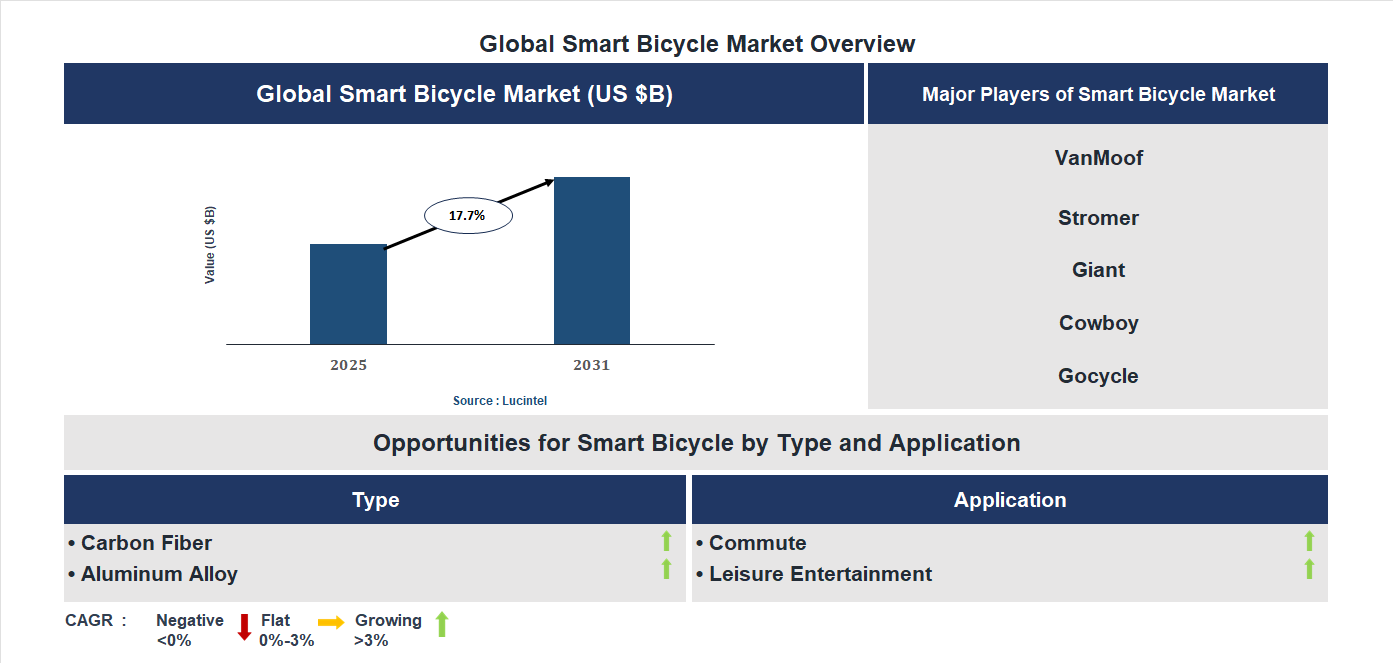
The future of the global smart bicycle market looks promising with opportunities in the commute and leisure entertainment markets. The global smart bicycle market is expected to grow with a CAGR of 17.7% from 2025 to 2031. The major drivers for this market are the increasing demand for connected cycling technologies, the rising preference for lightweight high-performance frames, and the growing adoption of app-integrated smart features.• Lucintel forecasts that, within the type category, carbon fiber is expected to witness higher growth over the forecast period.
• Within the application category, commute is expected to witness higher growth.
• In terms of region, APAC is expected to witness the highest growth over the forecast period. Gain valuable insights for your business decisions with our comprehensive 150+ page report. Sample figures with some insights are shown below.
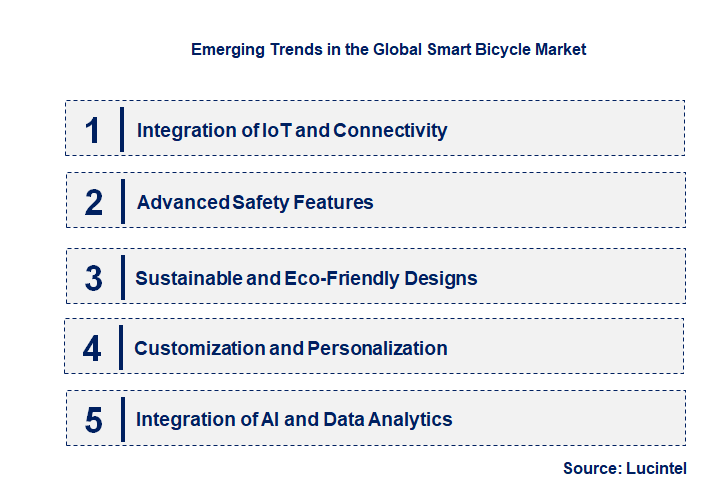
Emerging Trends in the Smart Bicycle Market
The smart bicycle market is experiencing rapid growth driven by technological advancements, increasing health consciousness, and a shift towards sustainable transportation. Consumers are seeking innovative solutions that combine fitness, convenience, and eco-friendliness. As urban areas become more congested, smart bicycles offer an attractive alternative to traditional commuting options. The integration of IoT, AI, and connectivity features is transforming bicycles into smart devices, enhancing user experience and safety. These developments are not only expanding market opportunities but also redefining how consumers perceive and utilize bicycles. The following key trends highlight the major shifts shaping this dynamic industry.• Integration of IoT and Connectivity: The adoption of Internet of Things (IoT) technology enables smart bicycles to connect with smartphones and other devices. This connectivity allows users to track their rides, monitor bike health, and access navigation features seamlessly. IoT integration enhances user engagement and provides real-time data for maintenance and performance optimization. As connectivity becomes more affordable and widespread, smart bicycles are increasingly becoming integrated into the digital ecosystem, offering personalized and efficient riding experiences.
• Advanced Safety Features: Safety remains a primary concern for cyclists, prompting manufacturers to incorporate innovative safety features. These include GPS tracking, automatic lights, anti-theft alarms, and collision detection systems. Some models are equipped with sensors that alert riders to obstacles or potential hazards, reducing accidents. The focus on safety not only boosts consumer confidence but also broadens the appeal of smart bicycles to a wider demographic, including urban commuters and recreational riders. Enhanced safety features are expected to be a key differentiator in the competitive market.
• Sustainable and Eco-Friendly Designs: The market is witnessing a shift towards environmentally sustainable bicycles, with an emphasis on lightweight materials, energy-efficient components, and eco-friendly manufacturing processes. Electric assist bikes are gaining popularity, providing an eco-conscious alternative to motorized vehicles. These bikes reduce carbon emissions and promote green transportation initiatives. Manufacturers are also exploring recyclable materials and sustainable supply chains to appeal to environmentally conscious consumers, aligning with global efforts to combat climate change and promote sustainable urban mobility.
• Customization and Personalization: Consumers increasingly demand tailored riding experiences, prompting manufacturers to offer customizable features. This includes adjustable components, personalized digital interfaces, and modular designs that allow users to modify their bikes according to preferences. Customization enhances user satisfaction and fosters brand loyalty. Additionally, digital apps enable riders to set preferences for ride modes, display themes, and performance metrics, creating a more engaging and personalized experience. The trend toward personalization is expected to drive innovation and differentiation in the market.
• Integration of AI and Data Analytics: Artificial Intelligence (AI) and data analytics are transforming smart bicycles into intelligent devices. AI algorithms analyze riding patterns, suggest optimal routes, and predict maintenance needs, improving overall performance and user experience. Data collected from rides can be used to enhance product design and develop targeted marketing strategies. AI-powered features also enable adaptive riding modes and real-time feedback, making cycling safer and more efficient. As AI technology advances, its integration into smart bicycles will continue to elevate the market, offering smarter, more intuitive riding solutions. In summary, these trends are collectively reshaping the smart bicycle market by making bicycles more connected, safe, sustainable, personalized, and intelligent. This evolution is expanding market reach, enhancing user experience, and promoting sustainable urban mobility, ultimately driving growth and innovation in the industry.
Recent Development in the Smart Bicycle Market
The smart bicycle market has experienced rapid growth driven by increasing urbanization, technological advancements, and a rising focus on health and sustainability. Consumers are seeking innovative solutions that combine fitness, convenience, and eco-friendliness. As a result, manufacturers are investing in smart features such as GPS tracking, IoT connectivity, and advanced safety systems. The market is also influenced by the integration of AI and data analytics to enhance user experience. These developments are transforming traditional bicycles into connected, intelligent devices, appealing to a broader demographic. The following key developments highlight the current trajectory and future potential of the smart bicycle market.• Integration of IoT Technology: The incorporation of Internet of Things (IoT) features allows bicycles to connect with smartphones and other devices, providing real-time data on location, performance, and maintenance needs. This connectivity enhances user experience and safety, making smart bicycles more appealing to tech-savvy consumers. It also enables manufacturers to gather valuable data for product improvements and personalized services, thereby increasing customer satisfaction and loyalty.
• Adoption of AI and Data Analytics: AI-driven features such as predictive maintenance, route optimization, and personalized training programs are becoming standard. Data analytics help users track their fitness progress and optimize riding patterns. This development improves the overall user experience by offering tailored insights and proactive maintenance alerts, reducing downtime and enhancing safety. It also opens new revenue streams for companies through subscription-based services and data monetization.
• Development of Smart Safety Features: Advanced safety systems like automatic lights, collision detection, and anti-theft mechanisms are being integrated into smart bicycles. These features significantly reduce accidents and theft risks, boosting consumer confidence. Enhanced safety measures are particularly attractive in urban environments, encouraging more people to adopt smart bicycles for daily commuting, thus expanding the market.
• Rise of E-Bikes with Smart Capabilities: Electric bikes equipped with smart features such as regenerative braking, battery management, and app-controlled settings are gaining popularity. These e-bikes cater to a broader audience, including older adults and commuters seeking efficient transportation options. The integration of smart technology in e-bikes is driving market growth by offering convenience, safety, and sustainability, making them a preferred choice over traditional bicycles.
• Expansion of Sustainable and Eco-Friendly Initiatives: Manufacturers are focusing on eco-friendly materials and energy-efficient components to appeal to environmentally conscious consumers. Smart bicycles with solar-powered features and recyclable parts are emerging, aligning with global sustainability goals. These initiatives not only reduce environmental impact but also enhance brand reputation, attracting a growing segment of eco-aware buyers and fostering market expansion. In summary, these developments are significantly transforming the smart bicycle market by enhancing connectivity, safety, and sustainability. They are broadening consumer appeal, increasing adoption rates, and opening new revenue streams for manufacturers. As technology continues to evolve, the market is poised for sustained growth, driven by innovation and a global shift towards healthier, greener transportation options.
Strategic Growth Opportunities in the Smart Bicycle Market
The smart bicycle market is experiencing rapid expansion driven by technological advancements, increasing urbanization, and a growing emphasis on health and sustainability. As consumers seek innovative, connected, and efficient transportation options, key applications are emerging as significant growth drivers. These applications are transforming traditional bicycles into smart, integrated devices that enhance user experience, safety, and performance. Companies are focusing on developing features tailored to different segments, including commuting, fitness, leisure, and competitive sports. The following are five key growth opportunities across these applications, each contributing to the overall evolution and market expansion of smart bicycles.• Commuting: Enhanced Connectivity and Safety Features : Integration of GPS, real-time traffic updates, and anti-theft systems improve commuting efficiency and security, making smart bicycles a preferred urban transport solution.
• Fitness and Health Monitoring: Personalized Data and Performance Tracking : Smart bicycles equipped with sensors and apps enable users to monitor heart rate, calories, and ride metrics, promoting healthier lifestyles and attracting fitness enthusiasts.
• Leisure and Recreational Use: Immersive Experience and Customization : Features like integrated speakers, customizable lighting, and interactive displays enhance leisure rides, appealing to recreational users seeking entertainment and personalization.
• Competitive Sports and Training: Advanced Analytics and Performance Optimization : High-performance smart bicycles with data analytics, power meters, and training programs support athletes and enthusiasts aiming for competitive edge and improved training outcomes.
• E-Bike Integration and Electrification: Extended Range and Smart Assistance : Combining electric propulsion with smart features increases range, ease of use, and adaptability, broadening appeal to a wider consumer base and supporting sustainable mobility initiatives. In summary, these growth opportunities are significantly impacting the smart bicycle market by driving innovation, expanding application scope, and attracting diverse consumer segments. The integration of smart technology into bicycles is not only enhancing user experience but also fostering sustainable urban mobility solutions, thereby fueling market growth and competitiveness.
Smart Bicycle Market Driver and Challenges
The smart bicycle market is influenced by a variety of technological, economic, and regulatory factors that shape its growth trajectory. Advances in IoT and sensor technology have enabled smarter, connected bicycles, appealing to health-conscious and eco-friendly consumers. Economic factors such as rising disposable incomes and urbanization drive demand for efficient transportation options. Regulatory policies promoting sustainable mobility and reducing carbon emissions further support market expansion. However, challenges like high product costs, technological integration issues, and regulatory uncertainties pose hurdles. Understanding these drivers and challenges is essential for stakeholders to navigate the evolving landscape and capitalize on emerging opportunities within the smart bicycle market. The factors responsible for driving the smart bicycle market include:• Technological Innovation: The integration of IoT, GPS, and sensor technology enhances bicycle functionality, safety, and user experience. These innovations enable features like real-time tracking, theft prevention, and health monitoring, making smart bicycles more attractive to consumers. Continuous R&D efforts are leading to lighter, more durable, and feature-rich products, which expand market reach. As technology becomes more affordable, adoption rates increase, fueling market growth and encouraging manufacturers to develop advanced models to meet consumer demands.
• Urbanization and Traffic Congestion: Rapid urban growth results in increased traffic congestion, prompting consumers to seek alternative transportation modes. Smart bicycles offer a cost-effective, eco-friendly, and flexible solution for short-distance travel within congested cities. Governments are also promoting cycling infrastructure, further encouraging adoption. This trend boosts demand for smart bicycles as a sustainable mobility option, especially among urban commuters seeking convenience and efficiency, thereby expanding the market.
• Rising Environmental Concerns: Growing awareness of climate change and pollution has led consumers to prefer eco-friendly transportation options. Smart bicycles, being emission-free, align with sustainability goals and government initiatives aimed at reducing carbon footprints. This environmental consciousness drives demand among eco-aware consumers and supports policies favoring cycling infrastructure development, which in turn propels market growth.
• Increasing Health and Fitness Awareness: The global focus on health and wellness encourages consumers to incorporate physical activity into daily routines. Smart bicycles with fitness tracking and health monitoring features appeal to health-conscious individuals. The convenience of combining exercise with commuting encourages adoption, expanding the customer base. This trend supports market growth by integrating health benefits with smart mobility solutions.
• Growing E-commerce and Sharing Economy: The rise of e-commerce and bike-sharing platforms has increased demand for smart bicycles. These platforms leverage connected bikes for rental and sharing services, providing affordable access to smart mobility. The convenience and cost-effectiveness attract urban dwellers and tourists, creating new revenue streams for manufacturers and service providers, thus fueling market expansion. The challenges facing this smart bicycle market include:
• High Product Costs: Advanced smart bicycles incorporate sophisticated technology, making them expensive compared to traditional bikes. High manufacturing and component costs limit affordability for a broader consumer base, restricting market penetration. Additionally, maintenance and repair costs can be significant, deterring price-sensitive customers. Overcoming cost barriers through technological advancements and economies of scale is crucial for wider adoption and market growth.
• Technological Integration and Compatibility Issues: Ensuring seamless integration of various IoT devices, sensors, and software platforms remains complex. Compatibility issues between different brands and models can hinder user experience and limit interoperability. These challenges can lead to consumer dissatisfaction and slow adoption rates. Continuous innovation and standardization are necessary to address these issues and foster a cohesive ecosystem for smart bicycles.
• Regulatory and Safety Concerns: Lack of clear regulations regarding smart bicycle safety standards, data privacy, and usage policies pose hurdles. Regulatory uncertainties can delay product launches and market acceptance. Additionally, concerns over cybersecurity and data breaches may impact consumer trust. Establishing comprehensive regulatory frameworks and safety standards is essential to promote confidence and facilitate market growth. In summary, the smart bicycle market is driven by technological advancements, urbanization, environmental awareness, health consciousness, and the sharing economy. However, high costs, technological compatibility issues, and regulatory uncertainties present significant challenges. These factors collectively influence market dynamics, requiring stakeholders to innovate and collaborate to overcome barriers. The overall impact suggests a promising growth trajectory, provided that technological, economic, and regulatory hurdles are effectively managed, enabling the market to capitalize on emerging opportunities and meet evolving consumer demands.
List of Smart Bicycle Companies
Companies in the market compete on the basis of product quality offered. Major players in this market focus on expanding their manufacturing facilities, R&D investments, infrastructural development, and leverage integration opportunities across the value chain. With these strategies smart bicycle companies cater increasing demand, ensure competitive effectiveness, develop innovative products & technologies, reduce production costs, and expand their customer base. Some of the smart bicycle companies profiled in this report include-• VanMoof
• Stromer
• Giant
• Cowboy
• Gocycle
• Hongji Intelligent Bike
• Darfon
Smart Bicycle Market by Segment
The study includes a forecast for the global smart bicycle market by type, application, and region.Smart Bicycle Market by Type [Value from 2019 to 2031]:
• Carbon Fiber
• Aluminum Alloy
Smart Bicycle Market by Application [Value from 2019 to 2031]:
• Commute
• Leisure Entertainment
Smart Bicycle Market by Region [Value from 2019 to 2031]:
• North America
• Europe
• Asia Pacific
• The Rest of the World
Country Wise Outlook for the Smart Bicycle Market
The smart bicycle market has experienced significant growth driven by increasing urbanization, technological advancements, and a rising emphasis on health and sustainability. Consumers are seeking innovative solutions for commuting and fitness, prompting manufacturers to develop smarter, connected bicycles. Governments and cities are also promoting eco-friendly transportation options, further boosting market expansion. As the market evolves, countries are adopting new technologies, regulations, and infrastructure to support smart bicycle adoption. This global trend reflects a shift towards smarter, more sustainable urban mobility solutions, with each country contributing uniquely based on its technological capabilities, infrastructure, and consumer preferences.• United States: The US market has seen rapid growth with increased adoption of IoT-enabled bicycles, integrating GPS, fitness tracking, and anti-theft features. Major brands are partnering with tech firms to develop connected bikes, and urban centers are investing in bike-sharing programs with smart features. Regulatory support for eco-friendly transportation is also boosting market expansion, alongside rising consumer interest in health and fitness.
• China: China remains a leader in smart bicycle adoption, driven by government initiatives promoting green transportation and urban congestion reduction. The market has seen a surge in e-bike sales with smart connectivity features, including app integration and real-time tracking. Local manufacturers are innovating rapidly, and extensive infrastructure development supports widespread usage, especially in major cities.
• Germany: Germanys market emphasizes high-quality, durable smart bicycles with advanced safety features and seamless connectivity. The country is focusing on integrating smart bikes into urban mobility plans, supported by strong regulatory frameworks and sustainability goals. Collaborations between tech companies and bicycle manufacturers are fostering innovation, and there is a growing demand for premium smart bikes among urban commuters.
• India: The Indian market is witnessing increasing demand for affordable smart bicycles, especially e-bikes, to address urban congestion and pollution. Local startups are introducing cost-effective models with basic smart features like GPS and theft protection. Government initiatives promoting electric mobility and infrastructure development are further encouraging adoption, particularly in metropolitan areas.
• Japan: Japans market is characterized by technologically advanced smart bicycles with a focus on safety, comfort, and integration with smart city infrastructure. The country is investing in R&D to develop innovative features such as autonomous riding assistance and energy-efficient systems. Consumer preference for high-quality, reliable products is driving the adoption of premium smart bicycles, supported by government policies promoting sustainable urban mobility.

Features of the Global Smart Bicycle Market
Market Size Estimates: Smart bicycle market size estimation in terms of value ($B). Trend and Forecast Analysis: Market trends (2019 to 2024) and forecast (2025 to 2031) by various segments and regions. Segmentation Analysis: Smart bicycle market size by type, application, and region in terms of value ($B). Regional Analysis: Smart bicycle market breakdown by North America, Europe, Asia Pacific, and Rest of the World. Growth Opportunities: Analysis of growth opportunities in different types, applications, and regions for the smart bicycle market. Strategic Analysis: This includes M&A, new product development, and competitive landscape of the smart bicycle market. Analysis of competitive intensity of the industry based on Porter’s Five Forces model.
FAQ
Q1. What is the growth forecast for smart bicycle market? Answer: The global smart bicycle market is expected to grow with a CAGR of 17.7% from 2025 to 2031. Q2. What are the major drivers influencing the growth of the smart bicycle market? Answer: The major drivers for this market are the increasing demand for connected cycling technologies, the rising preference for lightweight high-performance frames, and the growing adoption of app-integrated smart features. Q3. What are the major segments for smart bicycle market? Answer: The future of the smart bicycle market looks promising with opportunities in the commute and leisure entertainment markets. Q4. Who are the key smart bicycle market companies? Answer: Some of the key smart bicycle companies are as follows:• VanMoof
• Stromer
• Giant
• Cowboy
• Gocycle
• Hongji Intelligent Bike
• Darfon Q5. Which smart bicycle market segment will be the largest in future? Answer: Lucintel forecasts that, within the type category, carbon fiber is expected to witness higher growth over the forecast period. Q6. In smart bicycle market, which region is expected to be the largest in next 5 years? Answer: In terms of region, APAC is expected to witness the highest growth over the forecast period. Q7. Do we receive customization in this report? Answer: Yes, Lucintel provides 10% customization without any additional cost.
Table of Contents
List of Figures
List of Tables
Methodology
- In-depth interviews of the major players in this market
- Detailed secondary research from competitors’ financial statements and published data
- Extensive searches of published works, market, and database information pertaining to industry news, company press releases, and customer intentions
- A compilation of the experiences, judgments, and insights of Lucintel’s professionals, who have analyzed and tracked this market over the years.


Buy Now
Choose a license that fits your team. Instant PDF delivery.
Prices exclude taxes. Instant delivery. Custom licensing available on request.
Key Questions
- • What are some of the most promising, high-growth opportunities for the smart bicycle market by type (carbon fiber and aluminum alloy), application (commute and leisure entertainment), and region (North America, Europe, Asia Pacific, and the Rest of the World)?
- • Which segments will grow at a faster pace and why?
- • Which region will grow at a faster pace and why?
- • What are the key factors affecting market dynamics? What are the key challenges and business risks in this market?
- • What are the business risks and competitive threats in this market?
- • What are the emerging trends in this market and the reasons behind them?
- • What are some of the changing demands of customers in the market?
- • What are the new developments in the market? Which companies are leading these developments?
- • Who are the major players in this market? What strategic initiatives are key players pursuing for business growth?
- • What are some of the competing products in this market and how big of a threat do they pose for loss of market share by material or product substitution?
- • What M&A activity has occurred in the last 5 years and what has its impact been on the industry? For any questions related to Smart Bicycle Market, Smart Bicycle Market Size, Smart Bicycle Market Growth, Smart Bicycle Market Analysis, Smart Bicycle Market Report, Smart Bicycle Market Share, Smart Bicycle Market Trends, Smart Bicycle Market Forecast, Smart Bicycle Companies, write Lucintel analyst at email: helpdesk@lucintel.com. We will be glad to get back to you soon.


