
Market Report · July 16, 2026

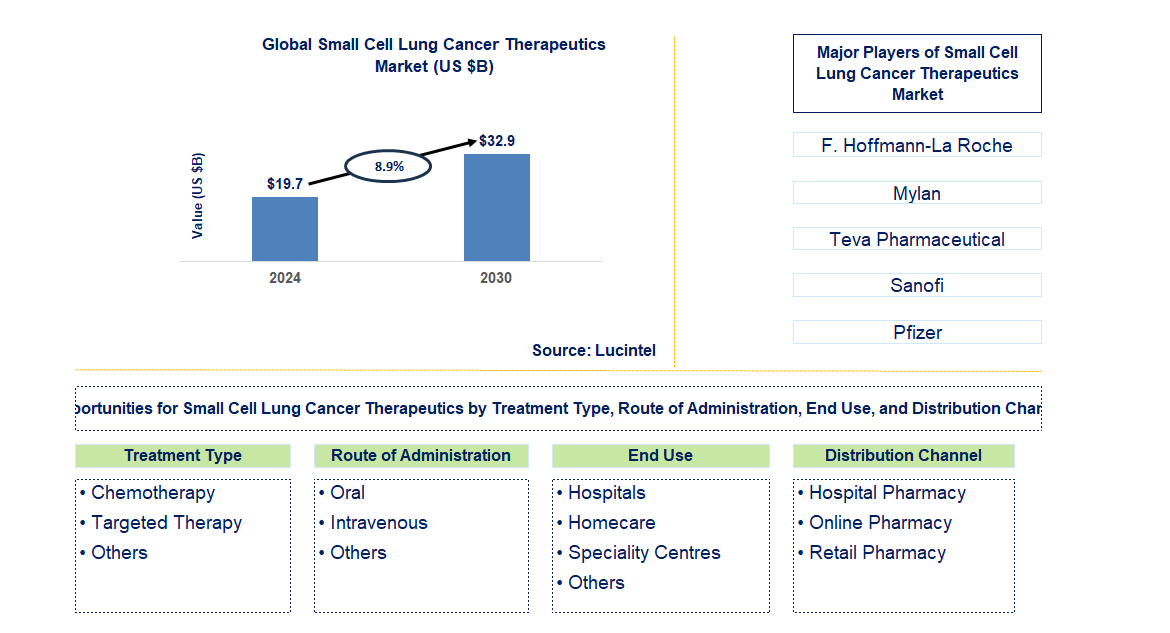
Key data points: The market size in 2030 = $32.9 billion, growth forecast = 8.9% annually for the next 6 years. Scroll below to get more insights. This market report covers trends, opportunities, and forecasts in the global small cell lung cancer therapeutics market to 2030 by treatment type (chemotherapy, targeted therapy, and others), route of administration (oral, intravenous, and others), end use (hospitals, homecare, speciality centres, and others), distribution channel (hospital pharmacy, online pharmacy, and retail pharmacy), and region (North America, Europe, Asia Pacific, and the Rest of the World)
We'll send your sample report shortly.
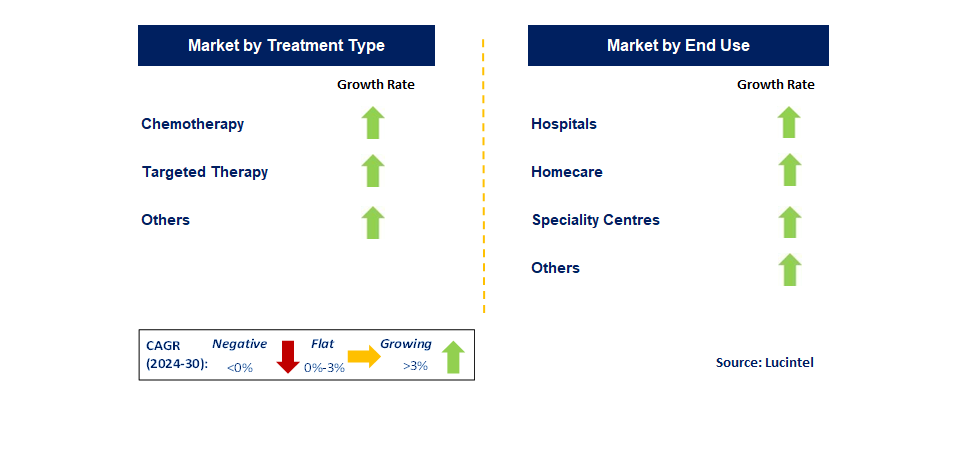
• Lucintel forecasts that, within the treatment type category, chemotherapy will remain a larger segment over the forecast period due to the high efficacy of chemotherapy drugs in treating SCLC patients.
• Within the end use category, hospitals will remain the largest segment as most SCLC patients requires complex and specialized care, which can only be provided in a hospital setting.
• In terms of regions, APAC is expected to witness the highest growth over the forecast period due to growing awarness towards early disease diagnosis and existence of key generic pharmaceuticals companies in this region. Gain valuable insights for your business decisions with our comprehensive 150+ page report.
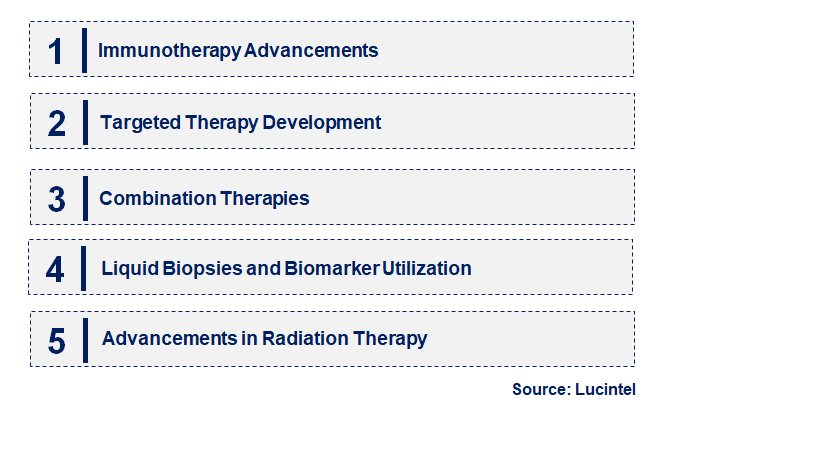
• Immunotherapy Advancements: Immunotherapy, particularly immune checkpoint inhibitors like pembrolizumab and nivolumab, is transforming small cell lung cancer treatment. These agents work by enhancing the immune system's ability to recognize and attack cancer cells. Recent studies have shown promising results, indicating that combining these therapies with other treatments can improve response rates and survival outcomes. The integration of immunotherapy in early-stage and maintenance settings is becoming increasingly common, offering new hope for patients with limited options.
• Targeted Therapy Development: Targeted therapies are being developed to address specific genetic mutations and alterations found in small cell lung cancer. Agents targeting pathways such as Notch, MYC, and Aurora kinases are in clinical trials, aiming to improve efficacy and minimize off-target effects. By focusing on the molecular drivers of small cell lung cancer, these therapies have the potential to provide more personalized and effective treatment options, reducing reliance on traditional chemotherapy and improving overall patient outcomes.
• Combination Therapies: Combining different therapeutic modalities—such as chemotherapy, radiotherapy, and targeted agents—has shown potential in enhancing treatment efficacy. For instance, combining chemotherapy with immunotherapy or targeted therapies can synergistically improve outcomes by attacking the cancer from multiple angles. Clinical trials are increasingly exploring these combinations to optimize treatment regimens and extend survival, reflecting a shift towards more integrated and comprehensive treatment strategies.
• Liquid Biopsies and Biomarker Utilization: Liquid biopsies are emerging as a non-invasive method for detecting and monitoring small cell lung cancer. By analyzing circulating tumor DNA (ctDNA) or RNA, these tests can provide real-time insights into tumor dynamics and treatment response. Additionally, identifying specific biomarkers can help tailor therapies to individual patients, enhancing the precision of treatments and potentially improving clinical outcomes by selecting the most effective interventions based on a patient’s unique tumor profile.
• Advancements in Radiation Therapy: Innovations in radiation therapy, such as stereotactic body radiation therapy (SBRT) and proton therapy, are offering more precise and targeted treatment options for small cell lung cancer. These advanced techniques aim to minimize damage to surrounding healthy tissues while maximizing tumor control. As technology improves, these therapies are becoming more integrated into treatment plans, providing options for patients who may not have responded well to traditional radiation approaches. In summary, the small cell lung cancer therapeutics market is being reshaped by these emerging trends, reflecting a shift towards more targeted, personalized, and integrative treatment approaches. Immunotherapy and targeted therapies are offering new avenues for intervention, while combination therapies and advanced diagnostic tools like liquid biopsies are enhancing treatment precision and monitoring. Innovations in radiation therapy further complement these strategies, collectively driving forward the search for more effective and personalized treatments for small cell lung cancer.
• Approval of New Immune Checkpoint Inhibitors: Recent approvals of immune checkpoint inhibitors, such as atezolizumab and durvalumab, have marked a significant breakthrough in small cell lung cancer treatment. These drugs work by enhancing the body's immune response against cancer cells. Clinical trials have shown that these inhibitors, especially when combined with chemotherapy, can lead to improved overall survival and progression-free survival rates in patients with extensive-stage small cell lung cancer. This development is a major advancement, as previous treatments had limited success, highlighting a shift towards immunotherapy as a critical component of small cell lung cancer management.
• Advancements in Targeted Therapies: Targeted therapies have made significant strides, particularly with the introduction of drugs like lurbinectedin. Lurbinectedin targets DNA strands within cancer cells, disrupting their replication and leading to cancer cell death. This drug has demonstrated promising results in clinical trials, showing efficacy in patients who have relapsed or progressed after previous treatments. Such targeted approaches represent a more precise treatment modality, potentially offering fewer side effects and improved outcomes compared to traditional chemotherapy.
• Combination Therapy Regimens: The use of combination therapies, involving both chemotherapy and novel agents like immune checkpoint inhibitors or targeted therapies, has shown enhanced efficacy in treating small cell lung cancer. For instance, the combination of etoposide with a checkpoint inhibitor has been associated with improved response rates and prolonged survival compared to standard chemotherapy alone. This approach leverages the synergistic effects of different therapeutic mechanisms, aiming to overcome resistance and achieve better clinical outcomes for small cell lung cancer patients.
• Personalized Medicine Approaches: The shift towards personalized medicine in small cell lung cancer involves tailoring treatments based on individual genetic and molecular profiles. Advances in genomic sequencing and biomarker identification are enabling more precise targeting of therapies. For example, identifying specific genetic mutations or protein expressions can guide the use of targeted therapies or combination regimens. This personalized approach aims to maximize efficacy while minimizing adverse effects, leading to more effective and individualized treatment strategies for small cell lung cancer patients.
• Development of Novel Drug Formulations: Innovative drug formulations, including sustained-release and novel delivery systems, are enhancing the effectiveness of existing small cell lung cancer treatments. For instance, recent advancements in nanotechnology and encapsulation methods are improving the bioavailability and targeted delivery of chemotherapeutic agents. These developments are designed to reduce systemic toxicity, improve drug penetration into tumors, and enhance overall treatment efficacy. Such innovations hold promise for better management of small cell lung cancer and addressing some of the limitations of traditional drug delivery methods. The recent developments in small cell lung cancer therapeutics are transforming the treatment landscape, offering new hope for patients with this challenging disease. The integration of immune checkpoint inhibitors, advancements in targeted therapies, the effectiveness of combination regimens, the move towards personalized medicine, and novel drug formulations collectively contribute to improved outcomes and survival rates. These innovations represent a shift towards more effective, individualized, and less toxic treatment options, ultimately enhancing the quality of care and patient prognosis in small cell lung cancer.
• Targeted Therapy: Targeted therapy has emerged as a powerful tool in treating small cell lung cancer by focusing on specific genetic mutations and molecular pathways. Advances in genomic profiling have identified critical targets, such as DNA repair enzymes and growth factor receptors, leading to the development of drugs like PARP inhibitors and tyrosine kinase inhibitors. These targeted agents offer higher specificity and reduced side effects compared to traditional chemotherapies. As research progresses, targeted therapies are expected to enhance efficacy and improve survival rates for small cell lung cancer patients, driving substantial growth in this segment of the market.
• Immunotherapy: Immunotherapy is revolutionizing cancer treatment by harnessing the body's immune system to fight cancer cells. For small cell lung cancer, immune checkpoint inhibitors, such as PD-1 and PD-L1 inhibitors, have shown promising results in clinical trials. These therapies work by blocking proteins that prevent immune cells from attacking cancer cells. The success of these treatments has led to their increasing adoption and expansion into combination therapies, further enhancing their effectiveness. The growing role of immunotherapy in small cell lung cancer treatment is creating significant growth opportunities as more patients benefit from this innovative approach.
• Combination Therapies: Combination therapies are gaining traction as they offer a synergistic approach to treating small cell lung cancer by integrating different therapeutic modalities. Combining chemotherapy with targeted therapies, immunotherapy, or newer agents can enhance treatment efficacy and overcome resistance. For instance, combining immune checkpoint inhibitors with chemotherapy has shown improved response rates and survival outcomes. This approach addresses the limitations of single-agent therapies and is expected to lead to more effective and personalized treatment regimens, driving substantial growth in the small cell lung cancer therapeutics market.
• Personalized Medicine: Personalized medicine is transforming small cell lung cancer treatment by tailoring therapies based on individual patient profiles, including genetic, environmental, and lifestyle factors. Advances in biomarker discovery and genomic sequencing enable the development of customized treatment plans that maximize efficacy and minimize adverse effects. By integrating personalized approaches, healthcare providers can better match patients with the most appropriate therapies, leading to improved outcomes and a more targeted use of resources. This trend towards personalization is a key growth opportunity in the small cell lung cancer therapeutics market.
• Early Detection and Diagnosis: Early detection and diagnosis of small cell lung cancer are critical for improving patient outcomes and expanding treatment options. Advances in imaging technologies, liquid biopsies, and molecular diagnostics are enhancing early detection capabilities. These innovations facilitate earlier intervention, which is crucial for effective treatment given the aggressive nature of small cell lung cancer. Increased focus on developing and implementing these diagnostic tools is expected to lead to earlier diagnosis, better treatment outcomes, and consequently, growth in the market for small cell lung cancer therapeutics. The small cell lung cancer therapeutics market is experiencing significant transformation driven by strategic growth opportunities across various applications. Targeted therapies, immunotherapy, combination therapies, personalized medicine, and advancements in early detection are collectively shaping the future of small cell lung cancer treatment. These opportunities not only promise to enhance patient outcomes and survival rates but also stimulate market expansion and innovation. As these developments continue to unfold, they will redefine treatment paradigms and drive substantial growth within the small cell lung cancer therapeutics market.
• F. Hoffmann-La Roche
• Mylan
• Teva Pharmaceutical Industries
• Sanofi
• Pfizer
• GSK
• Novartis
• Bayer
• Lilly
• Merck
• Chemotherapy
• Targeted Therapy
• Others
• Oral
• Intravenous
• Others
• Hospitals
• Homecare
• Speciality Centres
• Others
• Hospital Pharmacy
• Online Pharmacy
• Retail Pharmacy
• North America
• Europe
• Asia Pacific
• The Rest of the World
• United States: The U.S. has witnessed major advancements in small cell lung cancer therapeutics with the approval of novel therapies and treatment combinations. Key developments include the FDA's approval of new immune checkpoint inhibitors, such as atezolizumab and durvalumab, which have shown promise in clinical trials. Additionally, the use of novel combination therapies, including the integration of chemotherapy with targeted agents, has gained traction. Ongoing research focuses on identifying genetic markers to personalize treatment and improve outcomes. The U.S. remains a leader in clinical trials and innovative therapeutic strategies for small cell lung cancer.
• China: China has made significant strides in small cell lung cancer treatment, with a growing emphasis on clinical trials and the development of novel therapies. Recently, China has approved several new drugs and treatment combinations that align with global advancements. The focus has been on integrating immunotherapy with traditional treatments, such as chemotherapy. Additionally, there is increased investment in domestic research to address unique patient demographics and treatment responses specific to the Chinese population. These efforts aim to enhance efficacy and accessibility of small cell lung cancer treatments within the country.
• Germany: Germany has been at the forefront of integrating advanced therapeutic approaches for small cell lung cancer, particularly in clinical research and patient care. Recent developments include the adoption of new immune checkpoint inhibitors and targeted therapies that have shown effectiveness in combination with chemotherapy. Germany healthcare system emphasizes personalized medicine, leading to tailored treatment plans based on individual genetic profiles. Additionally, German research institutions are actively involved in international collaborations to advance small cell lung cancer therapies and improve patient outcomes through innovative clinical trials.
• India: In India, the small cell lung cancer therapeutics market is evolving with a focus on increasing access to new treatments and improving healthcare infrastructure. Recent advancements include the introduction of newer drugs and combination therapies, although adoption rates vary. Clinical trials are becoming more prevalent, exploring both global and localized treatment options. Efforts are also underway to enhance awareness and early detection of small cell lung cancer, which is critical for effective treatment. The Indian market is witnessing growth in pharmaceutical investments aimed at addressing the specific needs of the patient population.
• Japan: Japan has seen notable progress in small cell lung cancer therapeutics with the introduction of advanced treatment options and participation in global clinical trials. Recent developments include the approval of new immune checkpoint inhibitors and targeted therapies, reflecting a shift towards more personalized and effective treatment regimens. Japan healthcare system emphasizes the integration of new technologies and treatments, leading to improved patient outcomes. Research efforts are also focused on optimizing therapy combinations and exploring novel approaches to address the challenges of small cell lung cancer. The country's advancements align closely with international standards and innovations.


• F. Hoffmann-La Roche
• Mylan
• Teva Pharmaceutical Industries
• Sanofi
• Pfizer
• GSK
• Novartis
• Bayer
• Lilly
• Merck Q6. Which small cell lung cancer therapeutics market segment will be the largest in future? Answer: Lucintel forecasts that chemotherapy will remain the larger segment over the forecast period due to the high efficacy of chemotherapy drugs in treating SCLC patients. Q7. In small cell lung cancer therapeutics market, which region is expected to be the largest in next 5 years? Answer: APAC is expected to witness highest growth over the forecast period due to growing awarness towards early disease diagnosis and existence of key generic pharmaceuticals companies in this region. Q.8 Do we receive customization in this report? Answer: Yes, Lucintel provides 10% customization without any additional cost.


Choose a license that fits your team. Instant PDF delivery.
Prices exclude taxes. Instant delivery. Custom licensing available on request.
Market Report · July 16, 2026
Market Report · July 15, 2026
Market Report · July 15, 2026
Trusted partner for strategic intelligence and business growth


Receive a complimentary market analysis tailored to your industry. Our analysts will identify key growth opportunities and competitive dynamics specific to your business.

Market size, growth rate, and key trend analysis for your specific sector.

Top competitor positioning and market share analysis.

Strategic recommendations backed by data-driven insights.
Get curated market intelligence and competitive moves straight to your inbox.
By subscribing, you agree to receive our monthly insights. Unsubscribe anytime.
Receive a complimentary market analysis tailored to your industry. Our analysts will identify key growth opportunities and competitive dynamics specific to your business.
Market size, growth rate, and key trend analysis for your specific sector.
Top competitor positioning and market share analysis.
Strategic recommendations backed by data-driven insights.
Get curated market intelligence, emerging trends, and competitive moves straight to your inbox each month.
By subscribing, you agree to receive our monthly insights. Unsubscribe anytime.
We'll send your sample report shortly.