
Market Report · July 24, 2026

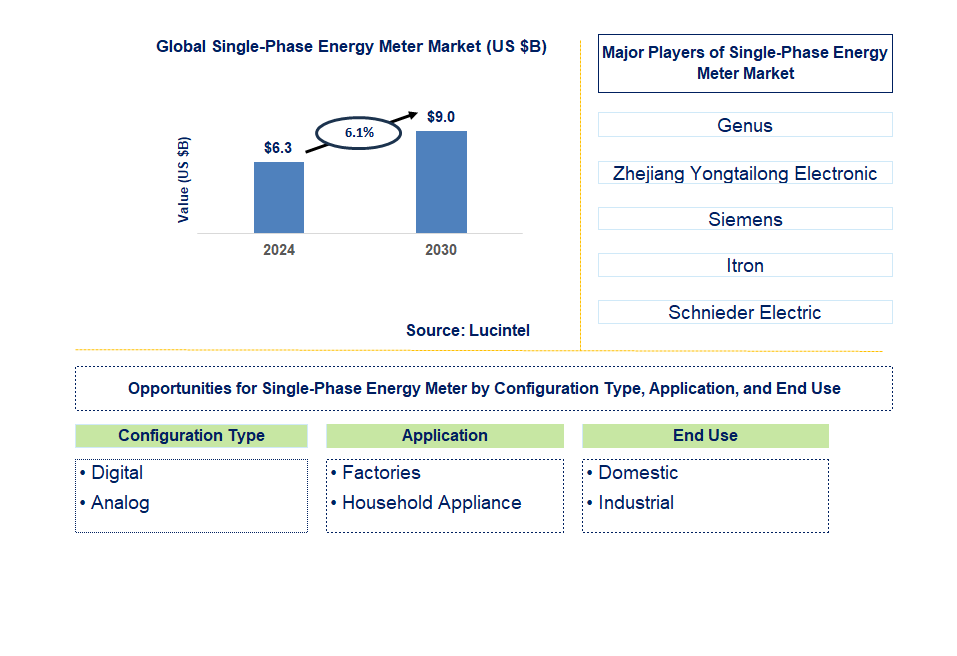
Key data points: The market size in 2030 = $9.0 billion, growth forecast = 6.1% annually for the next 6 years. Scroll below to get more insights. This market report covers trends, opportunities, and forecasts in the global single-phase energy meter market to 2030 by configuration type (digital and analog), application (factories and household appliance), end use (domestic and industrial), and region (North America, Europe, Asia Pacific, and the Rest of the World)
We'll send your sample report shortly.
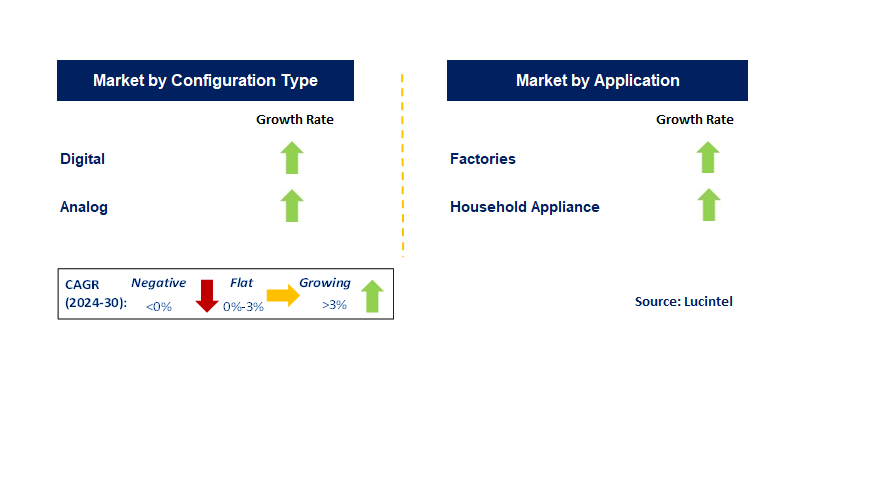
• Lucintel forecasts that, within the configuration type category, digital is expected to witness higher growth over the forecast period.
• In terms of regions, APAC is expected to witness highest growth over the forecast period due to high population density, rising data centers, industrialization, and household income, as well as investments in smart grid and smart city technologies in this region. Gain valuable insights for your business decisions with our 150+ page report.
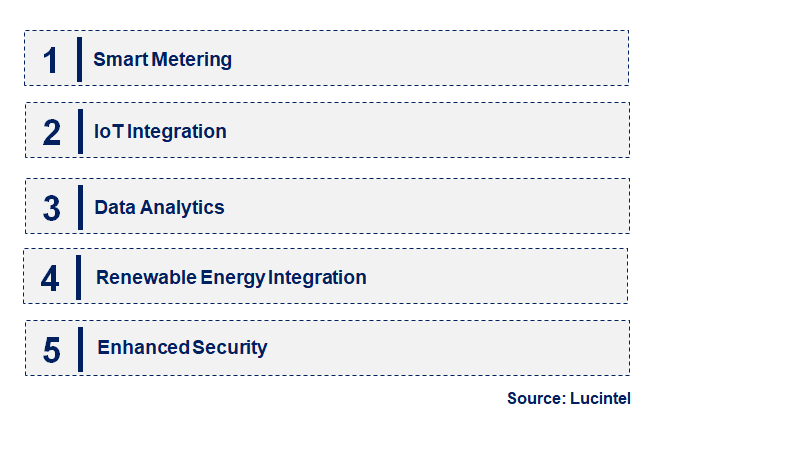
• Smart Metering: There is a growing shift toward smart meters that provide real-time data and remote monitoring capabilities, enhancing accuracy and efficiency.
• IoT Integration: The integration of Internet of Things (IoT) technologies into energy meters allows for better data management and improved communication between meters and utilities.
• Data Analytics: Advanced data analytics are increasingly used to optimize energy usage, detect anomalies, and provide actionable insights for both consumers and utilities.
• Renewable Energy Integration: Energy meters are being designed to seamlessly integrate with renewable energy sources, facilitating better management of distributed energy systems.
• Enhanced Security: With the rise of smart metering, there is a stronger focus on cybersecurity to protect against data breaches and ensure the integrity of metering systems.
• Regulatory Compliance: Compliance with evolving energy efficiency regulations and standards is driving the development of advanced metering solutions that meet regulatory requirements. The single-phase energy meter market is evolving with trends such as smart metering, IoT integration, and data analytics, reflecting a focus on efficiency, security, and regulatory compliance.
• Adoption of Smart Meters: The market is seeing widespread adoption of smart meters that enable remote monitoring, real-time data collection, and dynamic pricing models.
• Technological Innovations: Companies are advancing technologies such as cellular and RF communication to enhance meter performance and data transmission.
• Government Initiatives: Various government programs and regulations are promoting the deployment of smart meters and advanced metering infrastructure (AMI).
• Focus on Cybersecurity: There is an increased emphasis on developing secure metering systems to protect data from cyber threats and ensure user privacy.
• Integration with Smart Grids: The development of smart meters is closely linked with smart grid projects, facilitating better energy management and grid reliability.
• Enhanced Data Management: Innovations in data analytics and management are improving the accuracy of billing and energy consumption tracking. Recent developments in the single-phase energy meter market reflect a strong trend toward smart metering, technological innovation, and enhanced data management, driven by government initiatives and cybersecurity concerns.
• Smart Grid Integration: There are opportunities for growth through the integration of single-phase meters with smart grid systems, enhancing grid management and efficiency.
• Renewable Energy Projects: The expansion of renewable energy sources presents opportunities for energy meters that support integration with distributed energy systems.
• Urbanization and Smart Cities: Rapid urbanization and smart city initiatives drive demand for advanced metering solutions that support efficient energy management in urban environments.
• Government Programs: Various government schemes and incentives aimed at modernizing energy infrastructure offer growth opportunities for metering companies.
• Industrial and Commercial Applications: Increasing demand for precise energy monitoring in industrial and commercial settings creates opportunities for high-performance energy meters.
• Consumer Engagement: The rise in consumer interest in energy efficiency and real-time data provides opportunities for developing meters that offer enhanced user interfaces and feedback mechanisms. Strategic growth opportunities in the single-phase energy meter market are centered on smart grid integration, renewable energy projects, and urbanization, with potential in government programs and consumer engagement.
• Increased Demand for Smart Meters: Growing adoption of smart metering technologies drives the market, offering benefits such as real-time data and remote monitoring.
• Government Initiatives: Supportive policies and regulations promoting energy efficiency and smart grid integration fuel market growth.
• Technological Advancements: Innovations in metering technologies, such as IoT and data analytics, enhance meter performance and create new market opportunities.
• Focus on Energy Efficiency: Rising consumer and utility focus on energy efficiency and cost savings drives demand for advanced energy meters.
• Urbanization and Infrastructure Development: The expansion of urban areas and infrastructure projects increases the need for reliable energy metering solutions. Challenges in the single-phase energy meter market are:
• High Implementation Costs: The cost of deploying advanced metering infrastructure and smart meters can be high, posing a barrier to widespread adoption.
• Cybersecurity Risks: Ensuring the security of smart meters and protecting data from cyber threats is a significant challenge.
• Regulatory Compliance: Adhering to varying regulatory standards and requirements across different regions can be complex for manufacturers.
• Technology Integration: Integrating new metering technologies with existing infrastructure can present technical and logistical challenges.
• Market Competition: Intense competition among metering companies requires continuous innovation and differentiation to maintain market share.
• Consumer Acceptance: Gaining consumer acceptance for new metering technologies and addressing concerns about data privacy and reliability can be challenging. The single-phase energy meter market is driven by smart meter adoption, government initiatives, and technological advancements, but faces challenges related to costs, cybersecurity, and regulatory compliance.
• Genus
• Zhejiang Yongtailong Electronic
• Siemens
• Itron
• Schnieder Electric
• Landis+Gyr
• Invendis Technologies India
• Digital
• Analog
• Factories
• Household Appliance
• Domestic
• Industrial
• North America
• Europe
• Asia Pacific
• The Rest of the World
• USA: In the USA, recent developments in the single-phase energy meter market include advancements in smart metering technology and increased adoption of IoT-enabled devices. Companies like Landis+Gyr and Itron are leading innovations by integrating communication technologies such as cellular and RF into energy meters, enhancing data collection and management. The focus on upgrading the national grid infrastructure has spurred investments in smart meters that provide real-time energy usage data and support dynamic pricing models. Additionally, there is a push for improving cybersecurity measures to protect data integrity and user privacy in smart metering systems.
• China: China’s single-phase energy meter market is experiencing significant growth driven by government initiatives aimed at modernizing the power grid and promoting energy efficiency. Leading companies like China Southern Power Grid and State Grid Corporation of China are deploying advanced smart meters equipped with cellular and power line communication technologies. The focus is on enhancing grid management and enabling more accurate billing and consumption tracking. Additionally, China is investing heavily in smart city projects, which include the widespread installation of smart meters to support energy conservation and improved resource management in urban areas.
• India: In India, the single-phase energy meter market is expanding due to initiatives aimed at improving energy access and efficiency. Indian companies, such as L&T and HPL Electric & Power, are developing cost-effective smart meters that support remote reading and automated data collection. Government programs like the Smart Grid Mission are driving the adoption of advanced metering infrastructure (AMI) to enhance grid reliability and reduce losses. There is also a growing emphasis on integrating energy meters with renewable energy sources and improving customer engagement through real-time consumption data and feedback mechanisms.
• Japan: Japan’s single-phase energy meter market is characterized by technological advancements and a focus on precision and reliability. Japanese companies like Toshiba and NEC are leading innovations in smart metering technologies that integrate with Japan’s smart grid initiatives. Recent developments include the deployment of advanced metering systems with enhanced communication capabilities and data analytics to optimize energy management. Japan is also focusing on integrating energy meters with energy storage systems and promoting the use of smart meters in residential and commercial applications to support energy efficiency and sustainability goals.


• Genus
• Zhejiang Yongtailong Electronic
• Siemens
• Itron
• Schnieder Electric
• Landis+Gyr
• Invendis Technologies India Q6. Which single-phase energy meter market segment will be the largest in future? Answer: Lucintel forecasts that digital is expected to witness higher growth over the forecast period. Q7. In single-phase energy meter market, which region is expected to be the largest in next 5 years? Answer: APAC is expected to witness highest growth over the forecast period due to high population density, rising data centers, industrialization, and household income, as well as investments in smart grid and smart city technologies in this region. Q.8 Do we receive customization in this report? Answer: Yes, Lucintel provides 10% customization without any additional cost.


Choose a license that fits your team. Instant PDF delivery.
Prices exclude taxes. Instant delivery. Custom licensing available on request.
Market Report · July 24, 2026
Market Report · July 20, 2026
Market Report · July 20, 2026
Trusted partner for strategic intelligence and business growth


Receive a complimentary market analysis tailored to your industry. Our analysts will identify key growth opportunities and competitive dynamics specific to your business.

Market size, growth rate, and key trend analysis for your specific sector.

Top competitor positioning and market share analysis.

Strategic recommendations backed by data-driven insights.
Get curated market intelligence and competitive moves straight to your inbox.
By subscribing, you agree to receive our monthly insights. Unsubscribe anytime.
Receive a complimentary market analysis tailored to your industry. Our analysts will identify key growth opportunities and competitive dynamics specific to your business.
Market size, growth rate, and key trend analysis for your specific sector.
Top competitor positioning and market share analysis.
Strategic recommendations backed by data-driven insights.
Get curated market intelligence, emerging trends, and competitive moves straight to your inbox each month.
By subscribing, you agree to receive our monthly insights. Unsubscribe anytime.
We'll send your sample report shortly.