
Market Report · July 22, 2026

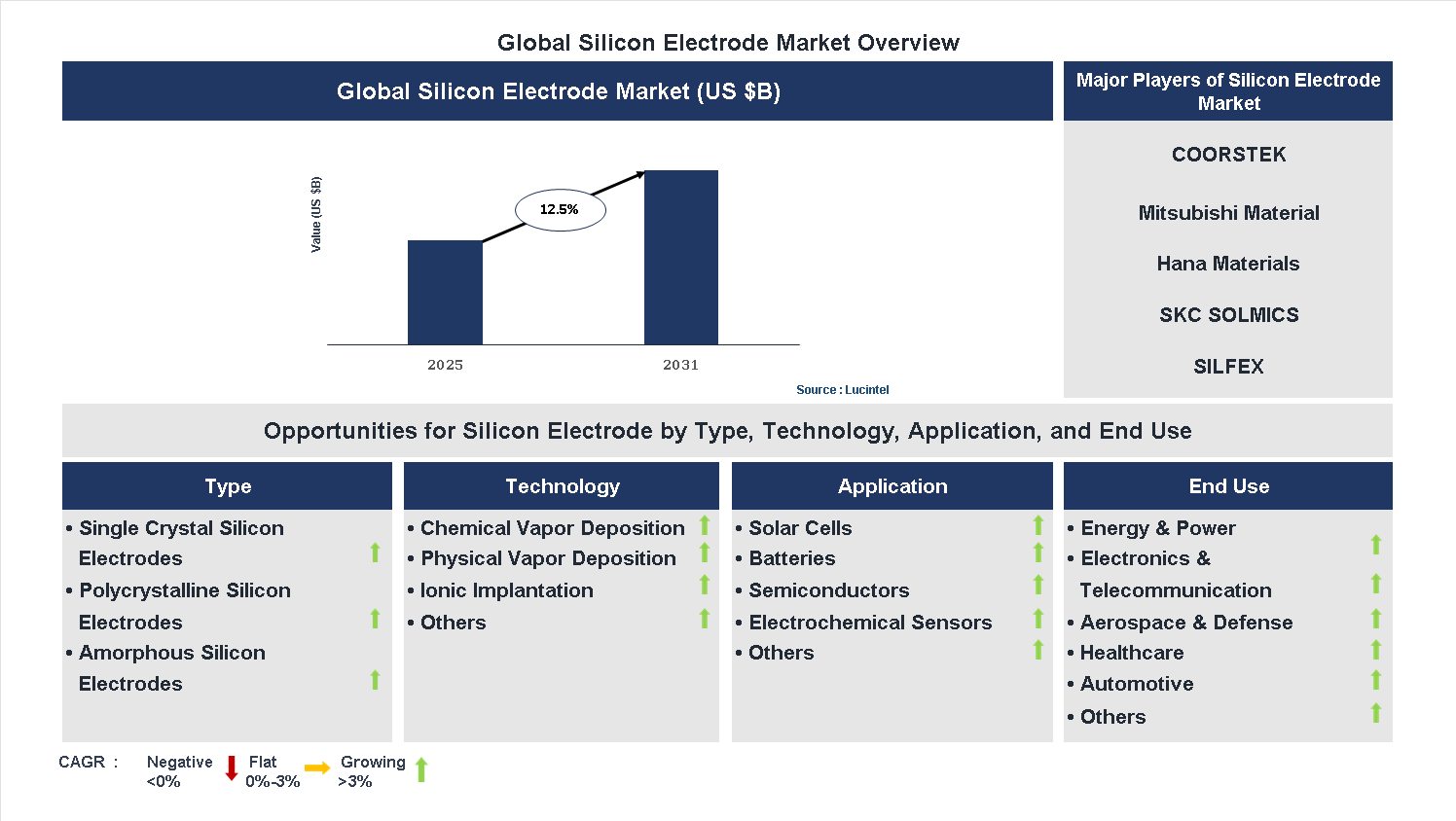
Key data points: The growth forecast = 12.5% annually for the next 7 years. Scroll below to get more insights. This market report covers trends, opportunities and forecasts in silicon electrode market to 2031 by type (single crystal silicon electrodes, polycrystalline silicon electrodes, and amorphous silicon electrodes), technology (chemical vapor deposition, physical vapor deposition, ionic implantation, and others), application (solar cells, batteries, semiconductors, electrochemical sensors, and others), end use (energy & power, electronics & telecommunication, aerospace & defense, healthcare, automotive, and others), and region (North America, Europe, Asia Pacific, and the Rest of the World)
We'll send your sample report shortly.
• Lucintel forecasts that, within the type category, amorphous silicon electrode is expected to witness the highest growth over the forecast period.
• Within the end use category, automotive is expected to witness the highest growth.
• In terms of region, APAC is expected to witness the highest growth over the forecast period. Gain valuable insights for your business decisions with our comprehensive 150+ page report. Sample figures with some insights are shown below.
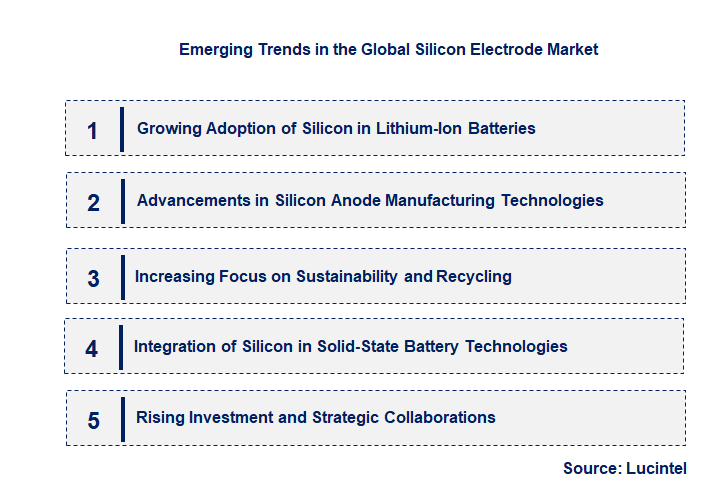
• Growing Adoption of Silicon in Lithium-Ion Batteries: The demand for higher energy density batteries is fueling silicons integration into lithium-ion batteries. Silicons high theoretical capacity (around 4200 mAh/g) compared to graphite (372 mAh/g) makes it an attractive anode material. Companies are developing silicon-graphite composites and pure silicon anodes to enhance battery performance, leading to longer-lasting, faster-charging, and more efficient energy storage solutions. This trend is expected to significantly boost market growth and expand silicon electrode applications across electric vehicles and portable electronics.
• Advancements in Silicon Anode Manufacturing Technologies: Innovations in manufacturing processes are enabling the production of silicon electrodes with improved stability and reduced volume expansion issues. Techniques such as nano-structuring, coating, and alloying are being employed to enhance electrode durability and cycle life. These technological advancements are lowering production costs and making silicon electrodes more commercially viable. As a result, manufacturers can deliver high-performance batteries that meet industry standards, thereby accelerating market adoption and broadening application scopes.
• Increasing Focus on Sustainability and Recycling: Environmental concerns are prompting the industry to develop eco-friendly silicon electrode production and recycling methods. Researchers are exploring sustainable sourcing of silicon and developing recycling techniques to recover silicon from used batteries. These initiatives aim to reduce the carbon footprint and promote circular economy principles within the market. The emphasis on sustainability is influencing consumer preferences and regulatory policies, encouraging companies to adopt greener practices, which in turn is shaping the future landscape of the silicon electrode market.
• Integration of Silicon in Solid-State Battery Technologies: The push towards safer, more efficient energy storage solutions is driving the integration of silicon electrodes in solid-state batteries. Silicons high capacity complements solid electrolytes, offering potential improvements in energy density and safety. Ongoing research focuses on overcoming challenges related to interface stability and manufacturing scalability. The successful incorporation of silicon into solid-state batteries could revolutionize the market by enabling next-generation electric vehicles and portable devices with superior performance, thus opening new avenues for market expansion.
• Rising Investment and Strategic Collaborations: Major industry players and startups are increasing investments in silicon electrode research and forming strategic partnerships to accelerate commercialization. Funding is directed toward overcoming technical barriers, scaling production, and developing new applications. These collaborations foster innovation, reduce time-to-market, and enhance competitive positioning. The influx of capital and strategic alliances are vital for driving technological breakthroughs and establishing a robust supply chain, ultimately shaping a more competitive and resilient silicon electrode market landscape. In summary, these emerging trends are collectively transforming the silicon electrode market by enhancing technological capabilities, promoting sustainability, and expanding application horizons. They are fostering innovation, reducing costs, and improving performance, which are crucial for meeting the growing global demand for advanced energy storage solutions. As these trends continue to evolve, they will significantly influence market dynamics, competitiveness, and the pace of adoption across various industries.
• Enhanced Material Composition: Researchers have developed silicon-based composites that improve electrode stability and lifespan, leading to longer-lasting batteries and reducing the need for frequent replacements, which boosts consumer confidence and reduces costs.
• Cost Reduction Techniques: New manufacturing processes, such as scalable vapor deposition and advanced coating methods, have lowered production costs of silicon electrodes, making them more commercially viable and accessible for large-scale applications.
• Improved Energy Density: Innovations in electrode design have increased energy density, enabling batteries to store more power in smaller sizes, which is critical for electric vehicles and portable electronics, thereby expanding market applications.
• Scaling Production Capacity: Major industry players are investing in large-scale manufacturing facilities, which enhances supply chain robustness and meets rising global demand, thus accelerating market growth and reducing lead times.
• Integration with Solid-State Batteries: Silicon electrodes are increasingly being integrated into solid-state battery technology, offering higher safety, stability, and performance, which is expected to revolutionize energy storage solutions. These developments are collectively transforming the silicon electrode market by enhancing product performance, reducing costs, and expanding application scope. As a result, the market is experiencing rapid growth, increased competitiveness, and a stronger push towards sustainable energy solutions, positioning silicon electrodes as a key component in future energy and electronic systems.
• Expansion in Battery Technologies: Increasing adoption of silicon electrodes in lithium-ion batteries enhances energy density and lifespan, impacting electric vehicle and portable electronics markets positively by providing longer-lasting, more efficient energy storage solutions.
• Development of Advanced Manufacturing Processes: Innovations in manufacturing techniques reduce costs and improve electrode quality, enabling mass production and making silicon electrodes more accessible across various applications, thus accelerating market growth.
• Growing Demand in Healthcare Devices: Silicon electrodes are increasingly used in medical devices for diagnostics and monitoring, driven by the need for high-precision, biocompatible sensors, which expands the application scope within healthcare.
• Adoption in Semiconductor Industry: Silicon electrodes are vital in semiconductor fabrication processes, offering improved conductivity and stability, which supports the development of more advanced electronic components and drives industry growth.
• Focus on Renewable Energy Storage: The integration of silicon electrodes in large-scale energy storage systems supports renewable energy projects by providing efficient, durable storage solutions, thereby boosting market expansion in sustainable energy sectors. In summary, these growth opportunities are significantly impacting the silicon electrode market by fostering innovation, expanding application areas, and driving demand for high-performance, cost-effective solutions. This evolution is positioning the market for sustained growth and increased competitiveness across multiple industries.
• Technological Innovation: The continuous development of advanced silicon electrode materials enhances battery capacity and lifespan, making them more attractive for electric vehicles and portable electronics. Innovations such as nanostructured silicon and composite materials improve electrode stability and charge efficiency, fueling market growth.
• Rising Demand for Electric Vehicles (EVs): The global shift towards sustainable transportation increases the need for high-capacity batteries. Silicon electrodes, with their higher energy density compared to traditional graphite, are critical in meeting the performance requirements of EV batteries, thus driving market expansion.
• Increasing Adoption of Renewable Energy Storage: As renewable energy sources like solar and wind become more prevalent, efficient energy storage solutions are vital. Silicon electrodes enable the development of longer-lasting, higher-capacity batteries, supporting grid stability and renewable integration, which propels market growth.
• Cost Reduction in Silicon Production: Advances in manufacturing processes and economies of scale are lowering the costs of silicon materials. Reduced costs make silicon electrodes more economically viable for widespread use, encouraging manufacturers to adopt this technology and expand the market. The challenges in the silicon electrode market are:
• Material Stability and Durability Issues: Silicons significant volume expansion during charge-discharge cycles leads to mechanical stress and electrode degradation. Overcoming these stability issues requires innovative material engineering, which can increase development costs and delay commercialization.
• High Manufacturing Costs: Despite cost reductions, producing high-quality silicon electrodes remains expensive due to complex fabrication processes and the need for specialized equipment. These costs can hinder mass adoption, especially in price-sensitive markets.
• Regulatory and Environmental Concerns: Stringent environmental regulations regarding raw material sourcing and disposal of battery components pose challenges. Ensuring compliance while maintaining cost-effectiveness requires ongoing innovation and adaptation, which can slow market growth. In summary, the silicon electrode market is driven by technological advancements, increasing demand from electric vehicles and renewable energy storage, and cost reductions in silicon production. However, material stability issues, high manufacturing costs, and regulatory hurdles present significant challenges. These factors collectively shape the market landscape, requiring stakeholders to innovate continuously and adapt strategies to capitalize on growth opportunities while managing risks. The overall impact is a dynamic, rapidly evolving industry with substantial potential for sustainable energy solutions.
• COORSTEK
• Mitsubishi Material
• Hana Materials
• SKC SOLMICS
• SILFEX
• Wakatec
• WDX
• ThinkonSemi
• Wuxi Rigetech
• Zhonggui Semiconductor
• Single Crystal Silicon Electrodes
• Polycrystalline Silicon Electrodes
• Amorphous Silicon Electrodes
• Chemical Vapor Deposition
• Physical Vapor Deposition
• Ionic Implantation
• Others
• Solar Cells
• Batteries
• Semiconductors
• Electrochemical Sensors
• Others
• Energy & Power
• Electronics & Telecommunication
• Aerospace & Defense
• Healthcare
• Automotive
• Others
• North America
• Europe
• Asia Pacific
• The Rest of the World
• United States: The US market has seen increased investment in silicon electrode research, driven by major automakers and tech companies aiming to enhance electric vehicle battery performance. Innovations focus on improving electrode stability and energy density, with several startups emerging in this space. Government incentives and funding programs support R&D efforts, fostering collaborations between academia and industry. Additionally, US-based manufacturers are expanding production capacities to meet rising domestic demand for advanced batteries.
• China: China remains a dominant player, with substantial advancements in silicon electrode manufacturing and integration into commercial batteries. The government’s policies favor the development of new energy vehicles, boosting demand for high-performance electrodes. Chinese companies are investing heavily in reducing silicon content costs and improving electrode durability. The country also leads in establishing supply chains for raw materials, ensuring a competitive edge in the global market. Strategic partnerships and technological innovations continue to propel China’s market growth.
• Germany: Germany’s market is characterized by a focus on high-quality, sustainable silicon electrodes, driven by its strong automotive and renewable energy sectors. Leading automotive manufacturers are collaborating with research institutes to develop next-generation batteries with enhanced safety and longevity. Germany emphasizes eco-friendly production processes and recycling of silicon electrodes. The country is also investing in pilot projects for solid-state batteries, which incorporate silicon anodes, aiming to revolutionize energy storage solutions.
• India: India’s silicon electrode market is emerging, with increasing interest from local battery manufacturers and government initiatives to promote electric mobility. Efforts are underway to develop indigenous raw material sources and improve manufacturing capabilities. The focus is on cost-effective solutions suitable for the Indian market, with startups exploring innovative electrode formulations. Policy support and investments in research are expected to accelerate market growth, making India a potential future hub for silicon electrode production.
• Japan: Japan continues to innovate in silicon electrode technology, emphasizing high-performance and long-lasting batteries for consumer electronics and electric vehicles. Leading companies are investing in nanotechnology and surface modification techniques to enhance electrode stability. Japan’s focus on sustainable manufacturing practices and recycling aligns with global environmental standards. The country is also exploring hybrid electrode systems combining silicon with other materials to optimize performance, positioning itself as a key player in advanced battery development.


• COORSTEK
• Mitsubishi Material
• Hana Materials
• SKC SOLMICS
• SILFEX
• Wakatec
• WDX
• ThinkonSemi
• Wuxi Rigetech
• Zhonggui Semiconductor Q5. Which silicon electrode market segment will be the largest in future? Answer: Lucintel forecasts that, within the type category, amorphous silicon electrode is expected to witness the highest growth over the forecast period. Q6. In silicon electrode market, which region is expected to be the largest in next 5 years? Answer: In terms of region, APAC is expected to witness the highest growth over the forecast period. Q7. Do we receive customization in this report? Answer: Yes, Lucintel provides 10% customization without any additional cost.


Choose a license that fits your team. Instant PDF delivery.
Prices exclude taxes. Instant delivery. Custom licensing available on request.
Market Report · July 22, 2026
Market Report · July 22, 2026
Market Report · July 22, 2026
Trusted partner for strategic intelligence and business growth


Receive a complimentary market analysis tailored to your industry. Our analysts will identify key growth opportunities and competitive dynamics specific to your business.

Market size, growth rate, and key trend analysis for your specific sector.

Top competitor positioning and market share analysis.

Strategic recommendations backed by data-driven insights.
Get curated market intelligence and competitive moves straight to your inbox.
By subscribing, you agree to receive our monthly insights. Unsubscribe anytime.
Receive a complimentary market analysis tailored to your industry. Our analysts will identify key growth opportunities and competitive dynamics specific to your business.
Market size, growth rate, and key trend analysis for your specific sector.
Top competitor positioning and market share analysis.
Strategic recommendations backed by data-driven insights.
Get curated market intelligence, emerging trends, and competitive moves straight to your inbox each month.
By subscribing, you agree to receive our monthly insights. Unsubscribe anytime.
We'll send your sample report shortly.