
Market Report · July 31, 2026

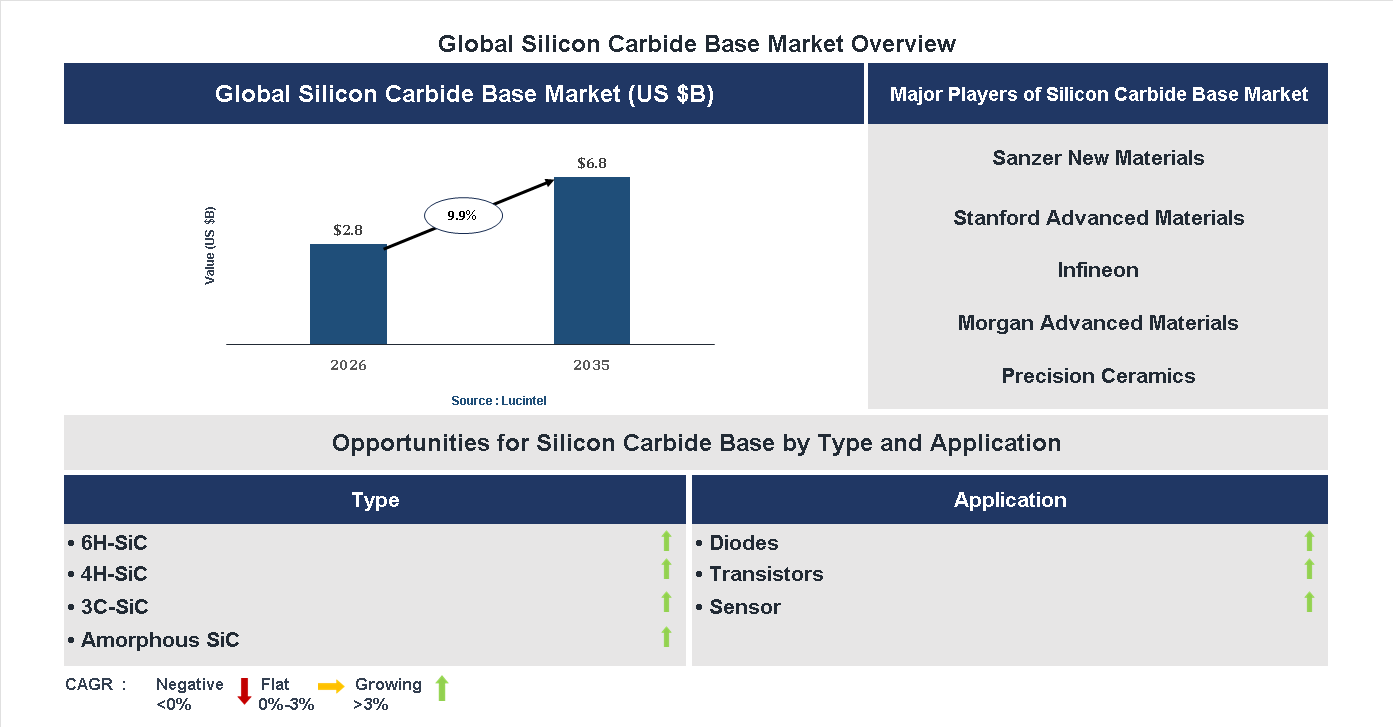
Key data points: The market size in 2035 = $6.8 billion, growth forecast = 9.9% annually for the next 8 years. Scroll below to get more insights. This market report covers trends, opportunities and forecasts in silicon carbide base market to 2035 by type (6H-SiC, 4H-SiC, 3C-SiC, and amorphous SiC), application (diodes, transistors, and sensor), and region (North America, Europe, Asia Pacific, and the Rest of the World)
We'll send your sample report shortly.
• Lucintel forecasts that, within the type category, 6H-SiC is expected to witness the highest growth over the forecast period.
• Within the application category, transistor is expected to witness the highest growth.
• In terms of region, APAC is expected to witness the highest growth over the forecast period. Gain valuable insights for your business decisions with our comprehensive 150+ page report. Sample figures with some insights are shown below.
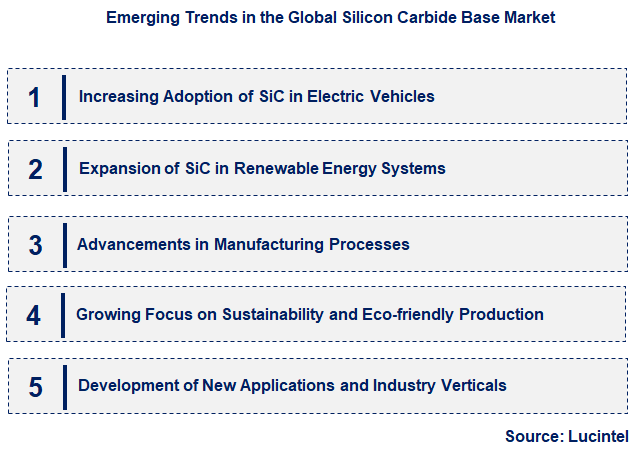
• Increasing Adoption of SiC in Electric Vehicles: The automotive industry is increasingly integrating SiC components into electric vehicles (EVs) due to their superior efficiency and thermal performance. SiC power electronics enable faster charging, longer driving ranges, and improved energy efficiency, making EVs more attractive to consumers. This trend is driven by stricter emissions regulations and the push for sustainable transportation. As automakers seek lightweight, durable, and high-performance materials, SiCs role in EVs is expected to expand significantly, boosting market growth and innovation in automotive power systems.
• Expansion of SiC in Renewable Energy Systems: The rising adoption of renewable energy sources like solar and wind power is fueling demand for efficient power conversion devices. SiC-based semiconductors are increasingly used in inverters and power management systems due to their high switching speeds and low losses. This trend enhances the overall efficiency and reliability of renewable energy installations, reducing operational costs and improving grid stability. As governments and industries prioritize clean energy, the integration of SiC in renewable infrastructure is set to accelerate, opening new avenues for market expansion and technological development.
• Advancements in Manufacturing Processes: Innovations in SiC manufacturing, such as improved crystal growth techniques and cost-effective production methods, are making SiC devices more accessible and affordable. These advancements reduce material costs and enhance device performance, enabling broader adoption across various sectors. Enhanced manufacturing processes also lead to higher quality and consistency in SiC components, which is critical for high-reliability applications. This trend is expected to lower barriers to entry for new players and foster increased competition, ultimately driving down prices and expanding the market reach.
• Growing Focus on Sustainability and Eco-friendly Production: Environmental concerns are prompting manufacturers to adopt greener production methods for SiC. This includes reducing energy consumption during manufacturing, utilizing sustainable raw materials, and implementing recycling practices. Such initiatives aim to minimize the carbon footprint of SiC production, aligning with global sustainability goals. The emphasis on eco-friendly practices not only enhances corporate social responsibility but also appeals to environmentally conscious consumers and industries. This trend is likely to influence regulatory standards and promote sustainable growth within the SiC market.
• Development of New Applications and Industry Verticals: Beyond traditional uses, SiC is increasingly being explored for innovative applications such as high-frequency RF devices, aerospace, and defense systems. Its unique properties enable high-performance solutions in extreme conditions, opening new industry verticals. The expansion into these sectors is driven by the need for materials that can withstand harsh environments and deliver superior performance. As research progresses, new applications are emerging, broadening the market scope and creating opportunities for diversification and technological breakthroughs. In summary, these emerging trends are collectively reshaping the silicon carbide base market by enhancing product performance, expanding application areas, and emphasizing sustainability. They are fostering innovation, reducing costs, and opening new markets, which will likely accelerate growth and competitiveness in the industry. As these developments continue, the SiC market is poised for significant transformation, driven by technological progress and evolving industry demands.
• Growth in Electric Vehicle Market: The increasing adoption of electric vehicles (EVs) is a major driver for the SiC market. SiC semiconductors offer higher efficiency, faster switching speeds, and better thermal performance compared to silicon, making them ideal for EV power electronics. This growth enhances vehicle range, reduces energy consumption, and improves overall performance. As automakers shift towards sustainable transportation, demand for SiC components is expected to surge, creating substantial opportunities for manufacturers and suppliers.
• Expansion of Power Electronics Applications: SiCs superior properties are expanding its use in power electronics beyond EVs, including renewable energy systems, industrial drives, and smart grids. Its ability to operate at higher voltages and temperatures improves system efficiency and reliability. This development reduces energy losses and enhances system lifespan, making SiC a preferred choice. The growing need for energy-efficient solutions across sectors is propelling market growth and encouraging innovation in device design.
• Advancements in Manufacturing Technologies: Recent innovations in manufacturing processes, such as wafer fabrication and doping techniques, are reducing production costs and improving product quality. These advancements enable large-scale, cost-effective production of high-performance SiC devices. As a result, market entry barriers are lowering, and more companies can participate. Enhanced manufacturing efficiency accelerates product availability, supports industry growth, and fosters competitive pricing, ultimately broadening market reach and application scope.
• Rising Focus on Sustainable Energy Solutions: The push for renewable energy sources like solar and wind power is increasing demand for efficient power conversion devices. SiCs high-temperature tolerance and efficiency make it ideal for grid integration and energy storage systems. Governments and industries are investing in clean energy infrastructure, which boosts SiC adoption. This trend promotes sustainable development, reduces carbon footprints, and opens new avenues for SiC applications in energy management, further expanding market potential.
• Increasing Investment and Strategic Collaborations: Major corporations and startups are investing heavily in SiC technology development through funding, acquisitions, and partnerships. Strategic collaborations facilitate knowledge sharing, innovation, and faster commercialization of advanced SiC products. These investments enhance supply chain resilience and expand market reach. As a result, the industry benefits from accelerated technological progress, increased competition, and a broader product portfolio, which collectively drive market growth and global adoption. These recent developments significantly impact the silicon carbide base market by enhancing product performance, reducing costs, and expanding application areas. The growth in electric vehicles, renewable energy, and industrial sectors creates a robust demand pipeline. Technological innovations and strategic investments further strengthen market competitiveness. Overall, these opportunities are fostering a dynamic environment that is propelling the silicon carbide base market toward sustained growth, innovation, and increased global adoption, shaping the future of power electronics and energy solutions.
• Expanding Power Electronics Market: The growing adoption of SiC in power electronics for electric vehicles, renewable energy systems, and industrial drives offers substantial growth. SiC devices provide higher efficiency, reduced energy loss, and better thermal performance compared to traditional silicon components. This trend is driven by the global shift toward sustainable energy solutions and the need for compact, high-performance electronic systems, positioning SiC as a critical material in next-generation power management.
• Increasing Demand in Electric Vehicles: The automotive industry’s shift toward electric vehicles (EVs) is a major driver for SiC market growth. SiC power modules enable faster charging, longer driving ranges, and improved energy efficiency in EVs. Automakers are integrating SiC components to meet stringent emissions standards and enhance vehicle performance. The rising adoption of EVs worldwide, coupled with government incentives, is expected to significantly boost SiC demand in automotive applications.
• Growth in Renewable Energy Infrastructure: The expansion of solar and wind energy projects necessitates advanced power conversion systems, where SiC plays a vital role. Its high-temperature tolerance and efficiency improve the performance of inverters and converters, reducing operational costs and enhancing grid stability. As countries invest heavily in renewable infrastructure, SiC-based solutions are increasingly preferred for their reliability and efficiency, creating new opportunities for market players.
• Industrial Applications and High-Temperature Devices: SiC’s ability to operate at extreme temperatures and harsh environments makes it ideal for industrial applications such as motor drives, heating elements, and sensors. Its durability and thermal stability improve equipment lifespan and performance, reducing maintenance costs. The industrial sector’s push for more resilient and efficient systems is expected to drive demand for SiC components, especially in sectors like oil & gas, aerospace, and manufacturing.
• Technological Innovations and Cost Reductions: Advances in manufacturing processes and material science are lowering the production costs of SiC devices, making them more accessible for a broader range of applications. Innovations such as wafer size increases and improved epitaxial growth techniques enhance device performance and yield. Cost reductions will accelerate adoption across various sectors, including consumer electronics and telecommunications, further expanding the market’s reach and potential. The silicon carbide base market is poised for significant growth driven by technological advancements and increasing adoption across diverse industries. Opportunities in power electronics, automotive, renewable energy, industrial applications, and cost innovations will shape the market’s future landscape. Companies that strategically invest in research, development, and manufacturing efficiencies will be well-positioned to capitalize on these expanding opportunities, ultimately transforming energy efficiency and industrial performance worldwide.
• Technological Advancements: The continuous development of manufacturing techniques, such as high-temperature sintering and chemical vapor deposition, has significantly improved the quality and performance of silicon carbide products. These innovations enable the production of more efficient semiconductors, abrasives, and refractory materials, expanding their application scope. As technology progresses, costs are expected to decrease, making silicon carbide more accessible and attractive for various industries. This technological evolution is crucial for meeting the increasing demand for high-performance materials in electronics, automotive, and energy sectors, thereby fueling market growth.
• Growing Electronics and Semiconductor Industry: The rising adoption of silicon carbide in power electronics and semiconductors is a major growth driver. Silicon carbides superior properties, such as high thermal conductivity, high breakdown voltage, and efficiency at high temperatures, make it ideal for high-power devices. The increasing demand for electric vehicles, renewable energy systems, and industrial automation is boosting the need for efficient power modules, which silicon carbide can provide. This trend is expected to continue as industries seek more reliable and energy-efficient solutions, thereby expanding the silicon carbide market significantly.
• Increasing Demand from Automotive Sector: The automotive industry is increasingly utilizing silicon carbide components for electric vehicles (EVs) and hybrid electric vehicles (HEVs). Silicon carbide-based power electronics improve energy efficiency, reduce weight, and enhance vehicle performance. Governments worldwide are promoting EV adoption through incentives and regulations, further driving demand. As automakers focus on developing more efficient, durable, and lightweight vehicles, silicon carbides role becomes more prominent. This sectors growth directly correlates with the expansion of the silicon carbide market, making it a vital driver for future development.
• Expansion in Aerospace and Defense Applications: Silicon carbides exceptional thermal stability, mechanical strength, and resistance to harsh environments make it suitable for aerospace and defense applications. It is used in high-temperature sensors, missile components, and advanced structural parts. The increasing focus on developing lightweight, durable materials for aircraft and defense systems is propelling demand. As technological innovations continue, silicon carbides application scope in these sectors is expected to broaden, contributing significantly to market growth and diversification.
• Supportive Regulatory Environment and Government Initiatives: Governments worldwide are promoting the adoption of advanced materials like silicon carbide through policies, subsidies, and research funding. Regulations aimed at reducing carbon emissions and increasing energy efficiency are encouraging industries to adopt silicon carbide-based solutions. These policies facilitate market entry, reduce barriers, and stimulate innovation. The regulatory support accelerates the development and deployment of silicon carbide technologies, ensuring sustained market growth and attracting investments in research and manufacturing facilities. The challenges facing the silicon carbide base market include:-
• High Production Costs: Manufacturing silicon carbide involves complex processes such as high-temperature sintering and chemical vapor deposition, which are energy-intensive and costly. The high costs associated with raw materials, specialized equipment, and skilled labor further escalate overall production expenses. These costs can limit the affordability and competitiveness of silicon carbide products, especially for small and medium-sized enterprises. Overcoming this challenge requires technological innovations to reduce manufacturing costs, which is critical for expanding market penetration and achieving economies of scale.
• Regulatory and Environmental Concerns: The production and disposal of silicon carbide materials pose environmental challenges, including emissions and waste management issues. Stringent regulations aimed at reducing industrial pollution can increase compliance costs and restrict manufacturing processes. Additionally, the environmental impact of raw material extraction and energy consumption during production may lead to regulatory restrictions, affecting supply chains and market stability. Navigating these regulatory landscapes requires sustainable practices and compliance strategies, which can be resource-intensive and time-consuming.
• Technological Limitations and Material Compatibility: Despite advancements, certain technological limitations persist, such as difficulties in large-scale manufacturing of defect-free silicon carbide wafers and integration with existing semiconductor processes. Compatibility issues with other materials and devices can hinder widespread adoption. Overcoming these technical barriers necessitates ongoing research and development, which involves significant investment and time. Addressing these limitations is essential for unlocking the full potential of silicon carbide in high-performance applications and ensuring market competitiveness. In summary, the silicon carbide base market is driven by technological innovations, expanding industries such as electronics, automotive, and aerospace, and supportive regulatory policies. However, high production costs, environmental concerns, and technological challenges pose significant hurdles. The interplay of these factors will shape the markets future, requiring strategic investments and sustainable practices to harness growth opportunities while mitigating risks. Overall, the markets evolution hinges on balancing innovation with regulatory compliance and cost management to achieve long-term success.
• Sanzer New Materials
• Stanford Advanced Materials
• Infineon
• Morgan Advanced Materials
• Precision Ceramics
• Coherent Corp.
• INSACO Inc.
• Henkel Adhesives
• Silcarb
• KYOCERA
• 6H-SiC
• 4H-SiC
• 3C-SiC
• Amorphous SiC
• Diodes
• Transistors
• Sensor
• North America
• Europe
• Asia Pacific
• The Rest of the World
• United States: The US market has seen rapid adoption of SiC in electric vehicle (EV) powertrains and renewable energy systems. Major companies like Cree and ON Semiconductor have expanded production capacities, investing heavily in research and development. The government’s push for clean energy and EV infrastructure has accelerated market growth, with increased focus on high-efficiency power devices. Additionally, US-based startups are innovating in SiC device design, further boosting technological advancements. The integration of SiC in aerospace and defense sectors is also gaining momentum, reflecting its versatility and performance benefits.
• China: China remains a dominant player in the SiC market, driven by its robust manufacturing base and government support for new energy vehicles and renewable energy projects. Local firms such as BYD and SICC are expanding their SiC component production to meet domestic demand. The Chinese government’s policies favor the development of advanced power electronics, fostering innovation and reducing reliance on imports. Recent investments in SiC wafer fabrication facilities have increased production capacity, positioning China as a key exporter. The market is also witnessing increased adoption in industrial applications, including motor drives and smart grids.
• Germany: Germany’s SiC market is characterized by strong industrial and automotive sector integration. Leading automotive manufacturers like Volkswagen and BMW are incorporating SiC components into electric vehicles to improve efficiency and range. German research institutions are actively involved in developing next-generation SiC devices, focusing on thermal management and reliability. The country’s emphasis on Industry 4.0 and renewable energy integration has spurred demand for high-performance SiC solutions. Additionally, Germany’s focus on sustainable manufacturing practices is encouraging innovations in SiC wafer production and device fabrication.
• India: India’s SiC market is emerging, with increasing interest from the automotive and renewable energy sectors. Government initiatives promoting electric mobility and solar energy are driving demand for SiC-based power electronics. Local startups and established firms are investing in developing indigenous SiC devices to reduce import dependence. The market benefits from a growing manufacturing ecosystem and supportive policies aimed at boosting domestic production. As infrastructure projects expand, the adoption of SiC components in industrial drives, smart grids, and EVs is expected to accelerate, positioning India as a promising growth market.
• Japan: Japan’s SiC industry is focused on high-end applications in electronics, automotive, and industrial sectors. Leading companies like ROHM and Sumitomo are advancing SiC device technology, emphasizing miniaturization and efficiency. Japan’s strong research and development ecosystem supports innovations in SiC wafer fabrication and device reliability. The country is also investing in the development of SiC-based power modules for renewable energy and electric vehicles. Government initiatives aim to enhance domestic manufacturing capabilities and reduce reliance on imports, fostering a competitive environment for SiC technology development and deployment.


• Sanzer New Materials
• Stanford Advanced Materials
• Infineon
• Morgan Advanced Materials
• Precision Ceramics
• Coherent Corp.
• INSACO Inc.
• Henkel Adhesives
• Silcarb
• KYOCERA Q6. Which silicon carbide base market segment will be the largest in future? Answer: Lucintel forecasts that, within the type category, 6H-SiC is expected to witness the highest growth over the forecast period. Q7. In silicon carbide base market, which region is expected to be the largest in next 5 years? Answer: In terms of region, APAC is expected to witness the highest growth over the forecast period. Q8. Do we receive customization in this report? Answer: Yes, Lucintel provides 10% customization without any additional cost.


Choose a license that fits your team. Instant PDF delivery.
Prices exclude taxes. Instant delivery. Custom licensing available on request.
Market Report · July 31, 2026
Market Report · July 31, 2026
Market Report · July 31, 2026
Trusted partner for strategic intelligence and business growth


Receive a complimentary market analysis tailored to your industry. Our analysts will identify key growth opportunities and competitive dynamics specific to your business.

Market size, growth rate, and key trend analysis for your specific sector.

Top competitor positioning and market share analysis.

Strategic recommendations backed by data-driven insights.
Get curated market intelligence and competitive moves straight to your inbox.
By subscribing, you agree to receive our monthly insights. Unsubscribe anytime.
Receive a complimentary market analysis tailored to your industry. Our analysts will identify key growth opportunities and competitive dynamics specific to your business.
Market size, growth rate, and key trend analysis for your specific sector.
Top competitor positioning and market share analysis.
Strategic recommendations backed by data-driven insights.
Get curated market intelligence, emerging trends, and competitive moves straight to your inbox each month.
By subscribing, you agree to receive our monthly insights. Unsubscribe anytime.
We'll send your sample report shortly.