Silica Sol Trends and Forecast
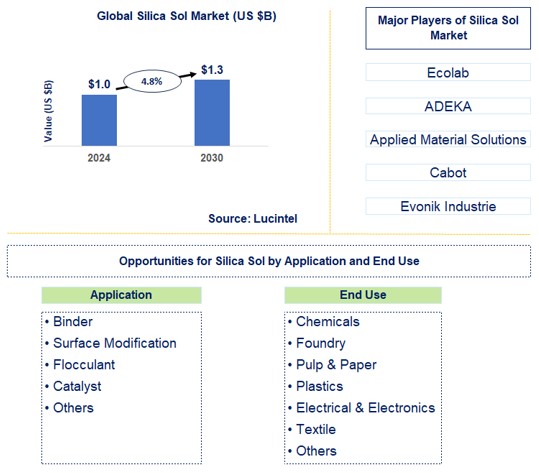
The future of the global silica sol market looks promising with opportunities in the chemicals, foundry, pulp & paper, plastics, electrical & electronics, and textile markets. The global silica sol market is expected to reach an estimated $1.4 billion by 2031 with a CAGR of 4.8% from 2025 to 2031. The major drivers for this market are rising demand for high-quality and eco-friendly materials and expanding adoption of this material in various industries, such as automotive, aerospace, and healthcare.
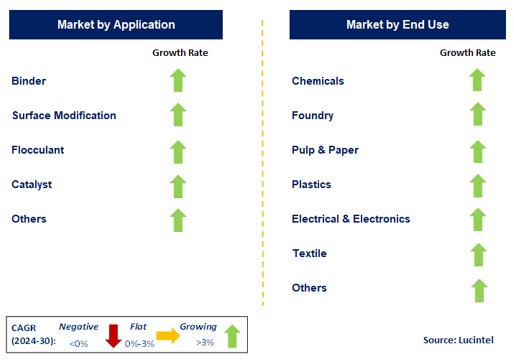
• Lucintel forecasts that, within the application category, the catalyst will remain the largest segment over the forecast period.
• Within the end use category, chemicals will remain the largest segment over the forecast period.
• In terms of regions, APAC is expected to witness the highest growth over the forecast period.
Gain valuable insights for your business decisions with our comprehensive 150+ page report.
Emerging Trends in the Silica Sol Market
Environmental issues and the increasing need for industries, silica sol is changing very fast. The major trends that are bound to shape the forecast for the silica sol market in the future would be more emphasis on the sustainability of the products, better performance in the precision engineering applications and new developments and inventions brought about by the advancing technologies. These developments are changing the way silica sol is produced and applied across various industries as the industries comes up with more demands for high performance and environmentally friendly materials.
• Eco-Friendly Trends in Manufacturing: One of the key trends that can be observed in silica sol industries is the move towards more environmentally centric, sustainable practices in their operation. Firms are increasingly adopting green technologies that reduce waste and energy used in the work. This trend is caused by environmental laws and consumers’ desire to use environmentally friendly products. Sustainable production techniques such as using renewable energy sources and developing biodegradable formulations reduce carbon emissions of silica sol which attracts many environmentally concerned industries.
• Advanced Sophisticated Silica Sol In Precision Casting: Expansion in the market for casting materials with an exceptional degree, along with the requirement for silica sol, is inducing advancement in the formulation to silica sol. Then, aerospace, automotive, and even defense industries all rely on the application of accuracy concentrated silica sol for the purpose of mold making. The regression in the production of unrefined dispersed silica sol allows the melt down of more intricately castings. This trend is pressing the companies to come up with more efficient processing technologies that will improve silica sol’s properties and stability which are key in satisfying the casting requirements in these demanding industries.
• Application of Silica Sol In Semiconductor and Electronics Industries: Silica sol is vital in the manufacture of advanced components as the semiconductor and electronics industries continue to expand. Electronics as a sector is focused on the production of miniaturized and compact devices and for such to be achieved high purity materials are vital hence the trend of developing silica sol with more refined particles. This allows for targeting and more effective use in the production processes of semiconductors, photomasks, and circuit boards whose dependability relies on top grade and reliable materials.
• Silica Sol: Optimal Coating Solutions in the Coating Industry: There is a focus on utilizing silica sol for energy-efficient solutions necessitated by new pressure for better thermal insulation. Applications such as under development include Silica Sol coatings for use in building materials, industrial coatings, and automotive surfaces. Development of coatings that enhance energy efficiency is a growing trend as the world strives to reduce energy consumption and carbon emissions. Silica sol is an excellent choice for industries in need of sustainable solutions as it has been shown to enhance both thermal conductivity and durability of coatings.
• Innovations in Silica Sol: in Medicine: The potential of silica sol in drug delivery systems and medical devices is making it a popular ideal material thus there is an emerging trend of using silica sol in medical applications. Researchers are working on new silica sol formulations which can be utilized for biocompatible coatings of implants as well as for targeted drug delivery systems. The field of medicine is increasingly using silica sol due to its biocompatibility, stability and versatility, thus allowing researchers to come up with new and advanced solutions in the healthcare sector.
The silica sol market is getting changed through these new trends which encourage the production of more advanced, efficient and targeted products. Increased emphasis on the specific applications and environmental issues are likely to be the factors that would improve modes of production, performance levels and cost-effectiveness of processes. Thus, in the foreseeable future, silica sol will remain important in the advanced manufacturing technologies across various industries, including electronics, construction, healthcare etc.
Recent Developments in the Silica Sol Market
There are several forces or factors, such as technological change, the quest for sustainability, and increasing industrial usage, which are changing the silica sol market. Recent exercise has been focusing on changing the production processes for the purposes of enhancing the quality of the products and broadening the use of those products in electronics, automobile, as well as foundry industries. Together, these developments are changing the silica sol market by improving the available product characteristics and fulfilling the increasing demand for high-performance, environmentally safe materials.
• Enhanced Production Techniques: Developments in production processes for silica sol are probably one of the most important improvements. The advancements in such formulation approaches have resulted in lower energy requirements, reduced costs and improved efficiency, and minimized waste. Currently, industries are investing in high-end technology like sol-gel processing techniques to produce finer and more stable silica sols that can be used in a number of industries with high material characteristics. All these improvements have led to the wider use of silica sol in more applications and indeed have increased its availability.
• Minimized Environmental Impact Silica Sol Production: With the increased demand for sustainability, the production of silica sol has undergone massive restructuring and improvements. Adopting the use of renewable raw materials and other technologies that help to reduce the carbon footprint has been one of the goals of many manufacturers. This includes trying to cut down energy and water consumption, reclaiming or recycling wasted or used raw materials, and cutting down releases such as carbon emissions. With the tightening of environmental policies, companies have been able to concentrate more on improving their silica sol production processes by making them more sustainable.
• Silica Sol for Semiconductor and Electronics Applications: Over the recent past, the application of silica sol in the semiconductor and electronics industries has been on the rise. The invention of ultra pure silica sol is facilitating a more accurate and effective production of electronics components. These improvements are particularly critical for the production of photomasks and microelectronics, as their applications necessitate the use of high-quality materials. The performance of materials has been improving due to the continuous restructuring of silica sol formulations, and this has helped to cater to the increasing demands for miniaturization and high-performance materials in the electronics industry.
• Silica Sol for High-Precision Casting: Silica sol is today finding much broader application in high-precision casting with notable effectiveness in aerospace, automotive, and defense industries, among others. Improved casting qualities, such as better surface finishes and higher durability, can be seen vis-à-vis the recent advances made in the methods of formulating silica sol. The use of finer silica particles and better dispersion methods has resulted in these advancements by improving the quality of the casting molds. With the increasing applications of precision casting, the high-performance and quality components produced by using silicate sol are bound to have a wide range of applications.
• Widening Scope of Silica Sol in the Construction: With advancements in technology, silica sol is increasingly gaining popularity in construction coating as well as concrete. In addition, new and improved silica sol-based coatings have been formulated to improve water resistance, durability, and reduce energy needs. These coatings are gaining traction in both commercial and residential buildings since they are a better ecological option than conventional materials. There is an increasing range of silica sol formulations that are being developed specifically for construction use in response to the demand for energy-saving and cleaner building solutions.
These developments are expected to drive the expansion of the silica sol market, as they allow manufacturers to accommodate more diverse, specialized products. The growth of silica sol is also being driven by new methods of production and new applications, sustainability, and other innovations, allowing the substance to remain relevant in electronics, automotive, construction, and any other industry.
Strategic Growth Opportunities in the Silica Sol Market
As the demand for silica sol increases, various applications provide avenues for strategic growth. Silica sol has unique characteristics that make it viable in many industries, and manufacturers are targeting specific market segments to guide their growth. Companies can find new opportunities by considering new technologies and market needs.
• Introduction to Silica Sol: The automotive sector is the second fastest-growing sector for silica sol. The increasing demand for engine parts, components, and high-performance transmission systems is driving the demand for silica sol casting materials. The popularity of silica sol is also due to the desire for more efficient and environmentally friendly manufacturing practices. This growth is supported by the automotive industry’s shift toward lightweight vehicle structures and energy-efficient vehicles.
• Market Segmentation by Use and Geography: Geographically, silica sol has a growing presence in certain regions within the automotive sector. In addition, the semiconductor and electronics industries offer strategic growth opportunities for silica sol, especially with the growing need for smaller, advanced components. Silica sol has found its place in semiconductor photomasks and microelectronics as these industries have developed. The growth of the Internet of Things (IoT) and the ongoing trend of shrinking electronics create further opportunities for silica sol manufacturers.
• Coatings and Construction: The expansion of the construction sector is benefiting from the rising use of silica sol in coatings, particularly in applications that promote energy efficiency. As the trend for sustainability continues, silica sol coatings provide better resistance to wear, moisture, and heat. These coatings are used in eco-friendly and energy-saving commercial and residential construction, which is in growing demand. The development of new products for the construction sector is expected to create additional opportunities.
• The Foundry Sector: Silica sol continues to play a vital role in the foundry sector, particularly in precision casting. The growing demand for precision castings in the aerospace, automotive, and military industries has led to increased use of silica sol. Manufacturers are focusing on improving the dispersibility and stability of fumed silica to meet the desired casting quality for complex and high-performance casts. As the demand for accurate parts and components grows, the foundry industry remains a key segment for silica sol growth.
• Medical and Healthcare Applications: The medical and healthcare sectors present emerging growth opportunities for silica sol. Researchers are exploring its use in drug delivery systems and coating materials for medical devices. Its biocompatibility, stability, and versatility make silica sol an ideal material for the medical field. As new methods of drug delivery and advanced medical devices are developed, silica sol continues to provide opportunities for innovation in this sector.
The crucial industries driving silica sol applications—automotive, electronics, construction, and healthcare—are expanding the market. By providing solutions to these industries and leveraging technological advancements, manufacturers can broaden their client base and produce products that meet the growing needs of these sectors.
Silica Sol Market Driver and Challenges
The silica sol market is driven by various factors and is challenged by several obstacles related to technology, economics, and regulatory aspects. These elements determine the growth pattern of the market, as well as supply and demand within various industries. It is imperative for stakeholders to understand the key drivers and challenges to position themselves effectively in the changing silica sol marketplace.
• Technological Advancements: Technological progress in silica sol production methods is a major factor affecting overall market growth. Developments in sol-gel processing, particle dispersion, and new synthesis techniques have improved the quality of silica sol. These advancements are enhancing the efficiency, cost-effectiveness, and application range of silica sol in industries like automotive, electronics, and construction.
• Increased Demand in High-Precision Applications: There is a growing demand for silica sol in applications requiring high precision, such as semiconductor production, automotive components, and aerospace. The growth of industries requiring intricate designs and fine materials has spurred the market for silica sol, which is integral in precision casting and semiconductor fabrication. The demand for high-quality materials has been a significant driver for the market.
• Sustainability Concerns and Regulatory Factors: The global push toward environmental sustainability is reshaping the silica sol market. This trend is being driven by the increasing regulatory pressure on industries to reduce emissions and waste. Companies are increasingly adopting eco-friendly production methods, such as using renewable energy sources and reducing their carbon footprints, to align with environmental policies.
Challenges:
• High Production Costs: Despite the demand for silica sol, challenges persist due to its relatively high production costs. The production of high-quality silica sol, particularly for precision and high-end applications, can be costly. The cost of raw materials, energy consumption, and the required expertise for production processes can all raise costs, which is a barrier for some manufacturers.
• Availability of Raw Materials: Another challenge in the silica sol market is the availability and cost of raw materials. Silica sol production requires specific raw materials like silicon dioxide, which may be subject to supply chain constraints. Any disruptions in the supply of raw materials can have an adverse effect on production schedules and overall costs.
• Competition and Market Saturation: The silica sol market is highly competitive, with many companies trying to expand their market share. While demand is growing in specific sectors, increased competition may lead to market saturation. Companies will need to continually innovate and improve the quality of their silica sol products to stand out in an increasingly crowded market.
In summary, while technological advancements, growing demand in high-precision applications, and sustainability efforts are driving the silica sol market, challenges related to high production costs, raw material availability, and market competition continue to shape the future of the industry.
List of Silica Sol Companies
Companies in the market compete on the basis of product quality offered. Major players in this market focus on expanding their manufacturing facilities, R&D investments, infrastructural development, and leverage integration opportunities across the value chain. Through these strategies silica sol companies cater increasing demand, ensure competitive effectiveness, develop innovative products & technologies, reduce production costs, and expand their customer base. Some of the silica sol companies profiled in this report include-
• Ecolab
• ADEKA
• Applied Material Solutions
• Cabot
• Evonik Industrie
• Merck
• Nissan Chemical
• W. R. Grace
• Gelest
• Sterling Chemicals
Silica Sol by Segment
The study includes a forecast for the global silica sol by application, end use, and region.
Silica Sol Market by Application [Analysis by Value from 2019 to 2031]:
• Binder
• Surface Modification
• Flocculant
• Catalyst
• Others
Silica Sol Market by End Use [Analysis by Value from 2019 to 2031]:
• Chemicals
• Foundry
• Pulp & Paper
• Plastics
• Electrical & Electronics
• Textile
• Others
Silica Sol Market by Region [Analysis by Value from 2019 to 2031]:
• North America
• Europe
• Asia Pacific
• The Rest of the World
Country Wise Outlook for the Silica Sol Market
Silica sol is a water-based colloidal suspension of silica particles that has advanced significantly around the world. This advancement has been shaped by diverse industrial applications, including coatings, adhesives, and foundries. In recent years, technological advancements, coupled with escalating market and environmental standards, have stimulated the revival of the silica sol segment. This is particularly true for the United States, China, Germany, India, and Japan, where business leaders are moving towards greener manufacturing practices and expanding the scope of applications to increase their market reach in targeted regions.
• USA: The USA has been active in silica sol production, and its increase is driven by the rise in demand from the automotive and aerospace industries. Developments in silica sol formulations have also enabled better use in precision casting and coatings. The country is also placing emphasis on green processing methods, the use of biodegradable materials, and reducing energy resource consumption. Another objective is to enhance research and development activities, focusing on areas where silica sol is used in specialty products. For example, in semiconductor applications, there is a high level of purity required for silica.
• China: China is one of the biggest producers and consumers of silica sol due to industrialization. Currently, silica sol production facilities in China are being improved to comply with environmental regulations. The country is also making progress in advancing the use of silica sol in electronics and construction. Research investments are focused on developing high-quality silica sol for investment castings, with applications in the automotive, machinery, and defense industries.
• Germany: The "Made in Germany" label is synonymous with advanced manufacturing industries, and in this case, Germany has made significant progress in silica sol technology. German companies have been at the forefront of producing high-quality silica sol used in high-precision applications, such as casting and electronics. Innovation is being driven by the demand for more sustainable and efficient production methods. German firms are also exploring the potential use of silica sol as energy-efficient coatings and as a binder in the ceramics manufacturing industry. Other research efforts are focused on producing silica sols that are compatible and stable for wider use.
• India: The expansion of the manufacturing sector, especially in the automotive and foundry industries, has contributed to the growth of the silica sol market in India. High-quality casting in sectors such as automotive, machinery, and heavy engineering has led to improvements in silica sol production in India. More importantly, the increasing interest in eco-friendly silica sol chemistry in India has boosted feature development. Domestic manufacturers are raising production levels and improving the quality of silica sol to meet international standards.
• Japan: Numerous innovations intended to improve quality and increase the range of useful applications have benefited JapanÄX%$%Xs silica sol industry. Semiconductors have increasingly been incorporated into domestic appliances and automobiles due to JapanÄX%$%Xs strong background in these industries, which has increased the use of silane in their manufacturing and precision casting. Japanese companies are developing advanced manufacturing facilities to produce ultra-fine silica sols that meet stringent industrial specifications. The country is also making efforts to reduce the environmental impact of silane production by minimizing waste generation and energy consumption.
Features of the Global Silica Sol Market
Market Size Estimates: Silica sol market size estimation in terms of value ($B).
Trend and Forecast Analysis: Market trends (2019 to 2024) and forecast (2025 to 2031) by various segments and regions.
Segmentation Analysis: Silica sol market size by application, end use, and region in terms of value ($B).
Regional Analysis: Silica sol market breakdown by North America, Europe, Asia Pacific, and Rest of the World.
Growth Opportunities: Analysis of growth opportunities in different applications, end uses, and regions for the silica sol market.
Strategic Analysis: This includes M&A, new product development, and competitive landscape of the silica sol market.
Analysis of competitive intensity of the industry based on Porter’s Five Forces model.
If you are looking to expand your business in this market or adjacent markets, then contact us. We have done hundreds of strategic consulting projects in market entry, opportunity screening, due diligence, supply chain analysis, M & A, and more.
FAQ
Q1. What is the silica sol market size?
Answer: The global silica sol market is expected to reach an estimated $1.4 billion by 2031.
Q2. What is the growth forecast for silica sol market?
Answer: The global silica sol market is expected to grow with a CAGR of 4.8% from 2025 to 2031.
Q3. What are the major drivers influencing the growth of the silica sol market?
Answer: The major drivers for this market are rising demand for high-quality and eco-friendly materials and expanding adoption of this material in various industries, such as automotive, aerospace, and healthcare.
Q4. What are the major segments for silica sol market?
Answer: The future of the silica sol market looks promising with opportunities in the chemicals, foundry, pulp & paper, plastics, electrical & electronics, and textile markets.
Q5. Who are the key silica sol market companies?
Answer: Some of the key silica sol companies are as follows:
• Ecolab
• ADEKA
• Applied Material Solutions
• Cabot
• Evonik Industrie
• Merck
• Nissan Chemical
• W. R. Grace
• Gelest
• Sterling Chemicals
Q6. Which silica sol market segment will be the largest in future?
Answer: Lucintel forecasts that catalyst will remain the largest segment over the forecast period.
Q7. In silica sol market, which region is expected to be the largest in next 5 years?
Answer: APAC is expected to witness highest growth over the forecast period.
Q.8 Do we receive customization in this report?
Answer: Yes, Lucintel provides 10% customization without any additional cost.
This report answers following 11 key questions:
Q.1. What are some of the most promising, high-growth opportunities for the silica sol market by application (binder, surface modification, flocculant, catalyst, and others), end use (chemicals, foundry, pulp & paper, plastics, electrical & electronics, textile, and others), and region (North America, Europe, Asia Pacific, and the Rest of the World)?
Q.2. Which segments will grow at a faster pace and why?
Q.3. Which region will grow at a faster pace and why?
Q.4. What are the key factors affecting market dynamics? What are the key challenges and business risks in this market?
Q.5. What are the business risks and competitive threats in this market?
Q.6. What are the emerging trends in this market and the reasons behind them?
Q.7. What are some of the changing demands of customers in the market?
Q.8. What are the new developments in the market? Which companies are leading these developments?
Q.9. Who are the major players in this market? What strategic initiatives are key players pursuing for business growth?
Q.10. What are some of the competing products in this market and how big of a threat do they pose for loss of market share by material or product substitution?
Q.11. What M&A activity has occurred in the last 5 years and what has its impact been on the industry?
For any questions related to Silica Sol Market, Silica Sol Market Size, Silica Sol Market Growth, Silica Sol Market Analysis, Silica Sol Market Report, Silica Sol Market Share, Silica Sol Market Trends, Silica Sol Market Forecast, Silica Sol Companies, write Lucintel analyst at email: helpdesk@lucintel.com. We will be glad to get back to you soon.