
Market Report · July 24, 2026

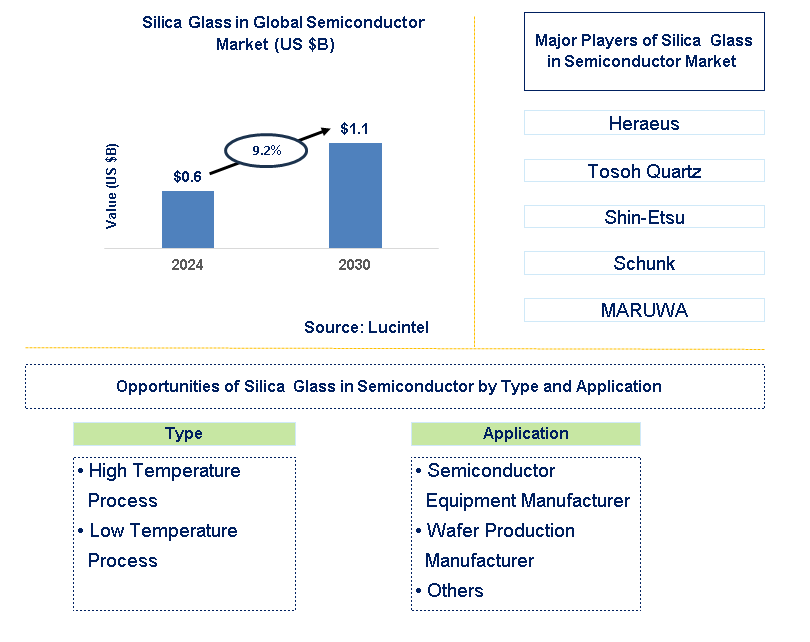
Key data points: The market size in 2030 = $1.1 billion, growth forecast = 9.2% annually for the next 6 years. Scroll below to get more insights. This market report covers trends, opportunities, and forecasts in the global silica glass for semiconductor market to 2030 by type (high temperature process and low temperature process), application (semiconductor equipment manufacturer, wafer production manufacturer, and others), and region (North America, Europe, Asia Pacific, and the Rest of the World)
We'll send your sample report shortly.
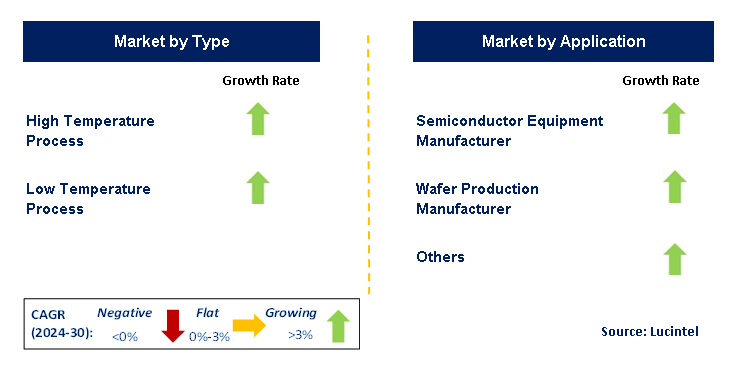
• Lucintel forecasts that, within the type category, high temperature process is expected to witness the higher growth over the forecast period due to the advancements in high temperature process technology and the growing adoption of advanced packaging technologies.
• Within the application category, wafer production manufacturer is expected to witness the higher growth.
• In terms of regions, APAC is expected to witness highest growth over the forecast period due to increasing focus on electric vehicle and renewable energy and presence of a large and well-established semiconductor manufacturing industry in the region. Gain valuable insights for your business decisions with our 150+ page report.
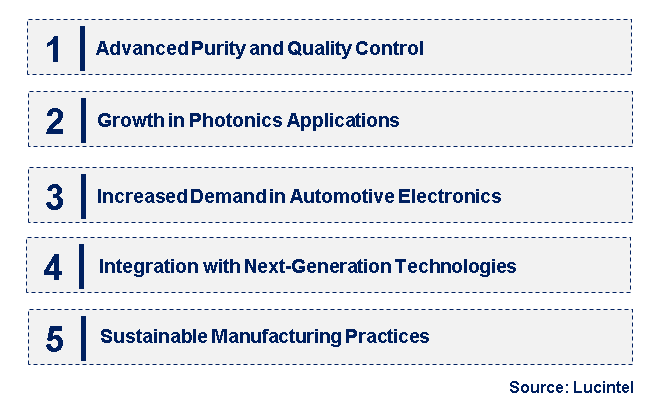
• Advanced Purity and Quality Control: Smaller, more precise semiconductor devices require higher purity and stringent quality control. Innovations in production methods focus on reducing impurities and improving consistency, enhancing the performance and reliability of semiconductor devices.
• Growth in Photonics Applications: There is increased interest in silica glass for photonic applications, such as optical communication and sensing. The unique optical properties of silica glass make it ideal for telecommunications and advanced imaging technologies.
• Increased Demand in Automotive Electronics: Demand for value-added silica glass supports the development of advanced automotive electronic systems. Enhanced thermal and mechanical performance of silica glass improves the durability and performance of automotive semiconductors, contributing to the growth of this sector.
• Integration with Next-Generation Technologies: Silica glass is increasingly integrated into next-generation technologies like 5G and artificial intelligence. Developing high-performance semiconductors for these technologies drives innovations in silica glass to meet the high-speed and high-frequency demands.
• Sustainable Manufacturing Practices: Emphasis on sustainability in silica glass manufacturing has become critical. Several companies are adopting environmentally friendly practices and effective recycling methods, reducing the environmental impact of silica glass production and aligning with global sustainability goals. Some key drivers in the silica glass for semiconductor market include advanced purity control, growth in photonics applications, increasing demand in automotive electronics, integration with next-generation technologies, and sustainable manufacturing practices. These drivers promote technological innovation, expand application areas, and address sustainability considerations that shape the overall market trajectory.
• Introduction of High-Purity Silica Glass: New high-purity silica glass formulations with improved thermal stability and optical clarity are being introduced. These features are crucial for manufacturing high-performance, reliable semiconductors suited to diverse high-tech applications.
• Manufacturing Technique Advances: Sophisticated manufacturing techniques, such as refined chemical vapor deposition and precision molding, enhance the quality and uniformity of silica glass, enabling the production of more reliable and efficient semiconductor components.
• Production Capacity Extension: To meet the rising demand, companies are expanding production capacities. New facilities and technologies are being developed to manufacture high-quality silica glass for the growing semiconductor industry.
• Specialized Coatings Development: Specialized coatings for silica glass are being developed to improve performance in specific applications. These coatings make the glass more resistant to harsh environments, extending its service life for advanced semiconductor uses.
• Focus on Energy-Efficient Production Methods: There is an increasing shift toward energy-efficient silica glass production methods. Companies are adopting practices that minimize energy use and environmental impact, supporting sustainability and cost-effectiveness. Developments related to high-purity silica glass, advanced manufacturing techniques, increased production capacity, functional coatings, and energy-efficient production methods are driving the silica glass for semiconductor market. These advances meet industry demands while supporting sustainable growth.
• High-Performance Computing (HPC): Demand for high-performance computing is driving the need for advanced silica glass. HPC components benefit from the enhanced thermal and optical properties of silica glass, creating growth opportunities in this sector.
• Telecommunications Infrastructure: Silica glass is increasingly used in telecommunications infrastructure, including optical fibers and communication devices. The growth of 5G and other advanced communication technologies opens new opportunities for silica glass suppliers to support high-speed and high-frequency applications.
• Automotive Electronics: Advanced automotive electronics and the shift toward electric vehicles create growth avenues for silica glass. Its durability and thermal stability enhance the performance of automotive semiconductors, driving demand in the automotive sector.
• Renewable Energy Systems: Silica glass is finding applications in renewable energy systems, such as solar panels and wind turbine electronics. Integrating silica glass in these systems improves energy efficiency and reliability, presenting growth opportunities in the renewable energy market.
• Consumer Electronics: The demand for high-quality consumer electronic devices, including smartphones and smart devices, boosts the need for value-added silica glass. Improved silica glass performance enhances semiconductor output in consumer electronics, expanding growth opportunities. Strategic growth opportunities in high-performance computing, telecommunications infrastructure, automotive electronics, renewable energy systems, and consumer electronics drive the silica glass market for semiconductors. These opportunities expand market potential, support technological advancement, and meet industry demands.
• Technological Advances: Innovations in silica glass technology, such as enhanced purity and advanced manufacturing methods, drive market growth. These advances ensure high performance and reliability in semiconductor devices, supporting high-tech applications.
• Increasing Demand for High-Tech Semiconductors: The demand for high-tech semiconductors in telecommunications, automotive, and consumer electronics drives the need for advanced silica glass. Its superior properties enhance semiconductor performance and efficiency.
• Diversification of Electronic and Photonic Applications: The growing applications of electronic and photonic materials, such as optical fibers and high-frequency devices, increase demand for specialty silica glasses suited to these uses.
• Investment in Research and Development: Significant investments in research and development foster innovations in silica glass technology. These investments lead to new materials and processes that improve performance and expand capabilities.
• Focus on Sustainable Manufacturing: Emphasis on sustainable manufacturing drives companies to adopt environmentally friendly methods for silica glass production, aligning with global sustainability goals. Challenges in the silica glass for semiconductor market are:
• High Production Costs: The high cost of producing high-quality silica glass limits its use in cost-sensitive applications, impacting its affordability in competitive markets.
• Complex Manufacturing Processes: Manufacturing silica glass involves complex processes like precision molding and chemical vapor deposition, which require advanced equipment and expertise, impacting production efficiency.
• Regulatory and Environmental Concerns: Regulatory and environmental issues related to silica glass production and disposal require compliance efforts to minimize environmental impact. Technological advances, increased demand for high-tech semiconductors, diversified applications, investment in R&D, and sustainable manufacturing practices are key drivers in the silica glass market for semiconductor applications. High production costs, complex manufacturing, and regulatory challenges are critical issues that must be addressed to leverage market opportunities and growth drivers.
• Heraeus
• Tosoh Quartz
• Shin-Etsu
• Schunk
• MARUWA
• Hanntek
• Ustron
• Beijing Kaide
• Shanghai QH Quartz
• Ferrotec
• High Temperature Process
• Low Temperature Process
• Semiconductor Equipment Manufacturer
• Wafer Production Manufacturer
• Others
• North America
• Europe
• Asia Pacific
• The Rest of the World
• United States: Major U.S. semiconductor companies invest in advanced silica glass technologies to enhance precision and performance in chip manufacturing. Improvements in purification and thermal stability increase device reliability, enabling next-generation high-performance semiconductors.
• China: The Chinese government is scaling up manufacturing to meet domestic semiconductor demand. Chinese companies are developing new silica glass formulations with improved optical and thermal properties, promoting innovations in electronics and photonics.
• Germany: Germany is a leading producer of high-quality silica glass for semiconductor applications. German companies focus on enhancing durability and adding functionalities, meeting the demands of high-tech industries like automotive electronics and industrial automation.
• India: Investments in local silica glass production facilities are rising as India's semiconductor and electronics industries expand. Indian research institutions are improving silica glass properties to enhance semiconductor performance.
• Japan: Japan continues to advance silica glass technology, particularly for high-purity, high-performance applications. Japanese companies address challenges in silica glass to support advanced technologies, such as high-frequency and high-power semiconductors, and invest in next-generation manufacturing processes.


• Heraeus
• Tosoh Quartz
• Shin-Etsu
• Schunk
• MARUWA
• Hanntek
• Ustron
• Beijing Kaide
• Shanghai QH Quartz
• Ferrotec Q6. Which silica glass for semiconductor market segment will be the largest in future? Answer: Lucintel forecasts that high temperature process is expected to witness the higher growth over the forecast period due to the advancements in high temperature process technology and the growing adoption of advanced packaging technologies. Q7. In silica glass for semiconductor market, which region is expected to be the largest in next 5 years? Answer: APAC is expected to witness highest growth over the forecast period due to increasing focus on electric vehicle and renewable energy and presence of a large and well-established semiconductor manufacturing industry in the region. Q.8 Do we receive customization in this report? Answer: Yes, Lucintel provides 10% customization without any additional cost.


Choose a license that fits your team. Instant PDF delivery.
Prices exclude taxes. Instant delivery. Custom licensing available on request.
Market Report · July 24, 2026
Market Report · July 20, 2026
Market Report · July 20, 2026
Trusted partner for strategic intelligence and business growth


Receive a complimentary market analysis tailored to your industry. Our analysts will identify key growth opportunities and competitive dynamics specific to your business.

Market size, growth rate, and key trend analysis for your specific sector.

Top competitor positioning and market share analysis.

Strategic recommendations backed by data-driven insights.
Get curated market intelligence and competitive moves straight to your inbox.
By subscribing, you agree to receive our monthly insights. Unsubscribe anytime.
Receive a complimentary market analysis tailored to your industry. Our analysts will identify key growth opportunities and competitive dynamics specific to your business.
Market size, growth rate, and key trend analysis for your specific sector.
Top competitor positioning and market share analysis.
Strategic recommendations backed by data-driven insights.
Get curated market intelligence, emerging trends, and competitive moves straight to your inbox each month.
By subscribing, you agree to receive our monthly insights. Unsubscribe anytime.
We'll send your sample report shortly.