
Market Report · July 29, 2026

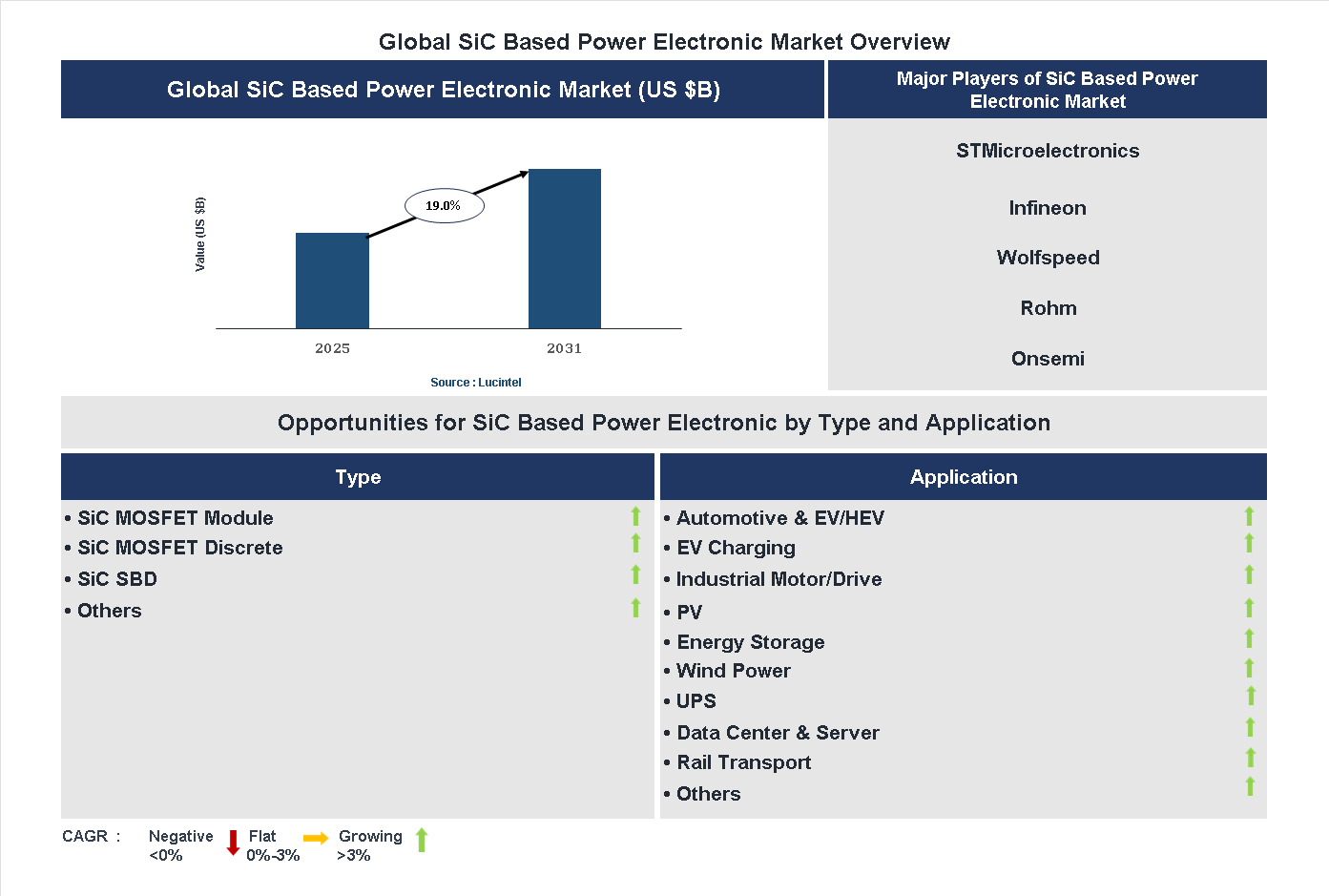
Key data points: The growth forecast = 19% annually for the next 7 years. Scroll below to get more insights. This market report covers trends, opportunities and forecasts in SiC based power electronic market to 2031 by type (SiC MOSFET module, SiC MOSFET discrete, SiC SBD, and others), application (automotive & EV/HEV, EV charging, industrial motor/drive, PV, energy storage, wind power, UPS, data center & server, rail transport, and others), and region (North America, Europe, Asia Pacific, and the Rest of the World)
We'll send your sample report shortly.
• Lucintel forecasts that, within the type category, SiC MOSFET is expected to witness the highest growth over the forecast period.
• Within the application category, automotive & EV/HEV is expected to witness the highest growth.
• In terms of region, APAC is expected to witness the highest growth over the forecast period. Gain valuable insights for your business decisions with our comprehensive 150+ page report. Sample figures with some insights are shown below.
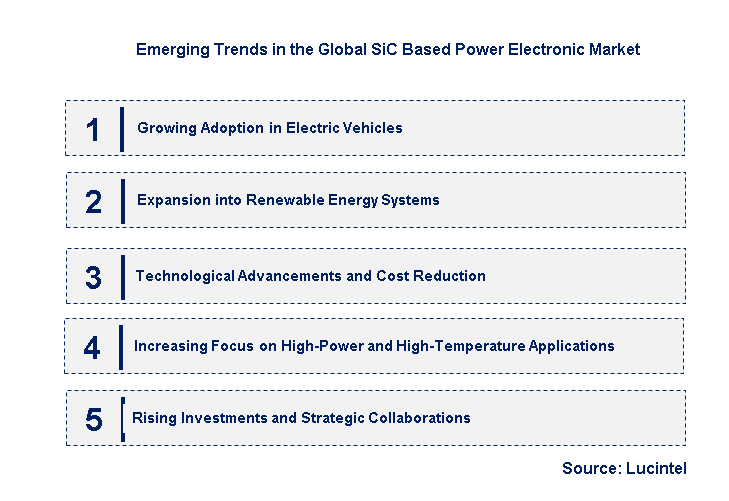
• Growing adoption in electric vehicles: The demand for electric vehicles (EVs) is accelerating, and SiC power devices are increasingly used in EV inverters and chargers. SiCs high efficiency, fast switching capabilities, and thermal performance improve vehicle range and reduce energy losses. Automakers and component manufacturers are investing heavily in SiC technology to meet stricter emissions standards and consumer expectations for longer-lasting, more efficient EVs. This trend is transforming automotive power electronics, making EVs more competitive with traditional vehicles.
• Expansion into renewable energy systems: SiC devices are gaining prominence in solar inverters, wind turbines, and energy storage systems. Their ability to operate at higher voltages and temperatures enhances the efficiency and reliability of renewable energy infrastructure. As the push for clean energy intensifies globally, SiCs robustness and efficiency help optimize power conversion, reduce system costs, and improve grid stability. This trend supports the integration of renewable sources into existing power grids, accelerating the transition to sustainable energy.
• Technological advancements and cost reduction: Continuous innovation in SiC wafer manufacturing, device design, and packaging is driving down costs and improving performance. Advances such as larger wafer sizes and improved epitaxial growth techniques reduce production expenses, making SiC devices more affordable for a broader range of applications. Cost reductions are critical for widespread adoption, especially in consumer electronics and industrial sectors. These developments are making SiC-based solutions more competitive against traditional silicon devices, fostering market growth.
• Increasing focus on high-power and high-temperature applications: SiCs ability to operate efficiently at high voltages, currents, and temperatures makes it ideal for demanding industrial and aerospace applications. Industries such as railways, aerospace, and heavy machinery are adopting SiC power modules to improve system efficiency, reduce cooling requirements, and enhance durability. This trend is expanding the market beyond conventional sectors, highlighting SiCs role in enabling next-generation high-power systems with improved performance and reliability.
• Rising investments and strategic collaborations: Major semiconductor companies, automotive OEMs, and energy firms are investing heavily in SiC research and development. Strategic partnerships aim to accelerate product innovation, scale manufacturing, and expand application reach. Government initiatives and funding programs further support market growth. These investments are fostering a competitive ecosystem, driving technological breakthroughs, and ensuring supply chain stability. The increased collaboration is positioning SiC as a critical component in future energy and power electronics infrastructure. In summary, these emerging trends are collectively reshaping the SiC power electronic market by enhancing performance, reducing costs, and expanding application horizons. They are driving a shift towards more efficient, durable, and sustainable power systems, ultimately transforming industries and supporting global energy transition goals.
• Technological Innovations in SiC Devices: New fabrication techniques have enhanced the performance and reliability of SiC power devices, leading to higher voltage and current capabilities. These innovations improve efficiency and thermal management, making SiC devices more suitable for demanding applications such as electric vehicles and industrial power supplies. The impact is a broader adoption of SiC technology in high-power applications, boosting market growth.
• Cost Reduction through Manufacturing Advancements: Advances in manufacturing processes, including wafer production and device packaging, have significantly lowered the costs of SiC components. This reduction makes SiC-based power electronics more competitive against traditional silicon devices. The impact is increased market penetration, especially among cost-sensitive sectors like consumer electronics and renewable energy.
• Expansion in Electric Vehicle (EV) Applications: The rising adoption of electric vehicles has driven demand for high-efficiency, compact power modules. SiC devices enable faster charging, longer driving ranges, and improved energy efficiency. The impact is a surge in EV-related power electronics sales, positioning SiC as a preferred material in automotive applications.
• Integration with Renewable Energy Systems: SiC power electronics are increasingly integrated into solar inverters and wind turbines due to their high efficiency and ability to operate at high voltages. This integration enhances energy conversion efficiency and system reliability. The impact is a strengthened market presence in renewable energy, supporting global sustainability goals.
• Development of Standardization and Certification Protocols: Industry bodies are establishing standards and certification processes for SiC devices, ensuring quality and safety. These protocols facilitate wider adoption across industries by reducing technical barriers. The impact is increased confidence among manufacturers and end-users, fostering market expansion. In summary, recent developments in the SiC Based Power Electronic Market—ranging from technological innovations and cost reductions to expanding applications in EVs and renewable energy—are significantly enhancing device performance, reducing costs, and broadening market reach. These trends are collectively driving rapid market growth and establishing SiC as a vital component in next-generation power electronics solutions.
• Automotive Electrification: The rise of electric vehicles (EVs) is a key driver for SiC power electronics. SiC devices enable higher efficiency, faster charging, and longer driving ranges, making EVs more practical and appealing. This growth opportunity impacts automakers by reducing energy losses and improving vehicle performance, thus accelerating the adoption of electric mobility worldwide.
• Renewable Energy Integration: SiC power electronics are crucial for efficient solar inverters and wind turbine converters. Their ability to operate at higher voltages and temperatures enhances the reliability and efficiency of renewable energy systems. This opportunity supports the transition to cleaner energy sources, reducing carbon emissions and fostering sustainable development.
• Industrial Automation: The increasing adoption of automation and robotics in manufacturing relies on high-performance power modules. SiC devices provide superior switching speeds and thermal management, improving system efficiency and reducing operational costs. This growth opportunity boosts industrial productivity and supports Industry 4.0 initiatives.
• Data Center Power Management: The demand for energy-efficient data centers is rising due to the exponential growth of cloud computing and digital services. SiC power modules enable compact, high-efficiency power supplies that reduce energy consumption and cooling requirements. This opportunity helps data centers lower operational costs and meet sustainability goals.
• Aerospace and Defense: The need for lightweight, reliable, and high-performance power systems in aerospace and defense applications is expanding. SiC technology offers enhanced thermal performance and durability under extreme conditions. This growth avenue enhances the capabilities of military and space systems, ensuring operational resilience and efficiency. In summary, these key growth opportunities are significantly impacting the SiC-based power electronic market by driving innovation, expanding application scopes, and enabling more energy-efficient and durable solutions. As these opportunities mature, they will catalyze market expansion, foster technological advancements, and support global efforts toward sustainability and high-performance power systems.
• Technological Advancements: The rapid development of Silicon Carbide (SiC) technology has significantly improved power efficiency, thermal performance, and device durability. These advancements enable the creation of smaller, lighter, and more reliable power electronic systems suitable for applications like electric vehicles, renewable energy, and industrial automation. As research continues, the cost of SiC devices is expected to decrease, further boosting adoption. The superior performance of SiC over traditional silicon-based components makes it a preferred choice for high-power, high-frequency applications, thus fueling market growth.
• Rising Demand for Energy Efficiency: Increasing global emphasis on reducing energy consumption and greenhouse gas emissions has driven the adoption of energy-efficient power electronic devices. SiC components offer lower conduction and switching losses, leading to improved system efficiency. This is particularly critical in sectors such as electric vehicles, renewable energy systems, and data centers, where energy efficiency directly impacts operational costs and environmental sustainability. Governments and regulatory bodies are incentivizing the adoption of such technologies, which propels market expansion.
• Growth in Electric Vehicle (EV) Market: The rapid expansion of the EV industry is a major driver for SiC power electronics. SiC devices enable faster charging, longer driving ranges, and improved thermal management in EVs. Automakers are increasingly integrating SiC-based power modules to meet stringent efficiency and performance standards. The growing consumer demand for electric vehicles, coupled with supportive policies and investments in charging infrastructure, is expected to sustain high growth rates in the SiC power electronics market.
• Expansion in Renewable Energy Sector: The shift towards renewable energy sources like solar and wind power necessitates efficient power conversion systems. SiC-based power electronics are ideal for high-voltage, high-frequency applications in these systems, improving overall efficiency and reliability. As countries aim to meet renewable energy targets, investments in SiC technology for grid integration and energy storage are increasing, further propelling market growth. The challenges in the SiC based power electronic market are:
• High Manufacturing Costs: The production of SiC devices involves complex processes such as high-temperature crystal growth and precise doping, which are expensive. These costs translate into higher prices for end products, limiting adoption among price-sensitive customers. Although economies of scale and technological improvements are expected to reduce costs over time, current manufacturing expenses remain a significant barrier to widespread market penetration.
• Technological Complexities: SiC devices require advanced fabrication techniques and precise control over material properties, which pose technical challenges. Issues such as defect management, device reliability, and thermal management need ongoing research and development. These complexities can delay product launches and increase R&D costs, hindering rapid market growth and adoption.
• Regulatory and Standardization Barriers: The lack of comprehensive standards and regulatory frameworks for SiC power electronics can impede market expansion. Certification processes are often lengthy and costly, and uncertainties around safety and performance standards can deter manufacturers from investing heavily. Harmonization of regulations across regions is necessary to facilitate global market growth and ensure product interoperability. In summary, the SiC Based Power Electronic Market is driven by technological innovations, energy efficiency demands, and expanding applications in electric vehicles and renewable energy. However, high manufacturing costs, technological challenges, and regulatory hurdles pose significant obstacles. These factors collectively influence the pace and scope of market development. While growth opportunities are substantial, addressing these challenges through technological advancements, cost reduction strategies, and regulatory harmonization will be crucial for sustained market success. Overall, the markets future hinges on balancing innovation with practical implementation to meet evolving industry needs.
• STMicroelectronics
• Infineon
• Wolfspeed
• Rohm
• Onsemi
• BYD Semiconductor
• Microchip (Microsemi)
• Mitsubishi Electric (Vincotech)
• Semikron Danfoss
• Fuji Electric
• SiC MOSFET Module
• SiC MOSFET Discrete
• SiC SBD
• Others
• Automotive & EV/HEV
• EV Charging
• Industrial Motor/Drive
• PV
• Energy Storage
• Wind Power
• UPS
• Data Center & Server
• Rail Transport
• Others
• North America
• Europe
• Asia Pacific
• The Rest of the World
• United States: The US has seen significant investments in SiC research and manufacturing, with major companies like Wolf Speed expanding production capacity. The government’s focus on clean energy and electric vehicles has accelerated adoption, leading to increased collaborations between industry and academia. US-based startups are also innovating in SiC device design, enhancing efficiency and reliability in power systems.
• China: China continues to dominate the global SiC market through aggressive government policies and large-scale manufacturing facilities. The country is heavily investing in SiC-based EV components and renewable energy projects, aiming for energy independence. Domestic companies are rapidly scaling up production, and local supply chains are becoming more integrated, reducing reliance on imports.
• Germany: Germany’s focus on industrial automation and renewable energy integration has driven the adoption of SiC power devices. Leading automotive and industrial equipment manufacturers are integrating SiC components to improve efficiency and reduce emissions. The country is also investing in research collaborations to develop next-generation SiC technologies, supported by EU funding initiatives.
• India: India is witnessing a growing interest in SiC for power electronics, driven by government initiatives promoting electric mobility and renewable energy. Local startups and established firms are exploring cost-effective SiC solutions to meet domestic demand. The government’s push for self-reliance is encouraging domestic manufacturing and innovation in SiC-based devices.
• Japan: Japan remains a key player in SiC technology, with major corporations like Toshiba and Sumitomo investing in advanced SiC wafer production. The country’s focus on energy-efficient electronics and electric vehicles has spurred innovation. Japan is also collaborating with global partners to develop high-performance SiC components, aiming to maintain its leadership in power semiconductor technology.


• STMicroelectronics
• Infineon
• Wolfspeed
• Rohm
• Onsemi
• BYD Semiconductor
• Microchip (Microsemi)
• Mitsubishi Electric (Vincotech)
• Semikron Danfoss
• Fuji Electric Q5. Which SiC based power electronic market segment will be the largest in future? Answer: Lucintel forecasts that, within the type category, SiC MOSFET is expected to witness the highest growth over the forecast period. Q6. In SiC based power electronic market, which region is expected to be the largest in next 5 years? Answer: In terms of region, APAC is expected to witness the highest growth over the forecast period. Q7. Do we receive customization in this report? Answer: Yes, Lucintel provides 10% customization without any additional cost.


Choose a license that fits your team. Instant PDF delivery.
Prices exclude taxes. Instant delivery. Custom licensing available on request.
Market Report · July 29, 2026
Market Report · July 20, 2026
Market Report · July 20, 2026
Trusted partner for strategic intelligence and business growth


Receive a complimentary market analysis tailored to your industry. Our analysts will identify key growth opportunities and competitive dynamics specific to your business.

Market size, growth rate, and key trend analysis for your specific sector.

Top competitor positioning and market share analysis.

Strategic recommendations backed by data-driven insights.
Get curated market intelligence and competitive moves straight to your inbox.
By subscribing, you agree to receive our monthly insights. Unsubscribe anytime.
Receive a complimentary market analysis tailored to your industry. Our analysts will identify key growth opportunities and competitive dynamics specific to your business.
Market size, growth rate, and key trend analysis for your specific sector.
Top competitor positioning and market share analysis.
Strategic recommendations backed by data-driven insights.
Get curated market intelligence, emerging trends, and competitive moves straight to your inbox each month.
By subscribing, you agree to receive our monthly insights. Unsubscribe anytime.
We'll send your sample report shortly.