
Market Report · May 18, 2026

This market report covers trends, opportunities, and forecasts in the global ship satellite terminals market to 2031 by technology (high power block up terminal, middle power block up terminal, and low power block up terminal), application (satellite voice, crew calling, and fax), and region (North America, Europe, Asia Pacific, and the Rest of the World)
We'll send your sample report shortly.
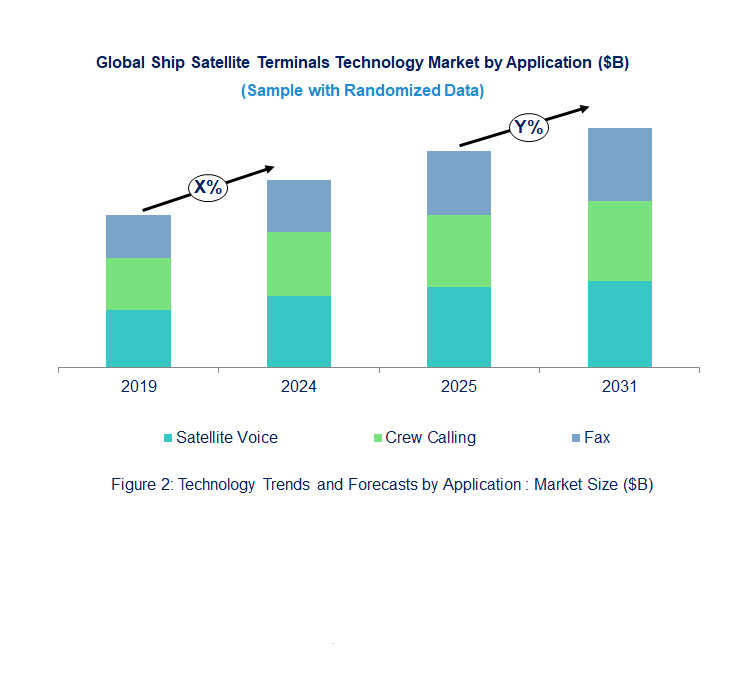
• High Throughput Satellites (HTS): The market is experiencing a shift from traditional geostationary satellites to HTS, offering higher capacity, faster data speeds, and more reliable connections. This shift supports the growing demand for high-speed internet and voice communication on ships.
• Integration of VSAT Systems: The integration of very-small-aperture terminal (VSAT) systems into ship satellite terminals is becoming the norm. VSAT systems enable smooth, two-way satellite communications with smaller, more compact hardware, reducing operational costs and improving service flexibility for maritime users.
• Integration of 5G Connectivity: With the full deployment of 5G globally, satellite terminal manufacturers are adding 5G to their systems to integrate ultra-low latency and very high data rates. This is beneficial for maritime operations, enabling applications such as real-time video streaming, IoT devices, and improved crew communication.
• Increased Automation and AI Integration: Ship satellite terminals are integrating artificial intelligence (AI) and machine learning (ML) for improved optimization of satellite communication networks and service management. This integration will enable predictive maintenance, improving network reliability and system efficiency.
• Development of Multi-Orbit Satellite Networks: The growth of Low Earth Orbit (LEO) and Medium Earth Orbit (MEO) satellite constellations is reshaping the satellite communication landscape. These networks promise reduced latency and better coverage, particularly in remote maritime regions, complementing existing geostationary satellite services. These trends are transforming the ship satellite terminals market by enhancing connectivity, reducing operational costs, and increasing service flexibility. The integration of advanced technology ensures reliable communication solutions at the highest speeds, even under the most extreme conditions.
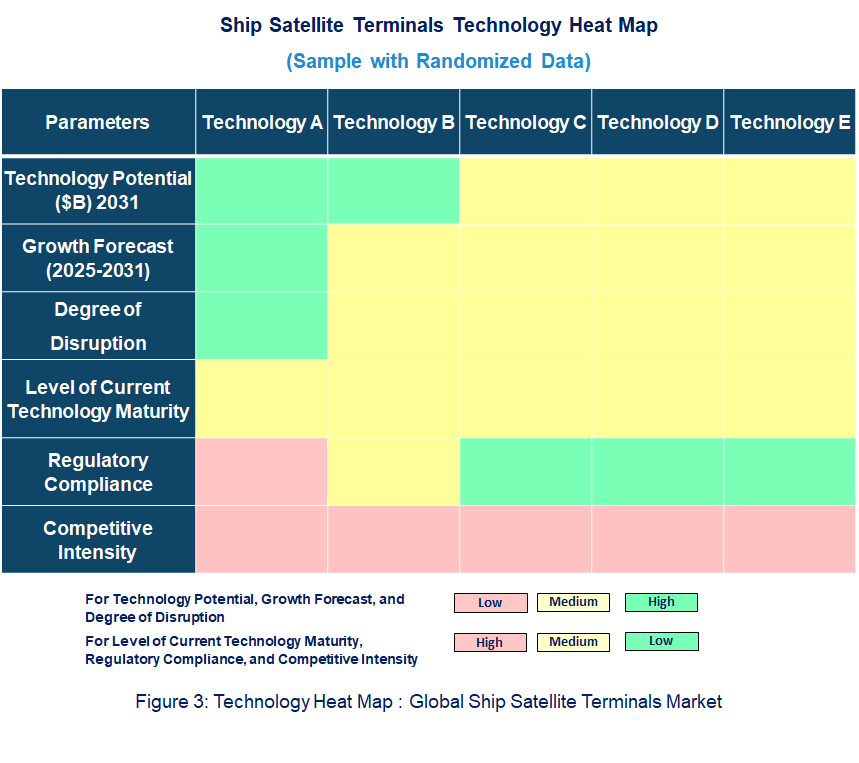
• Technology Potential: Ship satellite terminals are expected to grow significantly due to the increasing demand for reliable global communication at sea. Innovations like HTS and LEO satellites are improving data speeds and reducing latency, unlocking new potential for the shipping industry.
• Degree of Disruption: The disruption is significant, as new satellite communication technologies replace older systems like radio and older satellite constellations. The impact of IoT and automation on shipping operations is reshaping logistics, navigation, and fleet management, all supported by these advanced satellite systems.
• Level of Current Technology Maturity: The current level of satellite communication technology maturity for maritime use is relatively high, with well-established providers offering robust solutions. However, innovations like 5G and LEO satellites are still in the commercialization phase, further enhancing the sector’s capabilities.
• Regulatory Compliance: Regulatory challenges are moderate; satellite communication systems must adhere to global maritime regulations set by bodies such as the IMO (International Maritime Organization) and regional authorities on telecommunications. The market is growing rapidly and holds great prospects for innovation, although the regulatory framework should continue to evolve to keep pace with technological advancements.
• Furuno: Furuno has launched new satellite communication terminals that combine Ku-band and Ka-band technologies, offering better satellite communication with higher bandwidth capabilities. This positions Furuno to offer improved services to the maritime sector, addressing the increasing need for high-speed internet at sea.
• Cobham: Cobham’s development of multi-band antennas and adoption of HTS technology has revolutionized satellite communications on ships. Their new terminals provide seamless connectivity across multiple frequency bands, enhancing the reliability and flexibility of communication systems for maritime operations.
• Intellian: Intellian has advanced antenna technology by introducing the latest generation of antennas tailored for HTS networks. These systems provide greater throughput and more efficient satellite tracking, ensuring improved performance in the most extreme maritime environments.
• JRC: JRC has designed high-performance hybrid satellite terminals that integrate conventional satellites with LEO/MEO-based services, supporting continuous and uninterrupted communication at sea. Hybrid systems significantly enhance communication reliability in areas poorly covered by conventional satellites.
• KVH: KVH Innovation’s solutions for high-speed, low-cost VSAT systems have helped expand the use of satellite communications in the maritime industry. The new products focus on improved customer support, particularly for crew communication and data exchange operations.
• Samyung ENC: Samyung ENC has focused on increasing its satellite communication offerings with Ka-band technology, allowing for higher bandwidth and better internet access for ships, benefiting both business operations and crew welfare.
• Glocom: Glocom introduced a range of rugged, compact satellite terminals optimized for harsh maritime environments. These systems are designed to provide reliable connectivity for crew communications, internet access, and operational data transmission in remote regions.
• Addvalue Technologies: Addvalue Technologies has focused on advancing satellite communication solutions for small- and medium-sized vessels. Their solutions include dual-band terminals that enhance communication reliability and reduce latency, making satellite communications more economical for maritime operators.
• Thales: Thales has developed satellite terminals using hybrid satellite networks, designed to support communication with both geostationary and LEO satellites. This offers customers flexibility and increased coverage, especially in high-latitude regions such as the Arctic and Antarctic.
• MoveySat: MoveySat specializes in developing and manufacturing advanced mobile satellite communication terminals for maritime applications. The products introduced by the company enable voice and data transmission on the go, keeping crew members and operations teams in remote locations connected. These developments highlight the industry’s commitment to advancing satellite communication, with a focus on higher bandwidth, more reliable connections, and greater flexibility for maritime users.
• High-Speed Internet Demand: The demand for high-speed internet in the maritime sector, particularly for operational efficiency and crew welfare, is increasing. Shipping operations rely more on digital tools, and high-bandwidth connectivity has become essential for seamless communication and data exchange.
• Advances in Satellite Technology: The continued evolution of satellite technology has introduced HTS, LEO, and MEO constellations, enabling faster data speeds, reduced latency, and improved coverage, all of which are key for modern maritime operations.
• Fleet Connectivity Solutions: As the shipping industry shifts towards digitalization, fleet connectivity solutions are gaining importance. Satellite terminals that enable real-time data transfer for fleet management, operation monitoring, and predictive maintenance are driving growth in this market.
• Growing Adoption of IoT and AI in Maritime Operations: The increasing adoption of IoT and AI technologies in the maritime industry has created a demand for robust satellite communication solutions. IoT devices on ships require reliable, low-latency connectivity for real-time data collection and decision-making, further fueling the demand for advanced satellite terminals. Challenges in the ship satellite terminals market include:
• High Cost of Advanced Satellite Systems: Despite technological advancements, the cost of deploying advanced satellite communication systems remains a barrier for smaller maritime operators. High upfront investment in equipment, installation, and service fees may deter some from adopting these technologies.
• Network Reliability in Remote Areas: While satellite communications provide global coverage, maintaining a reliable connection in remote, high-latitude regions or under extreme weather conditions remains challenging. This can significantly affect the effectiveness of maritime operations, particularly for vessels in underserved areas.
• Regulatory and Spectrum Management Issues: The regulatory environment for satellite communications is evolving, with increasing concerns about spectrum management and bandwidth allocation. Changes in regulations or limited access to satellite bandwidth could restrain market growth and hinder the development of new satellite communication solutions. The ship satellite terminals market is undergoing rapid transformation, driven by emerging technologies, evolving market needs, and significant advancements in satellite communication systems. New technologies like HTS, 5G, and AI are revolutionizing the way ships communicate, improving operational efficiency, and providing better connectivity for business and crew needs. Despite challenges related to cost and network reliability, ongoing innovation in satellite communication is pushing the market toward more efficient, flexible, and cost-effective solutions for the maritime industry.
• Furuno
• Cobham
• Intellian
• Jrc
• Kvh
• Samyung Enc
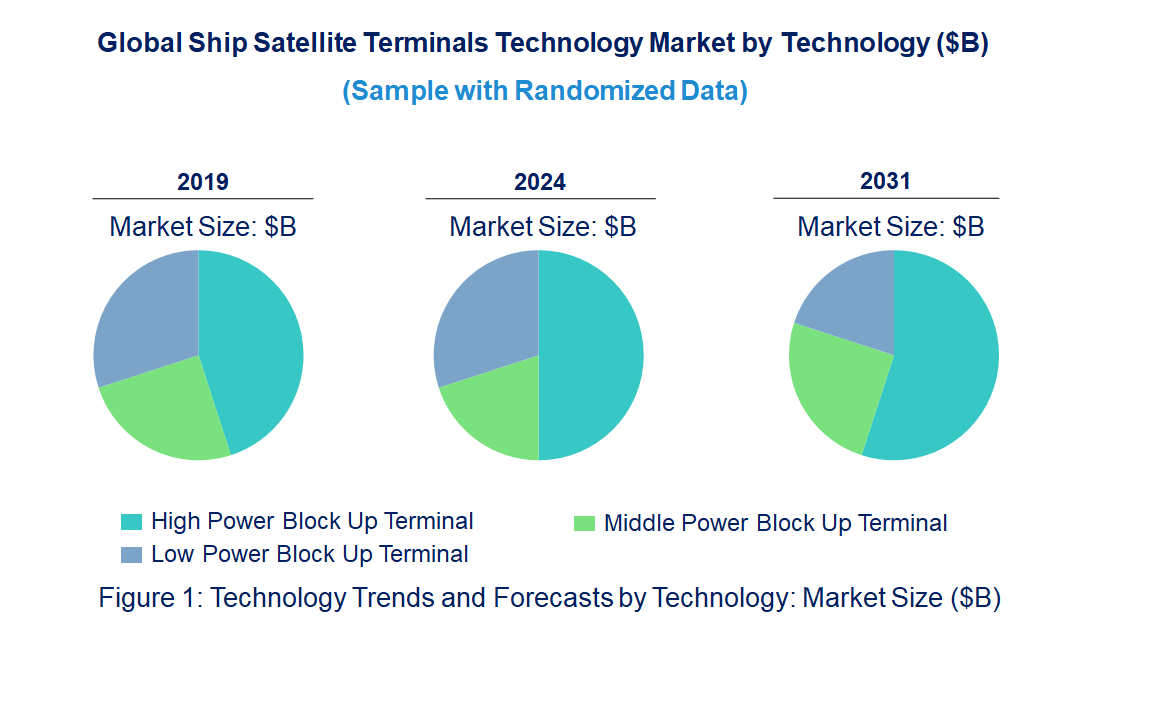
• Technology Readiness and Applications: HP-BUTs are highly advanced, supporting high-capacity applications such as maritime broadband and military use while complying with strict regulations. MP-BUTs balance cost and performance for commercial vessels, with growing maturity and regional compliance. LP-BUTs are ideal for small vessels and IoT, though they face challenges in meeting regulatory requirements.
• Disruption Potential: Advances in high power block up terminals (HP-BUT), middle power block up terminals (MP-BUT), and low power block up terminals (LP-BUT) are disrupting the ship satellite terminals market. HP-BUTs support high-demand applications such as broadcasting, military communications, and others. Commercial vessels with moderate power requirements may benefit from balanced MP-BUTs. LP-BUTs are revolutionizing satellite services for small vessels at lower costs, stimulating growth in remote locations.
• Competitive Intensity and Regulatory Compliance: The ship satellite market is highly competitive. HP-BUTs face competition from LEO satellites, while MP-BUTs cater to a broad market segment. LP-BUTs compete on cost for small vessels. Regulatory compliance is critical, with global bodies like ITU and FCC governing frequency and emission standards. Companies must innovate within these strict rules to stay ahead of the competition.
• High Power Block Up Terminal
• Middle Power Block Up Terminal
• Low Power Block Up Terminal
• Satellite Voice
• Crew Calling
• Fax
• North America
• Europe
• Asia Pacific
• The Rest of the World
• Latest Developments and Innovations in the Ship Satellite Terminals Technologies
• Companies / Ecosystems
• Strategic Opportunities by Technology Type


Choose a license that fits your team. Instant PDF delivery.
Prices exclude taxes. Instant delivery. Custom licensing available on request.
Market Report · May 18, 2026
Market Report · May 18, 2026
Market Report · May 18, 2026
Trusted partner for strategic intelligence and business growth


Receive a complimentary market analysis tailored to your industry. Our analysts will identify key growth opportunities and competitive dynamics specific to your business.

Market size, growth rate, and key trend analysis for your specific sector.

Top competitor positioning and market share analysis.

Strategic recommendations backed by data-driven insights.
Get curated market intelligence and competitive moves straight to your inbox.
By subscribing, you agree to receive our monthly insights. Unsubscribe anytime.
Receive a complimentary market analysis tailored to your industry. Our analysts will identify key growth opportunities and competitive dynamics specific to your business.
Market size, growth rate, and key trend analysis for your specific sector.
Top competitor positioning and market share analysis.
Strategic recommendations backed by data-driven insights.
Get curated market intelligence, emerging trends, and competitive moves straight to your inbox each month.
By subscribing, you agree to receive our monthly insights. Unsubscribe anytime.
We'll send your sample report shortly.