
Report Feature
Ship Leasing Market Trends and Forecast
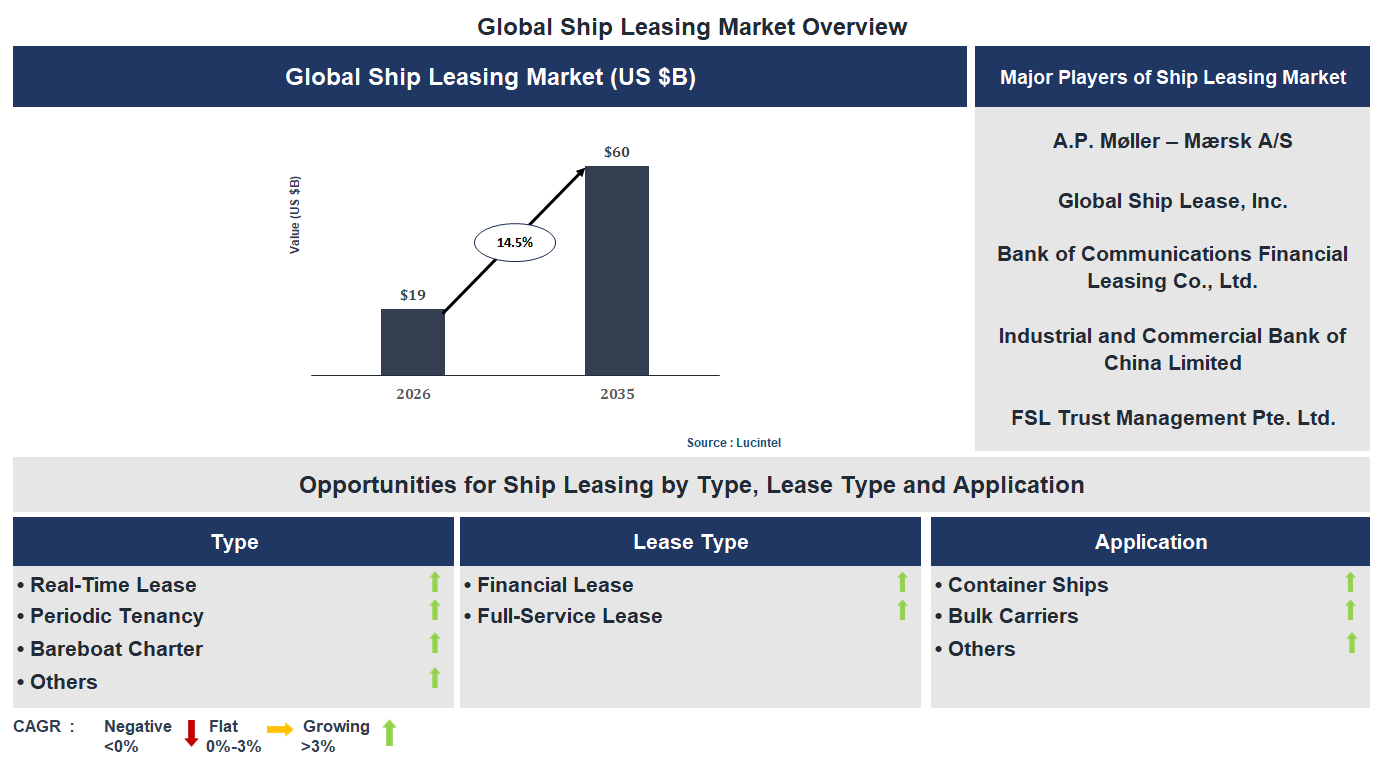
The future of the global ship leasing market looks promising with opportunities in the container ship and bulk carrier markets. The global ship leasing market is expected to reach an estimated $60 billion by 2035 with a CAGR of 14.5% from 2026 to 2035. The major drivers for this market are the increasing demand for flexible shipping solutions, the rising need for cost-effective maritime logistics, and the growing focus on fleet expansion strategies.• Lucintel forecasts that, within the type category, real-time lease is expected to witness the highest growth over the forecast period.
• Within the application category, container ship is expected to witness higher growth.
• In terms of region, North America is expected to witness the highest growth over the forecast period. Gain valuable insights for your business decisions with our comprehensive 150+ page report. Sample figures with some insights are shown below.
Emerging Trends in the Ship Leasing Market
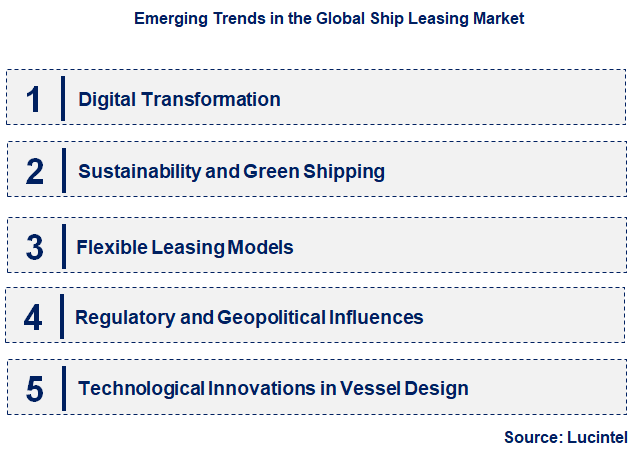
The ship leasing market is experiencing rapid transformation driven by technological advancements, changing global trade dynamics, and evolving regulatory frameworks. As shipping companies seek more flexible and cost-effective solutions, the market is adapting to meet these demands through innovative leasing models and sustainable practices. The emergence of digital platforms and increased focus on environmental regulations are further shaping the landscape. These developments are not only influencing the operational strategies of leasing companies but also impacting global trade flows and investment patterns. Understanding these key trends is essential for stakeholders aiming to navigate and capitalize on the evolving market environment.• Digital Transformation: The integration of digital platforms and technologies is revolutionizing the ship leasing industry. Online marketplaces and blockchain-based contracts streamline transactions, reduce paperwork, and enhance transparency. This shift improves efficiency, reduces costs, and enables real-time tracking of assets. Digital tools also facilitate better risk management and data-driven decision-making, making leasing processes more agile and accessible for global clients. As technology continues to evolve, digital transformation is expected to further optimize operations and expand market reach.
• Sustainability and Green Shipping: Increasing environmental regulations and the global push for sustainability are significantly impacting the ship leasing market. Leasing companies are now prioritizing eco-friendly vessels, such as LNG-powered ships and those with energy-efficient designs. Green leasing agreements include clauses for emissions reduction and compliance with international standards like IMO 2020. This trend encourages the adoption of cleaner technologies, reduces the carbon footprint of shipping operations, and aligns with corporate social responsibility goals. It also opens new opportunities for leasing environmentally sustainable vessels in a market increasingly focused on climate change mitigation.
• Flexible Leasing Models: The demand for flexible leasing arrangements is rising as shipping companies seek to adapt quickly to fluctuating trade volumes and market conditions. Short-term, voyage, and pay-as-you-go leasing options are gaining popularity over traditional long-term leases. These models offer greater financial flexibility, lower upfront costs, and reduced risk exposure. They enable operators to scale their fleets up or down efficiently, respond to seasonal demands, and manage cash flows better. This trend is making ship leasing more adaptable and responsive to the dynamic needs of the global shipping industry.
• Regulatory and Geopolitical Influences: Evolving international regulations and geopolitical tensions are shaping leasing strategies and market stability. Stricter safety, environmental, and operational standards require leasing companies to invest in compliant vessels and technologies. Geopolitical issues, such as trade disputes and sanctions, influence vessel availability and leasing costs. Companies are increasingly adopting risk mitigation strategies, including diversified portfolios and flexible leasing terms, to navigate these uncertainties. These factors are prompting a more cautious and strategic approach to leasing, emphasizing compliance and resilience in a complex global environment.
• Technological Innovations in Vessel Design: Advances in vessel design, including automation, digital twins, and energy-efficient hulls, are transforming the leasing market. These innovations improve vessel performance, reduce operational costs, and enhance safety. Leasing companies are incorporating these technologies into their fleets to attract clients seeking modern, efficient ships. Additionally, innovations like autonomous ships and smart sensors are expected to further revolutionize operations, offering higher productivity and lower maintenance costs. This trend underscores the importance of technological adoption for competitiveness and sustainability in the evolving market landscape. These trends are collectively reshaping the ship leasing market by fostering greater efficiency, sustainability, flexibility, and resilience. Digitalization and technological innovations are driving operational improvements, while environmental and regulatory pressures are pushing the industry toward greener solutions. Flexible leasing models are accommodating market volatility, and geopolitical factors are prompting strategic adjustments. Together, these developments are creating a more dynamic, sustainable, and competitive market environment, offering new opportunities and challenges for industry stakeholders.
Recent Development in the Ship Leasing Market
The ship leasing market is experiencing rapid transformation driven by technological advancements, evolving regulatory frameworks, and shifting global trade dynamics. These developments are creating new opportunities for investors, operators, and manufacturers to optimize fleet management, reduce costs, and enhance sustainability. As the industry adapts to these changes, stakeholders are exploring innovative leasing models, digital solutions, and eco-friendly vessels to stay competitive and meet increasing environmental standards. The following key developments highlight the current trajectory shaping the future of ship leasing.• Digital Transformation in Fleet Management: The integration of advanced digital platforms and IoT technology is revolutionizing fleet operations. Real-time data analytics, predictive maintenance, and automated reporting improve efficiency, reduce downtime, and lower operational costs. This shift enhances transparency and decision-making, attracting more investors and operators seeking optimized asset utilization. Digital solutions also facilitate compliance with international regulations, making leasing arrangements more flexible and reliable in a competitive market.
• Green Shipping Initiatives and Eco-Friendly Vessels: Growing environmental concerns and stricter regulations are pushing the industry toward sustainable practices. Leasing companies are increasingly offering eco-friendly vessels, such as LNG-powered ships and hybrid vessels, to meet emission standards. These initiatives reduce carbon footprints and operational costs, appealing to environmentally conscious clients. The adoption of green ships is expected to accelerate, creating new leasing opportunities and encouraging innovation in vessel design and fuel technology.
• Evolving Regulatory Frameworks and Compliance Standards: International maritime regulations are becoming more stringent, impacting leasing agreements and vessel operations. Compliance with IMO 2020 sulfur cap and ballast water management requires significant upgrades and operational adjustments. Leasing firms are adapting by offering vessels that meet these standards, often at premium rates. This evolution enhances safety, environmental protection, and market stability, but also demands continuous investment in compliance and certification processes, influencing lease pricing and contract terms.
• Innovative Leasing Models and Financial Structures: The industry is witnessing a shift from traditional leasing to more flexible, performance-based, and hybrid models. These include sale-and-leaseback, pay-per-use, and green leasing options, providing clients with tailored financial solutions. Such models reduce upfront costs, improve cash flow, and align interests between lessors and lessees. They also attract new market entrants and expand access to vessel financing, fostering growth and diversification within the market.
• Impact of Global Trade Dynamics and Supply Chain Changes: Fluctuations in global trade volumes, geopolitical tensions, and supply chain disruptions influence vessel demand and leasing strategies. Increased trade in emerging markets and shifts toward regional shipping routes create new leasing opportunities. Conversely, oversupply of vessels in certain segments can lead to competitive pricing pressures. Market players are adjusting their portfolios and leasing terms to capitalize on these trends, ensuring resilience amid changing economic conditions. The overall impact of these developments is a more dynamic, sustainable, and technologically advanced ship leasing market. Enhanced operational efficiencies, environmental compliance, and flexible financial models are attracting a broader range of clients and investors. These changes are fostering innovation, reducing costs, and supporting industry growth, positioning the market for long-term resilience and competitiveness.
Strategic Growth Opportunities in the Ship Leasing Market
The ship leasing market is experiencing significant growth driven by global trade expansion, fleet modernization needs, and increasing demand for flexible shipping solutions. As shipping companies seek cost-effective and scalable options, leasing offers strategic advantages, including access to newer vessels and reduced capital expenditure. Technological advancements and regulatory changes further influence market dynamics, creating opportunities for industry players to innovate and expand their portfolios. This evolving landscape presents numerous avenues for growth, investment, and competitive differentiation in the global shipping industry.• Increasing Demand for Fleet Modernization: The need to replace aging vessels with more fuel-efficient, environmentally compliant ships is driving leasing demand. Shipping companies prefer leasing to avoid large capital investments, enabling them to upgrade fleets rapidly. Leasing provides flexibility to adapt to changing regulations and market conditions, reducing operational costs and enhancing sustainability. This trend is particularly prominent in regions with strict emission standards, encouraging companies to lease newer, greener vessels to meet compliance and operational efficiency goals.
• Expansion of Emerging Market Shipping Routes: Growth in emerging markets such as Africa, Southeast Asia, and Latin America is opening new shipping routes, creating opportunities for leasing companies to supply vessels tailored to regional needs. These markets often lack extensive infrastructure, requiring specialized vessels and flexible leasing arrangements. As trade volumes increase, leasing offers a cost-effective solution for local operators to access modern ships without heavy capital outlays, fostering regional economic development and expanding the global shipping network.
• Adoption of Digital Technologies for Fleet Management: Integration of IoT, AI, and data analytics in vessel operations enhances efficiency, safety, and maintenance. Leasing companies investing in digital solutions can offer value-added services, such as predictive maintenance and real-time monitoring, attracting clients seeking operational excellence. Digital transformation also enables better asset utilization and risk management, providing a competitive edge. As technology adoption accelerates, leasing firms that leverage digital tools will be better positioned to optimize fleet performance and meet evolving customer expectations.
• Growing Focus on Sustainability and Green Shipping: Environmental regulations and societal pressure are pushing the industry toward sustainable practices. Leasing companies are increasingly offering eco-friendly vessels with alternative fuels, scrubbers, and energy-efficient designs. This shift allows shipping firms to meet regulatory standards without significant upfront costs. The demand for green leasing options is expected to rise, encouraging innovation in vessel design and financing structures. Sustainability initiatives also open avenues for government incentives and partnerships, further boosting market growth.
• Strategic Partnerships and Fleet Diversification: Collaborations between leasing firms, shipbuilders, and technology providers enable the development of diversified and specialized fleets. These partnerships facilitate access to innovative vessel types, such as LNG-powered ships or autonomous vessels, expanding market offerings. Diversification reduces risk and attracts a broader customer base, including niche markets. Strategic alliances also enhance technological capabilities and operational expertise, positioning leasing companies as comprehensive solutions providers in a competitive landscape. The overall impact of these opportunities is a dynamic, resilient ship leasing market poised for sustained growth. By capitalizing on modernization, technological innovation, regional expansion, sustainability, and strategic collaborations, industry players can strengthen their market position, meet evolving customer needs, and contribute to a more efficient, environmentally responsible shipping industry.
Ship Leasing Market Driver and Challenges
The ship leasing market is influenced by a complex interplay of technological advancements, economic fluctuations, and regulatory changes. As global trade expands, the demand for efficient and flexible shipping solutions increases, driving growth in leasing activities. Technological innovations such as automation and digitalization enhance operational efficiency, attracting investors. Economic factors like global GDP growth, trade volumes, and fuel prices significantly impact leasing demand. Meanwhile, regulatory frameworks concerning environmental standards and maritime safety shape market dynamics. Navigating these multifaceted drivers and challenges is crucial for stakeholders aiming to capitalize on opportunities while mitigating risks in this evolving industry. The factors responsible for driving the ship leasing market include:-• Increasing Global Trade and Shipping Demand: The surge in international trade, driven by globalization and economic growth, has led to higher demand for shipping vessels. Leasing provides flexible, cost-effective solutions for shipping companies to expand their fleets without heavy capital expenditure. This trend is reinforced by the need for modern, fuel-efficient vessels to meet environmental standards, further boosting leasing activities. As trade volumes grow, leasing companies benefit from steady revenue streams, making this a key growth driver.
• Technological Advancements in Vessel Design and Operations: Innovations such as automation, digital monitoring, and eco-friendly propulsion systems improve vessel efficiency and reduce operational costs. Leasing companies are increasingly investing in modern ships equipped with these technologies to attract clients seeking sustainable and cost-effective solutions. These advancements also enable better fleet management and compliance with stringent environmental regulations, thereby expanding leasing opportunities.
• Fluctuations in Fuel Prices and Operating Costs: Variations in fuel prices significantly influence shipping economics. Leasing offers flexibility for operators to adapt to these changes without long-term commitments. When fuel prices are volatile, leasing allows companies to upgrade to more fuel-efficient vessels or adjust fleet sizes swiftly, mitigating financial risks. This adaptability makes leasing an attractive option amid fluctuating operating costs.
• Regulatory Changes and Environmental Standards: Stricter regulations on emissions and safety, such as IMO 2020 sulfur cap and ballast water management, compel shipping companies to upgrade or replace vessels. Leasing provides a cost-effective way to comply with these standards without large capital investments. As environmental regulations tighten, demand for newer, compliant vessels increases, driving growth in the leasing sector.
• Growing Preference for Operating Leases: Shipping companies favor operating leases for their off-balance-sheet advantages and flexibility. This trend is driven by the desire to avoid ownership risks and maintain liquidity. Leasing firms benefit from long-term lease agreements, ensuring stable cash flows. The shift towards operating leases reflects a broader industry move towards financial agility and risk management, fueling market expansion. The challenges in the ship leasing market are:
• Volatility in Freight Rates and Market Cycles: The shipping industry is highly cyclical, with freight rates subject to global economic conditions, geopolitical tensions, and supply-demand imbalances. This volatility affects leasing revenues and vessel valuations, making it difficult for lessors to predict cash flows and manage risk. During downturns, leasing demand declines, and vessel values depreciate, impacting profitability and investment strategies.
• Regulatory and Environmental Compliance Costs: While regulations drive demand for modern vessels, compliance entails significant costs. Upgrading or retrofitting ships to meet new standards can be expensive, especially for older vessels. These costs can strain leasing companies’ margins and deter investment in certain segments. Additionally, navigating diverse international regulations adds complexity and operational risks.
• Market Oversupply and Vessel Depreciation: An oversupply of vessels, driven by overordering during boom periods, leads to increased competition and lower charter rates. Vessel depreciation reduces residual values, impacting leasing profitability. Managing fleet renewal and avoiding excess capacity are ongoing challenges that require strategic planning and financial discipline to sustain market stability. The ship leasing market is shaped by robust growth drivers such as increasing global trade, technological innovations, and regulatory shifts, which create ample opportunities for expansion. However, challenges like market volatility, compliance costs, and oversupply risks pose significant hurdles. The interplay of these factors necessitates strategic agility from market participants to capitalize on emerging trends while mitigating risks. Overall, the market's future hinges on balancing technological progress and regulatory compliance with prudent risk management to sustain long-term growth and stability.
List of Ship Leasing Companies
Companies in the market compete on the basis of product quality offered. Major players in this market focus on expanding their manufacturing facilities, R&D investments, infrastructural development, and leverage integration opportunities across the value chain. With these strategies ship leasing companies cater increasing demand, ensure competitive effectiveness, develop innovative products & technologies, reduce production costs, and expand their customer base. Some of the ship leasing companies profiled in this report include-• A.P. Møller – Mærsk A/S
• Global Ship Lease, Inc.
• Bank of Communications Financial Leasing Co., Ltd.
• Industrial and Commercial Bank of China Limited
• FSL Trust Management Pte. Ltd.
• SFL Corporation Ltd.
• Seaspan Corporation
• COSCO Shipping Corpo
Ship Leasing Market by Segment
The study includes a forecast for the global ship leasing market by type, lease type, application, and region.Ship Leasing Market by Type [Value from 2019 to 2035]:
• Real-Time Lease
• Periodic Tenancy
• Bareboat Charter
• Others
Ship Leasing Market by Lease Type [Value from 2019 to 2035]:
• Financial Lease
• Full-Service Lease
Ship Leasing Market by Application [Value from 2019 to 2035]:
• Container Ships
• Bulk Carriers
• Others
Ship Leasing Market by Region [Value from 2019 to 2035]:
• North America
• Europe
• Asia Pacific
• The Rest of the World
Country Wise Outlook for the Ship Leasing Market
The ship leasing market has experienced significant shifts driven by technological advancements, regulatory changes, and evolving economic conditions. As maritime trade continues to expand, countries are adapting their strategies to optimize fleet management, sustainability, and financial performance. The United States, China, Germany, India, and Japan are key players, each contributing unique developments that influence the market's trajectory. These nations are investing in greener technologies, digitalization, and strategic partnerships to enhance competitiveness and meet international standards. Understanding these recent developments provides insight into the future landscape of the ship leasing industry and its role in global trade.• United States: The US market has seen increased adoption of digital leasing platforms, improving transparency and efficiency. There is a growing focus on environmentally sustainable ships, with investments in LNG-powered vessels. Regulatory reforms aim to streamline leasing processes, and US-based leasing companies are expanding their fleets through strategic acquisitions, emphasizing innovation and sustainability.
• China: China continues to dominate the market with a surge in domestic fleet expansion and leasing activities. The government promotes green shipping initiatives, encouraging the adoption of eco-friendly vessels. Chinese leasing firms are forming alliances with international players to access advanced technologies and diversify their portfolios, while also investing in digital infrastructure to enhance operational efficiency.
• Germany: Germany remains a leader in maritime finance and ship leasing, emphasizing sustainable practices. The country has seen a rise in green leasing agreements, focusing on reducing carbon emissions. German banks and leasing companies are integrating digital solutions to streamline operations and are actively participating in international maritime sustainability initiatives, reinforcing their global competitiveness.
• India: The Indian ship leasing market is rapidly growing, driven by increased government support and a strategic focus on maritime infrastructure development. Indian leasing companies are expanding their fleets, often through partnerships with international firms. There is a notable shift towards eco-friendly vessels, aligning with global sustainability goals, and digitalization efforts are improving leasing processes and fleet management.
• Japan: Japan maintains a strong presence in the ship leasing industry, with a focus on advanced technology and innovation. The country is investing in next-generation vessels, including LNG and hybrid ships, to meet environmental standards. Japanese leasing firms are adopting digital platforms for better asset management and are actively involved in international collaborations to promote sustainable shipping practices.

Features of the Global Ship Leasing Market
Market Size Estimates: Ship leasing market size estimation in terms of value ($B). Trend and Forecast Analysis: Market trends (2019 to 2025) and forecast (2026 to 2035) by various segments and regions. Segmentation Analysis: Ship leasing market size by type, lease type, application, and region in terms of value ($B). Regional Analysis: Ship leasing market breakdown by North America, Europe, Asia Pacific, and Rest of the World. Growth Opportunities: Analysis of growth opportunities in different types, lease types, applications, and regions for the ship leasing market. Strategic Analysis: This includes M&A, new product development, and competitive landscape of the ship leasing market. Analysis of competitive intensity of the industry based on Porter’s Five Forces model.
FAQ
Q1. What is the ship leasing market size? Answer: The global ship leasing market is expected to reach an estimated $60 billion by 2035. Q2. What is the growth forecast for ship leasing market? Answer: The global ship leasing market is expected to grow with a CAGR of 14.5% from 2026 to 2035. Q3. What are the major drivers influencing the growth of the ship leasing market? Answer: The major drivers for this market are the increasing demand for flexible shipping solutions, the rising need for cost-effective maritime logistics, and the growing focus on fleet expansion strategies. Q4. What are the major segments for ship leasing market? Answer: The future of the ship leasing market looks promising with opportunities in the container ship and bulk carrier markets. Q5. Who are the key ship leasing market companies? Answer: Some of the key ship leasing companies are as follows:• A.P. Møller – Mærsk A/S
• Global Ship Lease, Inc.
• Bank of Communications Financial Leasing Co., Ltd.
• Industrial and Commercial Bank of China Limited
• FSL Trust Management Pte. Ltd.
• SFL Corporation Ltd.
• Seaspan Corporation
• COSCO Shipping Corporation Limited
• Hamburg Commercial Bank AG
• Standard Chartered Group Q6. Which ship leasing market segment will be the largest in future? Answer: Lucintel forecasts that, within the type category, real-time lease is expected to witness the highest growth over the forecast period. Q7. In ship leasing market, which region is expected to be the largest in next 8 years? Answer: In terms of region, North America is expected to witness the highest growth over the forecast period. Q8. Do we receive customization in this report? Answer: Yes, Lucintel provides 10% customization without any additional cost.
Table of Contents
List of Figures
List of Tables
Methodology
- In-depth interviews of the major players in this market
- Detailed secondary research from competitors’ financial statements and published data
- Extensive searches of published works, market, and database information pertaining to industry news, company press releases, and customer intentions
- A compilation of the experiences, judgments, and insights of Lucintel’s professionals, who have analyzed and tracked this market over the years.


Buy Now
Choose a license that fits your team. Instant PDF delivery.
Prices exclude taxes. Instant delivery. Custom licensing available on request.
Key Questions
- • What are some of the most promising, high-growth opportunities for the ship leasing market by type (real-time lease, periodic tenancy, bareboat charter, and others), lease type (financial lease and full-service lease), application (container ships, bulk carriers, and others), and region (North America, Europe, Asia Pacific, and the Rest of the World)?
- • Which segments will grow at a faster pace and why?
- • Which region will grow at a faster pace and why?
- • What are the key factors affecting market dynamics? What are the key challenges and business risks in this market?
- • What are the business risks and competitive threats in this market?
- • What are the emerging trends in this market and the reasons behind them?
- • What are some of the changing demands of customers in the market?
- • What are the new developments in the market? Which companies are leading these developments?
- • Who are the major players in this market? What strategic initiatives are key players pursuing for business growth?
- • What are some of the competing products in this market and how big of a threat do they pose for loss of market share by material or product substitution?
- • What M&A activity has occurred in the last 7 years and what has its impact been on the industry? For any questions related to Ship Leasing Market, Ship Leasing Market Size, Ship Leasing Market Growth, Ship Leasing Market Analysis, Ship Leasing Market Report, Ship Leasing Market Share, Ship Leasing Market Trends, Ship Leasing Market Forecast, Ship Leasing Companies, write Lucintel analyst at email: helpdesk@lucintel.com. We will be glad to get back to you soon.


