
Market Report · July 24, 2026

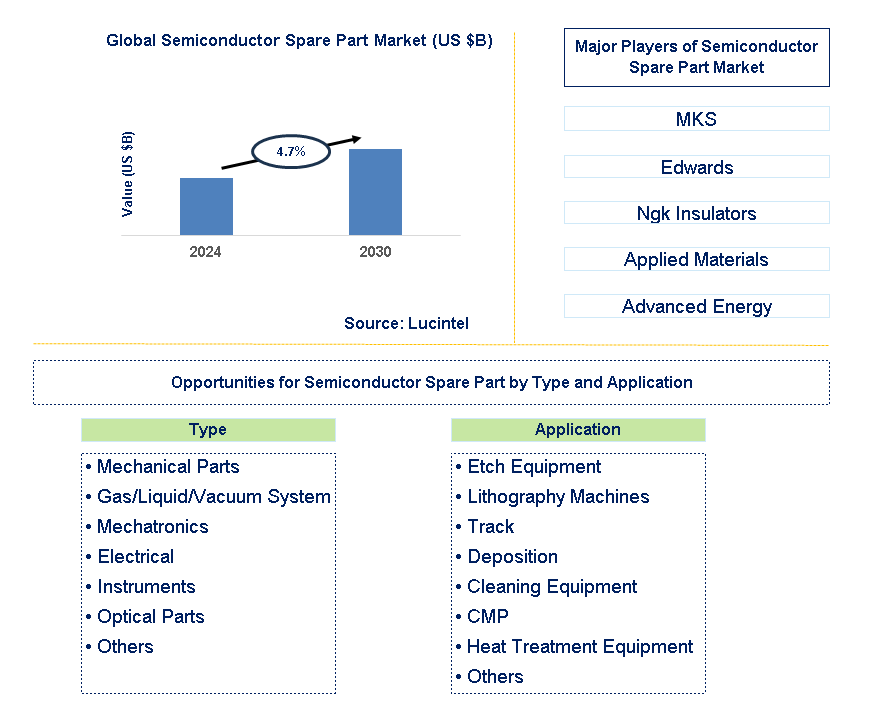
Key data points: The growth forecast = 4.7% annually next 6 years. Scroll below to get more insights. This market report covers trends, opportunities, and forecast in the global semiconductor spare part market to 2030 by type (mechanical parts, gas/liquid/vacuum system, mechatronics, electrical, instruments, optical parts, and others), application (etch equipment, lithography machines, track, deposition, cleaning equipment, CMP, heat treatment equipment, and others), and region (North America, Europe, Asia Pacific, and the Rest of the World)
We'll send your sample report shortly.
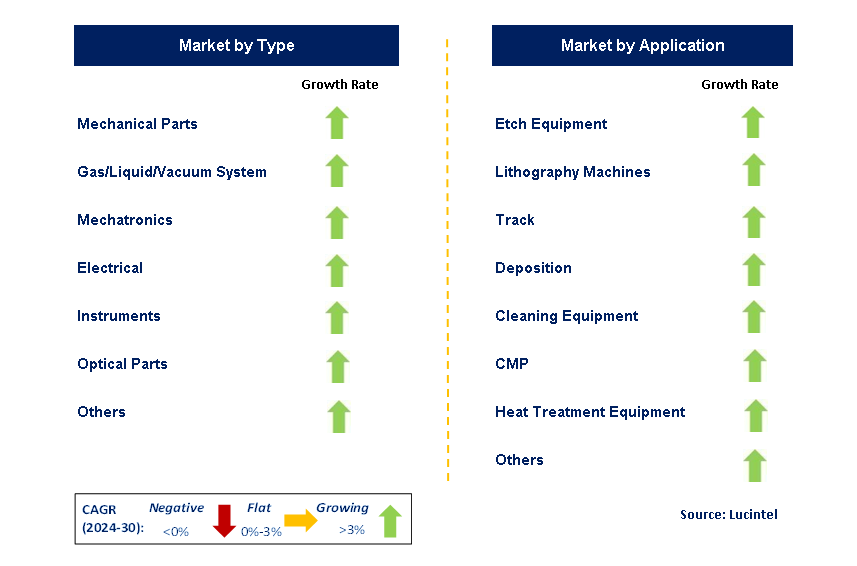
• Lucintel forecasts that mechanical part is expected to witness highest growth over the forecast period.
• Within this market, etch equipment is expected to witness the highest growth.
• APAC is expected to witness the highest growth over the forecast period. A more than 150-page report is developed to help in your business decisions.
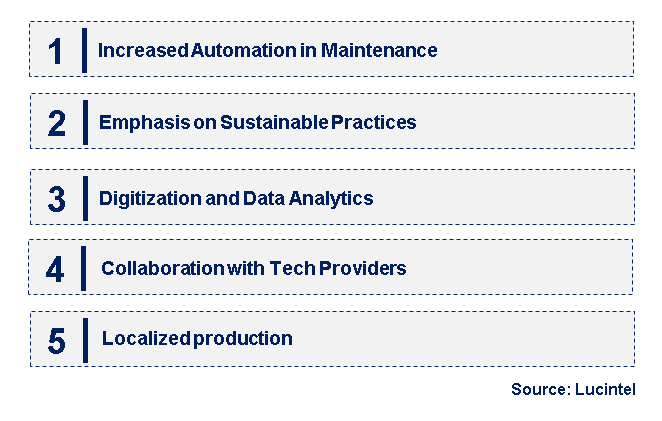
• Increased Automation in Maintenance: Semiconductors manufacturing nowadays increasingly employs automation technologies in their maintenance efficiency processes. Automated systems help predict the spare parts needed, thereby reducing downtime and optimizing operations. It is what shifts companies toward smart manufacturing-the ability to ensure better resource allocation and improve production schedules.
• Emphasis on Sustainable Practices: There is more and more attention being given to green considerations. This spreads well into the way spare parts are handled, recycling and refurbishment. Companies find that not wasting from prolonging the lifecycle for parts that aren't needed cuts cost, but also meets the most stringent requirements of worldwide sustainability goals. The trend facilitates corporate responsibility and attracts environmentally aware customers.
• Digitization and Data Analytics: It combines digital technology with data analytics to redefine the way spare parts management is approached. Predictive analytics help manufacturers demand better lead times and maintain accurate inventories. Thus, speedy short lead times as well as the presence of spare parts available at the time they are needed minimize operation disruptions.
• Collaboration with Tech Providers: Cooperation with the technology providers will be increasing for the semiconductor manufacturers and providers of technology, researching and developing the newest solutions for spare parts management, advanced tracking systems, and real-time monitoring. This will ensure full transparency in the supply chain such that critical components will be available at the right time.
• Localized production: A trend that had emerged in the wake of the disruptions caused by the pandemic was the localization in the production of semiconductor spare parts. Firms were investing in their domestic manufacturing capabilities and thus ensured that they have a steady supply of essential parts and reduced their dependence on third countries, enhancing their operation's resilience. Emerging trends in the Semiconductor Spare Parts market have been transforming and driving innovation, operational efficiency, and responsible practices towards sustainability. Focus on automation, sustainable practices, digitization, collaborations, and localized production presents the platform through which tremendous growth is anticipated to aid this industry in responding to market demands more effectively.
• Supply Chain Resilience: Companies are enhancing their supply chain strategies in a manner that they reduce their risk and ensure the availability of spare parts. Investment in local manufacturing and partnerships with regional suppliers become common in order to make the supply chain more stable and flexible.
• Predictive Maintenance Technologies: With the growing adoption of predictive maintenance technologies, manufacturers can predict when spare parts are needed, thereby reducing tendons as these spare parts become easily available and other productive activities are not affected in this manner.
• Sustainability Practices: Increasingly, in the semiconductor spare parts market, sustainability is an important practice. Companies are starting to embrace recycling and refurbishment programs as a means of stretching the lifecycle of parts. This may help abate waste while reducing its costs and keep conformity with environmental responsibility regulation.
• Digitalization of Operations: The integration of digital tools and data analytics into operations has been transforming spare part management. The help of these technologies makes it possible to control inventories with better accuracy, improve forecasting, and streamline procurement processes that enhance operational efficiency.
• Strategic Collaborations: With the growing number of partnerships between semiconductor manufacturers and technology providers, strategic collaborations are accelerated. In that case, they focus their work on well-designed solutions regarding spare part management to support the tracking and monitoring systems for immediate access to the required components. The present developments have promise in innovation and resilience by the Semiconductor Spare Parts market. Ensuring strategic collaborations with advanced supply chain resilience, predictive maintenance, sustainability, digitalization would set the industry up to gain future growth with improved competitiveness.
• Telecommunications Sector: The development of 5G technology is currently increasing the demand for semiconductor spare parts. Companies can focus on producing excellent quality components required for telecommunications infrastructure that guarantees reliability and performance of ever more complex networks.
• Automotive Electronics: Semiconductors spare parts in automotive electronics are in high demand due to the advancing technologies in vehicles. Companies can capitalize on this trend by developing niche products that support electric vehicles and advanced driver-assistance systems.
• Industrial Automation: With industrial automation paving the way for automated manufacturing processes, semiconductor spare parts will be in continuous demand because the companies will invest in developing high performance in the components for efficiency and reliability of automated systems, thus positioning them in line with the growing market of industry automation.
• Healthcare Technology: Since healthcare devices have become necessary for life, the sector also opens up scope for manufacturing spare parts of advanced semiconductors. Components compliant to strong regulatory and performance standards can help companies enter this lucrative healthcare technology market.
• Consumer Electronics: Consumer electronics are continually evolving continuously, thus permanently requiring spares like semiconductors. The company can focus on producing parts that improve the performance of any given device, compatible with the latest trends for smart home technology and portable devices. Signals for essential growth in the Semiconductor Spare Parts market would be these strategic growth opportunities. A look to the sectors such as telecommunications, automotive electronics, industrial automation, healthcare technology, and consumer electronics would allow companies to ride and stay up with the emergent trend to innovate and to seize the market opportunity.
• MKS
• Edwards
• Ngk Insulators
• Applied Materials
• Advanced Energy
• Lam Research
• Horiba
• VAT
• Entegris
• ZEISS
• Mechanical Parts
• Gas/Liquid/Vacuum System
• Mechatronics
• Electrical
• Instruments
• Optical Parts
• Others
• Etch Equipment
• Lithography Machines
• Track
• Deposition
• Cleaning Equipment
• CMP
• Heat Treatment Equipment
• Others
• North America
• Europe
• Asia Pacific
• The Rest of the World
• United States: The aftermath of the pandemic would see the US semiconductor spare parts market focus on building supply chain resilience. Companies are investing in local production capabilities and localizing supply chains to ensure reduced international sources. The benefits of predictive maintenance technologies also advance how manufacturers can minimize downtime by ensuring that spare parts are available when needed, thus enhancing overall operational efficiency.
• China: China's semiconductor spare parts market is growing fast, driven by initiatives from the government to achieve self-sufficiency in semiconductor production. Recent news includes investment in local manufacturing facilities and research and development. The focus is on high-quality spare parts as part of developing local semiconductor fabs, especially against foreign suppliers, to position oneself competitively in the global market.
• Germany: S pare parts market for semiconductors is emphasizing more and more the sustainability and circular economy in the semiconductor sector in Germany. More companies are now willing to return to the usage strategy that will help to minimize waste, thus at the same time going hand in hand with cost and environmental responsibility. Germany uses the know-how of its high-performance engineering as a platform to design innovative spare parts for semiconductor manufacturing, thus increasing performance and reliability.
• India: The Indian semiconductor spare parts market is increasing, due to governmental initiatives under the "Make in India" program. It aims at domestic manufacturing growth. Recent deals include partnerships with international companies to improve production capabilities at local levels. It focuses on building a robust ecosystem for semiconductor manufacturing, ensuring the availability of critical spare parts for supportable growth into several sectors.
• Japan: This market in Japan is driving technological innovations to make optimal and reliable performance. Companies are investing in the automation and digitization of this maintenance process, enabling predictive analytics in spare part management. This helps in minimizing operational disruption while improving semiconductor manufacturing processes regarding efficiency in staying on top of the global map.


• MKS
• Edwards
• Ngk Insulators
• Applied Materials
• Advanced Energy
• Lam Research
• Horiba
• VAT
• Entegris
• ZEISS Q5. Which semiconductor spare part market segment will be the largest in future? Answer: Lucintel forecasts that mechanical part is expected to witness highest growth over the forecast period. Q6. In semiconductor spare part market, which region is expected to be the largest in next 5 years? Answer: APAC is expected to witness the highest growth over the forecast period. Q.7 Do we receive customization in this report? Answer: Yes, Lucintel provides 10% customization without any additional cost.


Choose a license that fits your team. Instant PDF delivery.
Prices exclude taxes. Instant delivery. Custom licensing available on request.
Market Report · July 24, 2026
Market Report · July 20, 2026
Market Report · July 20, 2026
Trusted partner for strategic intelligence and business growth


Receive a complimentary market analysis tailored to your industry. Our analysts will identify key growth opportunities and competitive dynamics specific to your business.

Market size, growth rate, and key trend analysis for your specific sector.

Top competitor positioning and market share analysis.

Strategic recommendations backed by data-driven insights.
Get curated market intelligence and competitive moves straight to your inbox.
By subscribing, you agree to receive our monthly insights. Unsubscribe anytime.
Receive a complimentary market analysis tailored to your industry. Our analysts will identify key growth opportunities and competitive dynamics specific to your business.
Market size, growth rate, and key trend analysis for your specific sector.
Top competitor positioning and market share analysis.
Strategic recommendations backed by data-driven insights.
Get curated market intelligence, emerging trends, and competitive moves straight to your inbox each month.
By subscribing, you agree to receive our monthly insights. Unsubscribe anytime.
We'll send your sample report shortly.