
Market Report · July 24, 2026

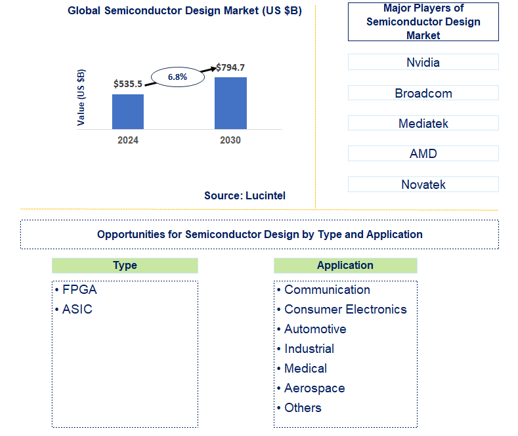
Key data points: The market size in 2030 = $794.7 billion, growth forecast = 6.8% annually next 6 years. Scroll below to get more insights. This market report covers trends, opportunities, and forecast in the global semiconductor design market to 2030 by type (FPGA and ASIC), application (communication, consumer electronics, automotive, industrial, medical, aerospace, and others), and region (North America, Europe, Asia Pacific, and the Rest of the World)
We'll send your sample report shortly.
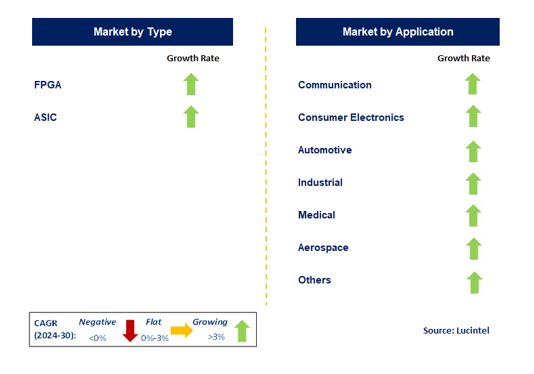
• Lucintel forecasts that FPGA is expected to witness higher growth over the forecast period.
• Within this market, communication is expected to witness the highest growth.
• APAC is expected to witness the highest growth over the forecast period. A more than 150-page report is developed to help in your business decisions.
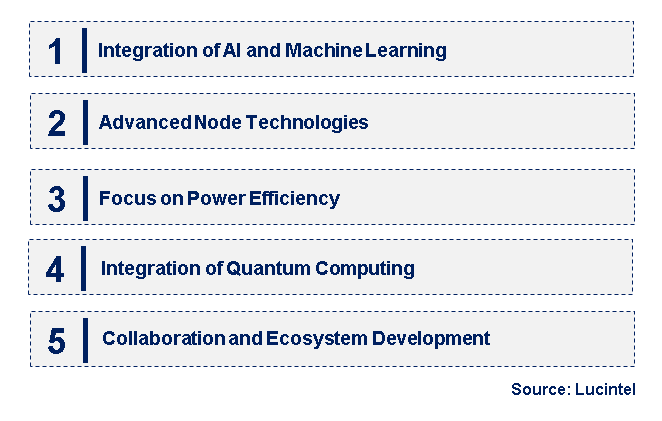
• Integration of AI and Machine Learning: AI and machine learning are being increasingly deployed in semiconductor design, for complex process automation, chip performance optimization, and predicting design outcomes. This trend improves the efficiency and accuracy of designs and thus can accelerate time-to-market for new semiconductor products.
• Advanced Node Technologies: Development of advanced node technologies involving building a 3nm and 5nm process is an area that requires very high priority in order to improve efficiency and performance with chips. These offer novel opportunities in the production of relatively less sized, powerful chips and drive innovation in consumer electronics and computing.
• Focus on Power Efficiency: Current focus is on designing semiconductors with excellent power efficiency for complete energy reduction. Other innovations have been in low-power chips or power management systems that are already influencing the design of applications in mobile and IoT applications, and even green technology.
• Integration of Quantum Computing: An emerging trend is the integration of quantum principles in semiconductor design. Research into quantum-compatible materials and architectures may fundamentally shift the computing power and breakthrough capabilities.
• Collaboration and Ecosystem Development: Developments in collaboration between semiconductor companies, research institutions, and government bodies are expanding this scale. This trend supports robust ecosystems for semiconductor design: it facilitates innovation and addresses challenges with collective expertise and resources. The massive changes in the industry are becoming imminent with the advent of new trends in semiconductor design, including AI integration, advanced node technologies, power efficiency, quantum computing, and cojunction. These trends are evolving and forming semiconductor design by means of more upscale performances, higher efficiency and innovation aspects that answer the needs and challenges of an ever-changing market and technology.
• Advancement in EUV Lithography: Adoption of EUV lithography technology allows for the production of semiconductor chips featuring smaller features and higher performance. In this way, process nodes at 7nm and below may be advanced, further enabling the process of innovation in areas like consumer electronics and high-performance computing.
• Emergence of AI-driven design tools: AI-driven design tools are made to revolutionize semiconductor design through the automation of very complex tasks and optimization of chip layouts. AI-driven design tools bring about a more accurate design with reduced time-to-market and improved overall efficiency, thus supporting the development of advanced semiconductor products, especially for the expansion of 5G and IoT applications.
• Expansion of 5G and IoT Applications: The silicon design market is opening up to accommodate the expansion of 5G and IoT applications. Some developments embrace designing special chips tailored for high-speed connectivity and low-power sensors, part of the process to deploy 5G networks and IoT ecosystems.
• Increased Investment in R&D: Great investment is going on in the field of research and development that drives innovation into semiconductor design. Companies here are focusing on developing new materials, carrying out improvements on design methodologies, and looking at advanced technologies that would maintain a competitive edge with such fast-changing markets.
• Growth of Semiconductor Design Startups: The trend of semiconductor design startups is enhancing market diversity and innovation. These emerging ventures, with new ideas, new approaches, and specialized expertise in semiconductor design, are well on their way to breaking the status quo and challenging the larger corporations, which further fosters technological advancement and innovation. Important progress in the industry is propelled by recent key advancements in semiconductor design, including improvement in EUV lithography, AI-driven design tools, support for 5G and IoT, enhanced R&D investment, and emergence of new start-ups. These enhance capabilities in designing, promote innovation, and offer a balance with growing demands of modern applications for semiconductors.
• Automotive Electronics: The automotive sector happens to be one of the prime growth areas for semiconductor design. Electric vehicle and innovations in autonomous driving systems require semiconductor solutions that meet these requirements of power management, connectivity, and sensor integration in new and special designs.
• Consumer Electronics: Growing consumer electronics markets mean opportunities in semiconductor design innovations. Various high-performance chips for smartphones, wearables, and home appliances are demanding advanced design solutions for functionality and efficiency.
• Data Centers and Cloud Computing: Data centers and cloud computing require high-performance semiconductors to power large-scale processing and storage requirements. There are designs for chips that enhance speed, energy efficiency, and scale in data center infrastructure.
• Health and Medical Devices: The health and medical devices market presents new areas of growth through semiconductors developed for medical devices and diagnostics. Advanced semiconductor designs for wearables capturing vital signs, imaging systems, and medical equipment are needed for innovation in those areas.
• Telecommunications Infrastructure: Advancements in telecommunications infrastructure, 5G networks included are an opportunity in semiconductor design. Support for advanced network technologies require high-speed, low-latency chips to deploy and operate these advancements. The main strategic growth opportunities presented by the industry in semiconductor design for its expansion and innovation are automotive electronics, consumer electronics, data centers, healthcare, and telecommunications infrastructure. This represents a massive application range of semiconductor technology and underscores the need for advanced design solutions to capture progressive market demands.
• Nvidia
• Broadcom
• Mediatek
• AMD
• Novatek
• Marvell
• Realtek
• FPGA
• ASIC
• Communication
• Consumer Electronics
• Automotive
• Industrial
• Medical
• Aerospace
• Others
• North America
• Europe
• Asia Pacific
• The Rest of the World
• US: In the U.S., advancement is being made in AI and machine learning in semiconductor design, which further enhances the efficiency of design automation. Research is being conducted on the advanced nodes of 3nm and 5nm technology to sustain the upper position in terms of high-performance computing and consumer electronics. Sustaining higher investments in home-based semiconductor R&D to reduce reliance on the supply chain.
• China: China is quickly bolstering up its semiconductor design capabilities focusing on building its indigenous technologies away from dependence on foreign technology. It has developed recent investments substantially in research and development and has been trying to build a robust ecosystem for semiconductor design with partnerships of global tech firms and development of new design centers.
• Germany: Semiconductor design in Germany: Automotive electronics and industrial applications experienced increased interest, driving the market forward. Strong design solutions for electric vehicles and Industry 4.0 are the main areas of development. Quantum computing as well as AI research activities are underway in Germany to take the lead and push boundaries in the design of semiconductors.
• India: Advances in the design of semiconductors in India are also used in enhancement of local design capabilities to support the fast-growing electronics manufacturing sector. This includes government incentives to semiconductor design start-ups recently and other such initiatives with overseas companies and assistance towards enhancing the local design capability and infrastructure.
• Japan: What recent developments in Japan focus on is the next generation of semiconductor materials and technologies, which remain in the country's hands as it continues to lead in overall semiconductor design. Draws attention to the key areas that have been advanced along these lines: innovative material for high-efficiency chips and high interaction between industry and academia for breakthroughs in semiconductor design.


• Nvidia
• Broadcom
• Mediatek
• AMD
• Novatek
• Marvell
• Realtek Q6. Which semiconductor design market segment will be the largest in future? Answer: Lucintel forecasts that FPGA is expected to witness higher growth over the forecast period. Q7. In semiconductor design market, which region is expected to be the largest in next 5 years? Answer: APAC is expected to witness the highest growth over the forecast period. Q.8 Do we receive customization in this report? Answer: Yes, Lucintel provides 10% customization without any additional cost.


Choose a license that fits your team. Instant PDF delivery.
Prices exclude taxes. Instant delivery. Custom licensing available on request.
Market Report · July 24, 2026
Market Report · July 20, 2026
Market Report · July 20, 2026
Trusted partner for strategic intelligence and business growth


Receive a complimentary market analysis tailored to your industry. Our analysts will identify key growth opportunities and competitive dynamics specific to your business.

Market size, growth rate, and key trend analysis for your specific sector.

Top competitor positioning and market share analysis.

Strategic recommendations backed by data-driven insights.
Get curated market intelligence and competitive moves straight to your inbox.
By subscribing, you agree to receive our monthly insights. Unsubscribe anytime.
Receive a complimentary market analysis tailored to your industry. Our analysts will identify key growth opportunities and competitive dynamics specific to your business.
Market size, growth rate, and key trend analysis for your specific sector.
Top competitor positioning and market share analysis.
Strategic recommendations backed by data-driven insights.
Get curated market intelligence, emerging trends, and competitive moves straight to your inbox each month.
By subscribing, you agree to receive our monthly insights. Unsubscribe anytime.
We'll send your sample report shortly.