
Market Report · July 31, 2026

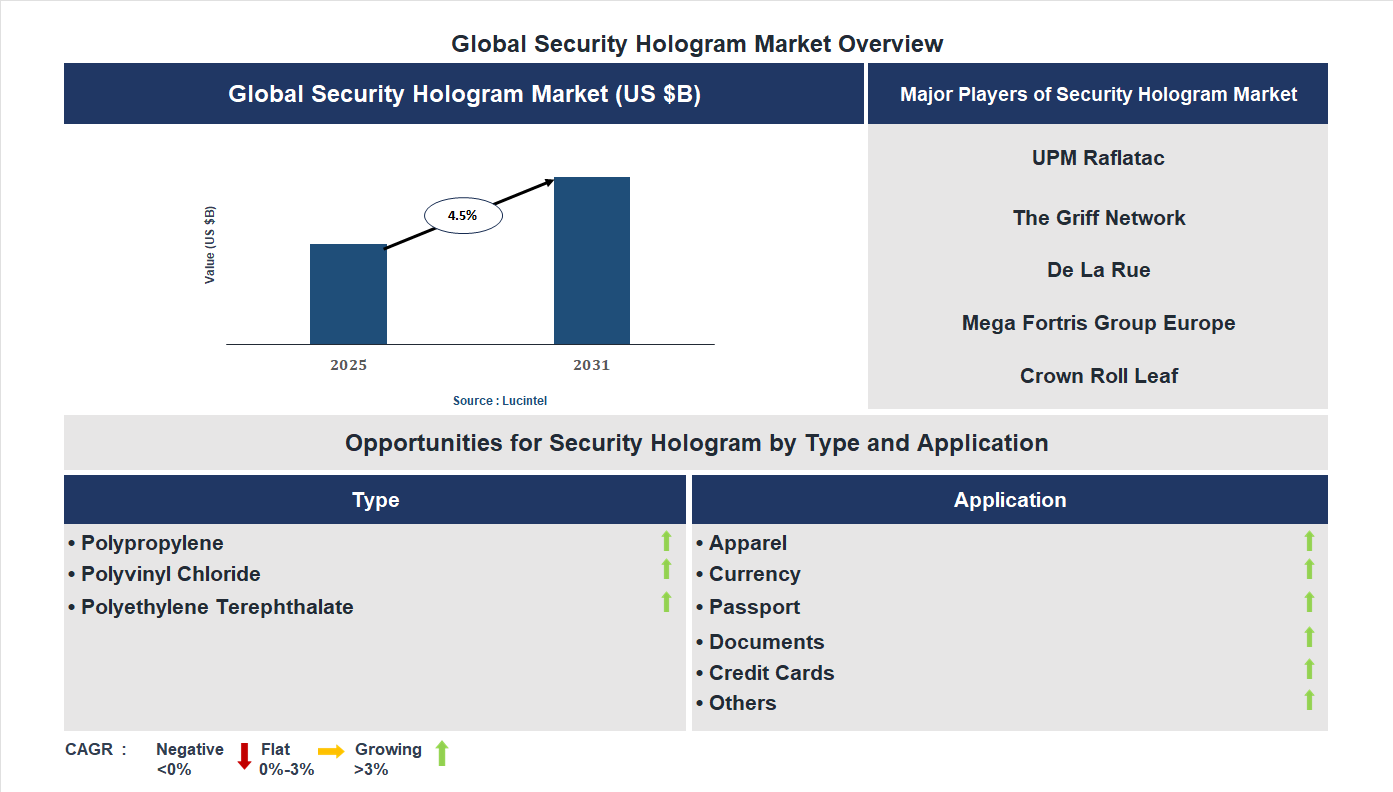
Key data points: The growth forecast = 4.5% annually for the next 7 years. Scroll below to get more insights. This market report covers trends, opportunities and forecasts in security hologram market to 2031 by type (polypropylene, polyvinyl chloride, and polyethylene terephthalate), application (apparel, currency, passport, documents, credit cards, and others), and region (North America, Europe, Asia Pacific, and the Rest of the World)
We'll send your sample report shortly.
• Lucintel forecasts that, within the type category, polypropylene is expected to witness the highest growth over the forecast period.
• Within the application category, currency is expected to witness the highest growth.
• In terms of region, APAC is expected to witness the highest growth over the forecast period. Gain valuable insights for your business decisions with our comprehensive 150+ page report. Sample figures with some insights are shown below.
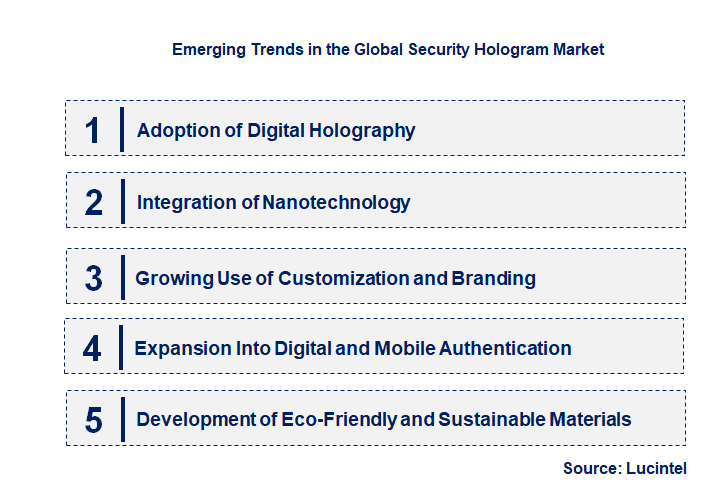
• Adoption of Digital Holography: The shift from traditional to digital holography allows for more complex, customizable, and high-resolution holograms. Digital techniques enable rapid production, easy updates, and enhanced security features, making holograms more difficult to counterfeit. This trend is driven by advancements in laser technology and computer-generated imagery, which facilitate intricate designs and dynamic holograms. As a result, companies can offer tailored security solutions that are both visually appealing and highly secure, expanding the market’s scope and application range.
• Integration of Nanotechnology: Nanotechnology is increasingly being incorporated into hologram production to improve durability, security, and visual effects. Nanoscale materials enhance the hologram’s resistance to tampering and environmental damage, ensuring longevity and reliability. This integration also allows for the creation of multi-layered holograms with complex visual effects that are difficult to replicate. The impact is significant, as it provides a higher level of security for high-value products and documents, thereby boosting consumer confidence and reducing fraud.
• Growing Use of Customization and Branding: Customizable holograms are gaining popularity as brands seek unique security features that also serve as marketing tools. Companies are leveraging holograms to incorporate logos, serial numbers, and dynamic elements that reinforce brand identity while providing authentication. This trend enhances consumer engagement and brand recognition, making holograms a dual-purpose security feature. The ability to tailor holograms to specific branding needs is expanding their application across luxury goods, pharmaceuticals, and official documents, thereby increasing market demand.
• Expansion into Digital and Mobile Authentication: The rise of digital and mobile verification methods is transforming hologram security. QR codes, augmented reality (AR), and blockchain integration enable consumers and authorities to verify authenticity instantly via smartphones. This trend reduces reliance on physical inspection alone and enhances traceability and transparency in supply chains. The integration of digital authentication with holograms offers a seamless, user-friendly experience, broadening the market’s reach and making security features more accessible and effective in combating counterfeiting.
• Development of Eco-Friendly and Sustainable Materials: Environmental concerns are prompting the industry to develop eco-friendly hologram materials. Biodegradable substrates, non-toxic inks, and recyclable components are being introduced to reduce environmental impact. This trend aligns with global sustainability goals and appeals to environmentally conscious consumers and companies. The adoption of sustainable materials not only enhances corporate social responsibility but also opens new market segments focused on green security solutions, thereby fostering innovation and expanding the market’s growth potential. In summary, these emerging trends are significantly reshaping the security hologram market by enhancing security features, enabling customization, integrating digital technologies, and promoting sustainability. These developments are making holograms more secure, versatile, and environmentally friendly, which in turn broadens their application scope and strengthens their role in combating counterfeiting across various industries.
• Technological Innovations: Development of advanced hologram techniques such as nano-embossing and 3D holography has enhanced security features, making counterfeiting more difficult and boosting market growth. These innovations improve visual appeal and security, attracting more industries to adopt hologram solutions.
• Growing Adoption in Pharmaceuticals: The pharmaceutical industry is increasingly utilizing security holograms on packaging to prevent counterfeit drugs. This development has significantly reduced counterfeit incidences, ensuring consumer safety and regulatory compliance, thereby expanding market opportunities.
• Regulatory and Compliance Standards: Governments and regulatory bodies are implementing stricter standards requiring hologram-based authentication for various products. This regulatory push has increased demand for secure hologram solutions, fostering market expansion and encouraging innovation.
• Integration with Digital Technologies: The incorporation of digital elements such as QR codes and RFID tags into holograms has improved traceability and verification processes. This integration enhances security and provides real-time tracking, impacting market growth positively.
• Sustainability and Eco-friendly Materials: The shift towards environmentally friendly hologram materials, such as biodegradable substrates, is gaining momentum. This development aligns with global sustainability goals and appeals to eco-conscious consumers, influencing market trends and expanding the customer base. In summary, these developments are collectively strengthening the security hologram market by enhancing security features, expanding application areas, and aligning with regulatory and sustainability trends. The market is poised for continued growth driven by technological advancements and increasing global security concerns.
• Brand Protection: Enhanced hologram solutions help companies safeguard their products from counterfeiting, preserving brand reputation and consumer trust. This reduces revenue loss and strengthens market position.
• Government ID Security: Advanced holograms improve the security of government-issued IDs, passports, and visas, preventing forgery and identity theft, thereby ensuring national security and public confidence.
• Retail and Consumer Goods: Holograms on packaging and labels serve as authenticators, reducing counterfeit products in the supply chain and ensuring consumer safety and brand integrity.
• Banking and Financial Services: Incorporating holograms in credit/debit cards and security documents enhances transaction security, reducing fraud and increasing customer confidence.
• Packaging Industry: Innovative holographic packaging solutions provide visual appeal and security features, helping brands differentiate products and prevent imitation in competitive markets. These growth opportunities are significantly impacting the security hologram market by expanding its application scope, driving technological innovation, and increasing demand across sectors. As industries prioritize security and authenticity, the market is poised for sustained growth, attracting investments and fostering competitive advancements.
• Technological Innovation: The rapid development of holographic printing and imaging technologies enhances security features, making holograms more difficult to counterfeit. Innovations such as nano-technology and 3D holography improve visual appeal and security, encouraging industries like banking, pharmaceuticals, and retail to adopt hologram solutions. These advancements also reduce production costs over time, making holograms more accessible. As technology continues to evolve, the market benefits from increased demand for sophisticated security features, fostering growth and expanding application scope globally.
• Rising Counterfeit and Fraudulent Activities: The surge in counterfeit products across sectors such as pharmaceuticals, luxury goods, and electronics has heightened the need for effective anti-counterfeiting measures. Security holograms serve as a reliable verification tool, helping brands protect their intellectual property and maintain consumer trust. Governments and regulatory bodies are mandating stricter security features on official documents and product packaging, further driving demand. This trend underscores the importance of hologram technology in safeguarding products and brand reputation, fueling market expansion as companies seek robust security solutions.
• Increasing Regulatory and Industry Standards: Governments and industry organizations are implementing stringent regulations requiring advanced security features on currency, identification cards, and branded products. These standards mandate the use of holograms to prevent forgery and ensure authenticity. Compliance with such regulations compels manufacturers to adopt high-quality hologram solutions, thereby expanding the market. Additionally, international trade agreements and anti-counterfeiting policies promote the integration of hologram technology across various sectors, reinforcing the market’s growth trajectory and encouraging innovation in security features.
• Growing Adoption in Various Sectors: The versatility of security holograms makes them suitable for multiple applications, including currency, official documents, brand protection, and packaging. Industries are increasingly integrating hologram solutions to enhance security and brand visibility. The retail sector, for example, uses holograms on product packaging to authenticate genuine items, while governments employ holograms on passports and ID cards. This broad adoption across sectors not only boosts demand but also stimulates technological advancements, creating new opportunities for manufacturers and suppliers to expand their product offerings and market reach. The challenges in the security hologram market are:
• High Production Costs: Manufacturing high-quality security holograms involves sophisticated equipment, specialized materials, and skilled labor, leading to significant costs. These expenses can limit adoption among small and medium-sized enterprises that may find it financially challenging to implement hologram solutions. Additionally, the need for continuous innovation to stay ahead of counterfeiters increases production complexity and costs. High costs can hinder market growth, especially in price-sensitive regions, and may restrict the widespread deployment of advanced hologram security features.
• Technological Complexity and Integration Issues: Developing and integrating hologram technology into existing security systems can be complex. Compatibility issues with current manufacturing processes and security protocols may arise, requiring significant technical expertise and investment. Furthermore, rapid technological advancements can render existing hologram solutions obsolete quickly, necessitating ongoing upgrades. These complexities can delay deployment, increase costs, and pose barriers for organizations seeking seamless integration, thereby impeding market expansion and innovation.
• Regulatory and Standardization Challenges: The lack of uniform global standards for security holograms complicates cross-border acceptance and implementation. Variations in regulatory requirements can lead to inconsistencies in hologram quality and security levels, affecting trust and efficacy. Additionally, evolving regulations may impose additional compliance costs and procedural hurdles for manufacturers. Navigating these regulatory landscapes requires significant effort and resources, which can slow down market growth and limit the adoption of hologram solutions in certain regions. In summary, the security hologram market is driven by technological advancements, increasing counterfeiting issues, regulatory mandates, and broad sector adoption. However, high production costs, technological complexities, and regulatory inconsistencies pose significant challenges. These factors collectively influence the market’s growth trajectory, requiring stakeholders to innovate continuously and adapt to evolving standards. Overall, the market’s future depends on balancing technological progress with cost-effective solutions and harmonized regulations to maximize security and efficiency.
• UPM Raflatac
• The Griff Network
• De La Rue
• Mega Fortris Group Europe
• Crown Roll Leaf
• Andrews & Wykeham
• BEP HOLOGRAM
• Nova Vision
• Security Hologram
• Opsec Security
• Polypropylene
• Polyvinyl Chloride
• Polyethylene Terephthalate
• Apparel
• Currency
• Passport
• Documents
• Credit Cards
• Others
• North America
• Europe
• Asia Pacific
• The Rest of the World
• United States: The US market has seen substantial growth with increased adoption of advanced hologram technologies in pharmaceuticals and electronics. Regulatory agencies are mandating more secure hologram features, leading to innovations in hologram design. Major players are investing in R&D to develop tamper-evident holograms, and there is a rising trend of integrating holograms with digital authentication methods. The US government is also promoting the use of security holograms in official documents and currency, further boosting market demand.
• China: China has emerged as a key market for security holograms, driven by a surge in counterfeit goods and a strong manufacturing sector. The government is implementing stricter regulations requiring hologram labels on luxury goods, pharmaceuticals, and electronics. Local companies are investing in advanced hologram production techniques, including nano-embossing and multi-layer holograms, to meet international standards. The market is also witnessing increased exports of hologram products to other regions, supported by Chinas expanding industrial base.
• Germany: Germanys market is characterized by high-quality hologram solutions tailored for the automotive, pharmaceutical, and luxury goods sectors. The country emphasizes innovation and precision in hologram manufacturing, with a focus on sustainability and eco-friendly materials. German companies are collaborating with international firms to develop cutting-edge hologram security features, including holographic foils and labels that are difficult to counterfeit. The adoption of holograms in official documentation and brand protection is also on the rise.
• India: India is experiencing rapid growth in the security hologram market, primarily driven by government initiatives to curb counterfeit pharmaceuticals and currency forgery. The country is witnessing increased demand from the pharmaceutical and FMCG sectors for secure packaging solutions. Local manufacturers are adopting advanced hologram technologies, including laser holography and digital printing, to cater to domestic and export markets. The government’s push for digital and secure authentication methods is expected to further accelerate market expansion.
• Japan: Japans market is focused on high-security hologram applications in electronics, banking, and official documents. The country is investing in research to develop holograms with enhanced durability and anti-tampering features. Japanese firms are integrating holograms with RFID and QR codes for multi-layered security solutions. The emphasis on quality and innovation is evident, with a growing trend toward eco-friendly hologram production. The government is also promoting hologram use in national identification and currency, supporting market growth.


• UPM Raflatac
• The Griff Network
• De La Rue
• Mega Fortris Group Europe
• Crown Roll Leaf
• Andrews & Wykeham
• BEP HOLOGRAM
• Nova Vision
• Security Hologram
• Opsec Security Q5. Which security hologram market segment will be the largest in future? Answer: Lucintel forecasts that, within the type category, polypropylene is expected to witness the highest growth over the forecast period. Q6. In security hologram market, which region is expected to be the largest in next 5 years? Answer: In terms of region, APAC is expected to witness the highest growth over the forecast period. Q7. Do we receive customization in this report? Answer: Yes, Lucintel provides 10% customization without any additional cost.


Choose a license that fits your team. Instant PDF delivery.
Prices exclude taxes. Instant delivery. Custom licensing available on request.
Market Report · July 31, 2026
Market Report · July 31, 2026
Market Report · July 31, 2026
Trusted partner for strategic intelligence and business growth


Receive a complimentary market analysis tailored to your industry. Our analysts will identify key growth opportunities and competitive dynamics specific to your business.

Market size, growth rate, and key trend analysis for your specific sector.

Top competitor positioning and market share analysis.

Strategic recommendations backed by data-driven insights.
Get curated market intelligence and competitive moves straight to your inbox.
By subscribing, you agree to receive our monthly insights. Unsubscribe anytime.
Receive a complimentary market analysis tailored to your industry. Our analysts will identify key growth opportunities and competitive dynamics specific to your business.
Market size, growth rate, and key trend analysis for your specific sector.
Top competitor positioning and market share analysis.
Strategic recommendations backed by data-driven insights.
Get curated market intelligence, emerging trends, and competitive moves straight to your inbox each month.
By subscribing, you agree to receive our monthly insights. Unsubscribe anytime.
We'll send your sample report shortly.