
Market Report · July 22, 2026

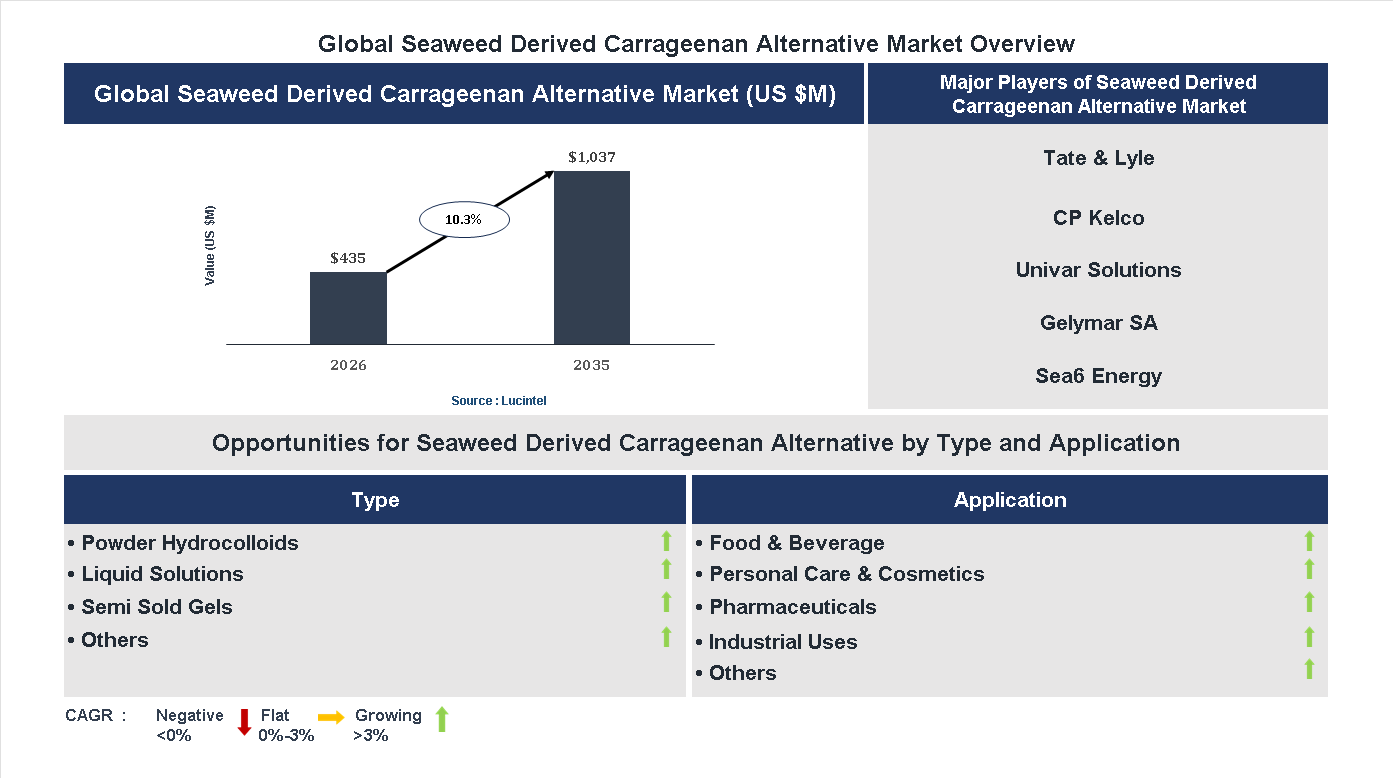
Key data points: The market size in 2035 = $1,037 million, growth forecast = 10.3% annually for the next 8 years. Scroll below to get more insights. This market report covers trends, opportunities and forecasts in seaweed derived carrageenan alternative market to 2035 by type (powder hydrocolloids, liquid solutions, semi sold gels, and others), application (food & beverage, personal care & cosmetics, pharmaceuticals, industrial uses, and others), and region (North America, Europe, Asia Pacific, and the Rest of the World)
We'll send your sample report shortly.
• Lucintel forecasts that, within the type category, powder hydrocolloid is expected to witness the highest growth over the forecast period.
• Within the application category, food & beverage is expected to witness the highest growth.
• In terms of region, APAC is expected to witness the highest growth over the forecast period. Gain valuable insights for your business decisions with our comprehensive 150+ page report. Sample figures with some insights are shown below.
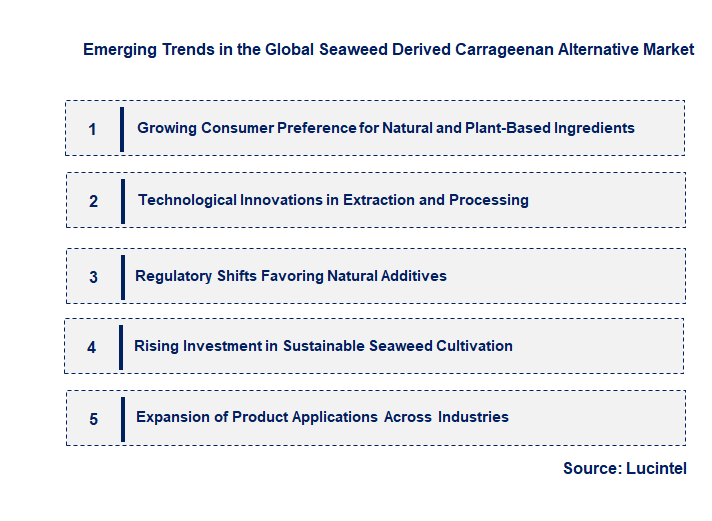
• Growing Consumer Preference for Natural and Plant-Based Ingredients: Consumers are increasingly seeking natural, organic, and plant-based products due to health concerns and environmental awareness. This shift is driving demand for seaweed-derived alternatives that are perceived as safer and more sustainable than synthetic or processed additives. Brands are responding by reformulating products to include these natural ingredients, which enhances brand image and appeals to eco-conscious buyers. This trend is expected to continue as consumers prioritize health and sustainability in their purchasing decisions.
• Technological Innovations in Extraction and Processing: Advances in extraction techniques, such as enzyme-assisted extraction and environmentally friendly processing methods, are improving the efficiency and yield of seaweed-based ingredients. These innovations reduce production costs and environmental impact, making alternatives more commercially viable. Enhanced processing also allows for better control over product quality and consistency, which is crucial for food and pharmaceutical applications. As technology evolves, the market will benefit from more sustainable and cost-effective solutions, broadening the scope of seaweed-based ingredients.
• Regulatory Shifts Favoring Natural Additives: Governments and regulatory bodies are increasingly scrutinizing synthetic additives like traditional carrageenan due to health concerns. This has led to stricter regulations and bans in certain regions, encouraging manufacturers to seek natural substitutes. The regulatory environment is becoming more favorable for seaweed-derived alternatives, providing a competitive advantage for companies that adopt these ingredients. Clear guidelines and safety assessments are fostering consumer trust and facilitating market expansion, making natural seaweed-based ingredients a preferred choice for compliant product formulations.
• Rising Investment in Sustainable Seaweed Cultivation: Investment in sustainable seaweed farming is on the rise, driven by the need for environmentally friendly raw materials. Innovations in aquaculture techniques and sustainable harvesting practices are ensuring a steady supply of high-quality seaweed. This growth supports the development of alternative ingredients and reduces reliance on wild harvesting, which can be environmentally damaging. Increased investment also encourages research and development, leading to new applications and improved processing methods, ultimately strengthening the supply chain and market stability.
• Expansion of Product Applications Across Industries: The versatility of seaweed-derived ingredients is leading to their adoption across various sectors, including food, cosmetics, pharmaceuticals, and agriculture. This diversification broadens market opportunities and reduces dependency on a single industry. For example, in the food sector, they are used as thickeners and stabilizers; in cosmetics, as natural emulsifiers; and in agriculture, as bio-stimulants. The expanding application base is driving innovation and increasing demand, positioning seaweed-based alternatives as essential components in sustainable product development across multiple industries. These trends are collectively reshaping the seaweed derived carrageenan alternative market by emphasizing sustainability, technological advancement, regulatory support, and diverse applications. They are fostering a shift towards safer, eco-friendly, and innovative ingredients, which will likely lead to increased market growth and a more sustainable future for the industry.
• Growing Consumer Preference for Natural Ingredients: The shift towards clean-label products is boosting demand for natural carrageenan alternatives. Consumers are increasingly wary of synthetic additives, prompting manufacturers to seek plant-based, eco-friendly options. This trend enhances market growth by encouraging innovation and expanding product portfolios that meet health and sustainability standards. Companies investing in natural ingredients are gaining competitive advantage, fostering trust and loyalty among health-conscious consumers.
• Technological Innovations in Extraction Processes: Advances in extraction and processing techniques are making it easier and more cost-effective to produce seaweed-based alternatives. These innovations improve yield, purity, and functionality, reducing environmental impact. As a result, manufacturers can offer high-quality, sustainable products at competitive prices. This technological progress accelerates market adoption, encourages new product development, and supports scalability, ultimately expanding the reach of seaweed-derived alternatives across various industries.
• Regulatory Support and Policy Changes: Governments and regulatory bodies are increasingly endorsing sustainable and natural ingredients, providing favorable policies and certifications. These regulations encourage companies to develop and adopt seaweed-based carrageenan alternatives, ensuring safety and environmental compliance. Such support reduces barriers to market entry, boosts consumer confidence, and promotes industry growth. Regulatory endorsement is crucial for mainstream acceptance and global expansion of these alternatives.
• Rising Applications in Food and Beverage Industry: The food sector is witnessing a surge in demand for plant-based thickeners and stabilizers, driven by vegan and allergen-free product trends. Seaweed-derived alternatives offer functional benefits such as gelling, thickening, and stabilizing, making them ideal substitutes. This expansion opens new revenue streams for manufacturers and enhances product innovation. The increasing adoption in processed foods, dairy, and beverages significantly impacts market growth and diversification.
• Expansion in Pharmaceutical and Cosmetic Sectors: The pharmaceutical and cosmetic industries are exploring seaweed-based ingredients for their bioactive and moisturizing properties. These natural alternatives are used in skincare, drug delivery, and wound healing products, driven by consumer preference for clean-label formulations. This diversification broadens market scope, encourages R&D investments, and fosters sustainable sourcing practices. The growing application base enhances market resilience and long-term growth prospects. These developments are significantly transforming the seaweed derived carrageenan alternative market by fostering innovation, sustainability, and regulatory support. They are expanding application areas, improving product quality, and aligning with consumer preferences for natural and eco-friendly solutions. This dynamic environment is poised to drive substantial market growth, offering new opportunities for stakeholders and shaping the future landscape of the industry.
• Growing Demand for Natural and Plant-Based Food Additives: Increasing consumer preference for clean-label, plant-based ingredients is driving the adoption of seaweed-derived carrageenan alternatives. Food manufacturers seek sustainable, non-GMO, and allergen-free options to meet health-conscious market demands. The shift towards natural ingredients enhances product appeal and aligns with regulatory trends favoring transparency. This demand encourages innovation in extraction methods, leading to a broader range of functional, eco-friendly additives that cater to diverse dietary needs and preferences.
• Expansion of Personal Care and Cosmetic Applications: The rising popularity of natural and organic personal care products is creating new opportunities for seaweed-based ingredients. Carrageenan alternatives offer thickening, stabilizing, and moisturizing properties suitable for skincare, haircare, and cosmetic formulations. Consumers favor products with sustainable, biodegradable ingredients, prompting brands to incorporate seaweed derivatives. This trend supports the development of multifunctional, eco-friendly formulations, expanding market reach beyond food into lucrative personal care segments, driven by consumer awareness and regulatory encouragement for natural ingredients.
• Innovations in Extraction and Processing Technologies: Advances in environmentally friendly extraction and processing techniques are enhancing the viability of seaweed-derived carrageenan alternatives. These innovations improve yield, purity, and functional properties while reducing environmental impact. Enhanced processing methods enable cost-effective production, making alternatives more competitive with traditional carrageenan. This technological progress fosters product diversification, supports sustainable supply chains, and encourages industry adoption, ultimately accelerating market growth and expanding application scopes across various sectors.
• Increasing Regulatory Support and Sustainability Initiatives: Governments and industry bodies are promoting sustainable practices and approving natural ingredients, bolstering market confidence. Regulatory frameworks favor plant-based, biodegradable additives, encouraging manufacturers to transition from synthetic options. Sustainability initiatives emphasize reducing carbon footprints and marine resource conservation, aligning with consumer values. This supportive environment facilitates market entry, innovation, and expansion of seaweed-derived carrageenan alternatives, ensuring compliance and fostering long-term growth in eco-conscious markets.
• Rising Consumer Awareness of Health and Environmental Benefits: Consumers are increasingly informed about the health and environmental impacts of their choices, favoring natural, sustainable ingredients. This awareness drives demand for seaweed-based carrageenan alternatives that are free from artificial additives and environmentally friendly. Educational campaigns and transparent labeling further influence purchasing decisions. As consumers prioritize wellness and sustainability, companies investing in these alternatives can capitalize on brand loyalty, expand market share, and meet the evolving expectations of health-conscious, eco-aware markets. These growth opportunities collectively shape a dynamic landscape for the seaweed derived carrageenan alternative market. Emphasizing sustainability, innovation, and consumer health, they foster industry transformation. Companies that leverage these opportunities can enhance product portfolios, meet regulatory standards, and satisfy evolving consumer preferences. Ultimately, this will lead to increased market penetration, diversified applications, and a stronger position in the global shift toward natural, eco-friendly ingredients.
• Technological Innovation: The development of advanced extraction and processing techniques has significantly improved the efficiency and sustainability of producing seaweed-based alternatives. Innovations such as enzyme-assisted extraction and environmentally friendly processing methods reduce chemical use and energy consumption, making the production process more sustainable and cost-effective. These technological advancements enable manufacturers to meet increasing demand for natural, clean-label ingredients, thereby expanding market opportunities. Moreover, ongoing research into novel extraction methods is expected to further enhance product quality and yield, fostering innovation-driven growth in the market.
• Rising Consumer Preference for Natural and Plant-Based Products: Consumers worldwide are increasingly seeking natural, organic, and plant-based ingredients due to health consciousness and environmental concerns. This shift is driving demand for seaweed-derived alternatives as safer, sustainable options compared to synthetic or animal-based ingredients. The trend is particularly prominent in the food, beverage, and cosmetic industries, where clean-label products are gaining popularity. As consumers become more aware of the benefits of seaweed-based ingredients, manufacturers are motivated to develop and promote carrageenan alternatives, fueling market expansion driven by health and sustainability trends.
• Regulatory Support and Food Safety Standards: Governments and regulatory bodies are implementing stricter food safety and labeling standards to ensure consumer protection and environmental sustainability. These regulations often favor natural and biodegradable ingredients, encouraging the adoption of seaweed-based carrageenan alternatives. For instance, bans or restrictions on certain synthetic additives are prompting manufacturers to seek natural substitutes. Regulatory support not only facilitates market entry for innovative products but also enhances consumer confidence, thereby boosting demand. Compliance with evolving standards is crucial for market players to maintain competitiveness and expand their product portfolios.
• Environmental Sustainability and Climate Change Initiatives: Growing awareness of environmental issues and climate change has led to increased emphasis on sustainable sourcing and eco-friendly production practices. Seaweed cultivation is considered environmentally beneficial due to its carbon sequestration capabilities and minimal land use. Governments and organizations are promoting sustainable harvesting and cultivation practices, which support the development of eco-friendly carrageenan alternatives. This focus on sustainability aligns with corporate social responsibility goals and consumer expectations, driving market growth. Additionally, sustainable practices help mitigate supply chain risks associated with climate change, ensuring long-term availability of raw materials.
• Expansion of End-Use Industries: The expanding applications of seaweed-derived alternatives across various industries, including food, pharmaceuticals, cosmetics, and agriculture, are fueling market growth. The demand for natural thickeners, stabilizers, and functional ingredients in these sectors is increasing, creating new opportunities for carrageenan alternatives. Innovations in product formulations and increasing acceptance of plant-based ingredients are further broadening the scope of applications. This diversification reduces dependency on traditional carrageenan and stimulates market expansion, driven by the need for safer, sustainable, and versatile ingredients across multiple industries. The challenges facing the seaweed derived carrageenan alternative market include:
• Regulatory Uncertainty and Stringent Standards: Despite supportive regulations, the market faces challenges from inconsistent regulatory frameworks across regions. Some countries impose strict restrictions or bans on carrageenan due to health concerns, which can hinder market entry and expansion. Navigating complex regulatory landscapes requires significant investment in compliance and testing, increasing costs for manufacturers. Additionally, evolving standards may lead to product reformulation or reclassification, creating uncertainty and delaying product launches. This regulatory unpredictability poses a significant barrier to market growth and necessitates proactive engagement with authorities.
• Supply Chain Disruptions and Raw Material Availability: The reliance on seaweed as a raw material makes the market vulnerable to supply chain disruptions caused by environmental factors, overharvesting, and climate change. Fluctuations in seaweed harvests can lead to inconsistent raw material supply, affecting production schedules and costs. Additionally, logistical challenges in harvesting, processing, and transporting seaweed can increase lead times and expenses. Ensuring sustainable and stable supply chains is critical for market stability, but current vulnerabilities pose risks to consistent product availability and pricing, potentially limiting growth prospects.
• Competition from Synthetic and Alternative Natural Ingredients: The market faces stiff competition from synthetic additives and other natural alternatives that serve similar functions. Synthetic thickeners and stabilizers often offer cost advantages and consistent quality, making them attractive to manufacturers seeking affordability. Moreover, the emergence of other plant-based ingredients with comparable functionalities intensifies competition. This competitive landscape pressures market players to innovate continuously and differentiate their products, which can increase R&D costs and impact profit margins. Overcoming price sensitivity and establishing consumer trust for new alternatives remain ongoing challenges. The seaweed derived carrageenan alternative market is shaped by technological advancements, consumer preferences, regulatory support, sustainability initiatives, and expanding industry applications. However, it faces challenges such as regulatory uncertainties, supply chain vulnerabilities, and intense competition. These factors collectively influence market growth, requiring stakeholders to innovate, adapt to regulatory changes, and develop resilient supply chains. Successfully navigating these drivers and challenges will determine the market's future trajectory, with opportunities for sustainable growth driven by increasing demand for natural, eco-friendly ingredients across diverse industries.
• Tate & Lyle
• CP Kelco
• Univar Solutions
• Gelymar SA
• Sea6 Energy
• Sway
• Umaro Foods
• Carbonwave
• Sumitomo Chemical
• Cargill
• Powder Hydrocolloids
• Liquid Solutions
• Semi Sold Gels
• Others
• Food & Beverage
• Personal Care & Cosmetics
• Pharmaceuticals
• Industrial Uses
• Others
• North America
• Europe
• Asia Pacific
• The Rest of the World
• United States: The U.S. market has seen significant advancements with increased investments in sustainable extraction technologies and plant-based alternatives. Regulatory agencies are encouraging cleaner production methods, leading to innovations in eco-friendly processing. Major food and beverage companies are adopting seaweed-derived ingredients to meet consumer demand for natural products. Additionally, startups are emerging with novel carrageenan substitutes, focusing on health and safety concerns associated with traditional carrageenan. Market growth is also driven by rising awareness of environmental sustainability and clean-label trends among American consumers.
• China: China is rapidly expanding its seaweed cultivation and processing capabilities, becoming a key player in the global market. The government has introduced policies supporting sustainable aquaculture and green technology adoption. Chinese companies are investing heavily in research to develop high-quality, cost-effective carrageenan alternatives. The domestic market is witnessing increased demand for natural ingredients in food, cosmetics, and pharmaceuticals. Additionally, China is exploring innovative extraction methods to reduce environmental impact and improve product safety, positioning itself as a leader in sustainable seaweed-based products.
• Germany: Germany's market focus is on eco-friendly and innovative extraction processes, aligning with its strong emphasis on sustainability and environmental responsibility. Several research institutions and companies are collaborating to develop plant-based carrageenan alternatives that meet strict safety standards. Consumer preferences for organic and clean-label products are driving market growth. Germany is also investing in circular economy initiatives, promoting the use of renewable resources like seaweed. The country’s regulatory framework supports innovation, making it a hub for sustainable food ingredients and alternative biopolymers derived from seaweed.
• India: India is witnessing a surge in seaweed farming, supported by government initiatives aimed at promoting sustainable aquaculture and rural livelihoods. The country is focusing on developing affordable, high-quality carrageenan alternatives to cater to domestic and export markets. Research institutions are working on improving extraction techniques to enhance yield and safety. The increasing demand for natural ingredients in food, cosmetics, and health products is fueling market expansion. India’s large coastline and abundant seaweed resources position it as a significant player in the global seaweed-derived ingredient market, with a focus on sustainable and cost-effective solutions.
• Japan: Japan continues to lead in seaweed cultivation and innovative extraction technologies, emphasizing high-quality, safe, and sustainable products. The country’s strong tradition of seaweed consumption supports ongoing research into alternative ingredients. Japanese companies are developing advanced processing methods to produce carrageenan substitutes that meet strict safety and environmental standards. The government promotes sustainable aquaculture practices and invests in R&D to improve product safety and environmental impact. Japan’s focus on premium, natural ingredients aligns with global trends, making it a key market for innovative, eco-friendly seaweed-based alternatives.


• Tate & Lyle
• CP Kelco
• Univar Solutions
• Gelymar SA
• Sea6 Energy
• Sway
• Umaro Foods
• Carbonwave
• Sumitomo Chemical
• Cargill Q6. Which seaweed derived carrageenan alternative market segment will be the largest in future? Answer: Lucintel forecasts that, within the type category, powder hydrocolloid is expected to witness the highest growth over the forecast period. Q7. In seaweed derived carrageenan alternative market, which region is expected to be the largest in next 5 years? Answer: In terms of region, APAC is expected to witness the highest growth over the forecast period. Q8. Do we receive customization in this report? Answer: Yes, Lucintel provides 10% customization without any additional cost.


Choose a license that fits your team. Instant PDF delivery.
Prices exclude taxes. Instant delivery. Custom licensing available on request.
Market Report · July 22, 2026
Market Report · July 22, 2026
Market Report · July 22, 2026
Trusted partner for strategic intelligence and business growth


Receive a complimentary market analysis tailored to your industry. Our analysts will identify key growth opportunities and competitive dynamics specific to your business.

Market size, growth rate, and key trend analysis for your specific sector.

Top competitor positioning and market share analysis.

Strategic recommendations backed by data-driven insights.
Get curated market intelligence and competitive moves straight to your inbox.
By subscribing, you agree to receive our monthly insights. Unsubscribe anytime.
Receive a complimentary market analysis tailored to your industry. Our analysts will identify key growth opportunities and competitive dynamics specific to your business.
Market size, growth rate, and key trend analysis for your specific sector.
Top competitor positioning and market share analysis.
Strategic recommendations backed by data-driven insights.
Get curated market intelligence, emerging trends, and competitive moves straight to your inbox each month.
By subscribing, you agree to receive our monthly insights. Unsubscribe anytime.
We'll send your sample report shortly.