
Market Report · July 15, 2026

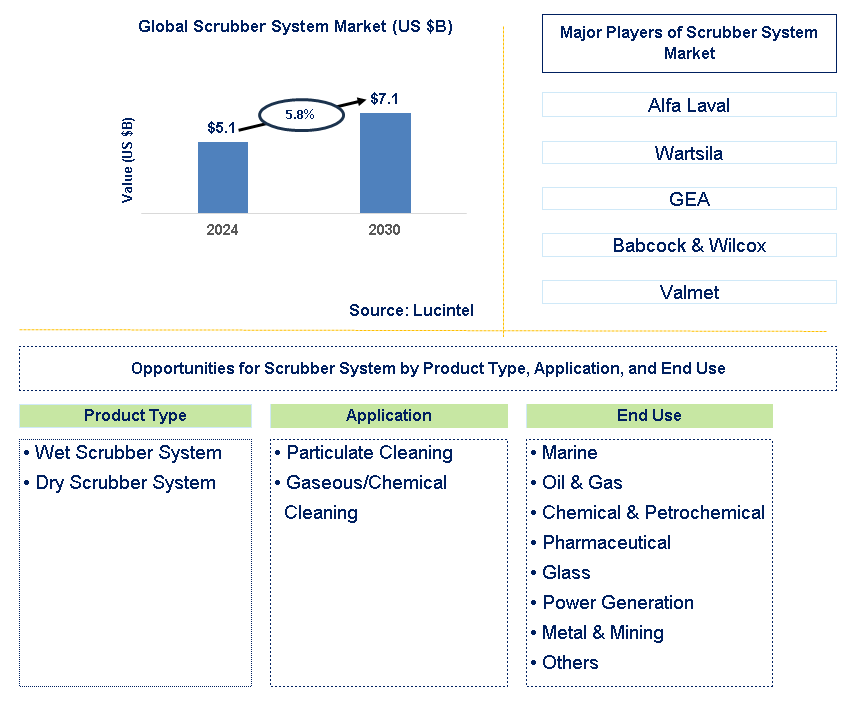
Key data points: The market size in 2030 = $7.1 billion, growth forecast = 5.8% annually for the next 6 years. Scroll below to get more insights. This market report covers trends, opportunities, and forecasts in the global scrubber system market to 2030 by product type (wet scrubber system and dry scrubber system), application (particulate cleaning and gaseous/chemical cleaning), end use (marine, oil & gas, chemical & petrochemical, pharmaceutical, glass, power generation, metal & mining, food, beverage, & agriculture, and others), and region (North America, Europe, Asia Pacific, and the Rest of the World)
We'll send your sample report shortly.
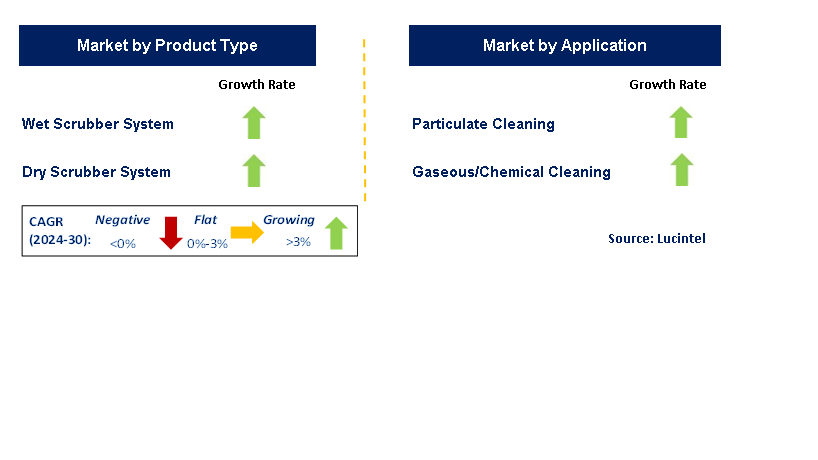
• Lucintel forecasts that, within the product type category, wet scrubber system is expected to witness a higher growth over the forecast period due to appropriate air pollution control equipment to collect both particulate matter and gases.
• In terms of regions, APAC will remain the largest region over the forecast period due to causes are government laws and directives aimed at reducing pollution. Gain valuable insight for your business decisions with our comprehensive 150+ page report
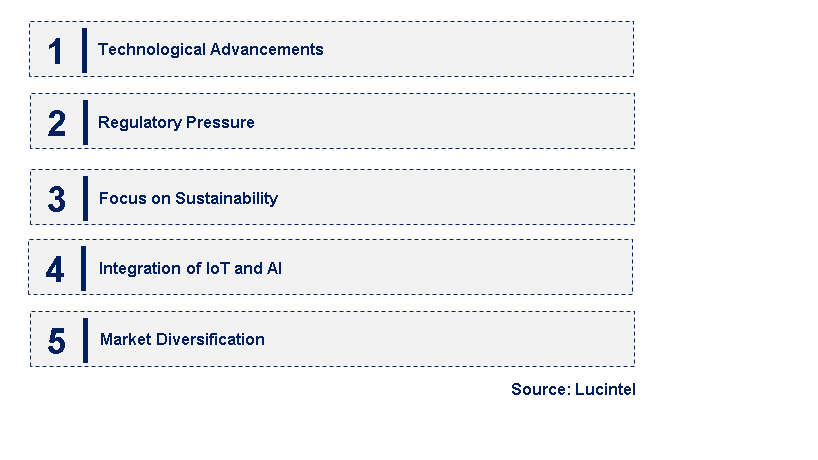
• Technological Advancements: Continuous innovation in scrubber technology is enhancing efficiency and reducing costs. Advanced materials and designs are enabling systems to operate with lower energy consumption, making them more attractive to industries facing regulatory pressures.
• Regulatory Pressure: Stricter environmental regulations are compelling industries to adopt scrubber systems. Governments worldwide are enforcing tighter emissions standards, driving demand for effective scrubber solutions to ensure compliance and avoid penalties.
• Focus on Sustainability: Growing environmental awareness is pushing companies to invest in sustainable practices. Scrubber systems are increasingly seen as essential components in achieving corporate sustainability goals, leading to greater adoption across various sectors.
• Integration of IoT and AI: The incorporation of the Internet of Things (IoT) and artificial intelligence (AI) technologies in scrubber systems is enabling real-time monitoring and data analysis. This integration allows for optimized performance and predictive maintenance, enhancing overall system reliability.
• Market Diversification: The scrubber system market is diversifying with new applications emerging in various sectors, including maritime, industrial, and energy. This trend is opening up new revenue streams for manufacturers and increasing the overall market size. These emerging trends are reshaping the scrubber system market by driving technological advancements, enhancing regulatory compliance, and promoting sustainability. As industries adapt to these trends, the demand for innovative scrubber solutions is expected to grow significantly.
• Enhanced Efficiency Designs: Manufacturers are developing scrubber systems with improved designs that enhance pollutant removal efficiency. These systems are incorporating advanced materials and innovative engineering to achieve better performance while minimizing energy consumption.
• Modular Scrubber Systems: The introduction of modular scrubber systems allows for flexible installation and scalability. This development is particularly beneficial for industries looking to expand their operations without significant downtime or investment in new infrastructure.
• Focus on Carbon Capture: There is a growing emphasis on integrating scrubber systems with carbon capture technologies. This dual approach helps industries not only reduce emissions but also capture CO2 for potential reuse or storage, aligning with global sustainability goals.
• Retrofit Solutions for Existing Systems: Companies are offering retrofit solutions that enable existing facilities to upgrade their scrubber systems without complete overhauls. This trend helps industries enhance compliance with new regulations while minimizing capital expenditure.
• Investment in R&D: Increased investment in research and development is driving innovations in scrubber technology. Companies are exploring new materials, designs, and processes to enhance scrubber performance and reduce operating costs, positioning themselves competitively in the market. These recent developments are significantly impacting the scrubber system market by enhancing efficiency, promoting sustainability, and driving innovation. As industries face increasing environmental challenges, these advancements will play a crucial role in shaping the future of pollution control.
• Maritime Applications: The maritime industry is a key growth area for scrubber systems, driven by stringent regulations on sulfur emissions. Companies can focus on developing advanced scrubber technologies tailored for ships to meet international compliance standards.
• Industrial Manufacturing: As manufacturing sectors face increasing scrutiny over emissions, there is a significant opportunity for scrubber systems in factories. Targeting industries such as textiles and chemicals can open new avenues for growth.
• Power Generation: The power generation sector, particularly coal-fired plants, presents growth potential for scrubber systems. Upgrading existing systems to improve efficiency and compliance with environmental regulations can drive demand.
• Oil and Gas Industry: The oil and gas sector is investing in scrubber technologies to manage emissions effectively. Providing customized solutions that cater to the unique needs of this industry can lead to substantial market opportunities.
• Renewable Energy Integration: With a global shift towards renewable energy sources, integrating scrubber systems with new technologies, such as biogas and biomass, presents a unique opportunity for growth. Companies can innovate solutions that support cleaner energy production. These strategic growth opportunities in the scrubber system market underscore the potential for innovation and expansion across various applications. By focusing on these areas, stakeholders can position themselves for sustained growth in an increasingly regulated environment.
• Stringent Environmental Regulations: Governments worldwide are implementing stricter regulations to control emissions. This regulatory pressure is a significant driver for the adoption of scrubber systems as industries seek compliance to avoid penalties.
• Increased Awareness of Air Quality: Growing public awareness of air quality issues is prompting industries to invest in cleaner technologies. Companies are adopting scrubber systems as part of their sustainability initiatives, driving demand.
• Technological Advancements: Continuous innovation in scrubber technology is enhancing efficiency and performance. Advances in materials and design are enabling industries to achieve better emissions control, further supporting market growth.
• Economic Incentives: Governments are providing economic incentives for companies to invest in pollution control technologies, including scrubber systems. These incentives can include tax breaks or grants, making it financially attractive for industries to upgrade their systems.
• Global Industrial Growth: The expansion of industries globally, particularly in emerging markets, is increasing the demand for scrubber systems. As new facilities are established, the need for effective emissions control becomes paramount. Challenges in the scrubber system market include:
• High Initial Investment Costs: The capital required to install scrubber systems can be a barrier for some industries, particularly small and medium enterprises. High upfront costs may deter investments in necessary technologies.
• Maintenance and Operational Costs: Ongoing maintenance and operational costs associated with scrubber systems can impact profitability. Industries must ensure they can manage these costs effectively to realize the benefits of scrubber technologies.
• Competition from Alternative Technologies: The presence of alternative pollution control technologies poses a challenge to the scrubber system market. Manufacturers must continuously innovate to maintain a competitive edge and demonstrate the effectiveness of their solutions. The interplay of these drivers and challenges significantly impacts the scrubber system market. By leveraging growth drivers and addressing challenges, stakeholders can enhance their strategies and achieve sustainable growth in this dynamic industry.
• Alfa Laval
• Wartsila
• GEA
• Babcock & Wilcox
• Valmet
• Wet Scrubber System
• Dry Scrubber System
• Particulate Cleaning
• Gaseous/Chemical Cleaning
• Marine
• Oil & Gas
• Chemical & Petrochemical
• Pharmaceutical
• Glass
• Power Generation
• Others
• North America
• Europe
• Asia Pacific
• The Rest of the World
• United States: In the U.S., the scrubber system market is driven by stringent regulations aimed at reducing emissions from industrial processes. The adoption of advanced wet and dry scrubbers is increasing, particularly in the maritime sector, to comply with the International Maritime Organization's sulfur cap. Companies are investing in retrofitting existing vessels with scrubbers, enhancing operational efficiency while minimizing environmental impact. Furthermore, innovations in scrubber design, such as modular systems, are gaining traction, allowing for easier installation and maintenance.
• China: China is witnessing rapid growth in its scrubber system market, fueled by government initiatives to combat air pollution. The country is investing heavily in scrubber technology for industrial applications, particularly in power plants and manufacturing. The push for cleaner coal usage is leading to increased adoption of flue gas desulfurization systems. Additionally, Chinese manufacturers are focusing on producing cost-effective scrubbers to cater to both domestic and international markets, positioning themselves as competitive players in the global landscape.
• Germany: In Germany, the scrubber system market is characterized by a strong emphasis on sustainability and innovation. The country's commitment to reducing greenhouse gas emissions is driving the adoption of state-of-the-art scrubber technologies in various sectors, including automotive and energy. German companies are investing in research and development to enhance scrubber efficiency and reduce operational costs. Moreover, the integration of digital technologies, such as IoT and AI, is enabling real-time monitoring and optimization of scrubber performance.
• India: India's scrubber system market is growing steadily, propelled by increasing environmental awareness and regulatory pressures. Industries are adopting scrubbers to comply with new emission standards set by the government, particularly in sectors like textiles and pharmaceuticals. Additionally, the demand for scrubbers in power plants is rising, driven by the need to mitigate air pollution from coal-fired units. Local manufacturers are also exploring innovative designs to enhance the effectiveness and efficiency of scrubber systems.
• Japan: In Japan, the scrubber system market is influenced by the nation's focus on environmental sustainability and disaster preparedness. The adoption of scrubbers is prevalent in industrial applications, particularly in the chemical and petrochemical sectors. Japanese companies are investing in advanced scrubber technologies to meet stringent emission standards and improve operational efficiency. Furthermore, the integration of renewable energy sources and carbon capture technologies is creating new opportunities for scrubber systems, aligning with Japan's long-term sustainability goals.


• Alfa Laval
• Wartsila
• GEA
• Babcock & Wilcox
• Valmet Q6. Which scrubber system market segment will be the largest in future? Answer: Lucintel forecasts that, within the product type category, wet scrubber system is expected to witness the higher growth over the forecast period due to appropriate air pollution control equipment to collect both particulate matter and gases. Q7. In scrubber system market, which region is expected to be the largest in next 5 years? Answer: In terms of regions, APAC will remain the largest region over the forecast period due to causes are government laws and directives aimed at reducing pollution. Answer: Yes, Lucintel provides 10% customization without any additional cost. Answer: Yes, Lucintel provides 10% customization without any additional cost.


Choose a license that fits your team. Instant PDF delivery.
Prices exclude taxes. Instant delivery. Custom licensing available on request.
Market Report · July 15, 2026
Market Report · June 24, 2026
Market Report · May 18, 2026
Trusted partner for strategic intelligence and business growth


Receive a complimentary market analysis tailored to your industry. Our analysts will identify key growth opportunities and competitive dynamics specific to your business.

Market size, growth rate, and key trend analysis for your specific sector.

Top competitor positioning and market share analysis.

Strategic recommendations backed by data-driven insights.
Get curated market intelligence and competitive moves straight to your inbox.
By subscribing, you agree to receive our monthly insights. Unsubscribe anytime.
Receive a complimentary market analysis tailored to your industry. Our analysts will identify key growth opportunities and competitive dynamics specific to your business.
Market size, growth rate, and key trend analysis for your specific sector.
Top competitor positioning and market share analysis.
Strategic recommendations backed by data-driven insights.
Get curated market intelligence, emerging trends, and competitive moves straight to your inbox each month.
By subscribing, you agree to receive our monthly insights. Unsubscribe anytime.
We'll send your sample report shortly.