
Market Report · July 29, 2026

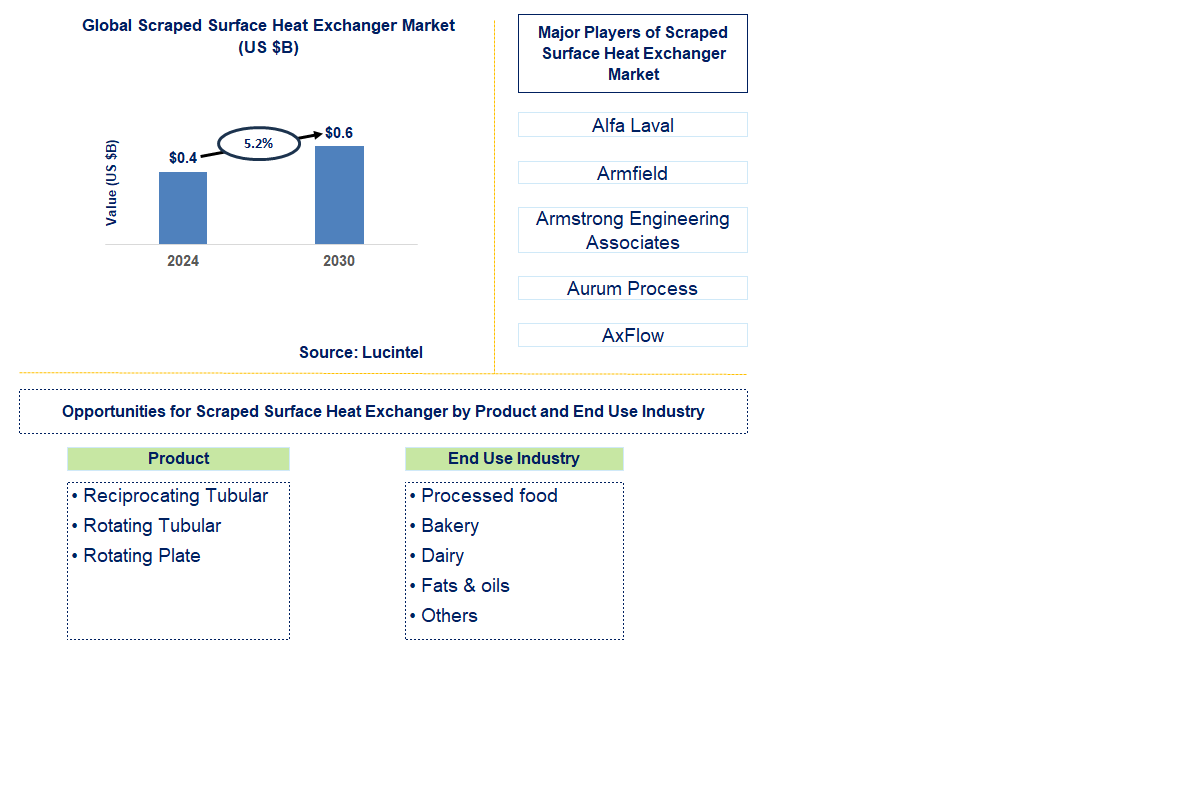
Key data points: The market size in 2030 = $0.6 billion, growth forecast = 5.2% annually for the next 6 years. Scroll below to get more insights. This market report covers trends, opportunities, and forecastss in the global scraped surface heat exchanger market to 2030 by product (reciprocating tubular, rotating tubular, and rotating plate), end use industry (processed food, bakery, dairy, fats & oils, and others), and region (North America, Europe, Asia Pacific, and the Rest of the World)
We'll send your sample report shortly.
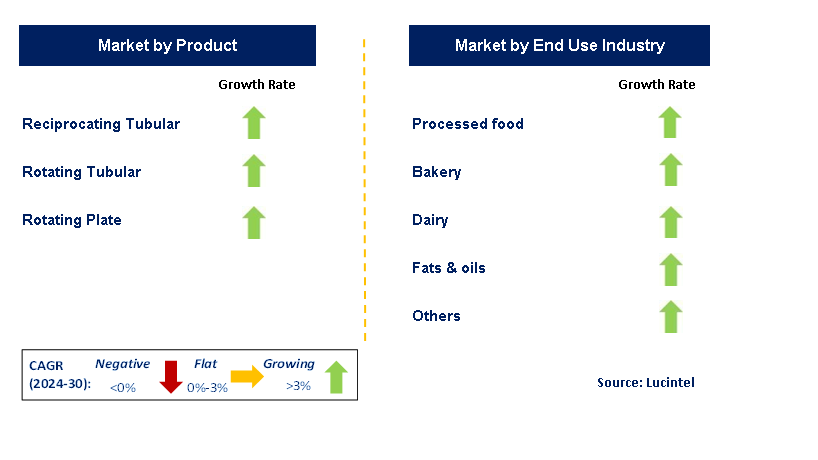
• Lucintel forecasts that, within the product category, reciprocating tubular is expected to witness the highest growth over the forecast period due to elevated thermal efficiency, minimal fouling, and low-pressure drop.
• Within the end use category, processed food will remain the largest segment due to extensive use of abrasive surface heat exchangers in its production processes.
• In terms of regions, Europe will remain the largest region over the forecast period due to substituting outdated scraped surface heat exchangers with modern and more efficient alternatives. Gain valuable insights for your business decisions with our comprehensive 150+ page report.
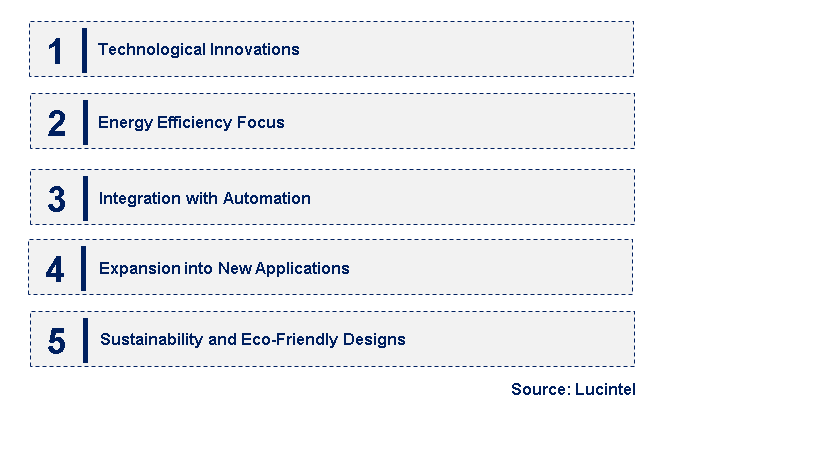
• Technological Innovations: The market is benefiting from SSHE technology developments, including the use of advanced scraper systems and better heat-to-water exchange systems. Innovations focus on enhancing the systems’ performance, reliability, and operational effectiveness.
• Energy Efficiency Focus: There is a developing trend of concentrating on the design of SSHEs in such a way that, no matter the operational costs, the environmental consequences are minimized. There have been designs of SSHEs that operate at lower power levels, enhancing the effectiveness of this goal.
• Integration with Automation: Industrial integration of SSHEs with automated and controlled machines is becoming increasingly common. This enhances process regulation, reduces operational idle time, and raises the efficiency of industrial processes.
• Expansion into New Applications: There is a growing trend of adapting SSHEs in different industrial domains, including pharmaceuticals, chemicals, and renewable energy, among others. This is because industries are expanding the need for effective heat exchanger systems.
• Sustainability and Eco-Friendly Designs: The trend of adopting eco-friendly SSHEs aligns with the global concern for environmental welfare. Manufacturers are encouraging the use of environmentally friendly materials and processes in their machinery. The above emerging trends, characterized by high technological advancement, energy efficiency, diversification through automation, and sustainability, are changing the SSHE industry. These changes are pushing the boundaries of technology, creating new markets, and defining the next trends in the industry.
• Advancements in Scraper Technology: The application of new scraper technologies is increasing the efficiency of SSHEs in a wide array of viscous and sticky handling operations. Better designs and materials for scrapers are improving heat transfer and reducing scraper downtime and maintenance.
• Energy-Efficient Designs: Recently, new types of SSHEs have been developed that achieve better thermal efficiency. Reductions in energy use and operational expenditures are being achieved through improvements in heat exchange and management technologies.
• Integration with Smart Technologies: There is growing integration of SSHEs with smart technologies for effective and efficient monitoring and control. This integration results in better process control, reduces instances of faults through predictive maintenance, and improves operational efficiency.
• Expansion of Applications: SSHEs are being engineered for applications in industries such as pharmaceuticals and renewable energy. This expansion is primarily driven by the need for fast and efficient heat exchange devices in specific fields.
• Sustainability Initiatives: There is an increasing focus on creating "green" SSHEs. Manufacturers are using environmentally safe materials and employing energy-efficient solutions in their development and production processes. Recent innovations in scraper surface heat exchanger technology, such as improved scraper designs, energy-saving features, smart technology integration, new applications, and sustainability, present various growth opportunities for the market. These innovations improve the effectiveness and range of SSHE applications and fulfill different demands from various industries.
• Food Processing Industry: SSHEs play a crucial role in food processing, helping with viscous product handling and facilitating heat transfer processes. Growth opportunities in this sector lie in developing new SSHE designs that improve performance and cater to the specifics of food processing.
• Pharmaceutical Industry: In the pharmaceutical industry, it is essential to have effective heat transfer systems for processing heat-sensitive materials. SSHEs are expected to create growth prospects by offering reliable and efficient heat transfer for pharmaceutical processes.
• Chemical Processing: SSHEs are used to handle high-viscosity fluids in chemical processing, ensuring effective heat transfer. Opportunities in this sector include creating SSHEs that can respond better to challenging chemical processes.
• Renewable Energy: There are opportunities for the expansion of SSHEs in the renewable energy sector, particularly within bioenergy and energy-from-waste applications. In these areas, SSHEs can assist with thermal management and heat recovery.
• Automotive Industry: Determining the heat levels required in various systems and providing thermal management would be key applications of SSHEs in the automotive industry. Growth opportunities lie in developing SSHEs that meet the stringent requirements for automotive heat management. It is anticipated that strategic growth opportunities in the SSHE market, such as applications in food processing, pharmaceuticals, chemical processing, renewable energy, and the automotive industry, will foster innovation and growth. These opportunities illustrate how SSHEs can be used across diverse sectors to meet various industry needs.
• Technological Advancements: The introduction and improvement of SSHE technologies, such as advanced scraper systems and energy-efficient designs, are driving market growth. The use of engineering and materials science is enhancing product capabilities and increasing diversity in usage.
• Increasing Industrial Demand: Industries such as food processing, pharmaceuticals, and chemicals require SSHEs to perform optimally. This demand is driving growth in the market.
• Focus on Energy Efficiency: Reducing energy usage and operating costs are key drivers. Advances in SSHE design aim to achieve better thermal regulation while using less energy.
• Regulatory Factors: Compliance with safety, health, and quality standards remains a key driver in the SSHE market. Companies must incorporate these regulations into product design, which can impact market entry.
• Economic Factors: Factors such as the fluctuating prices of raw materials and investor input affect the SSHE market. These economic factors should be managed by firms to remain profitable and competitive. Challenges in the SSHE market include:
• High Production Costs: The high production costs associated with the manufacture of advanced SSHEs are a challenge. Competitive pressure demands a balance between cost performance and profitability.
• Technical Complexity: SSHE technology involves complex design, fabrication, and servicing challenges. Expertise in engineering is crucial for ensuring the system’s reliability and performance.
• Regulatory Challenges: Compliance with sector regulations and standards can be difficult. Companies must allocate sufficient resources to adhere to these laws and maintain quality control systems. The SSHE market is driven by advancements in technology, increasing industrial demand, energy-saving concerns, and regulatory compliance. However, it also faces challenges such as high production costs, technical complexity, and stringent regulations. Addressing these factors will be key to promoting progress and seizing growth opportunities.
• Alfa Laval
• Armfield
• Armstrong Engineering Associates
• Aurum Process Technology
• AxFlow
• Exchanger Industries
• Gemak
• Gerstenberg Services
• GPE Process Equipment
• Gpi De Gouwe
• Reciprocating Tubular
• Rotating Tubular
• Rotating Plate
• Processed food
• Bakery
• Dairy
• Fats & oils
• Others
• In terms of regions, North America
• In terms of regions, Europe
• Asia Pacific
• The Rest of the World
• China: The SSHE market in China has been progressing by focusing on increased production capacity and incorporating advanced technologies. Chinese manufacturers are expanding their SSHE production capacity and directing attention to R&D to enhance their use. Major developments include the creation of highly effective SSHEs with a wide range of materials and operational conditions. Government policies aimed at industry modernization are making China a strong competitor in the international SSHE market.
• Germany: In Germany, the SSHE market has seen trends toward enhanced durability and energy efficiency. German SSHE companies have improved scraper blade technology and heat exchanger effectiveness, focusing on manufacturing SSHEs that require lower maintenance and offer better performance. There is also a shift toward using green materials and technologies to minimize energy use and environmental damage.
• India: The SSHE market in India is expanding due to increased industrialization and a growing need for heat exchangers. Recent trends include improved SSHE design and manufacturing to meet the requirements of the food and pharmaceutical industries. Indian manufacturers are enhancing performance and quality consistency through control systems and automation.
• Japan: Japan’s SSHE market is focused on modernization and performance enhancement. Japanese firms are using cutting-edge materials and designs to improve the durability and functionality of SSHEs. Developments include smart systems for monitoring and control and enhancements to scraper actions for handling difficult substances. Japan’s precision engineering is contributing to the widespread adoption of SSHEs across industries.


• Alfa Laval
• Armfield
• Armstrong Engineering Associates
• Aurum Process Technology
• AxFlow
• Exchanger Industries
• Gemak
• Gerstenberg Services
• GPE Process Equipment
• Gpi De Gouwe Q6. Which scraped surface heat exchanger market segment will be the largest in future? Answer: Lucintel forecasts that reciprocating tubular is expected to witness the highest growth over the forecast period due to elevated thermal efficiency, minimal fouling, and low-pressure drop. Q7. In scraped surface heat exchanger market, which region is expected to be the largest in next 5 years? Answer: Europe will remain the largest region over the forecast period due to substituting outdated scraped surface heat exchangers with modern and more efficient alternatives. Q.8 Do we receive customization in this report? Answer: Yes, Lucintel provides 10% customization without any additional cost.


Choose a license that fits your team. Instant PDF delivery.
Prices exclude taxes. Instant delivery. Custom licensing available on request.
Market Report · July 29, 2026
Market Report · July 15, 2026
Market Report · July 13, 2026
Trusted partner for strategic intelligence and business growth


Receive a complimentary market analysis tailored to your industry. Our analysts will identify key growth opportunities and competitive dynamics specific to your business.

Market size, growth rate, and key trend analysis for your specific sector.

Top competitor positioning and market share analysis.

Strategic recommendations backed by data-driven insights.
Get curated market intelligence and competitive moves straight to your inbox.
By subscribing, you agree to receive our monthly insights. Unsubscribe anytime.
Receive a complimentary market analysis tailored to your industry. Our analysts will identify key growth opportunities and competitive dynamics specific to your business.
Market size, growth rate, and key trend analysis for your specific sector.
Top competitor positioning and market share analysis.
Strategic recommendations backed by data-driven insights.
Get curated market intelligence, emerging trends, and competitive moves straight to your inbox each month.
By subscribing, you agree to receive our monthly insights. Unsubscribe anytime.
We'll send your sample report shortly.