
Market Report · July 31, 2026

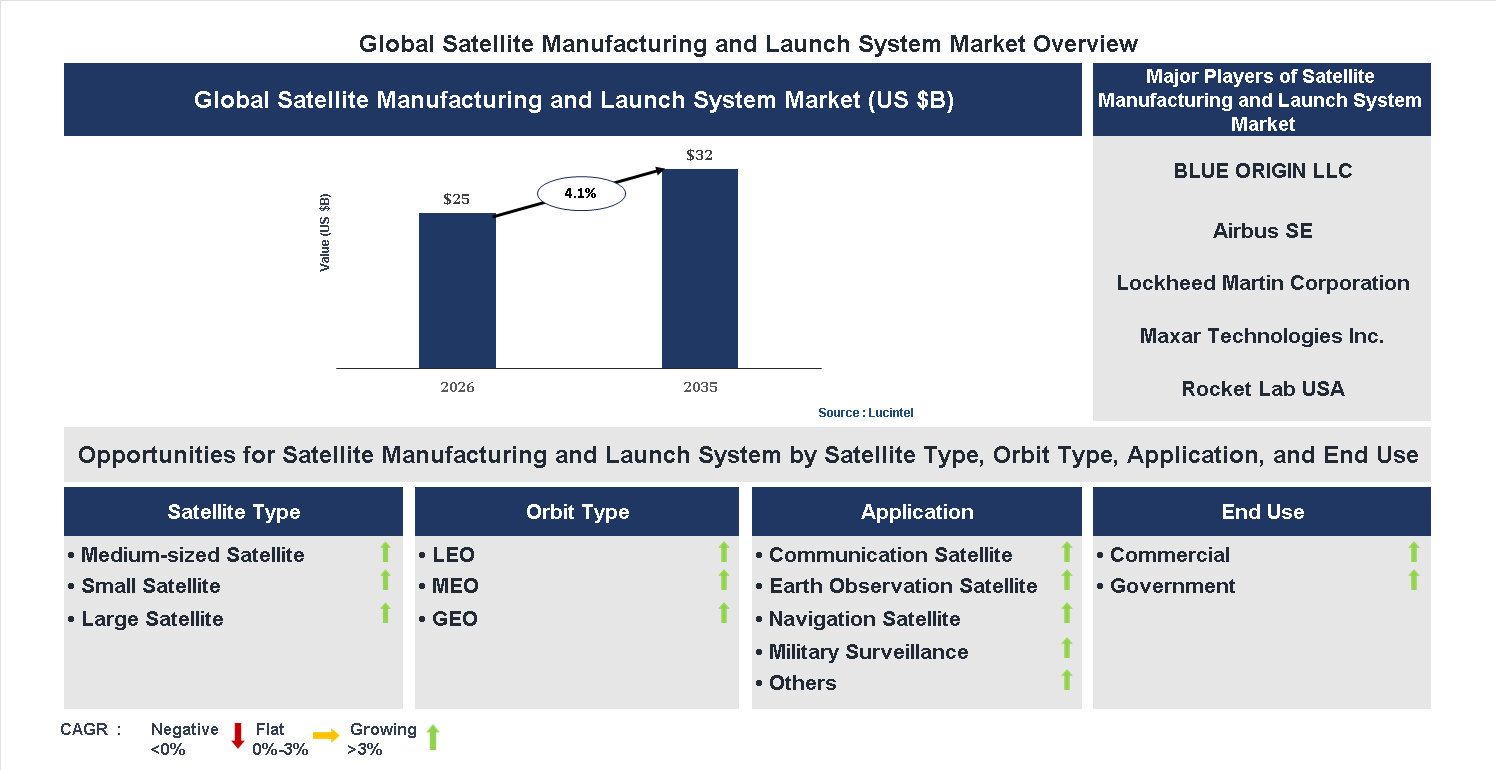
Key data points: The market size in 2035 = $32 billion, growth forecast = 4.1% annually for the next 8 years. Scroll below to get more insights. This market report covers trends, opportunities and forecasts in satellite manufacturing and launch system market to 2035 by satellite type (medium-sized satellite, small satellite, and large satellite), orbit type (LEO, MEO, and GEO), application (communication satellite, earth observation satellite, navigation satellite, military surveillance, and others), end use (commercial and government), and region (North America, Europe, Asia Pacific, and the Rest of the World)
We'll send your sample report shortly.
• Lucintel forecasts that, within the satellite type category, large satellite is expected to witness the highest growth over the forecast period.
• Within the application category, communication satellite is expected to witness the highest growth.
• In terms of region, North America is expected to witness the highest growth over the forecast period. Gain valuable insights for your business decisions with our comprehensive 150+ page report. Sample figures with some insights are shown below.
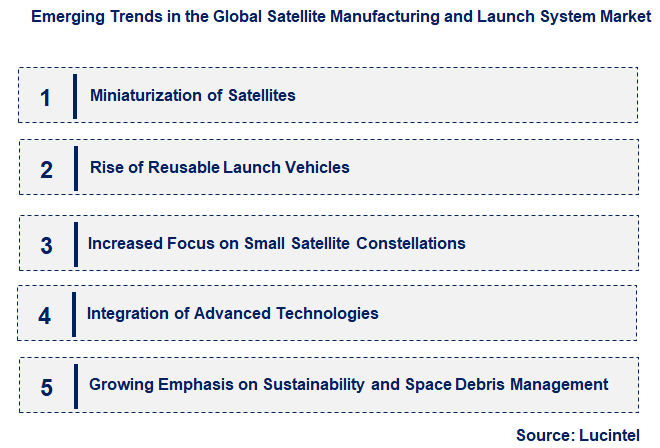
• Miniaturization of Satellites: Smaller, lightweight satellites, such as CubeSats, are gaining popularity due to lower costs and faster deployment times. This trend enables more frequent launches, democratizes access to space, and fosters innovation by allowing universities, startups, and smaller nations to participate. The miniaturization also reduces launch costs and opens new applications in Earth observation, communications, and scientific research, thereby expanding market reach and diversification.
• Rise of Reusable Launch Vehicles: The development and deployment of reusable launch systems, exemplified by companies like SpaceX, are significantly reducing launch costs and increasing launch frequency. This trend enhances market competitiveness by making satellite deployment more economical and reliable. Reusability also accelerates the pace of satellite launches, enabling rapid deployment of constellations and supporting emerging markets such as IoT and 5G. It is reshaping the industry by shifting focus toward sustainable and cost-effective launch solutions.
• Increased Focus on Small Satellite Constellations: The deployment of large-scale satellite constellations for global internet coverage, Earth monitoring, and navigation is a prominent trend. Companies like SpaceXs Starlink and OneWeb are leading this movement, which demands innovative manufacturing and launch strategies. These constellations improve connectivity, reduce latency, and provide comprehensive coverage, transforming the market by creating new revenue streams and competitive pressures for traditional satellite operators.
• Integration of Advanced Technologies: Incorporating AI, machine learning, and automation into satellite manufacturing and operations is revolutionizing the industry. These technologies enhance design precision, predictive maintenance, and autonomous operations, leading to increased efficiency and reduced costs. Advanced tech integration also enables real-time data processing and improved mission success rates, making satellite systems more adaptable and resilient. This trend is fostering innovation and creating new opportunities for market players to differentiate their offerings.
• Growing Emphasis on Sustainability and Space Debris Management: As satellite deployments increase, so does the concern over space debris and environmental impact. The industry is adopting sustainable practices, such as designing satellites for end-of-life deorbiting and developing debris removal technologies. Regulatory frameworks are evolving to address debris mitigation, influencing manufacturing standards and launch procedures. This trend is crucial for ensuring long-term space sustainability, fostering responsible innovation, and maintaining market viability amid increasing congestion in Earths orbit. These emerging trends are collectively reshaping the satellite manufacturing and launch system market by promoting cost efficiency, technological innovation, sustainability, and expanded access. They are driving a more dynamic, competitive, and responsible industry poised for continued growth and transformation in the coming years.
• Growing Demand for Small Satellites: The rise in small satellite production is driven by affordability, faster deployment, and versatility, enabling applications in Earth observation, communications, and scientific research. This growth is fostering innovation in miniaturization and modular design, reducing costs and increasing accessibility for startups and established players. The market expansion is also attracting investments, leading to more competitive pricing and diverse service offerings, ultimately broadening the satellite ecosystem and accelerating technological progress.
• Advancements in Launch Vehicle Technology: New launch systems, including reusable rockets and dedicated small satellite launchers, are significantly reducing costs and increasing launch frequency. These innovations enable quicker deployment of satellite constellations and reduce time-to-market for satellite services. The development of reliable, cost-effective launch options is attracting more customers, including commercial entities and governments, fostering a more dynamic and competitive market environment. This progress is crucial for supporting the growing demand for satellite-based solutions.
• Integration of Artificial Intelligence and Automation: AI-driven manufacturing processes and autonomous satellite operations are enhancing efficiency, precision, and reliability. Automated systems streamline production, reduce errors, and shorten development cycles. AI algorithms improve satellite data analysis, enabling real-time decision-making and predictive maintenance. These technological integrations are transforming the industry by lowering costs, increasing performance, and expanding the capabilities of satellite systems, making them more adaptable to diverse applications and market needs.
• Focus on Sustainable and Reusable Satellites: Sustainability initiatives are promoting the development of reusable satellite components and eco-friendly manufacturing practices. Reusable satellites and launch vehicles reduce space debris and environmental impact, aligning with global sustainability goals. This shift is encouraging innovation in materials and design, leading to cost savings and longer satellite lifespans. The emphasis on sustainability is also attracting environmentally conscious investors and customers, shaping a more responsible and resilient industry future.
• Expansion of Commercial and Government Collaborations: Increased partnerships between private companies and government agencies are driving innovation, funding, and market access. These collaborations facilitate the development of advanced satellite technologies and launch systems, supporting national security, scientific research, and commercial ventures. Such alliances foster knowledge sharing, resource pooling, and regulatory support, accelerating industry growth. The synergy between sectors is creating a robust ecosystem that enhances competitiveness and broadens the scope of satellite applications globally. The overall impact of these developments is a more innovative, cost-effective, and sustainable satellite manufacturing and launch market. Enhanced technological capabilities and strategic collaborations are expanding market reach, improving service quality, and fostering new applications. This dynamic environment is attracting diverse stakeholders, fueling industry growth, and positioning the market for continued expansion and technological leadership.
• Growing Demand for Commercial Satellite Launch Services: The rise in commercial satellite deployments, including telecommunications, Earth observation, and navigation, is boosting demand for reliable, cost-effective launch services. Innovations in reusable launch vehicles and increased private sector participation are reducing costs and increasing launch frequency. This creates opportunities for launch service providers to expand their customer base, improve operational efficiency, and develop new business models, ultimately accelerating market growth and enabling more satellite missions worldwide.
• Advancements in Satellite Manufacturing Technologies: Innovations in materials, miniaturization, and modular design are transforming satellite manufacturing. These advancements enable faster production cycles, reduced costs, and enhanced satellite capabilities. Companies investing in cutting-edge manufacturing processes can offer more versatile and resilient satellites, catering to diverse applications such as IoT, 5G, and space exploration. This technological evolution opens new revenue streams and strengthens market competitiveness, fostering sustained growth in satellite manufacturing.
• Increasing Government and Military Satellite Programs: Governments and military agencies are investing heavily in satellite infrastructure for defense, surveillance, and communication purposes. These programs often involve large-scale, high-performance satellites, creating substantial opportunities for manufacturers and launch providers. Strategic partnerships, compliance with security standards, and innovation in satellite technology are critical to capturing this market segment. The growth of government-led initiatives significantly contributes to overall market expansion and technological progress.
• Rising Adoption of Small Satellites and Constellations: The proliferation of small satellites and large constellations is revolutionizing connectivity, Earth monitoring, and data collection. These smaller, cost-effective satellites enable rapid deployment and scalable networks, appealing to commercial and governmental clients. The development of dedicated launch platforms and standardized manufacturing processes supports this trend. As demand for global coverage and real-time data increases, the market for small satellite systems and constellation deployment is expected to grow substantially.
• Expansion into Emerging Markets and New Applications: Emerging economies are investing in satellite infrastructure for telecommunications, disaster management, and resource monitoring. Additionally, new applications such as space tourism and asteroid mining are gaining interest. These markets offer untapped potential for manufacturers and launch providers willing to customize solutions for diverse needs. Strategic entry into these regions and sectors can diversify revenue streams, foster innovation, and ensure long-term market sustainability amid evolving global demands. The overall market outlook is shaped by these growth opportunities, which collectively drive innovation, reduce costs, and expand application scope. Companies that leverage these trends will be positioned for sustained success, contributing to the dynamic evolution of the satellite manufacturing and launch system industry.
• Technological Innovation: The continuous development of miniaturized, more efficient satellites and advanced launch systems enhances capabilities and reduces costs, attracting more investments and expanding market scope.
• Growing Demand for Satellite Services: Increased reliance on satellite-based communication, navigation, and Earth observation services across industries like telecommunications, defense, and agriculture fuels market expansion.
• Government and Private Sector Investments: Significant funding from government agencies and private companies for space exploration, satellite deployment, and launch services accelerates industry growth.
• International Space Initiatives: Collaborative projects and space exploration programs by countries and private entities foster innovation, create new markets, and stimulate demand for satellite manufacturing and launch systems. The challenges in the satellite manufacturing and launch system market are:
• High Development and Launch Costs: The substantial capital required for satellite development, testing, and launch operations limits entry for smaller players and constrains market growth.
• Regulatory and Licensing Barriers: Stringent international and national regulations regarding space activities, licensing procedures, and spectrum allocations can delay projects and increase compliance costs.
• Geopolitical Tensions and Space Debris: Political conflicts and the increasing problem of space debris pose risks to satellite operations and launch safety, potentially disrupting market stability and growth prospects. The satellite manufacturing and launch system market is driven by technological progress, rising demand for satellite services, and increased investments, which collectively foster growth and innovation. However, high costs, regulatory complexities, and geopolitical issues present significant hurdles that could impede progress. Navigating these drivers and challenges requires strategic planning and collaboration among stakeholders. Overall, the markets future hinges on balancing technological advancements with effective management of regulatory and geopolitical risks, ensuring sustainable growth and expanded satellite capabilities.
• BLUE ORIGIN LLC
• Airbus SE
• Lockheed Martin Corporation
• Maxar Technologies Inc.
• Rocket Lab USA
• Boeing
• ISRO
• Ariane Group SAS
• Northrop Grumman
• SpaceX
• Medium-sized Satellite
• Small Satellite
• Large Satellite
• LEO
• MEO
• GEO
• Communication Satellite
• Earth Observation Satellite
• Navigation Satellite
• Military Surveillance
• Others
• Commercial
• Government
• North America
• Europe
• Asia Pacific
• The Rest of the World
• United States: The US market has seen substantial investments in reusable launch vehicles, with companies like SpaceX and Blue Origin pioneering cost-effective launch solutions. The government has increased funding for national security and scientific missions, including the Artemis program. Commercial satellite deployment has surged, especially in telecommunications and Earth observation sectors. The US also focuses on developing next-generation satellite technologies, such as small satellites and mega-constellations, to meet growing global demand.
• China: China has made remarkable progress in satellite manufacturing and launch capabilities, establishing a comprehensive space industry. The country launched its own satellite series for navigation, communication, and Earth observation, reducing reliance on foreign technology. The Long March rocket family has expanded, supporting both government and commercial launches. China’s BeiDou navigation system continues to grow, and the nation is investing in space station development and lunar exploration, positioning itself as a major space power.
• Germany: Germany emphasizes sustainable satellite solutions, focusing on environmentally friendly manufacturing processes and reusable components. The country is a key player within the European Space Agency, contributing to collaborative projects like the Galileo navigation system and Copernicus Earth observation program. German companies are innovating in satellite payload technology and ground segment services. The market also sees increased interest in small satellite development for scientific, commercial, and defense applications, with a focus on cost efficiency and technological resilience.
• India: India’s space sector has experienced rapid growth, driven by ISRO’s successful launch vehicle programs like PSLV and GSLV. The country is developing indigenous satellite manufacturing capabilities, including communication, navigation, and Earth observation satellites. India’s cost-effective launch services have attracted international clients, boosting commercial satellite deployment. The launch of the Gagan Yaan crewed mission and the development of satellite constellations for rural connectivity and disaster management highlight India’s expanding space ambitions. The government continues to prioritize space technology for economic and strategic benefits.
• Japan: Japan remains a leader in advanced satellite technology, focusing on scientific research, defense, and disaster management. The country invests heavily in high-resolution Earth observation satellites and innovative communication systems. Japanese companies are developing small satellite platforms and modular payloads to enhance flexibility and cost efficiency. The government supports international collaborations and space exploration initiatives, including lunar and asteroid missions. Japan’s space industry emphasizes resilience, technological innovation, and maintaining its competitive edge in the global satellite manufacturing and launch market.


• BLUE ORIGIN LLC
• Airbus SE
• Lockheed Martin Corporation
• Maxar Technologies Inc.
• Rocket Lab USA
• Boeing
• ISRO
• Ariane Group SAS
• Northrop Grumman
• SpaceX Q6. Which satellite manufacturing and launch system market segment will be the largest in future? Answer: Lucintel forecasts that, within the satellite type category, large satellite is expected to witness the highest growth over the forecast period. Q7. In satellite manufacturing and launch system market, which region is expected to be the largest in next 8 years? Answer: In terms of region, North America is expected to witness the highest growth over the forecast period. Q8. Do we receive customization in this report? Answer: Yes, Lucintel provides 10% customization without any additional cost.


Choose a license that fits your team. Instant PDF delivery.
Prices exclude taxes. Instant delivery. Custom licensing available on request.
Market Report · July 31, 2026
Market Report · July 31, 2026
Market Report · July 31, 2026
Trusted partner for strategic intelligence and business growth


Receive a complimentary market analysis tailored to your industry. Our analysts will identify key growth opportunities and competitive dynamics specific to your business.

Market size, growth rate, and key trend analysis for your specific sector.

Top competitor positioning and market share analysis.

Strategic recommendations backed by data-driven insights.
Get curated market intelligence and competitive moves straight to your inbox.
By subscribing, you agree to receive our monthly insights. Unsubscribe anytime.
Receive a complimentary market analysis tailored to your industry. Our analysts will identify key growth opportunities and competitive dynamics specific to your business.
Market size, growth rate, and key trend analysis for your specific sector.
Top competitor positioning and market share analysis.
Strategic recommendations backed by data-driven insights.
Get curated market intelligence, emerging trends, and competitive moves straight to your inbox each month.
By subscribing, you agree to receive our monthly insights. Unsubscribe anytime.
We'll send your sample report shortly.