
Market Report · July 31, 2026

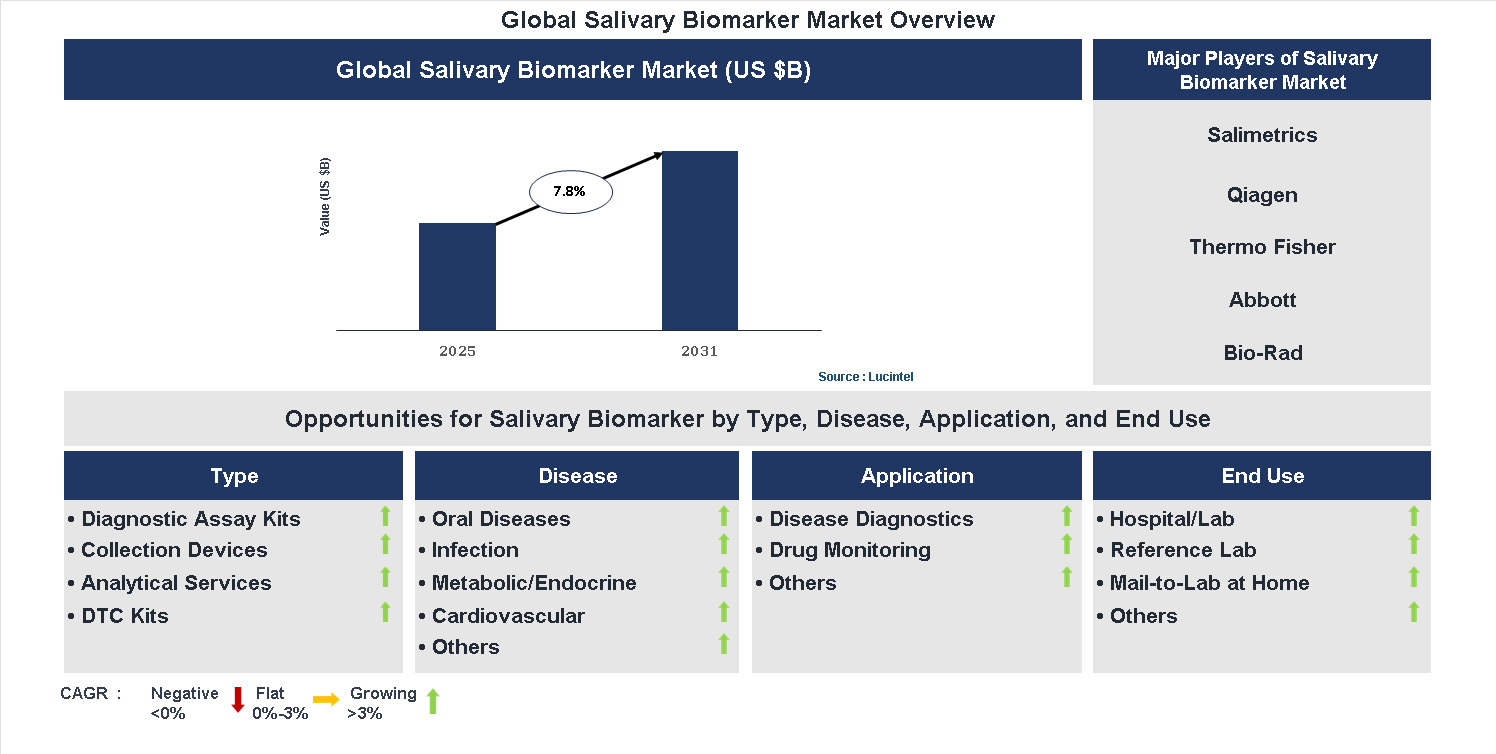
Key data points: The growth forecast = 7.8% annually for the next 6 years. Scroll below to get more insights. This market report covers trends, opportunities and forecasts in salivary biomarker market to 2031 by type (diagnostic assay kits, collection devices, analytical services, and DTC kits), disease (oral diseases, infection, metabolic/endocrine, cardiovascular, and others), application (disease diagnostics, drug monitoring, and others), end use (hospital/lab, reference lab, mail-to-lab at home, and others), and region (North America, Europe, Asia Pacific, and the Rest of the World)
We'll send your sample report shortly.
• Lucintel forecasts that, within the type category, diagnostic assay kit is expected to witness the highest growth over the forecast period.
• Within the end use category, hospital/lab is expected to witness the highest growth.
• In terms of region, APAC is expected to witness the highest growth over the forecast period. Gain valuable insights for your business decisions with our comprehensive 150+ page report. Sample figures with some insights are shown below.
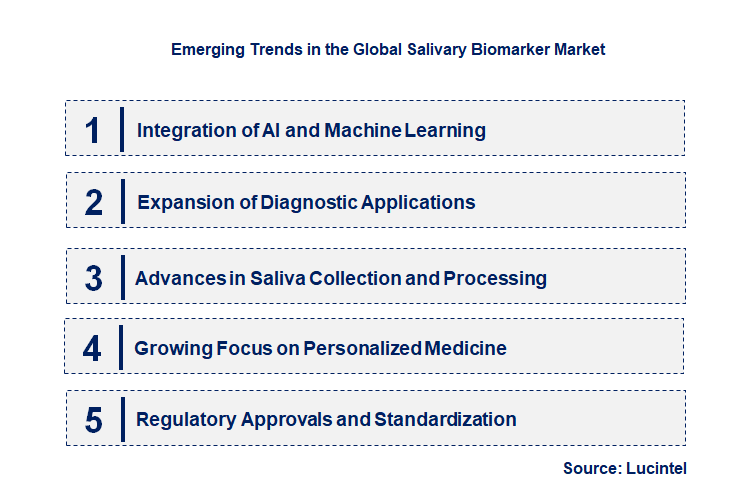
• Integration of AI and Machine Learning: The use of artificial intelligence and machine learning algorithms is enhancing the analysis of salivary biomarkers. These technologies improve diagnostic accuracy, enable early disease detection, and facilitate personalized treatment plans. AI-driven data interpretation accelerates research and reduces human error, making salivary diagnostics more reliable and scalable. This integration is expected to revolutionize how salivary biomarker data is utilized, leading to smarter, more predictive healthcare solutions.
• Expansion of Diagnostic Applications: Salivary biomarkers are increasingly being used beyond traditional areas like oral health, extending into systemic diseases such as cancer, cardiovascular conditions, and infectious diseases. This broadening application base is driven by the discovery of specific biomarkers linked to various health conditions. As a result, the market is diversifying, with new tests and kits being developed for early detection and monitoring, ultimately improving patient outcomes and reducing healthcare costs.
• Advances in Saliva Collection and Processing Technologies: Innovations in saliva collection devices and processing methods are making sample collection easier, more comfortable, and more reliable. These advancements include non-invasive, user-friendly kits suitable for at-home testing and remote diagnostics. Improved processing techniques also enhance the stability and sensitivity of biomarker detection. These technological improvements are expanding the reach of salivary diagnostics, especially in remote or resource-limited settings, and increasing patient compliance.
• Growing Focus on Personalized Medicine: The market is shifting towards personalized healthcare, with salivary biomarkers playing a crucial role in tailoring treatments to individual patients. By analyzing specific biomarker profiles, clinicians can customize therapies, monitor disease progression, and predict treatment responses. This trend is fostering the development of personalized diagnostic panels and targeted therapies, ultimately leading to more effective and patient-centric healthcare solutions.
• Regulatory Approvals and Standardization: Increasing regulatory support and efforts toward standardization are facilitating market growth. Clear guidelines and approval processes for salivary diagnostic tests are building trust among healthcare providers and consumers. Standardization of collection, processing, and analysis protocols ensures consistency and reliability of results. These regulatory advancements are crucial for widespread adoption, fostering innovation, and ensuring the markets sustainable growth. In summary, these trends are collectively reshaping the salivary biomarker market by making diagnostics more accurate, accessible, and personalized. The integration of advanced technologies, expanding applications, and regulatory support is driving innovation and market expansion, ultimately improving healthcare outcomes and patient experiences.
• Growing demand for non-invasive diagnostics: The shift towards saliva-based testing offers a painless, easy-to-collect alternative to blood tests, increasing patient compliance and enabling early disease detection. This trend is expanding the market as healthcare providers seek more accessible diagnostic options, especially in remote or resource-limited settings. Advances in biomarker sensitivity and specificity are further supporting this growth, making saliva a viable medium for detecting various conditions, including cancers, infectious diseases, and hormonal imbalances.
• Technological advancements in biomarker detection: Innovations such as high-throughput sequencing, proteomics, and microfluidics are enhancing the accuracy and efficiency of salivary biomarker analysis. These technologies enable rapid, precise identification of disease markers, facilitating early diagnosis and personalized treatment plans. The integration of AI and machine learning is further improving data interpretation, leading to better clinical decision-making. Such advancements are attracting investments and expanding research, thereby accelerating market growth.
• Increasing applications in disease diagnosis: Salivary biomarkers are increasingly used for diagnosing oral, systemic, and neurological diseases. Their ability to detect early-stage conditions like cancer, diabetes, and neurodegenerative disorders is transforming diagnostic protocols. The non-invasive nature allows for frequent monitoring, improving disease management. Growing awareness among clinicians and patients about saliva-based testing benefits is driving adoption, supported by ongoing research and validation studies that reinforce clinical utility.
• Rising investments and regulatory support: Governments, private investors, and research institutions are investing heavily in salivary biomarker research and development. Regulatory agencies are streamlining approval processes for innovative diagnostic tools, boosting market confidence. Funding initiatives are fostering collaborations and technological innovations, leading to new product launches. This supportive environment is attracting startups and established players, fueling market expansion and encouraging the development of comprehensive saliva-based diagnostic platforms.
• Expansion into sports and forensic applications: The use of salivary biomarkers in sports for monitoring hydration, stress, and doping is gaining traction. Similarly, forensic applications benefit from saliva’s ease of collection and DNA analysis capabilities. These niche markets are opening new revenue streams and diversifying the market landscape. Increased awareness and technological improvements are making saliva testing more reliable and accessible, thereby broadening its scope beyond traditional healthcare settings and contributing to overall market growth. The salivary biomarker market is poised for substantial growth, driven by technological innovations, expanding applications, and increasing investments. These developments are making saliva-based diagnostics more accurate, accessible, and versatile, ultimately transforming disease detection and management. As the market evolves, it will likely see broader adoption across healthcare, sports, and forensic sectors, significantly impacting global diagnostic practices and patient outcomes.
• Expansion of non-invasive diagnostic applications: The growing need for painless, easy-to-administer tests is propelling the development of salivary biomarker-based diagnostics. These tests are increasingly used for detecting oral, systemic, and infectious diseases, offering advantages such as improved patient compliance and rapid results. Advances in biomarker identification and assay sensitivity are enabling broader clinical adoption, making salivary diagnostics a vital component of personalized healthcare and early disease detection strategies.
• Rising prevalence of chronic diseases driving demand for early detection: Increasing cases of conditions like cancer, cardiovascular diseases, and neurodegenerative disorders are creating a strong demand for early, accurate diagnosis. Salivary biomarkers offer a non-invasive, cost-effective alternative to blood tests, facilitating regular screening and monitoring. This trend encourages research into disease-specific biomarkers, expanding the market’s scope and enabling timely interventions that can significantly improve patient outcomes.
• Technological innovations enhancing biomarker detection sensitivity: The integration of advanced technologies such as nanotechnology, proteomics, and genomics is improving the detection limits and specificity of salivary biomarkers. These innovations enable the identification of low-abundance biomarkers, increasing diagnostic accuracy. Enhanced analytical tools are also reducing testing time and costs, making salivary diagnostics more accessible and reliable, thus broadening their application in clinical and research settings.
• Growing adoption in forensic and legal applications: Salivary biomarkers are increasingly used in forensic science for DNA analysis, drug testing, and identifying individuals. The non-invasive nature of saliva collection simplifies sample acquisition in various environments, including crime scenes and border controls. Advances in DNA extraction and analysis techniques are improving accuracy and speed, expanding the market’s scope beyond healthcare into security, law enforcement, and legal sectors.
• Strategic collaborations and investments accelerating market growth: Partnerships between biotech firms, research institutions, and healthcare providers are fostering innovation in salivary biomarker discovery and commercialization. Increased funding for research and development is driving the creation of novel biomarkers and diagnostic platforms. These collaborations facilitate regulatory approvals, market entry, and product launches, ultimately expanding the market’s reach and enabling stakeholders to capitalize on emerging opportunities in personalized medicine and early diagnostics. The overall impact of these growth opportunities is a robust expansion of the salivary biomarker market, driven by technological advancements, increasing disease prevalence, and a shift towards non-invasive diagnostics. These factors collectively enhance diagnostic capabilities, improve patient experiences, and open new avenues for research and application, positioning the market for sustained growth and innovation in the coming years.
• Technological Advancements: The development of highly sensitive and specific detection methods, such as nanotechnology and proteomics, has significantly improved the accuracy and reliability of salivary diagnostics. These innovations enable early disease detection, personalized medicine, and real-time monitoring, making salivary biomarkers a viable alternative to traditional invasive tests. As technology continues to evolve, the scope for new biomarker discovery expands, fostering market growth and opening avenues for novel applications across healthcare and forensic fields.
• Rising Prevalence of Chronic Diseases: Increasing incidences of conditions like cancer, cardiovascular diseases, and infectious diseases have heightened the demand for early diagnosis and continuous monitoring. Salivary biomarkers offer a non-invasive, cost-effective, and patient-friendly approach, encouraging widespread adoption among healthcare providers. This trend is further supported by growing awareness and screening programs, which collectively contribute to expanding the market as early detection improves treatment outcomes and reduces healthcare burdens.
• Growing Preference for Non-Invasive Diagnostic Methods: Patients and clinicians are increasingly favoring saliva-based tests over blood or tissue biopsies due to their simplicity, safety, and convenience. This shift is driven by the desire to reduce discomfort, minimize infection risks, and facilitate frequent testing. The ease of sample collection at home or in outpatient settings enhances patient compliance and broadens the scope of diagnostic applications, thereby accelerating market growth and encouraging innovation in salivary biomarker research.
• Increasing Investment in Research and Development: Governments, private organizations, and academic institutions are investing heavily in salivary biomarker research to identify novel indicators for various diseases. This influx of funding accelerates the discovery process, validation studies, and clinical trials, leading to faster product development and regulatory approvals. Enhanced R&D efforts also foster collaborations and technological breakthroughs, which collectively bolster market expansion and the development of personalized diagnostic solutions. The challenges facing this Market include:
• Technological Limitations and Standardization Issues: Despite advancements, the detection of salivary biomarkers faces challenges related to low analyte concentrations, variability in saliva composition, and interference from other substances. Standardizing collection, processing, and analysis protocols remains difficult, impacting reproducibility and reliability across laboratories. These limitations hinder widespread clinical adoption and necessitate further technological refinement to ensure consistent, accurate results suitable for routine diagnostics.
• Regulatory and Approval Barriers: Navigating complex regulatory pathways for diagnostic devices and biomarker validation can be time-consuming and costly. Variability in approval requirements across regions creates additional hurdles for market entry. Ensuring compliance with stringent standards and demonstrating clinical utility are essential but challenging steps that can delay commercialization, restrict market growth, and increase development costs for companies.
• Validation and Clinical Adoption Challenges: The clinical validation of salivary biomarkers requires extensive studies to establish sensitivity, specificity, and predictive value. Limited large-scale clinical trials and a lack of standardized reference ranges impede acceptance by healthcare providers. Overcoming skepticism and demonstrating clear clinical benefits are critical for integrating salivary diagnostics into routine practice, which remains a significant hurdle for market expansion. In summary, the salivary biomarker market is driven by technological innovations, increasing disease prevalence, patient preferences for non-invasive testing, and substantial R&D investments. However, technological challenges, regulatory complexities, and validation issues pose significant barriers. These factors collectively influence the pace of market growth, requiring stakeholders to focus on overcoming technical and regulatory hurdles while leveraging emerging opportunities. The overall impact suggests a promising yet cautiously optimistic outlook, with continued innovation and collaboration essential for realizing the full potential of salivary diagnostics in healthcare.
• Salimetrics
• Qiagen
• Thermo Fisher
• Abbott
• Bio-Rad
• Diagnostic Assay Kits
• Collection Devices
• Analytical Services
• DTC Kits
• Oral Diseases
• Infection
• Metabolic/Endocrine
• Cardiovascular
• Others
• Disease Diagnostics
• Drug Monitoring
• Others
• Hospital/Lab
• Reference Lab
• Mail-to-Lab at Home
• Others
• North America
• Europe
• Asia Pacific
• The Rest of the World
• United States: The US market has seen rapid growth due to extensive research funding, technological innovation, and a high adoption rate of non-invasive diagnostics. Major biotech firms are developing advanced salivary biomarker panels for early detection of diseases like cancer, diabetes, and neurological disorders. Regulatory agencies such as the FDA are approving new diagnostic tools, boosting market confidence. Additionally, collaborations between academic institutions and industry players are fostering innovation. The increasing prevalence of chronic diseases and a focus on personalized medicine are driving demand for salivary diagnostics, making the US a leader in this market.
• China: China is rapidly expanding its salivary biomarker market through government initiatives supporting biotech innovation and healthcare modernization. The country is investing heavily in research to develop cost-effective, rapid diagnostic solutions suitable for its large population. Domestic companies are forming strategic partnerships with international firms to enhance technological capabilities. The rising burden of infectious diseases, cancer, and metabolic disorders is fueling demand for non-invasive testing methods. Additionally, increasing healthcare awareness and government policies promoting early diagnosis are contributing to market growth, positioning China as a key emerging player in this sector.
• Germany: Germanys market is characterized by a strong focus on research and development, supported by its robust healthcare infrastructure and biotech industry. The country is advancing in the development of salivary biomarkers for neurological and autoimmune diseases, with several clinical trials underway. Germanys emphasis on precision medicine and regulatory rigor ensures high-quality diagnostic products. Collaborations between universities, research institutes, and biotech companies are fostering innovation. The integration of salivary diagnostics into routine healthcare and preventive medicine is gaining momentum, driven by a well-established healthcare system and increasing awareness of early disease detection.
• India: India is witnessing rapid growth in the salivary biomarker market, driven by a large population and increasing healthcare expenditure. The focus is on developing affordable, easy-to-use diagnostic kits suitable for rural and urban settings. Government initiatives like Ayushman Bharat are promoting early diagnosis and preventive healthcare, boosting demand. Local startups and research institutions are actively working on innovative solutions for cancer, infectious diseases, and metabolic disorders. The expanding healthcare infrastructure, coupled with rising awareness about non-invasive diagnostics, is propelling market growth, making India a significant emerging market in this field.
• Japan: Japans market is characterized by advanced technological research and a focus on aging-related diseases such as dementia and cardiovascular conditions. The country is investing in the development of highly sensitive salivary biomarker assays for early detection and monitoring. Japans aging population and high healthcare standards drive demand for non-invasive, accurate diagnostic tools. Regulatory agencies are facilitating the approval process for innovative diagnostics, and collaborations between academia and industry are common. The integration of salivary biomarker testing into routine health check-ups and preventive care is increasing, supported by Japans strong healthcare infrastructure and emphasis on innovative healthcare solutions.


• Salimetrics
• Qiagen
• Thermo Fisher
• Abbott
• Bio-Rad Q5. Which salivary biomarker market segment will be the largest in future? Answer: Lucintel forecasts that, within the type category, diagnostic assay kit is expected to witness the highest growth over the forecast period. Q6. In salivary biomarker market, which region is expected to be the largest in next 5 years? Answer: In terms of region, APAC is expected to witness the highest growth over the forecast period. Q7. Do we receive customization in this report? Answer: Yes, Lucintel provides 10% customization without any additional cost.


Choose a license that fits your team. Instant PDF delivery.
Prices exclude taxes. Instant delivery. Custom licensing available on request.
Market Report · July 31, 2026
Market Report · July 31, 2026
Market Report · July 31, 2026
Trusted partner for strategic intelligence and business growth


Receive a complimentary market analysis tailored to your industry. Our analysts will identify key growth opportunities and competitive dynamics specific to your business.

Market size, growth rate, and key trend analysis for your specific sector.

Top competitor positioning and market share analysis.

Strategic recommendations backed by data-driven insights.
Get curated market intelligence and competitive moves straight to your inbox.
By subscribing, you agree to receive our monthly insights. Unsubscribe anytime.
Receive a complimentary market analysis tailored to your industry. Our analysts will identify key growth opportunities and competitive dynamics specific to your business.
Market size, growth rate, and key trend analysis for your specific sector.
Top competitor positioning and market share analysis.
Strategic recommendations backed by data-driven insights.
Get curated market intelligence, emerging trends, and competitive moves straight to your inbox each month.
By subscribing, you agree to receive our monthly insights. Unsubscribe anytime.
We'll send your sample report shortly.